Migrant tales
Menu
  • #MakeRacismHistory “In Your Eyes”
  • About Migrant Tales
  • It’s all about Human Rights
  • Literary
  • Migrant Tales Media Monitoring
  • NoHateFinland.org
  • Tales from Europe
Menu

Tag: Islamophobia

UPDATE (December 5): Migrant Tales’ 2015 Hall of Poor and Sloppy Journalism

Posted on January 7, 2015 by Migrant Tales

How does the Finnish media give politicians that spread xenophobia and racism inflated respectability and importance? How can they  spread their prejudices and lies about immigrants and minorities without the help of the media? Migrant Tales will begin to collect stories from January 7 written by careless journalists that have been taken for a ride by such politicians.

It’s one of the oldest tricks in the books used against journalists:  A politician makes an outrageous claim to a journalist, who doesn’t even bother to question its veracity. Eventually the journalist may do some investigating and find out that he or she was fed malarkey. By then it’s too late because the story is already out there.

Migrant Tales will send each story that appears in our Hall of “Fame” to the journalist who wrote the story.

There are so many of these types of stories published by the media that compiling a long list in a short time would be relatively easy. It’s important, however, to reveal media bias when reporting stories about migrants and minorities.

This video clip is one of the best that I’ve seen of how politicians with racist agendas took British journalists for a ride in the 1970s and 1980s. Watch video clip here.
Below is an example of good journalism when HARDtalk host Stephen Sackur grilled Perussuomalaiset (PS)* chairman Timo Soini.  Two times the same interview has been taken down from YouTube. 

Common mistakes by the Finnish media when reporting on migration and minorities:    

  • White sources are always used as authorities when immigrants and minorities are the topic
  • Editors of Finland’s main dailies are white Finns
  • Immigrant and visible minority voices are rarely if ever permitted to make their case
  • Editors too often ask white experts – rarely if ever migrant or minority experts –  their view of the “immigrant problem”
  • We give inflated respectability and importance to racists because they mirror our attitudes
  • In Finland, the stronger racism became, the more airtime it gets
  • The rise of racism in our society and our coverage of it reveals how unbalanced and uncritical our media is
  • When it comes to fighting racism, the media are part of the problem

Continue reading “UPDATE (December 5): Migrant Tales’ 2015 Hall of Poor and Sloppy Journalism”

More red lights flashing in Sweden after three mosques set ablaze within a week

Posted on January 1, 2015 by Migrant Tales

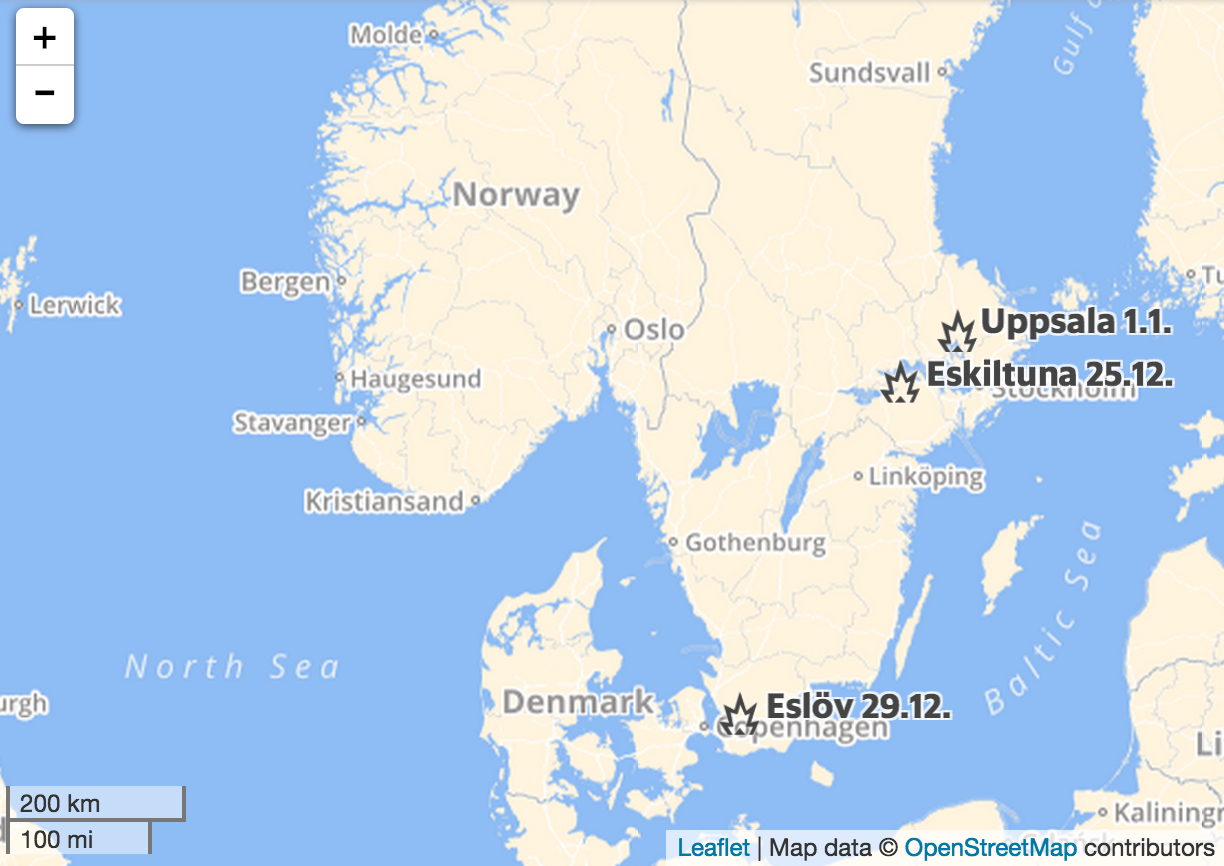
After one mosque was set ablaze on Christmas Day in Eskiltuna, two others have been targeted by suspected arsonists in the southern town of Esilöv on December 29 and in Uppsala on New Year’s Day, reports Helsingin Sanomat, Finland’s largest daily. 

The attacks against three mosques took place within a week. The far right Sweden Democrats caused a political crisis that would have required the minority government of Stefan Löfven to call snap elections in March. An agreement announced on Saturday between the government and opposition parties helped call off such elections.

Apart from being a direct attack against religious freedom in Sweden, the suspected arson attacks are a direct threat to Sweden’s cultural and ethnic diversity.


Näyttökuva 2015-1-1 kello 17.03.51

Read full story here.


Elvir Gigovic, chair of the Muslim Council of Sweden, told The Guardian that the spate of attacks against Muslims in 2014 was systematic. Justice Minister Morgan Johansson described the Eskilstuna fire as a “heinous atrocity” that was nothing more than violence directed against the Muslim community.

Expo, an anti-racism NGO, claimed that there have been at least 13 suspected arson attacks against mosques in Sweden this year alone.

The fact that a handful of people are taking the law in their hands and committing acts of violence against a religious groups should be enough proof of the ugly face of intolerance but our resolve to not be intimidated by vigilante style violence.

We hope the authorities in Sweden capture the perpetrators soon.

Islamophobia is rampant in the PS and they like it

Posted on November 4, 2014 by Migrant Tales

Or should the headline read: Islamophobia is rampant in the PS and they LOVE it?

Two members of the Perussuomalaiset (PS) Salo city board said in a statement that the Muslim religion is incompatible with our Nordic welfare state values. The statement by the PS of Salo, a city located 114km west of the capital Helsinki, comes after the city board approved 10-3 a zoning change to allow the construction of a mosque in the city. 

According to the statement,  the PS said that it was a bad idea to build the mosque near a child care center.

Using the usual crime statistics to drive home their Islamophobic views, the PS of Salo said:

Research by the National Research Institute of Legal Policy show (sic!) that migrants from the Middle East and North Africa are 16 times overrepresented in rape statistics. Muslim values promote social inequality of women and of other religions. These values are unacceptable to the Perussuomalaiset.

Unacceptable values?! What about toxic values like bigotry and limiting religious freedom?

With such stands and statements by the PS of Salo, the anti-immigration and especially anti-Islam party continually sticks its foot in the mouth and contradicts itself.

The eeriest matter about such Islamophobic stands not the PS itself, but the near-silence of the rest of society condemning such anti-democratic views. What kind of a monster would we create if we permitted the PS to decide what religions are compatible with our way of life and those which are not?

Its leader, Timo Soini, who is a devout Catholic, believes that religious freedom is an important value he personally supports.

So how does the Salo PS statement sit with what Soini believes? It doesn’t. Welcome to the strange world of the PS.

Näyttökuva 2014-11-4 kello 11.31.52

Islamophobia is rampant in the PS as this statement (in Finnish) proves.


Migrant Tales spoke in January 2013 to Hannu Niemi, a Justice Ministry researcher who does research on migrant crime, admitted that crime rates by immigrants have been exaggerated by the media and some political parties to gain attention and label whole groups.

Niemi said that the number of rape crimes committed by immigrants is 1-2 per 1,000 inhabitants.

As the PS statement clearly shows, bigotry and racism have become the norm in some circles in Finland.

A statement like ‘not in line with our values’ is ample proof that the PS are the menace to those Nordic welfare state values we cherish.

* The Finnish name for the Finns Party is the Perussuomalaiset (PS). The English names of the party adopted by the PS, like True Finns or Finns Party, promote in our opinion nativist nationalism and xenophobia. We therefore prefer to use the Finnish name of the party on our postings.

An effective way of putting racism in context in Finland

Posted on October 26, 2014 by Migrant Tales

There are many ways to understand ethnic hatred and racism in Finland. One of these is by substituting the word ‘migrant’ for your ethnic group and/or ‘woman’ in a text that’s aimed at fueling ‘us’ and ‘them.’ Let’s take the recent claims of two politicians, MPs Tom Packalén and Pia Kauma, to see how passions are fueled or can be smothered. 

Original claim by Perussuomalaiset (PS)* MP Packalén.

Before: Gangs made up only of young people with migrant backgrounds said their motives are racist because their aim is to hurt white Finns.

After: Gangs made up of only young white Finns said their motives are racist because their aim is to hurt migrants and minorities.

Näyttökuva 2014-10-26 kello 10.24.24

Before and after. Racism is like the fly agaric (Amanita muscaria) mushroom. It looks beautiful when it fruits and may invite some to eat its hallucinogenic poison. Time, like racism, reveals the true face of this mushroom when it ages and dies.


As we all know, Packalén pulled a fast one on the media and public. The problem with the PS MP’s claim is that it just isn’t true and an inflated exaggeration. Even so, his claims have spread fear and labelled non-white Finns, encouraging even neo-Nazi groups like the Kansallinen Vastarinta and members of the PS to patrol the streets of Helsinki.

Here’s National Coalition Party MP Kauma’s claim.

Before: Migrant mothers buy new baby carriages with social aid.

After: White Finnish mothers buy new baby carriages with social aid.

Like with Packalén, Kauma’s claim is stuffed as well with lots of baloney.

Even if these two MPs made up these stories in light of the April parliamentary elections, is one point. But the other very important one is that they succeeded at getting a lot of media coverage, which was their original aim.

Check out the two postings below on how by just changing a few key words in a vengeful and racist text reveals the underhanded motives of the writer and brings the topic closer to home:

  • Let’s play fill in the blanks with far-right Finnish MP Teuvo Hakkarainen
  • Let’s play fill in the blanks with far-right Finnish MP James Hirvisaari

If you still are trying to grasp these two disgraceful examples, why not replace migrant or ethnic group with ‘woman.’

Remember how urban tales about women were and still may be rampant in Finland? Women can’t drive, they’re poor in math, all they know what to do is have babies and cook…This is the exact anatomy of racist discourse in Finland today. Migrants live off welfare, they’re lazy, sly and shouldn’t be trusted…

How many generations did such outright lies about women still continue to oppress them?

Ever figure out how it feels to be in a university math class and be the only women? Think about how much pressure there is on that woman and how much energy she must expend to prove that she’s just as good as her male classmates.

This exact feeling is what many migrants feel in society. They’re constantly trying to prove that they are just as good and worthy of being treated as equal members of society.

Thus there is nothing harmless when politicians reinforce prejudices about migrants. On the contrary – it is a violent act that aims through power to dominate others.

Add to the latter the near-silence of society and a bigger picture of the social ill emerges.

Racism is not only costly to society but especially to the victim.


* The Finnish name for the Finns Party is the Perussuomalaiset (PS). The English names of the party adopted by the PS, like True Finns or Finns Party, promote in our opinion nativist nationalism and xenophobia. We therefore prefer to use the Finnish name of the party on our postings.

Six-year fruitless search for a Muslim burial ground in Finland

Posted on August 11, 2014 by Migrant Tales

The Finnish Islamic Council has been searching without success since 2008 for a burial ground in the southern Finnish region of Uusimaa, according to YLE in English. Up to know, Muslims are buried in the “Muslim section” of Lutheran Church cemeteries.

Pia Jardi, deputy chair of the Finnish Islamic Council, told Migrant Tales that a questionnaire was sent to 16 municipalities about the matter but only four responded: Helsinki, Espoo, Vantaa and Tuusula.

She said that she was surprised by the large number of municipalities that didn’t respond.

“Are they worried about voters [if there is a Muslim cemetery in their municipality]?” she said. “Muslims do the same thing in graves as any other people.”

Näyttökuva 2014-8-11 kello 16.08.26

Read full story here.

Jardi said that cooperation with the Lutheran Church has been good.

“We’ve been sometimes asked why don’t we bury our dead in the Tatar Cemetery of Hietaniemi [in Helsinki],” she continued.  “This isn’t possible since you have to be a member of the Tatar community to be buried there.”

The six-year search is a good example of how some sectors of Finland persist in the belief that very little will change as our society becomes more culturally diverse.  Our laws and values speak of integration, or two-way adaption, but what happens in too many cases is assimilation or expectations of the latter.

“You would certainly think that we would find an area in Uusimaa that could be rezoned for cemetery use,” Jardi was quoted as saying on Yle in English. “Perhaps is has to do with a lack of political will. If you even scan web forums they are extremely anti-Muslim…”

There are some 60,000 Muslims estimated living in Finland.

Institute of Race Relations: The ‘Guantánamization’ of Belgium

Posted on August 2, 2014 by Migrant Tales

By Frances Webber

A new book on Belgium, Guantanamo chez nous?, is an important contribution to the analysis of racism and the war on terror in Europe.

It would be hard to find anyone in the UK who has not heard of Abu Qatada. But how many people know that he was recently acquitted of terrorist charges in Jordan? The story, the person behind the name is unknown – he has become an icon of ‘Islamist terrorism’, a dehumanised trope which is fed by and in turn feeds rampant anti-Muslim racism, and is used to justify ever-increasing securitisation (more surveillance, more police powers) and attempts to de-universalise basic rights, to make them contingent on behaviour and not ours by virtue of our common humanity. The demonisation is so powerful that it renders impossible any rational argument about Qatada’s actions or his treatment by the justice system; any suggestion that his eleven years’ detention and deportation was unjust would be seen as either very misguided or symptomatic of support for terrorism.

Na?ytto?kuva 2014-8-2 kello 15.41.38

Read original story here.

Nizar Trabelsi is Belgium’s own Abu Qatada. In September 2001 he was arrested and charged with conspiracy to attack a NATO air base in Belgium. He was sentenced to ten years imprisonment which he served, only to be extradited to the US to face further charges based on the same incidents. In this book, Luk Vervaet enters the lion’s den, arguing that Trabelsi’s punishment has been disproportionate and his treatment unjust, an injustice made possible by the processes of racist dehumanisation which, post-9/11, engulfed the already marginalised north African-origin Muslim community in Belgium.

Racism is, in the final analysis, injustice, and in Guantanamo chez nous? (Guantanamo in Belgium) Vervaet describes the deepening injustice towards its Muslim citizens brought about by Belgium’s co-option into the US-led war on terror and the resulting securitisation and ‘Guantánamisation’ of Belgian society. The book interweaves the story of Trabelsi’s imprisonment and his October 2013 extradition with the bigger story of which it forms part, with chapters dealing with Belgian complicity with the CIA’s extraordinary rendition programme (through authorising the use of its airports and air space); the government’s failure to protect its Muslim citizens ‘rendered’ to Guantánamo or subjected to torture in Morocco, which mirrors their neglect and exclusion at home in Belgium; the huge growth in the prison estate and the adoption of techniques condemned as inhuman or degrading treatment for the control of prisoners; the difficult issues raised by young Muslims going off to Syria or Afghanistan and the ban on suspected Islamist sympathisers exercising a profession.

Initially, Belgium was a critic of the US invasion of Iraq. But when campaigners sought to prosecute General Tommy Franks in Belgium for war crimes arising from the Iraq invasion, under laws of universal jurisdiction accepted by Belgium, the US threatened a trade boycott and the removal of NATO headquarters from Brussels. Under such direct and blatant pressure, parliament amended, then revoked the universal jurisdiction law, allowing Franks to go untried. This was the beginning of a ten-year slide from universalist and rights-based principles. The mighty were above the law; the lowly, or in this case the dehumanised Trabelsi, beneath it. His extradition, a decade later, is to face charges based on the same incident, in breach of the principle that no one should be tried twice for the same offence; it took place in breach of a stay imposed by the European Court of Human Rights; and it followed twelve years of a prison regime featuring almost constant isolation, in breach of prison policy and to the condemnation of the Council of Europe Committee on the Prevention of Torture.

Vervaet’s analysis of terrorist incidents in Europe is telling, demonstrating the minuscule proportion of such incidents which can be described as ‘Islamic’ in motivation and the total lack of even-handedness vis-à-vis terrorism of the extreme Right. He is angered by the criminalisation of young Muslims who go to fight dictatorship in Syria or occupation in Afghanistan or Iraq, as against the impunity for volunteers recruited to the Israeli Defence Force, and for mercenaries who fight anywhere. But perhaps some of the most valuable parts of the book are those where Vervaet examines prisons, prison regimes and the changes in prison policy – subjects he discusses with the fluency and authority of the insider. It is in the prison system and the way Muslim ‘national security’ prisoners in particular are treated that we see the way dehumanisation and racism corrode decency.

Belgium used to have a progressive prisons policy, with few prisons and no high-security units or isolation regimes. But the justice minister who in 1996 announced that prison didn’t work and proposed an ambitious ‘alternatives to prison’ policy, who signed his country’s formal abolition of the death penalty, later presided over the opening of high-security units in two prisons. He signed the warrant for Trabelsi’s extradition to a supermax future in the US, and under his watch, the Council of Europe condemned Belgium for its use of ‘white torture’ methods – deafening music and opaque goggles – on detainees during transfer, and for the conditions of detention for prisoners in the isolation regime. In July 2010, the Council of Europe’s Committee for the Prevention of Torture reported that the high security regime, designed for ‘unmanageable’ prisoners with ‘extreme, persistent behaviour problems … posing a threat to staff and/ or other inmates’ was being misused, within months of its inception; Trabelsi was one of five of the eight prisoners in the Bruges unit, and six of the nine at Lantin, who should never have been put there. Unabashed, the justice ministry has now signed off a massive prison construction programme, including Belgium’s first dedicated high-security prison.

Whether Trabelsi’s initial prison sentence of ten years was proportionate to the conspiracy he was said to have hatched alone, is a vexed question. But there can be no doubt that his treatment in the criminal justice system stands as a template and exemplar for the racist dehumanisation of Muslims in Belgian prisons and in its wider society. From his receipt of the maximum sentence possible for a terror attack, despite his plea of guilty and the fact that the plan was never implemented, to his years in the isolation regime, which led to physical and psychological damage, through his endless, wearying struggle against official obstructions for permission to marry, with the political and media portrayal of his fiancee as a dangerous terrorist, to the final trick – telling him, before the transfer to the military airfield and the CIA extradition flight, that he was being transferred to another prison where he could marry – all smack of vindictiveness, of injustice. This treatment culminated in the illegal extradition which is, for Vervaet and for Trabelsi’s lawyer Maitre MarcNeve (former vice-president of the Committee for the Prevention of Torture), who writes the preface, symptomatic of the disastrous slide from the values of universal human rights and the rule of law.

Vervaet’s own story, which he recounts as one among many cases of a new ‘Berufsverbot’[1] or politically-inspired dismissal from work, stands as an example of the new McCarthyism which brands all attempts to understand or to reconcile as ‘enemy propaganda’ and ‘support for terrorism’. A teacher of Dutch to prisoners, he found himself banned from all Belgian prisons – and so deprived of his livelihood – in August 2009, for ‘reasons of national security’ which were never spelled out. Although he won his case against the lack of reasons for the ban in the Constitutional Court, he has never been compensated for losing his livelihood. Another man, who organised football matches for prisoners for eighteen years, was banned on the basis of a false rumour that he intended to help Trabelsi escape – despite having never met him.

Vervaet takes issue with the Left’s passivity, its impotence, its failure to challenge all of this and in some instances its complicity. He points out that Belgium, as a tri-lingual country which has been a battlefield in two world wars, has a unique legitimacy and moral authority to resist involvement in the new imperialist wars. His message is: wake up from your silence, your indifference – Belgium can stand for peace, for dialogue.

His analysis of the ‘Guantánamisation’ of Belgium, and his message, resonate in Britain, with our history of racialised monsters and injustice, from the Birmingham Six to Winston Silcott. In common with much of Europe, we too see the demonisation of Islam and its followers, the mobilisation of enormous resources to detect and punish so-called supporters of terrorism in racialised groups – and with these trends, the erosion of principles of universality in human rights and equality before the law.

Vervaet’s book needs to be widely read, and – as its currently available only in French – to be translated into English.

Related links

Read an IRR News story: Belgian prison teacher vindicated

Read an IRR News story: Belgium: arbitrary state power checked in prison teacher case

Read an IRR News story:  Prison teacher victim of new McCarthyism in Belgium


Read original story here.

This piece was reprinted by Migrant Tales with permission.

The PS of Pori, Finland, wanted to stop funding to Islamic cultural association

Posted on June 17, 2014 by Migrant Tales

Two Perussuomalaiset (PS)* members of the City of Pori board failed to get enough support behind a motion to stop funding to an Islamic cultural association, reports YLE. The association gets 4,000 euros in funding from the city.

Migrant Tales not only read this story with some concern.

Apart from being Muslims, is there any other reason why the PS wants to cut off funding to the Islamic cultural association in Pori?


Näyttökuva 2014-6-17 kello 12.37.16

Read full story here.

The motion, which would have cut funding to five other political and student associations as well, was defeated 9-2.

The two PS city board members who backed the motion are Laura Huhtasaari and Tommi Salokangas.

Migrant Tales tried to get in touch with Huhtasaari but she was unavailable for comment.

Salokangas said that he didn’t really understand what Huhtasaari’s aim was except to probably get some attention.

“I’ve visited the people of the [Islamic] association and there is nothing wrong with them,” he said. “You have to ask Huhtasaari about the her motives [for trying to stop the funding].”


* The Finnish name for the Finns Party is the Perussuomalaiset (PS). The names adopted by the PS, like True Finns or Finns Party, promote in our opinion nativist nationalism and xenophobia. We therefore prefer to use the Finnish name of the party on our postings. 

MP Olli Immonen reinforces that the PS is a xenophobic and racist party

Posted on June 12, 2014 by Migrant Tales

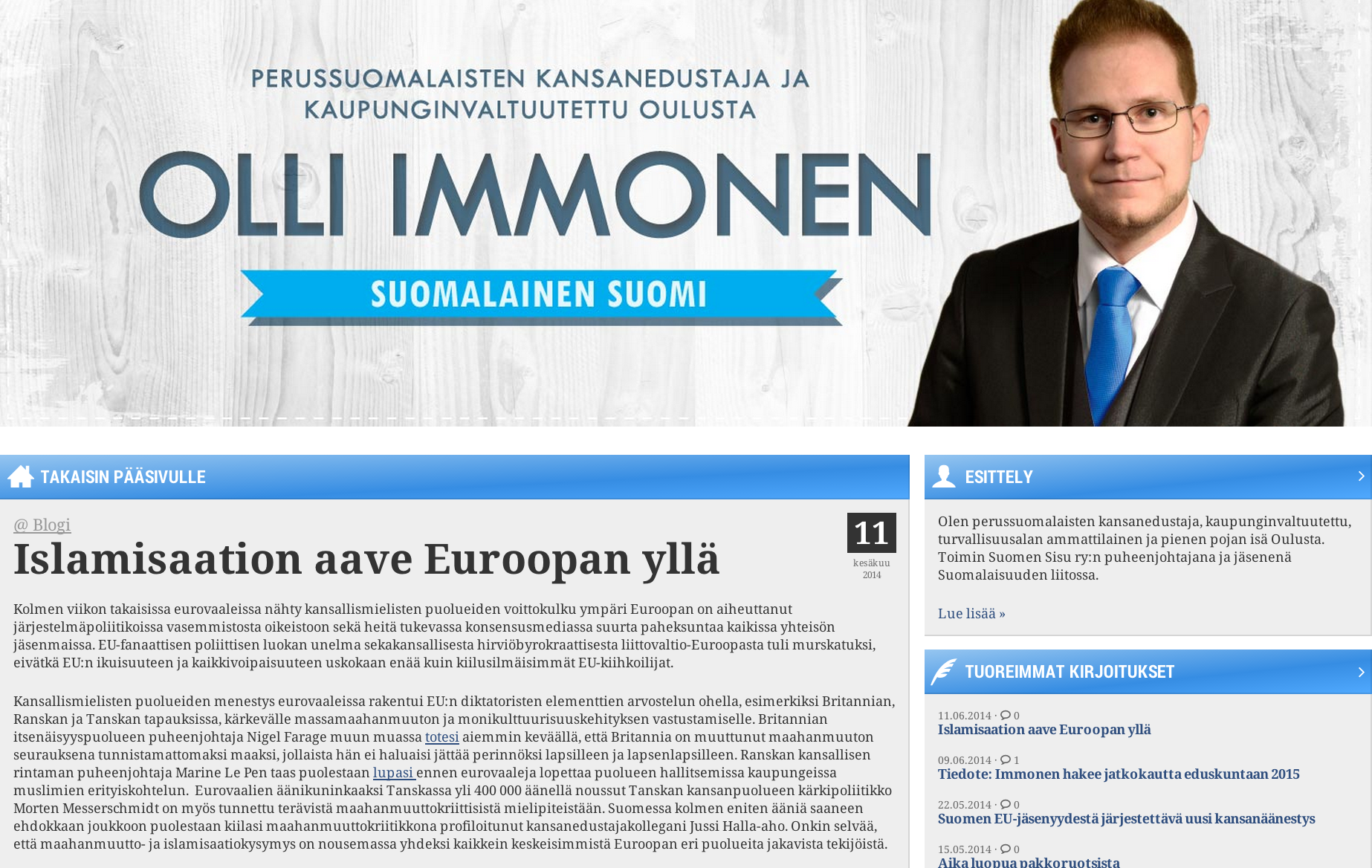
After the EU election victories of the National Front of France, UKIP and the Danish People’s Party, Perussuomalaiset (PS)* MP Olli Immonen lashes out against Muslims on a blog entry, claiming that Europe is being overtaken by Muslims. 

This latest attack by Immonen against Muslims, migrants and non-white Finns, is a good example that the PS is a xenophobic party with deep far-right roots that loathes cultural diversity. Immonen’s stance is no different from the ethnic war drums that politicians like Marine Le Pen’s National Front and Geert Wilders’ Party of Freedom are beating.

Näyttökuva 2014-6-12 kello 10.43.28

While Immonen’s racist rants don’t surprise us, the silence of the PS, who claims not to be a racist party, the media and politicians is equally worrying.

There is very little value in what Immonen writes except that it exposes that racism is the same ogre in Finland as elsewhere in Europe.

* The Finnish name for the Finns Party is the Perussuomalaiset (PS). The names adopted by the PS, like True Finns or Finns Party, promote in our opinion nativist nationalism and xenophobia. We therefore prefer to use the Finnish name of the party on our postings. 

Financial Times: Finnish and Danish MEPs “with criminal records” join Conservative Prime Minister David Cameron’s group

Posted on June 5, 2014 by Migrant Tales

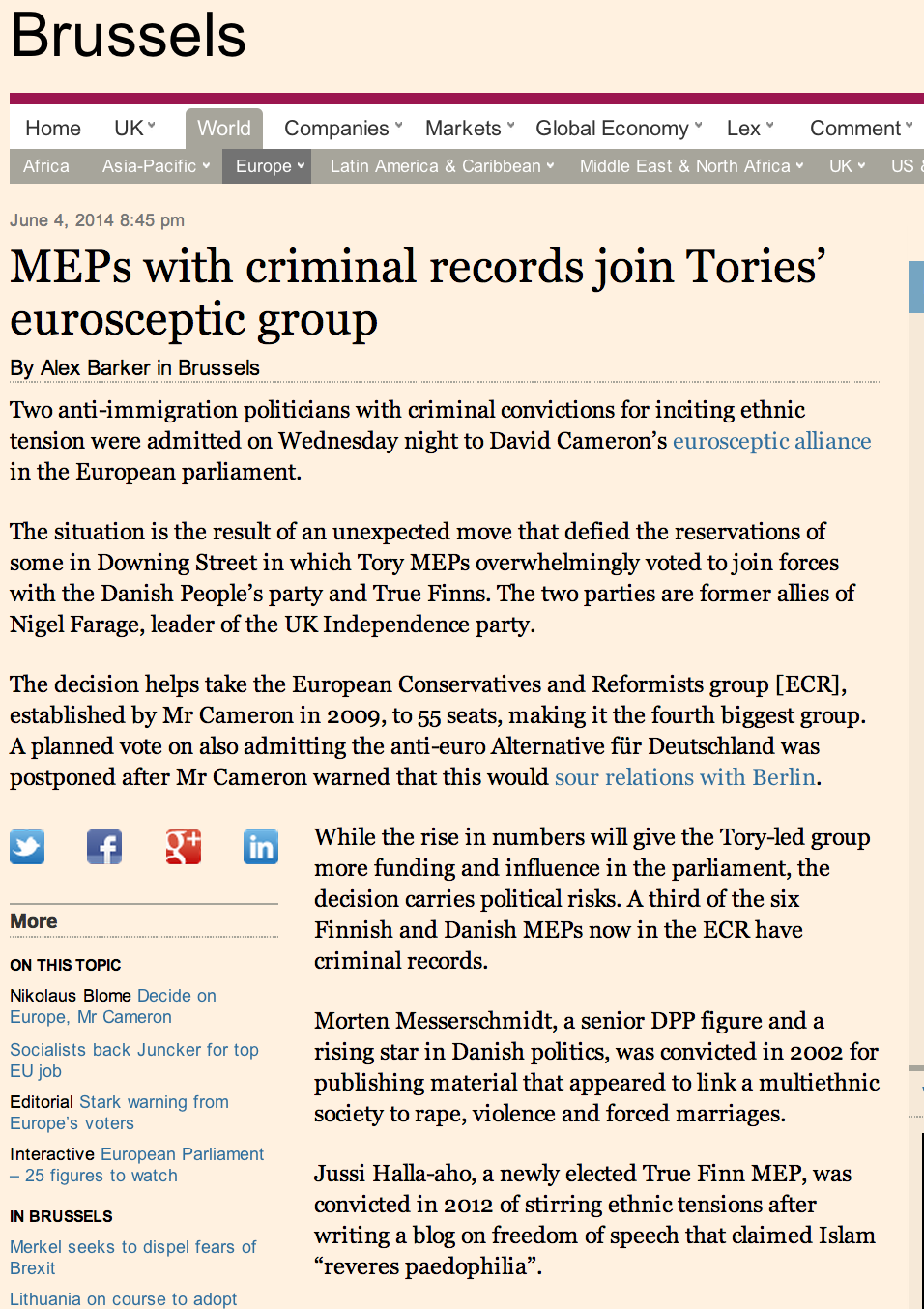
While some speculated that the Perussuomalaiset (PS)* and the Danish People’s Party (DPP), both with MEPs with criminal records, would be given the cold shoulder by UK Prime Minister David Cameron’s European Conservatives and Reformists (ECR) group,  the opposite happened, writes the Financial Times. 

The two MEPs with criminal records are PS MEP Jussi Halla-aho and DPP’s Morten Messerschmidt, who was convicted in 2002 for claiming that cultural diversity was linked to rape, violence and forced marriages.

Writes the Financial Times quoting Mats Persson of the Open Europe think-tank said:

This will raise the eyebrows of many in Europe who thought the Danish People’s party in particular wouldn’t pass the Tory party’s blush test…The good news for the Tories is that they’re on course to become the third largest party in the European Parliament. The risk however is that they drive reform-minded liberal parties straight into the arms of the big federalist block in the EP [European parliament].

PS chairman Timo Soini expressed satisfaction about being accepted into the ECR.

“Fifty-five MEPs have joined so far this group [ECR],” Soini was quoted as saying on YLE. “This group is in practice bigger than the Left and Green group [European United Left-Nordic Green Left].”

The PS and DPP used to belong to the Europe for Freedom and Democracy (EFD) group, with far-right parties like the  Slovak National Party, whose leader said that the best policy for dealing with the Roma is “a long whip in a small yard.”

With parties like the Lega Nord – formerly an EFD member – joining Marine Le Pen and the PS and DPP the ECR, the interesting matter to watch is if UKIP’s Nigel Farage will be able to get the seven parties and 27 MEPs are needed to form a group in the European parliament. 


Näyttökuva 2014-6-5 kello 1.16.38


Read full story here.


Another interesting question to ask is why Cameron permitted two anti-immigration parties with MEPs with criminal records to join the ECR?

One answer is that Cameron and his fellow conservatives in the group don’t care too much if a politician has been sentenced for ethnic agitation or has issues with racism. Taking into account the Tories’ anti-immigration rhetoric that has grown recently due to  the growth of the UKIP, this is nothing strange.

The PS’ entry into the ECR puts the party well into the conservative, populist and far-right camp.

* The Finnish name for the Finns Party is the Perussuomalaiset (PS). The names adopted by the PS, like True Finns or Finns Party, promote in our opinion nativist nationalism and xenophobia. We therefore prefer to use the Finnish name of the party on our postings. 


Disingenuous Finnish PS MEP-elect Jussi Halla-aho fears image would suffer with parties like far-right National Front

Posted on May 27, 2014 by Migrant Tales

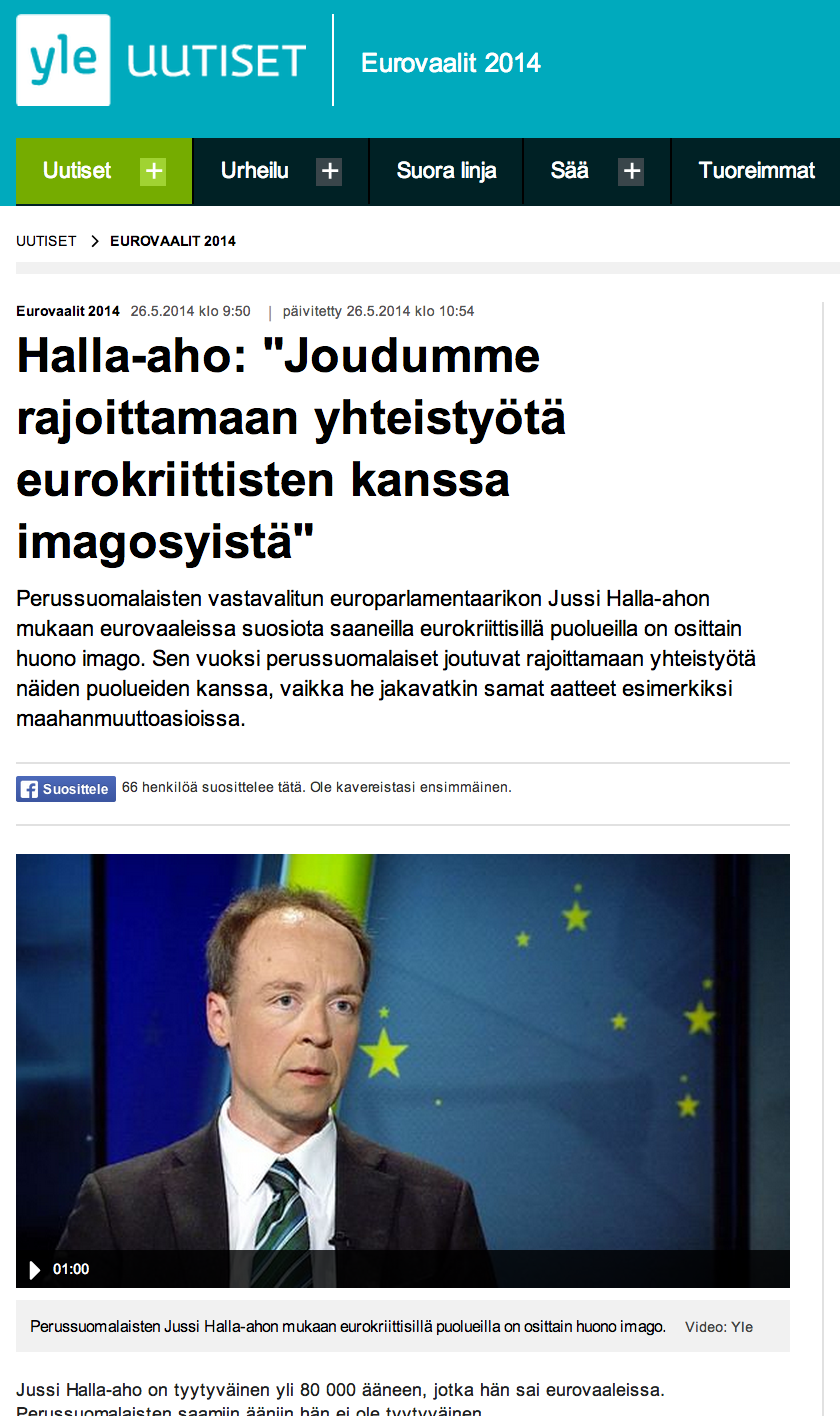
In an interview on YLE, Perussuomalaiset (PS) newly elected MEP Jussi Halla-aho said that it was doubtful that the anti-immigration party would form part of a parliamentary group with far-right parties like the National Front of France “because the party’s image would suffer.”

What a disingenuous statement by a politician who has based his career together with the PS on spreading racism and hatred of Muslims and migrants. Moreover, hasn’t he considered that the only group where the PS will be accepted is the present one, or the Europe for Freedom and Democracy?

If put in the right context, Halla-aho is saying that the PS’ image would suffer ever-greater damage if it grouped with parties like the National Front.

The French xenophobic party’s leader, Marine Le Pen, has said that she would like the PS to form part of her new group in the European parliament.

Näyttökuva 2014-5-27 kello 7.07.39

Read full story here.


Without naming the National Front or Geert Wilders’ Party for Freedom, Halla-aho said that far-right anti-immigration parties in Europe were in the same ideological ballpark as the PS.

In the face of Halla-aho’s comments, what then is the difference between the Lega Nord of Italy, which praised Anders Breivik after he murdered 77 victims on 22/7, and parties like the National Front?

The PS can blame itself and its actions for its right-wing populist, far-right and nationalistic anti-immigration, homophobic and especially anti-Islam image.

The PS forms part to the same European parliament group as the Lega Nord, Danish People’s Party, UKIP and others in the Europe of Freedom and Democracy group.


  • Previous
  • 1
  • …
  • 60
  • 61
  • 62
  • 63
  • 64
  • 65
  • 66
  • …
  • 72
  • Next
Read more about documentary film
Read more

Recent Posts

  • Finland’s tabloids Iltalehti and Ilta-Sanomat are the pits
  • Riikka Purra’s Dr Jekyll and Mr Hyde mask
  • Double standards
  • Perussuomalaiset: Uusi logo, sama vanha juttu
  • Taco Trump

Recent Comments

  1. Absolutely Socking: Racist Finnish Facebook group against human rights gets flooded with socks on Musta Barbaari’s mother and sister charged by the police in “ethnic profiling” case
  2. Ilkka Nuotio on Pekka Myrskylä: “Tilastot kertovat toista kuin poliittinen keskustelu”
  3. Genrih Soinkara on The war in Ukraine and the Russian-Finnish border crisis are showing Finland’s ugly side
  4. Ahti Tolvanen on Comment by Ahti Tolvanen on the Helsinki +50 conference
  5. Angel Barrientos on Angel Barrientos is one of the kind beacons of Finland’s Chilean community

Archives

  • June 2026
  • May 2026
  • April 2026
  • March 2026
  • February 2026
  • January 2026
  • December 2025
  • November 2025
  • October 2025
  • September 2025
  • August 2025
  • July 2025
  • June 2025
  • May 2025
  • April 2025
  • March 2025
  • February 2025
  • January 2025
  • December 2024
  • November 2024
  • October 2024
  • September 2024
  • August 2024
  • July 2024
  • June 2024
  • May 2024
  • April 2024
  • March 2024
  • February 2024
  • January 2024
  • December 2023
  • November 2023
  • October 2023
  • September 2023
  • August 2023
  • July 2023
  • June 2023
  • May 2023
  • April 2023
  • March 2023
  • February 2023
  • January 2023
  • December 2022
  • November 2022
  • October 2022
  • September 2022
  • August 2022
  • July 2022
  • June 2022
  • May 2022
  • April 2022
  • March 2022
  • February 2022
  • January 2022
  • December 2021
  • November 2021
  • October 2021
  • September 2021
  • August 2021
  • July 2021
  • June 2021
  • May 2021
  • April 2021
  • March 2021
  • February 2021
  • January 2021
  • December 2020
  • November 2020
  • October 2020
  • September 2020
  • August 2020
  • July 2020
  • June 2020
  • May 2020
  • April 2020
  • March 2020
  • February 2020
  • January 2020
  • December 2019
  • November 2019
  • October 2019
  • September 2019
  • August 2019
  • July 2019
  • June 2019
  • May 2019
  • April 2019
  • March 2019
  • February 2019
  • January 2019
  • December 2018
  • November 2018
  • October 2018
  • September 2018
  • August 2018
  • July 2018
  • June 2018
  • May 2018
  • April 2018
  • March 2018
  • February 2018
  • January 2018
  • December 2017
  • November 2017
  • October 2017
  • September 2017
  • August 2017
  • July 2017
  • June 2017
  • May 2017
  • April 2017
  • March 2017
  • February 2017
  • January 2017
  • December 2016
  • November 2016
  • October 2016
  • September 2016
  • August 2016
  • July 2016
  • June 2016
  • May 2016
  • April 2016
  • March 2016
  • February 2016
  • January 2016
  • December 2015
  • November 2015
  • October 2015
  • September 2015
  • August 2015
  • July 2015
  • June 2015
  • May 2015
  • April 2015
  • March 2015
  • February 2015
  • January 2015
  • December 2014
  • November 2014
  • October 2014
  • September 2014
  • August 2014
  • July 2014
  • June 2014
  • May 2014
  • April 2014
  • March 2014
  • February 2014
  • January 2014
  • December 2013
  • November 2013
  • October 2013
  • September 2013
  • August 2013
  • July 2013
  • June 2013
  • May 2013
  • April 2013
  • March 2013
  • February 2013
  • January 2013
  • December 2012
  • November 2012
  • October 2012
  • September 2012
  • August 2012
  • July 2012
  • June 2012
  • May 2012
  • April 2012
  • March 2012
  • February 2012
  • January 2012
  • December 2011
  • November 2011
  • October 2011
  • September 2011
  • August 2011
  • July 2011
  • June 2011
  • May 2011
  • April 2011
  • March 2011
  • February 2011
  • January 2011
  • December 2010
  • November 2010
  • October 2010
  • September 2010
  • August 2010
  • July 2010
  • June 2010
  • May 2010
  • April 2010
  • March 2010
  • February 2010
  • January 2010
  • December 2009
  • November 2009
  • October 2009
  • September 2009
  • August 2009
  • July 2009
  • December 2008
  • November 2008
  • October 2008
  • September 2008
  • August 2008
  • July 2008
  • June 2008
  • May 2008
  • April 2008
  • March 2008
  • February 2008
  • January 2008
  • November 2007
  • October 2007
  • September 2007
  • August 2007
  • July 2007
  • June 2007
  • May 2007

Categories

  • ?? Gia L?c
  • ????? ?????? ????? ???????? ?? ??????
  • ???????
  • @HerraAhmed
  • @mondepasrond
  • @nohatefinland
  • @oula_silver
  • @Varathas
  • A Pakistani family
  • äärioikeisto
  • Abbas Bahmanpour
  • Abdi Muhis
  • Abdirahim Hussein Mohamed
  • Abdirahim Husu Hussein
  • Abdirisak Mahamed
  • About Migrant Tales
  • activism
  • Adam Al-Sawad
  • Adel Abidin
  • Afrofinland
  • Ahmed IJ
  • Ahti Tolvanen
  • Aino Pennanen
  • Aisha Maniar
  • Alan Ali
  • Alan Anstead
  • Alejandro Díaz Ortiz
  • Alekey Bulavsev
  • Aleksander Hemon
  • Aleksanterinliitto
  • Aleksanterinliitto ry
  • Aleksanterinliitto ry:n hallitus
  • Alex Alex
  • Alex Mckie
  • Alexander Nix
  • Alexandra Ayse Albayrak
  • Alexis Neuberg
  • Ali Asaad Hasan Alzuhairi
  • Ali Hossein Mir Ali
  • Ali Rashid
  • Ali Sagal Abdikarim
  • Alina Tsui
  • Aline Müller
  • All categories
  • Aman Heidari
  • Amiirah Salleh-Hoddin & Jana Turk
  • Amin A. Alem
  • Amir Zuhairi
  • Amkelwa Mbekeni
  • Ana María Gutiérrez Sorainen
  • Anachoma
  • Anders Adlecreutz
  • Angeliina Koskinen
  • Anna De Mutiis
  • Anna María Gutiérrez Sorainen
  • Anna-Kaisa Kuusisto ja Jaakko Tuominen
  • Annastiina Kallius
  • Anneli Juise Friman Lindeman
  • Announcement
  • Anonymous
  • Antero Leitzinger
  • anti-black racism
  • Anti-Hate Crime Organisation Finland
  • Anudari Boldbaatar
  • Arshiya Nasser
  • Aspergers Syndrome
  • Asylum Corner
  • Asylum seeker 406
  • Athena Griffin and Joe Feagin
  • Autism
  • Avaaz.org
  • Awale Olad
  • Ayan Said Mohamed
  • AYY
  • Barachiel
  • Bashy Quraishy
  • Beatrice Kabutakapua
  • Beri Jamal
  • Beri Jamal and Enrique Tessieri
  • Bertolt Brecht
  • Boiata
  • Boodi Kabbani
  • Bruno Gronow
  • Carmen Pekkarinen
  • Çelen Oben and Sheila Riikonen
  • Chiara Costa-Virtanen
  • Chiara Costa-Virtanen
  • Chiara Sorbello
  • Christian Thibault
  • Christopher Wylie
  • Clara Dublanc
  • Dana
  • Daniel Malpica
  • Danilo Canguçu
  • David Papineau
  • David Schneider
  • Dexter He
  • Don Flynn
  • Dr Masoud Kamali
  • Dr. Faith Mkwesha
  • Dr. Theodoros Fouskas
  • Edna Chun
  • Eeva Kilpi
  • Emanuela Susheela
  • En castellano
  • ENAR
  • Enrique
  • Enrique Tessieri
  • Enrique Tessieri & Raghad Mchawh
  • Enrique Tessieri & Yahya Rouissi
  • Enrique Tessieri and Muhammed Shire
  • Enrique Tessieri and Sira Moksi
  • Enrique Tessieri and Tom Vandenbosch
  • Enrique Tessieri and Wael Che
  • Enrique Tessieri and Yahya Rouissi
  • Enrique Tessieri and Zimema Mhone
  • Epäluottamusmies
  • EU
  • Europe
  • European Islamophobia Report
  • European Islamophobia Report 2019,
  • European Union
  • Eve Kyntäjä
  • Ezequiel Caldeiro
  • Facebook
  • Fadumo Dayib
  • Faisa Kahiye
  • Farhad Manjoo
  • Fasismi
  • Finland
  • Fizza Qureshi
  • Flyktingar och asyl
  • Foreign Student
  • Fozia Mir-Ali
  • Frances Webber
  • Frida Selim
  • Gareth Rice
  • Ghyslain Vedeaux
  • Global Art Point
  • Great Replacement
  • Habiba Ali
  • Hami Bahadori
  • Hami Bahdori
  • Hamid
  • Hamid Alsaameere
  • Hamid Bahdori
  • Handshake
  • Harmit Athwal
  • Hassan Abdi Ali
  • Hassan Muhumud
  • Heikki Huttunen
  • Heikki Wilenius
  • Helsingin Sanomat
  • Henning van der Hoeven
  • Henrika Mälmsröm
  • Hser Hser
  • Hser Hser ja Mustafa Isman
  • Husein Muhammed
  • Hussain Kazemian
  • Hussain Kazmenian
  • Ibrahim Khan
  • Ida
  • Ignacio Pérez Pérez
  • Iise Ali Hassan
  • Ilari Kaila & Tuomas Kaila
  • Imam Ka
  • inside-an-airport
  • Institute of Race Relations
  • Iraqi asylum seeker
  • IRR European News Team
  • IRR News Team
  • Islamic Society of Norhern FInland
  • Islamic Society of Northern Finland
  • Islamophobia
  • Jacobinmag.com
  • Jallow Momodou
  • Jan Holmberg
  • Jane Elliott
  • Jani Mäkelä
  • Jari Luoto
  • Jari Taponen
  • Jegor Nazarov
  • Jenni Stammeier
  • Jenny Bourne
  • Jessie Daniels
  • Joe Davidow
  • Johannes Koski
  • John D. Foster
  • John Grayson
  • John Marriott
  • Jon Burnett
  • Jorma Härkönen
  • Jos Schuurmans
  • José León Toro Mejías
  • Josue Tumayine
  • Jouni Karnasaari
  • Juan Camilo
  • Jukka Eräkare
  • Julian Abagond
  • Julie Pascoet
  • Jussi Halla-aho
  • Jussi Hallla-aho
  • Jussi Jalonen
  • JusticeDemon
  • Kadar Gelle
  • Kaksoiskansalaisuus
  • Kansainvälinen Mikkeli
  • Kansainvälinen Mikkeli ry
  • Katherine Tonkiss
  • Kati Lepistö
  • Kati van der Hoeven-Lepistö
  • Katie Bell
  • Kättely
  • Kerstin Ögård
  • Keshia Fredua-Mensah & Jamie Schearer
  • Khadidiatou Sylla
  • Khadra Abdirazak Sugulle
  • Kiihotus kansanryhmää vastaan
  • Kirsi Crowley
  • Koko Hubara
  • Kristiina Toivikko
  • Kubra Amini
  • KuRI
  • La Colectiva
  • La incitación al odio
  • Laura Huhtasaari
  • Lauri Finér
  • Leif Hagert
  • Léo Custódio
  • Leo Honka
  • Leontios Christodoulou
  • Lessie Branch
  • Lex Gaudius
  • Leyes de Finlandia
  • Liikkukaa!
  • Linda Hyökki
  • Liz Fekete
  • M. Blanc
  • Maarit Snellman
  • Mahad Sheikh Musse
  • Maija Vilkkumaa
  • Malmin Kebab Pizzeria Port Arthur
  • Marcell Lorincz
  • Mari Aaltola
  • María Paz López
  • Maria Rittis Ikola
  • Maria Tjader
  • Marja-Liisa Tolvanen
  • Mark
  • Markku Heikkinen
  • Marshall Niles
  • Martin Al-Laji
  • Maryan Siyad
  • Matt Carr
  • Mauricio Farah Gebara
  • Media Monitoring Group of Finland
  • Micah J. Christian
  • Michael McEachrane
  • Michele Levoy
  • Michelle Kaila
  • Migrant Tales
  • Migrant Tales Literary
  • Migrantes News
  • Migrants' Rights Network
  • MigriLeaks
  • Mikko Kapanen
  • Miriam Attias and Camila Haavisto
  • Mohamed Adan
  • Mohammad Javid
  • Mohammad M.
  • Monikulttuurisuus
  • Monisha Bhatia and Victoria Canning
  • Mor Ndiaye
  • Muh'ed
  • Muhamed Abdimajed Murshid
  • Muhammed Shire
  • Muhammed Shire and Enrique Tessieri
  • Muhis Azizi
  • Musimenta Dansila
  • Muslimiviha
  • Musulmanes
  • Namir al-Azzawi
  • Natsismi
  • Neurodiversity
  • New Women Connectors
  • Nils Muižnieks
  • No Labels No Walls
  • Noel Dandes
  • Nuor Dawood
  • Omar Khan
  • Otavanmedia
  • Oula Silvennoinen
  • Paco Diop
  • Pakistani family
  • Pentti Stranius
  • Perussuomalaiset
  • perustuslaki
  • Petra Laiti
  • Petri Cederlöf
  • Pia Grochowski
  • Podcast-lukija Bea Bergholm
  • Pohjois – Suomen Islamilainen Yhdyskunta
  • Pohjois Suomen Islamilainen Yhyskunta
  • Polina Kopylova
  • Race Files
  • racism
  • Racism Review
  • Raghad Mchawh
  • Ranska
  • Rashid H. and Migrant Tales
  • Rasismi
  • Raul Perez
  • Rebecka Holm
  • Reem Abu-Hayyeh
  • Refugees
  • Reija Härkönen
  • Remiel
  • Reza Nasri
  • Richard Gresswell
  • Riikka Purra
  • Risto Laakkonen
  • Rita Chahda
  • Ritva Kondi
  • Robito Ibrahim
  • Roble Bashir
  • Rockhaya Sylla
  • Rodolfo Walsh
  • Roger Casale
  • Rostam Atai
  • Roxana Crisólogo Correa
  • Ruth Grove-White
  • Ruth Waweru-Folabit
  • S-worldview
  • Sadio Ali Nuur
  • Sami Rusanen
  • Sandhu Bhamra
  • Sara de Jong
  • Sarah Crowther
  • Sari Alhariri
  • Sarkawt Khalil
  • Sasu
  • Scot Nakagawa
  • Shabana Ahmadzai
  • Shada Islam
  • Sharon Chang blogs
  • Shenita Ann McLean
  • Shirlene Green Newball
  • Sini Savolainen
  • Sira Moksi
  • Sonia K.
  • Sonia Maria Koo
  • Steverp
  • Stop Deportations
  • Suldaan Said Ahmed
  • Suomen mediaseurantakollektiivi
  • Suomen Muslimifoorumi ry
  • Suomen viharikosvastainen yhdistys
  • Suomen viharikosvastainen yhdistys ry
  • Suomi
  • Supermen
  • Susannah
  • Suva
  • Syrjintä
  • Talous
  • Tapio Tuomala
  • Taw Reh
  • Teivo Teivainen
  • The Daily Show
  • The Heino
  • The Supermen
  • Thomas Elfgren
  • Thulfiqar Abdulkarim
  • Tim McGettigan
  • Tino Singh
  • Tito Moustafa Sliem
  • Tobias Hübinette and L. Janelle Dance
  • Transport
  • Trica Danielle Keaton
  • Trilce Garcia
  • Trish Pääkkönen
  • Trish Pääkkönen and Enrique Tessieri
  • Tuulia Reponen
  • Uncategorized
  • UNITED
  • University of Eastern Finland
  • Uyi Osazee
  • Väkivalta
  • Vapaa Liikkuvuus
  • Venla-Sofia Saariaho
  • Vieraskynä
  • W. Che
  • W. Che an Enrique Tessieri
  • Wael Ch.
  • Wan Wei
  • Women for Refugee Women
  • Xaan Kaafi Maxamed Xalane
  • Xassan Kaafi Maxamed Xalane
  • Xassan-Kaafi Mohamed Halane & Enrique Tessieri
  • Yahya Rouissi
  • Yasmin Yusuf
  • Yassen Ghaleb
  • Yle Puhe
  • Yuliet Tresa
  • Yve Shepherd
  • Zahra Khavari
  • Zaker
  • Zalina Ametova
  • Zamzam Ahmed Ali
  • Zeinab Amini ja Soheila Khavari
  • Zimema Mahone and Enrique Tessieri
  • Zimema Mhone
  • Zoila Forss Crespo Moreyra
  • ZT
  • Zulma Sierra
  • Zuzeeko Tegha Abeng
© 2026 Migrant tales | Powered by Minimalist Blog WordPress Theme