Migrant tales
Menu
  • #MakeRacismHistory “In Your Eyes”
  • About Migrant Tales
  • It’s all about Human Rights
  • Literary
  • Migrant Tales Media Monitoring
  • NoHateFinland.org
  • Tales from Europe
Menu

Tag: integration

Adaption of migrants in Finland is a one-way (assimilation) process

Posted on July 9, 2017 by Migrant Tales

What do politicians and public officials in Finland mean when they claim that integration is a two-way process? Is it only political correctness that motivates them to make up such claims or is it code that means one-way adaption, or assimilation?

The first question that I’d like to ask is what does two-way integration mean? How is it put in practice in Finland?


The table above shows the educational background of 15-64-year-old migrants (ulkomaalaistaustainen) and Finns (suomalaistaustainen) who have completed tertiary education (korkea aste), upper secondary school (toinen aste) or comprehensive school (peruskoulu). Source: Survey on work and well-being among people of foreign origin.

In an ideal world, it is supposed to mean – I suspect – when two equal members of society representing different cultures learn from each other and try to find synergies to create a stronger and more dynamic society. For such a thing to happen, however, there must be no institutional racism. And there’s a lot of that in Finland.

Continue reading “Adaption of migrants in Finland is a one-way (assimilation) process”

Helsingin Sanomat survey on migrants reveals expectations that adaption in Finland is and will be a one-way process

Posted on July 7, 2017 by Migrant Tales

Finland’s largest daily, Helsingin Sanomat, published a survey Friday about the minimum requirements that foreigners should adapt to if living here. Seventy-seven percent fully agreed that white Finns should be able to shake hands with both sexes. The survey showed as well that 52% were against women’s-only swimming hours and 37% felt that one should bathe naked in the sauna. 

What surprised me the most, however, was that 32% were against men and women bus drivers using turbans and hijabs. That compared with 40% that said that teachers, the police or other public officials should not use any object to cover their hair.

Migrant Tales reported during 2013-2014 about the long struggle of a Sikh bus driver, Gill Sukhdarshan Singh, who won a landmark case to wear a turban at work.  

While these are interesting expectations of white Finns in the survey they reinforce what we’ve known all along: Adaption of foreigners is a one-way process.  It also reveals that people are reluctant to make room for cultural diversity.


Some findings of the Helsingin Sanomat survey on what Finns expect foreigners to accept about Finland. Read the full story here.

Since racism, bigotry, and exclusion are enforced by the majority’s power and privilege, it’s clear that the survey, the questions, and answers will respond to maintaining the status quo.  The survey reveals as well Helsingin Sanomat’s simplistic view of how migrants should adapt to our society.

Continue reading “Helsingin Sanomat survey on migrants reveals expectations that adaption in Finland is and will be a one-way process”

Migrants’ Right Network: Saving the gains of the Schengen agreement requires European solidarity on protection for refugees

Posted on January 25, 2016 by Migrant Tales

Don Flynn*

Näyttökuva 2015-5-3 kello 12.52.32


Much of the news commentary on Europe seems to assume that the Schengen open borders arrangement will vanish in the next few months. That would be a disaster. Saving it will require a reversal of the current refusal of solidarity with countries at the frontline of the refugee flows.

The interior and home affairs ministers of the EU countries are gathering in Amsterdam today and tomorrow in in what is being described as an informal meeting to discuss the latest phase of the region’s migration crisis.

The current Dutch presidency of the EU has set the context for their discussion with the dire warning that the Schengen agreement will fail within two months if a way is not fund to contain the movement of refugees now spilling out across the continent.

Though the UK is not a member of the 26 country agreement it is expected to suffer the negative consequences if it collapses.  Schengen allows for the management of migration across 8,000 kilometres of external land borders as well as a sea frontier that extend for 40,000 kilometres.

It is usually reported as a measure which provides for free movement across the internal borders of the area it encompasses, but equally important is the role it plays in standardising checks on the admission of people moving across external borders.  Critics of the system have claimed that it is failing on this account, and the admission of over one million people seeking asylum in Europe during the course of 2015 has exposed its fundamental flaws.

Continue reading “Migrants’ Right Network: Saving the gains of the Schengen agreement requires European solidarity on protection for refugees”

Defining white Finnish privilege #25: This land is my land, this land isn’t your land

Posted on November 19, 2015 by Migrant Tales

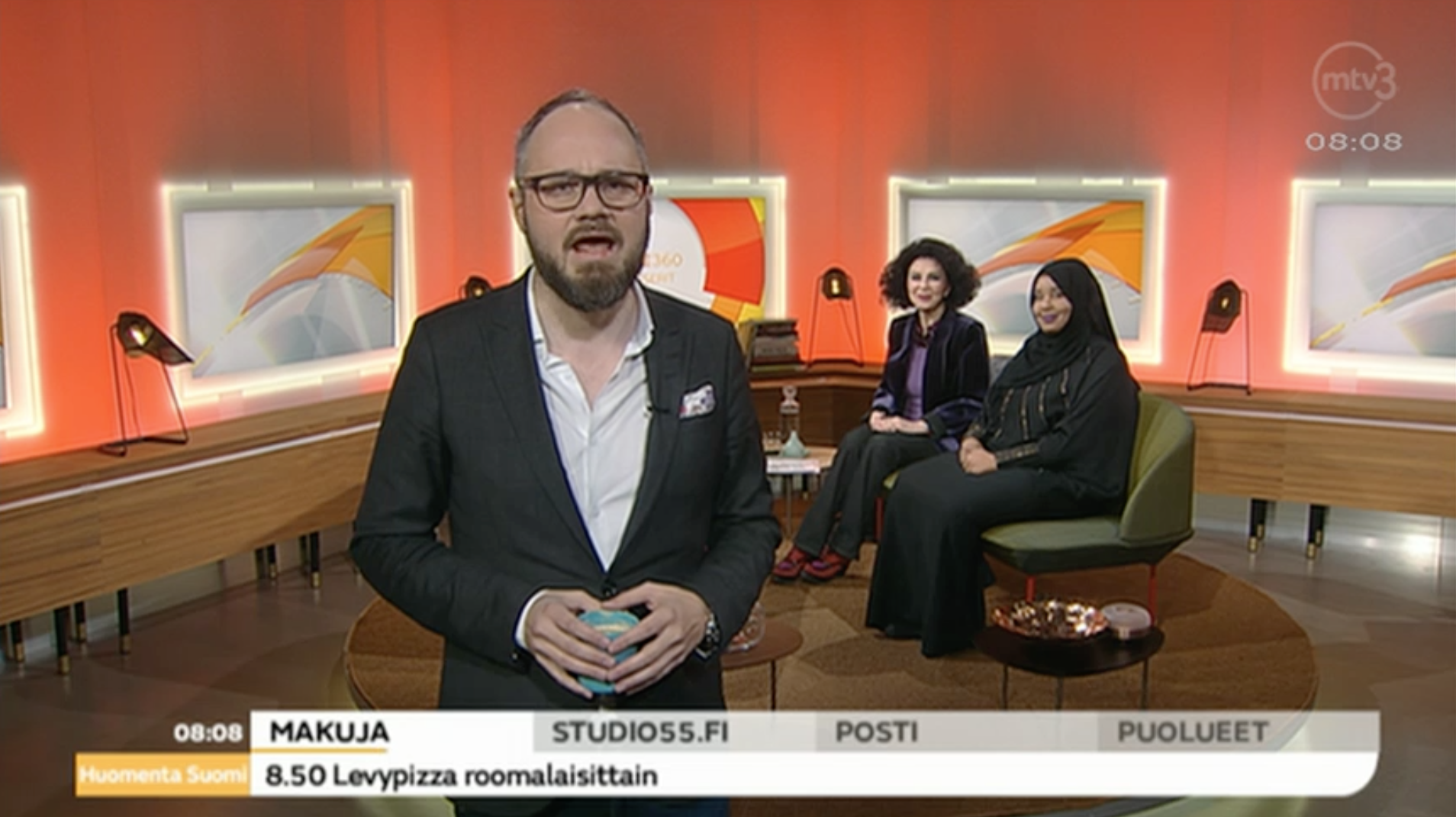
It’s disturbing to watch in Finland journalists who maintain and promote urban tales and racism. One of these is Tuomas Enbuske who invited Lenita Airisto to his television talk show to speak about Muslims. When Aristo opens her mouth and gives her opinions about cultural diversity, it’s evident that she still lives is a provincial and stuffy time warp of pre-1990s Finland.

One of the many things she said that exposed her bigotry in a recent talk show with Enbuske was that Muslim women should show more flexible in Finland and take off their veils if they live here.

Airisto, who shamelessly patronizes the Muslim host, Maryam Askar, continuously pats her on the shoulder as if she had such a right.

The patting on the shoulder is a good example of how Airisto sees minorities like Askar as if they were children.

But then she states something that exposes her white privilege to a tee:

“You have come to my country, Finland is my country, and has taken you in with open arms…”

This affirmation, which is highly offensive because Airisto still believes that Finland and the Finns are only white.

What Airisto is doing is denying Askar the right to be different, which is the basis of racism in Finland. Racists and racism is nothing more in Finland than people who have serious issues with people who are different from them.

Näyttökuva 2015-11-19 kello 18.27.18

Host Tuomas Enbuske is no rocket scientist when it comes to debating matters like immigration and Muslims. He shows more ignorance and conservative opinionated views than sound judgement. In one of his talk shows he advertised “why Somalis rape?” His show got a warning  as a result from The Council for Mass Media for making such a racist statement.

Continue reading “Defining white Finnish privilege #25: This land is my land, this land isn’t your land”

Migrants’ Rights Network: Frontier anxiety: Living with the stress of the everyday border

Posted on November 16, 2015 by Migrant Tales

Don Flynn*

What happens when we bring the anxieties of life at the border into the heart of our all our communities? How can we contend with life in a space where identity is constantly checked and people subjected to the question: Why are you really here? MRN director Don Flynn asks this in an article published this month in Soundings, a journal of cultural politics and simultaneously on the website of Eurozine. The full article can be accessed here.

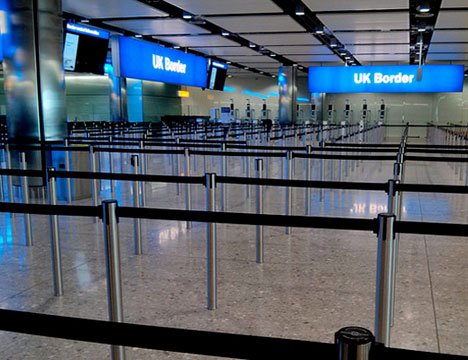
State borders hold a place in the collective imagination of our times in which anxiety plays a central part. It is at borders that the mundane certainties of life dissolve and the simple business of existing becomes a matter of uncertainty. This is the place where a person is forced to confront with the sharpest of intensity the fact that the rights which usually seem as securely available as an intimate personal possession are in fact a by-product of their relationship with the authorities of a state. It is at the border that this relationship can be called into most fundamental question. “I see you are in possession of a British passport madam”, says the immigration officer. “But can you explain to me how you came by this document and why you feel you are entitled to benefit from it?”

Photo: Martin Deutsch. Source: Flickr

This is a disconcerting question that few of us would feel confident of answering (certainly without detailed knowledge of the provisions of the British Nationality Act 1981). Most of us are in the happy position of being unlikely to be pushed too far on the matter. But some are not. For example, one young man I assisted with legal advice told me of his anxious hours at Heathrow airport when his claim that he was British-born, if not raised, was treated with deep scepticism. He had been born in Britain, but when he was six years old his Guyanese parents had taken him to their home country after a decade of life in London. Now returning to study at university, his case was only resolved after his lawyer intervened with additional evidence of his personal circumstances.

But if a British citizen can be subjected to this level of stress, how much greater are the anxiety levels for a Filipina nurse questioned about a visa that is probably incomprehensible to her – supplied by an agent back in Manila, who has assured her that it entitles her to come to the UK to accept the offer of a job as a nurse. It is entirely possible that all the deals that have been done – the form-filling, the gathering of supporting documents, the photographing, the English testing, the finger-print taking, and the payment of often very considerable fees, will be picked apart by an assiduous official who routinely finds grounds for doubting that a young woman from northern Santa Teresita could ever have been awarded a degree in health care from the country’s prestigious De La Salle University.

Beyond Fortress Europe


This article is part of the Eurozine focal pointBeyond Fortress Europe.

The scale of the human tragedy afflicting migrants who seek entry to Fortress Europe has increased dramatically of late, triggering a new European debate on laws, borders and human rights. A debate riddled with the complex, often epic, narratives that underlie immediate crisis situations. [more]

At a border you can be mentally stripped naked through rigorous interrogation, before being taken to a small room where you are physically stripped. Diaries will be read and hard drives on laptops scrutinized; while the letter from your cousin offering you a sofa to doss on until you sort out your own place will be the subject of excited interest, in case it reveals a snippet or two about why you are “really” here. When things go wrong for you at a border you lose the right to tell your own story of your life. You see another you being assembled before your very eyes, through which you are presented as a monster of conniving malevolence, capable of any deceit in your efforts to lay your hands on something to which you have no entitlement. The worst thing is that you are invited at each stage to follow the logic of this deconstruction of yourself. By the end you may find yourself morbidly agreeing that, “yes, I can see how you would believe that of me …”.

In short, a border is a place where most of us don’t want to be for any longer than the time it takes to clear the queues at immigration control, pick up your luggage and board the bus to the centre of town. As the border gets further behind you with each passing minute, you return to a world which may have its everyday worries and concerns, but in which there is at least the assurance that, in normal, mundane intercourse, the default presumption is that you are who you say you are.

But nowadays, for increasing numbers of people, this is not what happens. The border is no longer something to be negotiated on the relatively few occasions in life when we make a conscious decision to approach it and hazard all its dangers. Those disconcerting immigration officials are now being given leave to absent themselves from passport checking duties: they are being sent off in minibuses to ply their trade in many of the places where ordinary folk need to go as part of their daily lives. People may now be asked to verify their immigration status when they apply for a tenancy, or to university, or for child support, or even at the tube station.

Continue reading “Migrants’ Rights Network: Frontier anxiety: Living with the stress of the everyday border”

UPDATE (October 6): Migrant Tales’ 2015 Hall of Poor and Sloppy Journalism

Posted on October 7, 2015 by Migrant Tales

Migrant Tales’ 2015 Hall of Poor and Sloppy Journalism will be updated separately. To see other examples of opinionated journalism in Finland about cultural diversity, please go to this link.

October 6

A2 Pakolais-ilta (YLE)

What was wrong with this television debate? Even if one of the hosts on the program was Wali Hashi, it was white Finns’ perceptions and opinions about asylum seekers coming to Finland and how they should integrate to our society. The term “integration” was mentioned a lot of times but it was code for assimilation, or one-way integration. Every form of prejudice Finland has about asylum seekers and migrants,  like they are criminals, rapists, social welfare bums and other labels, were pushed around freely during the one-sided debate. Forcing a refugee family to eat porridge and speaking of these people, who are also medics and university graduates, as helpless children who have to learn that zucchini is kesäkurpitsa in Finnish is beyond me.  The program did little to dispel the xenophobic climate in Finland but instead reinforced it by not challenging it. On top of this you had one National Coalition Party MP, Susanna Koski, and a pastor, Marjanna Toivianen, who still don’t know that the correct Finnish term for integration is kotoutuminen, not kotiutuminen, which means “coming home.” In 1998 Finland had to invent a new term for integration because none existed before that. That term is kotoutuminen.

If YLE cannot do a descent TV debate on our ever-growing culturally diverse society it should not do one at all.

Näyttökuva 2015-10-7 kello 8.47.49


Included – not integrated

Posted on July 19, 2015 by Maarit Snellman

Inclusion is when everyone is along per se.

In Finland we are still struggling with integration issues. We need programmes and policies so that developmentally disabled people can live where other people are living. We need special laws to make sure that they can have the services they need. But those does not matter when money comes to the picture. Because they are not productive in the eyes of decision makers.

There is a long history of segregative practices in Finland. Disabled people we hidden to institutions in the rural areas because that was best for the disabled. Now the times have changed but lot of work has been done and still has to be done before disabled are equals with the rest of us.

There is intolerance against Sami people and Roms. Finnish – Swedes have been hated and disliked for decades. This increased before 2011 Parliament elections when populism came to Finnish politics by Perussuomalaiset. One of my Sami friends was attacked in the university campus because of his activism.

When my parents came here as refugees after evacuation in 1944 from the neck of land Karelia not everyone was happy for that. Karelians are more talkative and outgoing. Many thought Karelian traditions and habits were bizarre.

A couple of moths ago I was told that Finns have done enough for refugees when they took the Karelian people here. People who had lost everything like all of my grandparents. We are also unwelcome and unwanted. Own people. But we Karelians we integrated and we paid taxes. That was the good part I was told. This made me fee like crying.

In this context of intolerance I don’t wonder at all that refugees, paperless, immigrants, other foreigners and black-skinned people meet intolerance, hard attitudes, racism and discrimination.

What comes to religious diversity Finland has been very Lutherian for a long long time. Times are changing and some people have difficulties to face to growing multiculturalism. We have developed a new phobia – Islamofobia. People suffering for it unfortunately are the loudest ones in most public discussion. At the same time Anti-Semitism is rising in Europe

Constitutional Law of Finland and law for equality are clear on equal rights. The new Finnish government says in the government programme that racism will not be tolerated. Still Perussuomalaiset as an openly racist party has been taken to government and the spokesman Soini is the minister of foreign affairs. The rest of the government is looking the other way which is participating to racist acts. I haven heard a single statement concerning increasing hostility made by government members.

Finnish media has a lot to do with the success of Perussuomalaiset and influencing on negative attitudes towards diversity. Media has given PS a lot of media time and helped them to first election victory in 2011. That is the opinion of some political analysts. I just wonder what is in the interests of media to make sure that party hostile towards foreigners and against immigration is doing well.

Law for equal marriage rights should come into the force in 2017 in Finland. But 50 000 people have supported citizen initiative to prevent it from happening. Mostly religious arguments are being used against the fact that sexual orientation is a biological feature. Homophobia is alive and well.

There are also signs of political discrimination. The left parties are the reason for the poor economics. Which is as much BS as that islamist or jihadist is the same as Muslim. Also the poor and unemployed are having a hard time and get blamed for their situation.

Economics is poor but that does not justify racism or xenophobia. We don’t need to make same poor choices and mistakes. We can make some profound changes in economics. We don’t need scapegoats. That wont solve anything. We have been through that road before and cruelty, inhumanity and violence just are not solution. We can do better. But we have to solve the economics and some key social issues it is causing globally.

Inclusion is when everyone is along per se.

Integration by perkele

Posted on May 20, 2014 by Migrant Tales

Some have heard of the expression of management by perkele, which means swift decision-making by management and where your opinion as an employee counts little. In Finland the goal is integration, or two-way adaption, but what happens on too many occasions is integration by perkele. 

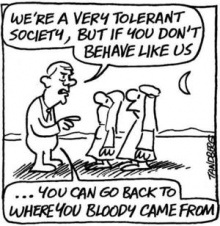
Integration by perkele has a clear message: This is our country, perkele, and don’t forget it! Since this is my country, you are going to adapt to me. In plain English integration by perkele means assimilation.

The cartoon below offers a good example of integration by perkele.

220px-svvalues_narrowweb_300x3080

How do you recognize integration by perkele? Here are some good examples:

  • They have to adapt to us;
  • We’ve always done things this way;
  • Read my lips: This is our country!
  •  Learn Finnish!
  • Too bad you’re not white like me;
  • If you don’t like our country, you can always move elsewhere;
  • Maassa maan tavalla, or in Rome do as the Romans do;
  • “Debating immigrant issues in this country doesn’t mean you’re racist”
  • The Perussuomalaiset* aren’t against immigrants and they’re not racist.

Is integration by perkele an effective way to adapt migrants and minorities? If you want an answer to the that question, why not ask Amerindians, who were victims of systematic genocide, the Roma, Muslims and gays in Russia, Poles in the UK, Turks in Germany, Moroccans and Latin Americans in Spain, Africans in France, asylum-seekers in Greece as well as other migrants and minorities?

Certainly they’ll tell you about the hostility they face daily thanks to integration by perkele.

* The Finnish name for the Finns Party is the Perussuomalaiset (PS). The names adopted by the PS, like True Finns or Finns Party, promote in our opinion nativist nationalism and xenophobia. We therefore prefer to use the Finnish name of the party on our postings. 


Migrants’ Rights Network: Living in an Age of Migration

Posted on March 21, 2014 by Migrant Tales

Don Flynn*

Don_web_0


Immigration studies has emerged as an important discipline in colleges and universities across the world, with scores of research centres being established in the UK alone over the last decade or so. Contributions have come from sociologists, anthropologists, geographers, political scientist, economists and philosophers over this time, giving anyone who is moved to make a systematic review of the literature quite a job in terms of catching up on what is being said and thought about the subject.

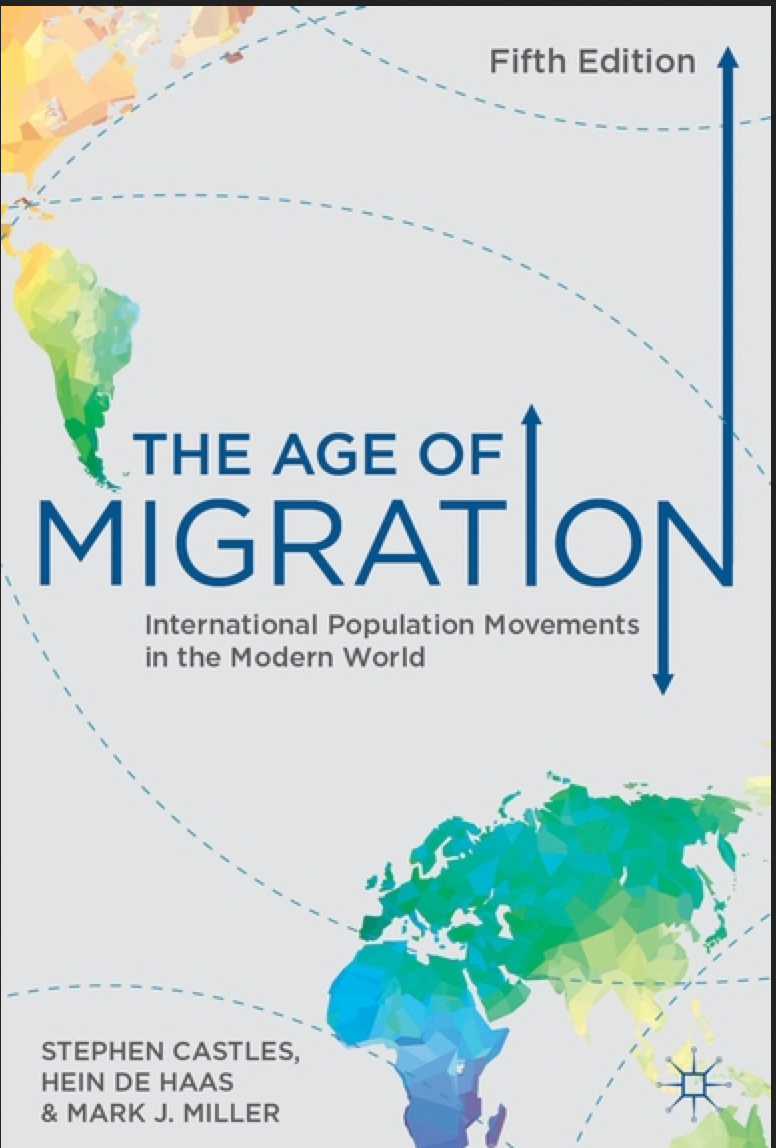
That is a good enough reason to welcome the 5th edition of Age of Migration and what has probably become the 101 introductory text to the study of population movements in the modern world.  Enough has happened since the publication of the 4th edition in 2009 to justify a considerable revision of the book, and the long-standing authors, Stephen Castles and Mark J. Miller have been joined by Hein de Haas of the International Migration Institute in Oxford.
Näyttökuva 2014-3-21 kello 8.22.51

The book puts as its central proposition the fact that we are once again living in the midst of an age of migration. Some would say that doesn’t mean that much, since migration has been a major activity for human beings since they first moved out of Africa around 500,000 years ago. But if migration can be said to have happened in each and every age of humanity it is of critical importance to note that what drives people to move at any one time is related in large part to the distinct features of the age under consideration.

Global markets

For the Age of Migration considered by Castles and his colleagues, it is the age of global markets. More precisely, global markets that themselves evolve over time as the terms of trade and commerce are shaped by the rise of nation states and their out-flowing into colonialism, the dominance of particular economic and political super-powers, changes to the structures of firms, the proliferation of manufacturing and service-providing sectors, the integration of economic regions, and the new technologies of management and communication.

All of these things provide the factors which allow migration across periods of decades to ebb and flow, at some points allowing politicians to believe that it is no longer an important feature of the systems they govern, but at others revealing hitherto unacknowledged demand which brings millions back into the business of crossing borders.

These layers of complexity mean that no one theory of migration suffices to tell the whole story. The two main branches – functionalist accounts of ‘push-pull’ factors, and historical-structural theories – are further subdivided and contribute insights based on what their approaches have encouraged them to focus on. Dependency and world systems theory looks at the power relations between ‘core’ capitalist states and the nations of the ‘periphery’, showing how migration chains are built up from movements between villages and urban areas in developing areas and transformed into international migration through relationships of dominance and subordination between the developed and developing regions of the world.

Theorists stressing the significance of globalisation stress the importance of the economic component of these relations between the nationals powerful enough to structure markets and the terms of trade, and consequently the importance this had in increasing the movement of people seeking opportunities for wage labour.  Economists constructing models of segmented labour markets give us a way of understanding how the demand for migration can persist even when the overall economy is mired in recession.  And in the background looms the grimmer story of forced migration, where the movement of people is induced by political instability and terror.

Unstoppable movement

Age of Migration implies that the balance of all theories on the movement of people tends to agreement that it is so closely entwined with the spirit of our times as to be unamenable to serious reduction in the either the short or medium terms.   It certainly provides no example of any contributor to high-level discussion who would support the viewpoint common amongst so many mainstream politicians that, with just one more push, we could reverse the trends of a half century or more and get the system under the firm management of the state authorities.

If migration is determined at its broadest extent by the imbalances between the rich and the poor worlds, then the authors consider whether the volume of people movement would be reduced by the developing regions catching up and become ‘more like us’.  The review the literature that  has considered this possibility and conclude that the opposite effect is more likely for the foreseeable future, with incremental improvements to the living standards of modest households bringing more people to the point where the investment in at least one of their members becoming mobile across frontier seems to be worthwhile.

If the arguments stack up around the viewpoint that every which way leads to the continuation of migration the authors suggest that gloom and despondency is not the appropriate response.  Despite all the furore the economic and social forces that prevail over the lives of humans still favour most of us – at present around 97% – remaining in our home territories.  If no more than 3% have attained the footloose and fancy free status of migrant the increase in the global population of the world to its current 7 billion (5 billion in 1987) means that there are more people in this fragment, and most still look for opportunities in the relatively small number of highly developed nations.

But cheer up:  this is a pretty smart bunch of people, with higher proportions having had experience of tertiary education that exists in national populations.  They are young and ambitious, and having grown up as a part of the global digital generation, they are generally well-informed about they need to do to make a success of their migration projects.

There is another story to be told however, and Age of Migration traces this out in chapters which look at the literature on migrant experiences in the labour force, and the continuing tendency of western societies to generate racisms and other forms of exclusion which turn newcomers into marginalised ethnic minorities over time.  All of this suggests, and the authors do more than hint that this is the case, that the real substance of an immigration policy agenda ought to be less about stopping people from coming, and more to do with tackling exploitation and chronic disadvantage.

Age of Migration has a website which aims to supplement the text with more case studies and updates on developments in migration studies.  You can view it by CLICKING HERE

Read original story here.

This piece was reprinted by Migrant Tales with permission.

*Don Flynn, the MRN Director, leads the organisation’s strategic development and coordinates MRN’s policy and project work. He is a regular and sought-after speaker at conferences, seminars and lectures on behalf of MRN.

Finnish-language courses reveal part of the challenges that migrants face in Finland

Posted on March 5, 2014 by Migrant Tales

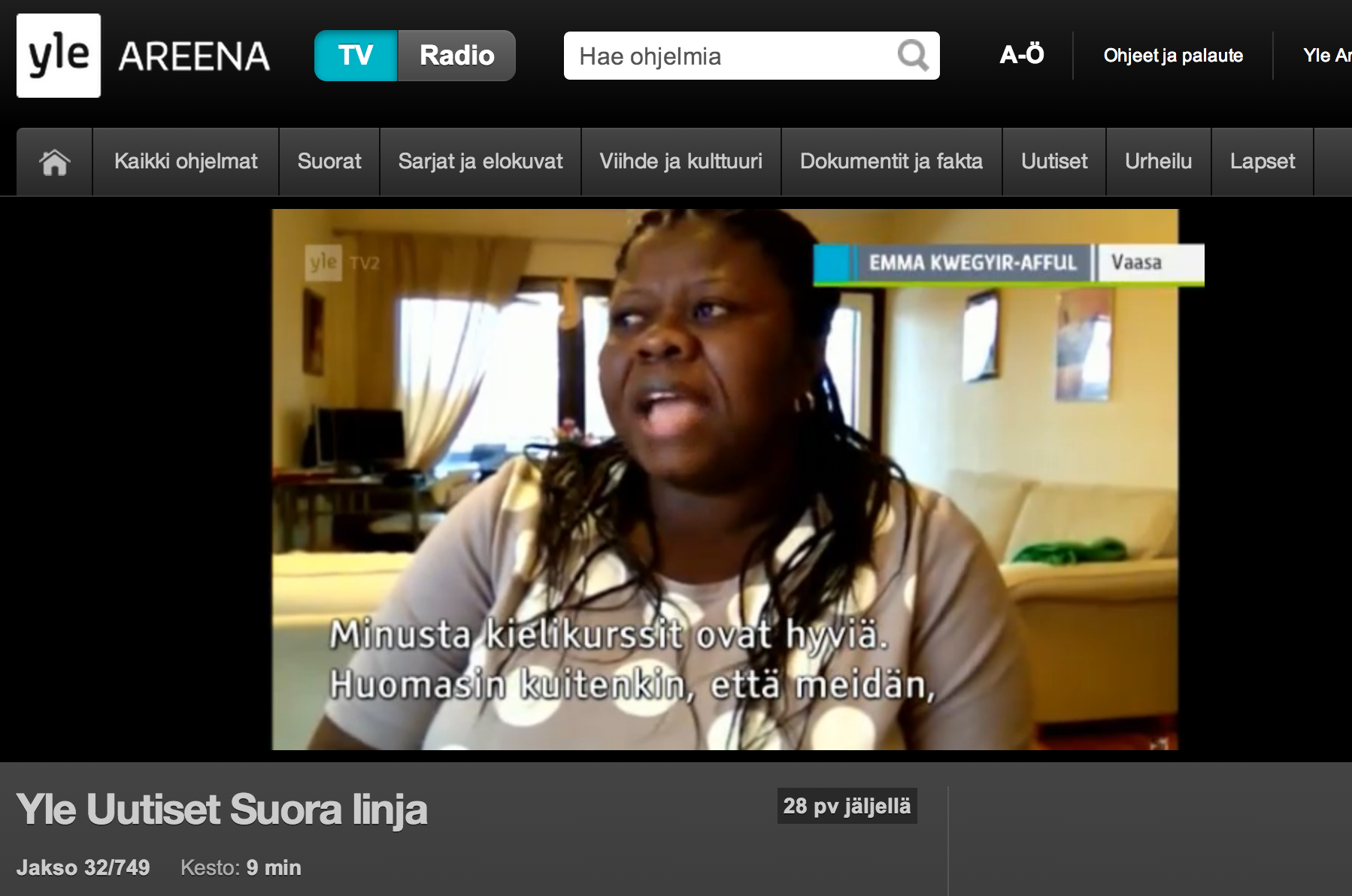
Migrant Tales was happy to see one of our readers and contributors, Stephen Penny, on YLE Suora Linja Monday and Tuesday talking about the challenges some migrants face in learning the Finnish language. While Penny and Emma Kwegyir-Afful offer some good advice on how to improve Finnish-language training, the program raised two important issues that should be investigated further.  

While the host speaks about the importance of Finnish language in integration, he forgets to mention that it’s a two-way process never mind that Swedish is our other official language. This first aspect, in my opinion, reveals an ongoing problem: We speak officially of two-way adaption but the rule and expectation appear to be one-way assimilation.

Are we an inclusive society and do we readily accept people who are different from us?

The other question is how discrimination robs newcomers of employment opportunities. Emma Kwegyir-Afful, a native of Ghana who has lived in Finland for four years, has a degree in nursing from her home country and from Finland as well as a master’s degree in health.

Why is she unemployed?

Kuvankaappaus 2014-3-5 kello 9.32.26

Here’s the question that she raised: Why do they bring white nurses from Spain and directly employ them with only four months of language training? The Spanish nurses learn Finnish at work.

Kwegyir-Afful doesn’t mention “white” Spanish nurses but it would be an interesting matter if ethnic background has anything to do with the matter.

Why does Kwegyir-Afful speak English instead of Finnish on the program raises some questions as well about the effectiveness of the Finnish-language courses she’s taken.

It must be a real blow to self-confidence to be so qualified as her and be unemployed.

Kuvankaappaus 2014-3-5 kello 9.32.59

Penny gave some good advice to newcomers and the authorities.

“You have to own the [integration and language-learning] process yourself and not leave it to Kela or the employment office or to whom ever it may be,” he said, “you have to chase up every day, make phone calls every day and once you start chasing these things and put pressure on certain people, they tend to get done a bit quicker. But it is a frustrating process.”

Penny considered that the Finnish-language program didn’t teach migrants practical things like what type of Finnish you need at work.

  • Previous
  • 1
  • 2
  • 3
  • 4
  • Next
Read more about documentary film
Read more

Recent Posts

  • Finland’s tabloids Iltalehti and Ilta-Sanomat are the pits
  • Riikka Purra’s Dr Jekyll and Mr Hyde mask
  • Double standards
  • Perussuomalaiset: Uusi logo, sama vanha juttu
  • Taco Trump

Recent Comments

  1. Absolutely Socking: Racist Finnish Facebook group against human rights gets flooded with socks on Musta Barbaari’s mother and sister charged by the police in “ethnic profiling” case
  2. Ilkka Nuotio on Pekka Myrskylä: “Tilastot kertovat toista kuin poliittinen keskustelu”
  3. Genrih Soinkara on The war in Ukraine and the Russian-Finnish border crisis are showing Finland’s ugly side
  4. Ahti Tolvanen on Comment by Ahti Tolvanen on the Helsinki +50 conference
  5. Angel Barrientos on Angel Barrientos is one of the kind beacons of Finland’s Chilean community

Archives

  • June 2026
  • May 2026
  • April 2026
  • March 2026
  • February 2026
  • January 2026
  • December 2025
  • November 2025
  • October 2025
  • September 2025
  • August 2025
  • July 2025
  • June 2025
  • May 2025
  • April 2025
  • March 2025
  • February 2025
  • January 2025
  • December 2024
  • November 2024
  • October 2024
  • September 2024
  • August 2024
  • July 2024
  • June 2024
  • May 2024
  • April 2024
  • March 2024
  • February 2024
  • January 2024
  • December 2023
  • November 2023
  • October 2023
  • September 2023
  • August 2023
  • July 2023
  • June 2023
  • May 2023
  • April 2023
  • March 2023
  • February 2023
  • January 2023
  • December 2022
  • November 2022
  • October 2022
  • September 2022
  • August 2022
  • July 2022
  • June 2022
  • May 2022
  • April 2022
  • March 2022
  • February 2022
  • January 2022
  • December 2021
  • November 2021
  • October 2021
  • September 2021
  • August 2021
  • July 2021
  • June 2021
  • May 2021
  • April 2021
  • March 2021
  • February 2021
  • January 2021
  • December 2020
  • November 2020
  • October 2020
  • September 2020
  • August 2020
  • July 2020
  • June 2020
  • May 2020
  • April 2020
  • March 2020
  • February 2020
  • January 2020
  • December 2019
  • November 2019
  • October 2019
  • September 2019
  • August 2019
  • July 2019
  • June 2019
  • May 2019
  • April 2019
  • March 2019
  • February 2019
  • January 2019
  • December 2018
  • November 2018
  • October 2018
  • September 2018
  • August 2018
  • July 2018
  • June 2018
  • May 2018
  • April 2018
  • March 2018
  • February 2018
  • January 2018
  • December 2017
  • November 2017
  • October 2017
  • September 2017
  • August 2017
  • July 2017
  • June 2017
  • May 2017
  • April 2017
  • March 2017
  • February 2017
  • January 2017
  • December 2016
  • November 2016
  • October 2016
  • September 2016
  • August 2016
  • July 2016
  • June 2016
  • May 2016
  • April 2016
  • March 2016
  • February 2016
  • January 2016
  • December 2015
  • November 2015
  • October 2015
  • September 2015
  • August 2015
  • July 2015
  • June 2015
  • May 2015
  • April 2015
  • March 2015
  • February 2015
  • January 2015
  • December 2014
  • November 2014
  • October 2014
  • September 2014
  • August 2014
  • July 2014
  • June 2014
  • May 2014
  • April 2014
  • March 2014
  • February 2014
  • January 2014
  • December 2013
  • November 2013
  • October 2013
  • September 2013
  • August 2013
  • July 2013
  • June 2013
  • May 2013
  • April 2013
  • March 2013
  • February 2013
  • January 2013
  • December 2012
  • November 2012
  • October 2012
  • September 2012
  • August 2012
  • July 2012
  • June 2012
  • May 2012
  • April 2012
  • March 2012
  • February 2012
  • January 2012
  • December 2011
  • November 2011
  • October 2011
  • September 2011
  • August 2011
  • July 2011
  • June 2011
  • May 2011
  • April 2011
  • March 2011
  • February 2011
  • January 2011
  • December 2010
  • November 2010
  • October 2010
  • September 2010
  • August 2010
  • July 2010
  • June 2010
  • May 2010
  • April 2010
  • March 2010
  • February 2010
  • January 2010
  • December 2009
  • November 2009
  • October 2009
  • September 2009
  • August 2009
  • July 2009
  • December 2008
  • November 2008
  • October 2008
  • September 2008
  • August 2008
  • July 2008
  • June 2008
  • May 2008
  • April 2008
  • March 2008
  • February 2008
  • January 2008
  • November 2007
  • October 2007
  • September 2007
  • August 2007
  • July 2007
  • June 2007
  • May 2007

Categories

  • ?? Gia L?c
  • ????? ?????? ????? ???????? ?? ??????
  • ???????
  • @HerraAhmed
  • @mondepasrond
  • @nohatefinland
  • @oula_silver
  • @Varathas
  • A Pakistani family
  • äärioikeisto
  • Abbas Bahmanpour
  • Abdi Muhis
  • Abdirahim Hussein Mohamed
  • Abdirahim Husu Hussein
  • Abdirisak Mahamed
  • About Migrant Tales
  • activism
  • Adam Al-Sawad
  • Adel Abidin
  • Afrofinland
  • Ahmed IJ
  • Ahti Tolvanen
  • Aino Pennanen
  • Aisha Maniar
  • Alan Ali
  • Alan Anstead
  • Alejandro Díaz Ortiz
  • Alekey Bulavsev
  • Aleksander Hemon
  • Aleksanterinliitto
  • Aleksanterinliitto ry
  • Aleksanterinliitto ry:n hallitus
  • Alex Alex
  • Alex Mckie
  • Alexander Nix
  • Alexandra Ayse Albayrak
  • Alexis Neuberg
  • Ali Asaad Hasan Alzuhairi
  • Ali Hossein Mir Ali
  • Ali Rashid
  • Ali Sagal Abdikarim
  • Alina Tsui
  • Aline Müller
  • All categories
  • Aman Heidari
  • Amiirah Salleh-Hoddin & Jana Turk
  • Amin A. Alem
  • Amir Zuhairi
  • Amkelwa Mbekeni
  • Ana María Gutiérrez Sorainen
  • Anachoma
  • Anders Adlecreutz
  • Angeliina Koskinen
  • Anna De Mutiis
  • Anna María Gutiérrez Sorainen
  • Anna-Kaisa Kuusisto ja Jaakko Tuominen
  • Annastiina Kallius
  • Anneli Juise Friman Lindeman
  • Announcement
  • Anonymous
  • Antero Leitzinger
  • anti-black racism
  • Anti-Hate Crime Organisation Finland
  • Anudari Boldbaatar
  • Arshiya Nasser
  • Aspergers Syndrome
  • Asylum Corner
  • Asylum seeker 406
  • Athena Griffin and Joe Feagin
  • Autism
  • Avaaz.org
  • Awale Olad
  • Ayan Said Mohamed
  • AYY
  • Barachiel
  • Bashy Quraishy
  • Beatrice Kabutakapua
  • Beri Jamal
  • Beri Jamal and Enrique Tessieri
  • Bertolt Brecht
  • Boiata
  • Boodi Kabbani
  • Bruno Gronow
  • Carmen Pekkarinen
  • Çelen Oben and Sheila Riikonen
  • Chiara Costa-Virtanen
  • Chiara Costa-Virtanen
  • Chiara Sorbello
  • Christian Thibault
  • Christopher Wylie
  • Clara Dublanc
  • Dana
  • Daniel Malpica
  • Danilo Canguçu
  • David Papineau
  • David Schneider
  • Dexter He
  • Don Flynn
  • Dr Masoud Kamali
  • Dr. Faith Mkwesha
  • Dr. Theodoros Fouskas
  • Edna Chun
  • Eeva Kilpi
  • Emanuela Susheela
  • En castellano
  • ENAR
  • Enrique
  • Enrique Tessieri
  • Enrique Tessieri & Raghad Mchawh
  • Enrique Tessieri & Yahya Rouissi
  • Enrique Tessieri and Muhammed Shire
  • Enrique Tessieri and Sira Moksi
  • Enrique Tessieri and Tom Vandenbosch
  • Enrique Tessieri and Wael Che
  • Enrique Tessieri and Yahya Rouissi
  • Enrique Tessieri and Zimema Mhone
  • Epäluottamusmies
  • EU
  • Europe
  • European Islamophobia Report
  • European Islamophobia Report 2019,
  • European Union
  • Eve Kyntäjä
  • Ezequiel Caldeiro
  • Facebook
  • Fadumo Dayib
  • Faisa Kahiye
  • Farhad Manjoo
  • Fasismi
  • Finland
  • Fizza Qureshi
  • Flyktingar och asyl
  • Foreign Student
  • Fozia Mir-Ali
  • Frances Webber
  • Frida Selim
  • Gareth Rice
  • Ghyslain Vedeaux
  • Global Art Point
  • Great Replacement
  • Habiba Ali
  • Hami Bahadori
  • Hami Bahdori
  • Hamid
  • Hamid Alsaameere
  • Hamid Bahdori
  • Handshake
  • Harmit Athwal
  • Hassan Abdi Ali
  • Hassan Muhumud
  • Heikki Huttunen
  • Heikki Wilenius
  • Helsingin Sanomat
  • Henning van der Hoeven
  • Henrika Mälmsröm
  • Hser Hser
  • Hser Hser ja Mustafa Isman
  • Husein Muhammed
  • Hussain Kazemian
  • Hussain Kazmenian
  • Ibrahim Khan
  • Ida
  • Ignacio Pérez Pérez
  • Iise Ali Hassan
  • Ilari Kaila & Tuomas Kaila
  • Imam Ka
  • inside-an-airport
  • Institute of Race Relations
  • Iraqi asylum seeker
  • IRR European News Team
  • IRR News Team
  • Islamic Society of Norhern FInland
  • Islamic Society of Northern Finland
  • Islamophobia
  • Jacobinmag.com
  • Jallow Momodou
  • Jan Holmberg
  • Jane Elliott
  • Jani Mäkelä
  • Jari Luoto
  • Jari Taponen
  • Jegor Nazarov
  • Jenni Stammeier
  • Jenny Bourne
  • Jessie Daniels
  • Joe Davidow
  • Johannes Koski
  • John D. Foster
  • John Grayson
  • John Marriott
  • Jon Burnett
  • Jorma Härkönen
  • Jos Schuurmans
  • José León Toro Mejías
  • Josue Tumayine
  • Jouni Karnasaari
  • Juan Camilo
  • Jukka Eräkare
  • Julian Abagond
  • Julie Pascoet
  • Jussi Halla-aho
  • Jussi Hallla-aho
  • Jussi Jalonen
  • JusticeDemon
  • Kadar Gelle
  • Kaksoiskansalaisuus
  • Kansainvälinen Mikkeli
  • Kansainvälinen Mikkeli ry
  • Katherine Tonkiss
  • Kati Lepistö
  • Kati van der Hoeven-Lepistö
  • Katie Bell
  • Kättely
  • Kerstin Ögård
  • Keshia Fredua-Mensah & Jamie Schearer
  • Khadidiatou Sylla
  • Khadra Abdirazak Sugulle
  • Kiihotus kansanryhmää vastaan
  • Kirsi Crowley
  • Koko Hubara
  • Kristiina Toivikko
  • Kubra Amini
  • KuRI
  • La Colectiva
  • La incitación al odio
  • Laura Huhtasaari
  • Lauri Finér
  • Leif Hagert
  • Léo Custódio
  • Leo Honka
  • Leontios Christodoulou
  • Lessie Branch
  • Lex Gaudius
  • Leyes de Finlandia
  • Liikkukaa!
  • Linda Hyökki
  • Liz Fekete
  • M. Blanc
  • Maarit Snellman
  • Mahad Sheikh Musse
  • Maija Vilkkumaa
  • Malmin Kebab Pizzeria Port Arthur
  • Marcell Lorincz
  • Mari Aaltola
  • María Paz López
  • Maria Rittis Ikola
  • Maria Tjader
  • Marja-Liisa Tolvanen
  • Mark
  • Markku Heikkinen
  • Marshall Niles
  • Martin Al-Laji
  • Maryan Siyad
  • Matt Carr
  • Mauricio Farah Gebara
  • Media Monitoring Group of Finland
  • Micah J. Christian
  • Michael McEachrane
  • Michele Levoy
  • Michelle Kaila
  • Migrant Tales
  • Migrant Tales Literary
  • Migrantes News
  • Migrants' Rights Network
  • MigriLeaks
  • Mikko Kapanen
  • Miriam Attias and Camila Haavisto
  • Mohamed Adan
  • Mohammad Javid
  • Mohammad M.
  • Monikulttuurisuus
  • Monisha Bhatia and Victoria Canning
  • Mor Ndiaye
  • Muh'ed
  • Muhamed Abdimajed Murshid
  • Muhammed Shire
  • Muhammed Shire and Enrique Tessieri
  • Muhis Azizi
  • Musimenta Dansila
  • Muslimiviha
  • Musulmanes
  • Namir al-Azzawi
  • Natsismi
  • Neurodiversity
  • New Women Connectors
  • Nils Muižnieks
  • No Labels No Walls
  • Noel Dandes
  • Nuor Dawood
  • Omar Khan
  • Otavanmedia
  • Oula Silvennoinen
  • Paco Diop
  • Pakistani family
  • Pentti Stranius
  • Perussuomalaiset
  • perustuslaki
  • Petra Laiti
  • Petri Cederlöf
  • Pia Grochowski
  • Podcast-lukija Bea Bergholm
  • Pohjois – Suomen Islamilainen Yhdyskunta
  • Pohjois Suomen Islamilainen Yhyskunta
  • Polina Kopylova
  • Race Files
  • racism
  • Racism Review
  • Raghad Mchawh
  • Ranska
  • Rashid H. and Migrant Tales
  • Rasismi
  • Raul Perez
  • Rebecka Holm
  • Reem Abu-Hayyeh
  • Refugees
  • Reija Härkönen
  • Remiel
  • Reza Nasri
  • Richard Gresswell
  • Riikka Purra
  • Risto Laakkonen
  • Rita Chahda
  • Ritva Kondi
  • Robito Ibrahim
  • Roble Bashir
  • Rockhaya Sylla
  • Rodolfo Walsh
  • Roger Casale
  • Rostam Atai
  • Roxana Crisólogo Correa
  • Ruth Grove-White
  • Ruth Waweru-Folabit
  • S-worldview
  • Sadio Ali Nuur
  • Sami Rusanen
  • Sandhu Bhamra
  • Sara de Jong
  • Sarah Crowther
  • Sari Alhariri
  • Sarkawt Khalil
  • Sasu
  • Scot Nakagawa
  • Shabana Ahmadzai
  • Shada Islam
  • Sharon Chang blogs
  • Shenita Ann McLean
  • Shirlene Green Newball
  • Sini Savolainen
  • Sira Moksi
  • Sonia K.
  • Sonia Maria Koo
  • Steverp
  • Stop Deportations
  • Suldaan Said Ahmed
  • Suomen mediaseurantakollektiivi
  • Suomen Muslimifoorumi ry
  • Suomen viharikosvastainen yhdistys
  • Suomen viharikosvastainen yhdistys ry
  • Suomi
  • Supermen
  • Susannah
  • Suva
  • Syrjintä
  • Talous
  • Tapio Tuomala
  • Taw Reh
  • Teivo Teivainen
  • The Daily Show
  • The Heino
  • The Supermen
  • Thomas Elfgren
  • Thulfiqar Abdulkarim
  • Tim McGettigan
  • Tino Singh
  • Tito Moustafa Sliem
  • Tobias Hübinette and L. Janelle Dance
  • Transport
  • Trica Danielle Keaton
  • Trilce Garcia
  • Trish Pääkkönen
  • Trish Pääkkönen and Enrique Tessieri
  • Tuulia Reponen
  • Uncategorized
  • UNITED
  • University of Eastern Finland
  • Uyi Osazee
  • Väkivalta
  • Vapaa Liikkuvuus
  • Venla-Sofia Saariaho
  • Vieraskynä
  • W. Che
  • W. Che an Enrique Tessieri
  • Wael Ch.
  • Wan Wei
  • Women for Refugee Women
  • Xaan Kaafi Maxamed Xalane
  • Xassan Kaafi Maxamed Xalane
  • Xassan-Kaafi Mohamed Halane & Enrique Tessieri
  • Yahya Rouissi
  • Yasmin Yusuf
  • Yassen Ghaleb
  • Yle Puhe
  • Yuliet Tresa
  • Yve Shepherd
  • Zahra Khavari
  • Zaker
  • Zalina Ametova
  • Zamzam Ahmed Ali
  • Zeinab Amini ja Soheila Khavari
  • Zimema Mahone and Enrique Tessieri
  • Zimema Mhone
  • Zoila Forss Crespo Moreyra
  • ZT
  • Zulma Sierra
  • Zuzeeko Tegha Abeng
© 2026 Migrant tales | Powered by Minimalist Blog WordPress Theme