Migrant tales
Menu
  • #MakeRacismHistory “In Your Eyes”
  • About Migrant Tales
  • It’s all about Human Rights
  • Literary
  • Migrant Tales Media Monitoring
  • NoHateFinland.org
  • Tales from Europe
Menu

Tag: immigration

Migrant Tales video blog entry: President Sauli Niinistö’s New Year address 2013

Posted on January 2, 2013 by Migrant Tales

Here’s Migrant Tales’ first-ever video blog entry. We plan to publish more of these in 2013 in English, Finnish as well as in other languages. 

This is a first attempt so I’m certain there’s a lot of room for improvement. We’ll get better at them as we get more practice.


President Niinistö’s New Year’s Day address sidelined immigrants and New Finns

Posted on January 1, 2013 by Migrant Tales

President Sauli Niinistö’s first New Year’s Day address* brought up some important issues facing Finland. Some of these were the threat of plugging our budget deficit with debt as well as how greed and selfishness undermine our unity as a society. He did not mentioned once the term immigrant never mind New Finn and our ever-growing cultural diversity.

Kuvankaappaus 2013-1-1 kello 14.06.28

You can listen to President Niinistö’s address (in Finnish and Swedish) here.

President Niinistö said that justice and unity are two crucial factors that are needed today.

”We don’t necessarily do what feels right, but rather what brings us the greatest benefit,” he said criticizing the growing role of greed and selfishness in our society.

Another matter that was mentioned in President Niinistö’s address was the graying of our population. He said that Finland has never in its history faced such an enormous demographic threat as today.

While Finland’s head of state raised some very important points, he did not mention once what immigration and our transformation to an ever-growing culturally diverse society imply never mind the role they will play in spurring economic, social and demographic growth in the new century.

In my opinion, omitting important terms like “multiculturalism” and “immigration” in the president’s address not only reveals a lack of leadership but that these terms are still politically too hot to debate openly by the new head of state of this country.

How can the president ask for the government and politicians to “be bold” and make hard decisions if he omits a crucial term like immigration from his New Year’s day address because it’s too controversial?

President Niinistö addressed the television audience as “citizens.” This means in effect that 3.4% of our population, or those who are not “citizens,” were excluded. Moreover, there are 244,827 people in this country who speak another mother tongue than Finnish, Swedish or Saami.

Taking into account the economic, social and demographic challenges we face today, we cannot afford not to debate the role of cultural diversity because it is important to find proactive solutions that further mutual acceptance, respect and the inclusion of other groups to our culturally diverse society.

Probably we’ll hear those golden words sometime in the near future, when they will form part of the president’s New Year’s Day address.

*You can read the official English transcription of President Niinistö’s address here. 

Approaching hate crimes in Finland: problem solver or angry boss?

Posted on December 20, 2012 by Mark

boss-yellingEnrique mentions an interesting comment from a policeman in Mikkeli talking about racism, who compares racism to being hassled when he returns to his home town because he is now a policeman. The comparison is very poor, but it’s also very telling. It is from our mistakes that we really can learn the most.

In the absence of real knowledge about the effects of being racially abused, harassed or assaulted, the policeman can be seen filling in the gap by trying to draw on his own experience. That’s perfectly normal, but it’s also horribly inadequate and dangerous, particularly when it’s a public official. He assumes that because his comparison is to him a minor thing, then racial abuse must also be a minor thing for other people too.

This illustrates all too well that public officials lack the appropriate training. And without it, they just fill in the blanks with their own made up theories and ‘common sense’, which can have the effect of downplaying the significance for the victim of the abuse they suffer as well as completely failing to see or ask what can be done about it and by whom.

Another key thing strikes me. The policeman sees this as a specifically individual problem: It’s caused by individuals and must be dealt with by the individuals involved. The person being abused must make allowances and ‘adapt’ to the abuse. The policeman doesn’t even begin to ask the question of what factors in society, the community, the life of the people involved are making this possible, more likely, or even tolerated. It’s easier to tell someone they must change their behaviour than to try to change the complex and extensive social world in which we live.

We belong to society in the same way that workers belong to an organisation. When an organisation has poor practices and a culture of incompetence that seeks to explain away mistakes by blaming individuals (the angry boss response!), the opportunities for correcting poor management, planning, education, training, and communication disappear. The same can be said for the phenomenon of racism, which is the culmination not only of individual attitudes, but also a set of conditions and practices within society that makes racism more likely.

A similar attempt to individualise problems happens in other immigrant-related issues. Joblessness, poor acquisition of language skills, poverty, and benefit dependency are all seen as exclusively the fault of the immigrants themselves, who are described variously as incompetent, lazy, uncivilised, exploiters, predators, etc. The faults or inefficiencies in the system are ignored.

Going back to our example, when an employer sets out to blame employees for all the mistakes or inefficiencies in the workplace, the employer has effectively put up a barrier to fixing the problem. Many problems can be solved by simply making it impossible for the error to occur, by changing or modifying equipment, by changing practices, by putting in safeguards and checklists, by educating, by increasing the number of personnel etc. While the education of employees is important,  it is good to remember that it is also the least effective method for diminishing errors or inefficiencies. We need more than just media campaigns to stamp out racism.

We need to look at the conditions in society that make racism acceptable, possible and likely. For some people, the answer is that immigrants are the problem, simply because of their mere presence. Such a hate-filled response is a bit like blaming the patient for a failure in medical care. It’s clearly insane.

If you want to ensure that an immigrant isn’t discriminated against in the market place, then employers need to understand what constitutes discrimination. If the ‘labelling’ is poor, then the patient can easily get the wrong medicine. Employers who tell themselves that an immigrant ‘won’t fit into the existing workplace’ think they are giving the right medicine to their organisation, but actually, they are poisoning their organisation, poisoning the immigrant, and poisoning the wider society, because higher unemployment becomes a bigger problem for society and can feed racism and hate-filled grievance.

Another example is how to implement appropriate ‘alarm’ systems so that we are doing all we can to prevent discrimination. One such alarm would be an indicator of how many immigrants an organisation employs, which can be compared to local or relevant demographic data. This is not an idea about quotas, but a way to draw attention to possible poor employment practices that are disadvantaging immigrants. In some sectors, immigrants are overrepresented in the workforce, and this too can be an alarm bell that they are being exploited, either as cheap labour, or in poor working conditions. How we choose to act on this information as a society is a question on its own, but without alarm bells many situations that threaten social cohesion, justice and normal living for immigrants can all too easily be ignored or go unnoticed.

Any minority in society needs special protection and safeguards. This requires a society wide approach!

Yes, the individual is important. An immigrant needs to be equipped and willing to do the jobs that are available. But it’s all too easy to blame an immigrant if they don’t have exactly the right skills. Yet an employer who ignores the capacities of employees or fails to provide up-to-date training and career advancement opportunities will very quickly find any workforce inadequate.

In just the same way an employer has a responsibility to ensure the staff are properly equipped for the jobs they need to do, so too does society need to equip immigrants to take advantage of their citizenship. Employees have responsibilities too, but the more conscientious the ’employer’, the more they avoid a ‘blame culture’ approach to problems, then the more the ‘staff’ are willing and able to realise their own individual potential.

So, the key message for me is that we need to take a less individual approach to immigration issues, especially racism, and to look at the wider conditions of society that perpetuate racist behaviour and attitudes. We need to build in more safeguards to make discrimination in various ways impossible, or at the very least to build in comprehensive and adequate monitoring and alarm systems that can alert us to the problem and give some clue as to a solution.

We need to get out of this ridiculous blame game and this pointing the finger at individuals – or ethnic groups as if they were individuals. It should be clear to all of us that an individual functions in a society. Ignoring or dismissing ‘the society’ part of the bargain is like an organisation claiming that its own management and workplace practices have no role whatsoever in the behaviour and effectiveness of its staff.

Migrant Tales Literary: Elixir – ?????

Posted on October 14, 2012 by Dana

Elixir – ?????

By Dana

?? ??? ????? ?? ?? ??? ????                    ??????? ???? ???? ? ????

In this unlimited evil and cruel world

Oh GOD  u r the right one and sage

?? ?????? ?? ? ??? ?? ????                  ???? ?? ?? ? ?? ???? ????

In your doorway night and day oh GOD

I whimper all minutes and moments , oh spirit

?? ?? ???? ????? ???????                      ??? ?? ???? ??? ?? ?????

That u, sacrosanct lover, my guide

 U r my root spirit, my moon face.

?? ????? ???? ? ???? ?????                         ??????? ?????? ???????

Fill me with spirit: lily, nightingale and song

U can turn me into a rosary, living and immortal

? ????? ? ??? ???? ??? ???                  ????? ?? ????? ?????? ???

Keeping me a safe distance from deception and duplicity

Visit my existence , banquet and GOD

????? ?? ???? ??? ?? ???                     ??? ?? ??? ????? ?? ?? ? ???

Turn me me into an aromatic light flower

Heal my life from bad and evil

??????? ??????? ?? ????                     ??? ???? ?? ?? ?? ??? ? ????

Oh GOD apparel me with ur spirit

Dress me always with ur colors and visage

???? ????? ????? ???????                            ???????? ???? ? ???? ????

Father, my pleasant Baba, my elixir

My portion, shelter and staddle

??? ?? ??? ?? ?? ???????                         ?????? ???? ?? ?? ?????

Oh GOD u r an unlimitted treasure of jubilatation

A bright  beautiful star and explicit

??? ???? ??? ??????? ? ??                     ??????? ?????? ???? ? ???

 Granting me patience, focus  and path

Showering  me with health, wisdom and happiness.


Women for Refugee Women: ‘The dream I hope and strive for’

Posted on October 4, 2012 by Migrant Tales

Helen came to the UK 9 years ago  after she was imprisoned in Ethiopia for her political activities. She claimed asylum but was refused, and looks after herself and her three children on £50 a week.

I’ve been in the UK since 2003. I have three children aged one, two and four. Things have got easier for me recently because my eldest goes to nursery just round the corner and he loves it. The past year has been very difficult because my daughter was born premature and suffers from reflux and was in hospital for eight months. My first child was also premature and also had reflux but as he get older he is able to keep much more food down, and is sick less, so I am hoping the same will be true of my daughter.

We live in North London and the hospital was two hours away, so I had a journey for four hours a day with my other two children on public transport. Sometimes my very dear friend would look after the other two so that I could go to the hospital on my own, but often I had to take them with me for the long daily journey. At the time I was living off £50 a week including travel so it was very difficult, but I felt it was very important to make sure the mother and baby have a strong bond and that my daughter should be with me every single day.  There were some premature babies on the ward that didn’t have regular visitors and it was very sad to see them crying on their own without the comfort of a mother. I think the daily journey for eight months was really worth it because after all that my daughter is a happy baby who knows her brothers and me very well.

I had to leave Ethiopia in 2003 because I was in trouble with the government.  I was young and had many ideals and protested against them. It is hard for me to remember the person I was that was brave enough to do that. I was imprisoned and many terrible things happened to me while I was in prison. My family was affected too and we still don’t know what has happened to my father. He has been missing for a long time.

My family paid a lot of money to get me out of Ethiopia because they thought that I would be killed if I stayed. I didn’t really know where I was going – just that it had been arranged that I should go somewhere safer.   When I arrived in London the man who was accompanying me took me to a café and then he said he was going to the toilet and just disappeared. I was so frightened. I didn’t know where I was and had no money and didn’t know what to do.  I felt completely lost and without anyone who cared about what happened to me.

I was taken to the Home Office in Croydon to tell them my story and a group of us had to sleep outside in a doorway waiting for it to open. When I finally got to speak to someone and she asked where I had stayed the night she didn’t believe that we had slept outside. From then on she didn’t believe much of what I said and my English wasn’t good enough at that point to be able to explain the situation I was escaping from.

I was taken to a place in Crystal Palace and then to Dover, but my case was refused. My friend let me sleep in her room and she wouldn’t let me walk by the window because I had no status and we were afraid that I would be seen and taken into detention and then sent back to Ethiopia. It was after that that I met my children’s father. He was the wrong man for me, I see that now, and we are not together any more. But many women make this mistake, and they are able to rebuild their lives after that. I am now trying to make what is called a fresh application for asylum. It is very hard to do this because to do so you must present fresh evidence, How do I prove what happened to me nearly ten years ago?

I think what is so difficult is the indecision. It really damages your confidence and I need to build a life. I want to work and contribute. I would like to be an independent person earning my own money. I am not allowed to work, but that is the dream that I strive and hope for.

I know that I have a very happy looking face, with a big smile and dimples which my kids have all inherited but inside I sometimes feel so afraid for my and the kids’ future.  Some days I feel very depressed because I don’t want us to be stuck like this in limbo.

Helen’s name has been changed. She told her story to Sophie Radice.

Read original blog entry here or visit the website.

This piece was reprinted by Migrant Tales with permission.

How much further? A film about the lives of refugees in Greece

Posted on September 14, 2012 by Migrant Tales

This documentary about refugees in Greece is a stark reminder of how Greek authorities and the European Union have turned their backs on asylum seekers and undocumented immigrants. The answer is not higher border fences or fear-mongering by politicians, but finding proactive solutions that take into account the needs and human rights of these people.

Eighty percent of the refugees that come from war-stricken areas flee to neighboring countries like Pakistan, where there are 1.7 million refugees. In the Dadaab refugee camp alone in Kenya there are a staggering 500,000  Somali refugees.

For the sake of comparison, 27 EU states have a total of 1.3 million refugees.

Traveling under a truck is one way that asylum seekers use to cross borders in Europe.

Says the European Council on Refugees and Exiles (ECRE) in a statement about the documentary, How much further:

Filmed in Athens between October 2011 and February 2012, in the midst of social, political and economic turmoil, the documentary raises the voices of those who have fled Afghanistan, Somalia or Sudan hoping to find refuge in Europe. After months or even years on the road, they arrive in Greece, a country whose population is facing the full brunt of the economic crisis and where the asylum and reception systems are completely dysfunctional. Most people see no option but to take to the road again in the hope of reaching a country that can receive them and consider their claim for asylum. But, once they have entered Greece, it is extremely difficult if not impossible to leave the country given the European policies that legally bind them to Greece.

This documentary is the fruit of the cooperation between ECRE, the Greek Forum of Refugees and the film maker Matthias Wiessler, and supported by the European Programme for Integration and Migration (EPIM).

Following the simultaneous premières in Brussels and Athens for World Refugee Day (20 June), How much further? has already been shown in two other screenings so far, at theEuropean Policy Institute and to the students of the Odysseus Network Summer School on European Law and Polciy on Immigration & Asylum.

To see documentary, How much further, click here.


Migrant Tales Literary: ?? Fever

Posted on August 2, 2012 by Dana

By Dana
???? ????????? ?????? ??? ?????? ???    ???? ?? ?? ?? ???????? ? ?? ???? ???
Don’t feel sorry for me, don’t degrade me, don’t make me feel any sicker from my sorrow
Don’t whip me, don’t injure me, don’t send me to the gallows.
??? ???? ???? ??????? ? ????? ?????      ?? ??? ?? ???? ? ?? ???????? ?????
I will be the incarcerated, the shamed silent murky demon
Cooling water on visage and Rosary night.
???? ?? ??? ????? ??? ??? ????? ?????        ??????? ?? ???? ???? ???? ????? ?????
I will lenity on a hard situation and take care of this weeping infant
Rip the chains that will destroy the crypt.

???? ?????? ??????????? ? ????? ?????    ???? ?? ????? ????? ???? ?? ????? ?????
Will free my tress, dance and spread them
Kohl in my eyes, laughter of demons.

???? ?? ?? ????? ??? ????? ????? ?????     ??????? ????????? ?? ??? ????? ?????
I will buss on the head of fingers of this shaky hand
Miniature earrings decorating a spirit’s ears.
???? ?? ????? ??????????? ? ????? ?????       ????? ??? ??? ?? ????? ? ????? ?????
I will spread meaning, wonder and straggler
will change a bitter story to something sweet  and bright.
?? ?? ? ??? ?? ???? ????? ???? ?????           ?? ??? ? ????? ?????????? ? ????? ?????
Will separate a flower from a bad thorn and present it to the Master of the Universe
I promise and will make a pact, song where I will lay.
?? ???? ?? ??? ??? ?? ???? ??? ?????       ????? ?? ??? ???? ????? ????? ?????
Will whine from the corner of  my heart to the presence of a spirit
Slow  in the sphere of the ear, whispering Sophie.
?? ?? ??? ???? ??????????? ???? ????    ?? ?? ??????? ?????? ???? ????? ?????
Oh GOD u r my owner, u r the lover’s wake
Oh GOD help me, I will find the 40 remedies for my life.

Migrants’ Rights Network: The battle on family migration will be a long one, but we can win

Posted on July 16, 2012 by Migrant Tales

By Ruth Grove-White

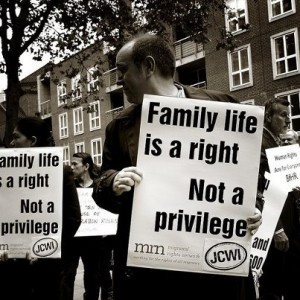
Every now and again there are changes to the immigration rules which even writers for the Daily Mail voice their objections to. The new rules on family migration to the UK, which came into force on Monday, represent a major assault on family life for Brits and migrants alike. Campaigners now need to work on bringing political opposition to the rules out from behind closed doors.

Monday’s changes to the family migration rules are significant: the UK now ranks among the toughest of Western democracies on family reunification policies.

Among other changes, the government has introduced a new income requirement of £18,600 per year for people who wish to bring a foreign partner to live with them in the UK. This means an estimated 47% of the UK working population would not qualify to bring their overseas spouse or partner here in the future.

The Home Office estimates up to 18,500 people every year will be prevented from coming to join family members here as a result. This may be helpful in inching the government towards lower net migration levels, but will be devastating for the families who are kept apart as a result.

Although the family migration changes have been politically controversial, much opposition has been confined to back rooms in Whitehall rather than aired in public. Press reports earlier this year hinted at internal battles between Lib Dems and Conservatives on family migration, with children and families minister Sarah Teather rumoured to be particularly resistant to tough rule changes.

Although these issues were officially resolved, behind closed doors there is reportedly still opposition among some Lib Dem MPs to the new rules.

Labour has also found itself in a tangled position over the family migration changes. Despite vocal opposition to the family rules among key players such as front bencher Kate Green MP and home affairs committee chair Keith Vaz MP, the Labour front bench has not yet expressed a clear position against these rules.

Still in the midst of a policy review, there has seemingly been reluctance to wade into a debate that could result in Labour once again being painted as soft on immigration. But never say never. What is certain is that the fight for family rights will continue and it has the scope to build political support.

Now that the family migration rules have come into force there will be growing evidence about their negative impacts, with particular problems anticipated for young couples, Asian families, and in parts of the UK with low average incomes.

Families who are affected can help to overturn these rules in the future by writing to their MPs, joining campaigns and building solidarity with others who are affected.

If the evidence can be amassed, Monday’s changes potentially offer up a future political opportunity: to speak out on an immigration issue that will affect thousands of Brits as well as migrants in the UK. And as the next general election draws nearer we hope to see quiet support develop into concerted political leadership, that points the UK in a different direction on family migration.

This article first appeared on the Left Foot Forward website on 11th July 2012.

Read original story here.

This piece was reprinted by Migrant Tales with permission.


Migrants’ Rights Network: Attitudes to immigration, polarisation or convergence?

Posted on July 3, 2012 by Migrant Tales
By Juan Camilo
Research published last month shows that attitudes to immigration in Britain are more polarised than in other countries, with older, poorer, and less educated people tending to have much more negative views than younger, well educated, financially secure and ethnically mixed people. Will a generational shift bring about more positive attitudes to migration or will growing inequality lead to marked divides in attitudes?

High levels of concern in the UK over immigration expressed by public opinion through polling have been taken as a cue by political leaders, sections of the media and those opposing immigration to favour a tougher approach to immigration policy. The strong sentiment that migration must be reduced has been interpreted by the current government as a  ‘mandate’ for their policy of reducing net-immigration.

Recent studies have attempted to look more closely at the question of public attitudes to immigration, yielding a much more nuanced picture. Rob Ford’s recent report, Parochial and Cosmopolitan Britain is a welcome addition to our knowledge of attitudes on migration. It highlights differences in attitudes according to the socio-economic profile of respondents published that hint to some optimism but also alerts to challenges about public opinion on immigration in the future.

We already know that opinion on immigration is not monolithic once you start asking about different types of migrants. Last year’s report by the Migration Observatory’s on understanding public opinion found that, when given the chance to differentiate between different types of migrants and routes where they would like to see reductions in levels of immigration, people tend to state a preference for reduction in low skilled workers, extended family and asylum seekers and much less appetite for reductions in students and high skilled workers. The paradox is that the government has strong policy levers for the latter but limited options on family, asylum seekers and low-skilled European workers so they are forced to make the largest cuts amongst those groups that public opinion actually do not see as a problem.

Rob Ford’s analysis is innovative in looking into the differences in attitudes between different population groups. His data, from the Transatlantic Trends annual survey on attitudes to migration across Europe and in North America, confirms that larger proportions of respondents in the UK have negative views on immigration than in most other countries. However, he also found that British respondents were also more divided in their views along generational and socio-economic lines. Young respondents, those that are better educated and financially well-off and the children of migrants tend to have more positive views than those who are older, less educated and poorer.

These factors often overlap, giving rise to distinct groups with varying attitudes to immigration:

‘The cumulative effects of these overlapping differences lead to a strong social polarization in immigration attitudes. At one pole are “parochial pensioners” who grew up in an immobile, mono-ethnic society where university education was a preserve of the elite, and contact with someone from another country was a rarity. At the other pole are the “cosmopolitan young”: highly educated, economically secure, and used to effortless travel across borders and regular mixing with people of different ethnic and racial backgrounds.’

Ford suggests that in the future, as the young, cosmopolitan and educated replaces the older generation, tough policies towards immigration could alienate them as voters opening up a political space for more positive approaches on the part of political parties. On the other hand, older voters are much more likely to vote and political parties will be wary of losing their vote on this issue in the short term.

These conclusions could be tempered in two ways. The first, with regards to the older generation, is that more work needs to be done to find creative ways to reach older people who often find the changes brought about by migration more challenging. There are already examples of projects that try to bring this generation closer to new migrants to develop more personal relations with the newcomers and get a better understanding of who they are and why they are here.  One example is the failte-isteach initiative in Ireland where older volunteers teach English to new migrants. This type of initiative builds on the fact that the elderly are often involved in community activities in their areas to bring them in contact with newcomers who can also benefit from their support.

The second issue is related to inequality. Britain is amongst the most unequal countries in the West and inequality seems to be increasing. Education and economic well-being, two factors identified by Ford, are important in this increase.  Inequality is a big issue for migrants generally: they are often over-represented amongst those in low paid jobs and with poor housing and health outcomes. But Ford’s findings add another layer of concern about inequality to those direct effects: that higher inequality could bring harsher views on immigration amongst those who are at on the lower rungs. Perhaps it’s not the top concern when thinking about inequality but it is a further issue to think ahead, whether its permanence and growth mean an even more polarised debate on immigration rather than a convergence of views and attitudes.

Read original story here.

This piece was reprinted by Migrant Tales with permission.


Family reunification: Interior Ministry calls for comments

Posted on May 21, 2012 by JusticeDemon

The Finnish Ministry of the Interior recently published a working group report on the present state of family reunification of refugees and displaced persons in Finland. This report seeks to clarify the background to family reunification and to examine the prospects for amending the associated regulations.

The report was prepared in response to the programme of the Katainen government, which envisages harmonisation of family reunification practices in Finland with those of the other Nordic countries. The working group was an internal committee of civil servants from the Ministry’s Immigration Department.

There is nothing objectionable in principle about a closed ministerial committee preparing a preliminary factual review. However, this report also includes one very important “proposal” that is, to all intents and purposes, a policy recommendation. This is described in the abstract as follows:

Selvityksessä ehdotetaan, että asetetaan hanke ulkomaalaislain perhesidelupia koskevien säännösten muuttamiseksi tavoitteena Suomessa jo käytössä olevan toimeentuloedellytyksen laajentaminen koskemaan myös humanitaarista suojelua saavien perheen yhdistämistilanteita.

“The report proposes a project to amend the provisions of the Aliens Act governing permits issued on family grounds, with a view to extending the income condition already applied in Finland to include reunification of the families of recipients of humanitarian protection.”

This would scrap the exemption that humanitarian immigrants currently enjoy from the income condition that otherwise governs family reunification.

It is interesting that this exemption would nevertheless continue to apply to the families of citizens of Finland and other Nordic countries.

In concrete terms, and applying current rates, this means that a person displaced by civil war, for example, would have to demonstrate a net monthly income of EUR 1,530 to bring a spouse to Finland plus a further EUR 450 for each additional child. The national average monthly wage in Finland is currently just over EUR 3,000 before taxes and contributions.

The Interior Ministry has requested comments on the report by no later than 6 July 2012.

  • Previous
  • 1
  • …
  • 3
  • 4
  • 5
  • 6
  • 7
  • 8
  • 9
  • …
  • 13
  • Next
Read more about documentary film
Read more

Recent Posts

  • Finland’s tabloids Iltalehti and Ilta-Sanomat are the pits
  • Riikka Purra’s Dr Jekyll and Mr Hyde mask
  • Double standards
  • Perussuomalaiset: Uusi logo, sama vanha juttu
  • Taco Trump

Recent Comments

  1. Absolutely Socking: Racist Finnish Facebook group against human rights gets flooded with socks on Musta Barbaari’s mother and sister charged by the police in “ethnic profiling” case
  2. Ilkka Nuotio on Pekka Myrskylä: “Tilastot kertovat toista kuin poliittinen keskustelu”
  3. Genrih Soinkara on The war in Ukraine and the Russian-Finnish border crisis are showing Finland’s ugly side
  4. Ahti Tolvanen on Comment by Ahti Tolvanen on the Helsinki +50 conference
  5. Angel Barrientos on Angel Barrientos is one of the kind beacons of Finland’s Chilean community

Archives

  • June 2026
  • May 2026
  • April 2026
  • March 2026
  • February 2026
  • January 2026
  • December 2025
  • November 2025
  • October 2025
  • September 2025
  • August 2025
  • July 2025
  • June 2025
  • May 2025
  • April 2025
  • March 2025
  • February 2025
  • January 2025
  • December 2024
  • November 2024
  • October 2024
  • September 2024
  • August 2024
  • July 2024
  • June 2024
  • May 2024
  • April 2024
  • March 2024
  • February 2024
  • January 2024
  • December 2023
  • November 2023
  • October 2023
  • September 2023
  • August 2023
  • July 2023
  • June 2023
  • May 2023
  • April 2023
  • March 2023
  • February 2023
  • January 2023
  • December 2022
  • November 2022
  • October 2022
  • September 2022
  • August 2022
  • July 2022
  • June 2022
  • May 2022
  • April 2022
  • March 2022
  • February 2022
  • January 2022
  • December 2021
  • November 2021
  • October 2021
  • September 2021
  • August 2021
  • July 2021
  • June 2021
  • May 2021
  • April 2021
  • March 2021
  • February 2021
  • January 2021
  • December 2020
  • November 2020
  • October 2020
  • September 2020
  • August 2020
  • July 2020
  • June 2020
  • May 2020
  • April 2020
  • March 2020
  • February 2020
  • January 2020
  • December 2019
  • November 2019
  • October 2019
  • September 2019
  • August 2019
  • July 2019
  • June 2019
  • May 2019
  • April 2019
  • March 2019
  • February 2019
  • January 2019
  • December 2018
  • November 2018
  • October 2018
  • September 2018
  • August 2018
  • July 2018
  • June 2018
  • May 2018
  • April 2018
  • March 2018
  • February 2018
  • January 2018
  • December 2017
  • November 2017
  • October 2017
  • September 2017
  • August 2017
  • July 2017
  • June 2017
  • May 2017
  • April 2017
  • March 2017
  • February 2017
  • January 2017
  • December 2016
  • November 2016
  • October 2016
  • September 2016
  • August 2016
  • July 2016
  • June 2016
  • May 2016
  • April 2016
  • March 2016
  • February 2016
  • January 2016
  • December 2015
  • November 2015
  • October 2015
  • September 2015
  • August 2015
  • July 2015
  • June 2015
  • May 2015
  • April 2015
  • March 2015
  • February 2015
  • January 2015
  • December 2014
  • November 2014
  • October 2014
  • September 2014
  • August 2014
  • July 2014
  • June 2014
  • May 2014
  • April 2014
  • March 2014
  • February 2014
  • January 2014
  • December 2013
  • November 2013
  • October 2013
  • September 2013
  • August 2013
  • July 2013
  • June 2013
  • May 2013
  • April 2013
  • March 2013
  • February 2013
  • January 2013
  • December 2012
  • November 2012
  • October 2012
  • September 2012
  • August 2012
  • July 2012
  • June 2012
  • May 2012
  • April 2012
  • March 2012
  • February 2012
  • January 2012
  • December 2011
  • November 2011
  • October 2011
  • September 2011
  • August 2011
  • July 2011
  • June 2011
  • May 2011
  • April 2011
  • March 2011
  • February 2011
  • January 2011
  • December 2010
  • November 2010
  • October 2010
  • September 2010
  • August 2010
  • July 2010
  • June 2010
  • May 2010
  • April 2010
  • March 2010
  • February 2010
  • January 2010
  • December 2009
  • November 2009
  • October 2009
  • September 2009
  • August 2009
  • July 2009
  • December 2008
  • November 2008
  • October 2008
  • September 2008
  • August 2008
  • July 2008
  • June 2008
  • May 2008
  • April 2008
  • March 2008
  • February 2008
  • January 2008
  • November 2007
  • October 2007
  • September 2007
  • August 2007
  • July 2007
  • June 2007
  • May 2007

Categories

  • ?? Gia L?c
  • ????? ?????? ????? ???????? ?? ??????
  • ???????
  • @HerraAhmed
  • @mondepasrond
  • @nohatefinland
  • @oula_silver
  • @Varathas
  • A Pakistani family
  • äärioikeisto
  • Abbas Bahmanpour
  • Abdi Muhis
  • Abdirahim Hussein Mohamed
  • Abdirahim Husu Hussein
  • Abdirisak Mahamed
  • About Migrant Tales
  • activism
  • Adam Al-Sawad
  • Adel Abidin
  • Afrofinland
  • Ahmed IJ
  • Ahti Tolvanen
  • Aino Pennanen
  • Aisha Maniar
  • Alan Ali
  • Alan Anstead
  • Alejandro Díaz Ortiz
  • Alekey Bulavsev
  • Aleksander Hemon
  • Aleksanterinliitto
  • Aleksanterinliitto ry
  • Aleksanterinliitto ry:n hallitus
  • Alex Alex
  • Alex Mckie
  • Alexander Nix
  • Alexandra Ayse Albayrak
  • Alexis Neuberg
  • Ali Asaad Hasan Alzuhairi
  • Ali Hossein Mir Ali
  • Ali Rashid
  • Ali Sagal Abdikarim
  • Alina Tsui
  • Aline Müller
  • All categories
  • Aman Heidari
  • Amiirah Salleh-Hoddin & Jana Turk
  • Amin A. Alem
  • Amir Zuhairi
  • Amkelwa Mbekeni
  • Ana María Gutiérrez Sorainen
  • Anachoma
  • Anders Adlecreutz
  • Angeliina Koskinen
  • Anna De Mutiis
  • Anna María Gutiérrez Sorainen
  • Anna-Kaisa Kuusisto ja Jaakko Tuominen
  • Annastiina Kallius
  • Anneli Juise Friman Lindeman
  • Announcement
  • Anonymous
  • Antero Leitzinger
  • anti-black racism
  • Anti-Hate Crime Organisation Finland
  • Anudari Boldbaatar
  • Arshiya Nasser
  • Aspergers Syndrome
  • Asylum Corner
  • Asylum seeker 406
  • Athena Griffin and Joe Feagin
  • Autism
  • Avaaz.org
  • Awale Olad
  • Ayan Said Mohamed
  • AYY
  • Barachiel
  • Bashy Quraishy
  • Beatrice Kabutakapua
  • Beri Jamal
  • Beri Jamal and Enrique Tessieri
  • Bertolt Brecht
  • Boiata
  • Boodi Kabbani
  • Bruno Gronow
  • Carmen Pekkarinen
  • Çelen Oben and Sheila Riikonen
  • Chiara Costa-Virtanen
  • Chiara Costa-Virtanen
  • Chiara Sorbello
  • Christian Thibault
  • Christopher Wylie
  • Clara Dublanc
  • Dana
  • Daniel Malpica
  • Danilo Canguçu
  • David Papineau
  • David Schneider
  • Dexter He
  • Don Flynn
  • Dr Masoud Kamali
  • Dr. Faith Mkwesha
  • Dr. Theodoros Fouskas
  • Edna Chun
  • Eeva Kilpi
  • Emanuela Susheela
  • En castellano
  • ENAR
  • Enrique
  • Enrique Tessieri
  • Enrique Tessieri & Raghad Mchawh
  • Enrique Tessieri & Yahya Rouissi
  • Enrique Tessieri and Muhammed Shire
  • Enrique Tessieri and Sira Moksi
  • Enrique Tessieri and Tom Vandenbosch
  • Enrique Tessieri and Wael Che
  • Enrique Tessieri and Yahya Rouissi
  • Enrique Tessieri and Zimema Mhone
  • Epäluottamusmies
  • EU
  • Europe
  • European Islamophobia Report
  • European Islamophobia Report 2019,
  • European Union
  • Eve Kyntäjä
  • Ezequiel Caldeiro
  • Facebook
  • Fadumo Dayib
  • Faisa Kahiye
  • Farhad Manjoo
  • Fasismi
  • Finland
  • Fizza Qureshi
  • Flyktingar och asyl
  • Foreign Student
  • Fozia Mir-Ali
  • Frances Webber
  • Frida Selim
  • Gareth Rice
  • Ghyslain Vedeaux
  • Global Art Point
  • Great Replacement
  • Habiba Ali
  • Hami Bahadori
  • Hami Bahdori
  • Hamid
  • Hamid Alsaameere
  • Hamid Bahdori
  • Handshake
  • Harmit Athwal
  • Hassan Abdi Ali
  • Hassan Muhumud
  • Heikki Huttunen
  • Heikki Wilenius
  • Helsingin Sanomat
  • Henning van der Hoeven
  • Henrika Mälmsröm
  • Hser Hser
  • Hser Hser ja Mustafa Isman
  • Husein Muhammed
  • Hussain Kazemian
  • Hussain Kazmenian
  • Ibrahim Khan
  • Ida
  • Ignacio Pérez Pérez
  • Iise Ali Hassan
  • Ilari Kaila & Tuomas Kaila
  • Imam Ka
  • inside-an-airport
  • Institute of Race Relations
  • Iraqi asylum seeker
  • IRR European News Team
  • IRR News Team
  • Islamic Society of Norhern FInland
  • Islamic Society of Northern Finland
  • Islamophobia
  • Jacobinmag.com
  • Jallow Momodou
  • Jan Holmberg
  • Jane Elliott
  • Jani Mäkelä
  • Jari Luoto
  • Jari Taponen
  • Jegor Nazarov
  • Jenni Stammeier
  • Jenny Bourne
  • Jessie Daniels
  • Joe Davidow
  • Johannes Koski
  • John D. Foster
  • John Grayson
  • John Marriott
  • Jon Burnett
  • Jorma Härkönen
  • Jos Schuurmans
  • José León Toro Mejías
  • Josue Tumayine
  • Jouni Karnasaari
  • Juan Camilo
  • Jukka Eräkare
  • Julian Abagond
  • Julie Pascoet
  • Jussi Halla-aho
  • Jussi Hallla-aho
  • Jussi Jalonen
  • JusticeDemon
  • Kadar Gelle
  • Kaksoiskansalaisuus
  • Kansainvälinen Mikkeli
  • Kansainvälinen Mikkeli ry
  • Katherine Tonkiss
  • Kati Lepistö
  • Kati van der Hoeven-Lepistö
  • Katie Bell
  • Kättely
  • Kerstin Ögård
  • Keshia Fredua-Mensah & Jamie Schearer
  • Khadidiatou Sylla
  • Khadra Abdirazak Sugulle
  • Kiihotus kansanryhmää vastaan
  • Kirsi Crowley
  • Koko Hubara
  • Kristiina Toivikko
  • Kubra Amini
  • KuRI
  • La Colectiva
  • La incitación al odio
  • Laura Huhtasaari
  • Lauri Finér
  • Leif Hagert
  • Léo Custódio
  • Leo Honka
  • Leontios Christodoulou
  • Lessie Branch
  • Lex Gaudius
  • Leyes de Finlandia
  • Liikkukaa!
  • Linda Hyökki
  • Liz Fekete
  • M. Blanc
  • Maarit Snellman
  • Mahad Sheikh Musse
  • Maija Vilkkumaa
  • Malmin Kebab Pizzeria Port Arthur
  • Marcell Lorincz
  • Mari Aaltola
  • María Paz López
  • Maria Rittis Ikola
  • Maria Tjader
  • Marja-Liisa Tolvanen
  • Mark
  • Markku Heikkinen
  • Marshall Niles
  • Martin Al-Laji
  • Maryan Siyad
  • Matt Carr
  • Mauricio Farah Gebara
  • Media Monitoring Group of Finland
  • Micah J. Christian
  • Michael McEachrane
  • Michele Levoy
  • Michelle Kaila
  • Migrant Tales
  • Migrant Tales Literary
  • Migrantes News
  • Migrants' Rights Network
  • MigriLeaks
  • Mikko Kapanen
  • Miriam Attias and Camila Haavisto
  • Mohamed Adan
  • Mohammad Javid
  • Mohammad M.
  • Monikulttuurisuus
  • Monisha Bhatia and Victoria Canning
  • Mor Ndiaye
  • Muh'ed
  • Muhamed Abdimajed Murshid
  • Muhammed Shire
  • Muhammed Shire and Enrique Tessieri
  • Muhis Azizi
  • Musimenta Dansila
  • Muslimiviha
  • Musulmanes
  • Namir al-Azzawi
  • Natsismi
  • Neurodiversity
  • New Women Connectors
  • Nils Muižnieks
  • No Labels No Walls
  • Noel Dandes
  • Nuor Dawood
  • Omar Khan
  • Otavanmedia
  • Oula Silvennoinen
  • Paco Diop
  • Pakistani family
  • Pentti Stranius
  • Perussuomalaiset
  • perustuslaki
  • Petra Laiti
  • Petri Cederlöf
  • Pia Grochowski
  • Podcast-lukija Bea Bergholm
  • Pohjois – Suomen Islamilainen Yhdyskunta
  • Pohjois Suomen Islamilainen Yhyskunta
  • Polina Kopylova
  • Race Files
  • racism
  • Racism Review
  • Raghad Mchawh
  • Ranska
  • Rashid H. and Migrant Tales
  • Rasismi
  • Raul Perez
  • Rebecka Holm
  • Reem Abu-Hayyeh
  • Refugees
  • Reija Härkönen
  • Remiel
  • Reza Nasri
  • Richard Gresswell
  • Riikka Purra
  • Risto Laakkonen
  • Rita Chahda
  • Ritva Kondi
  • Robito Ibrahim
  • Roble Bashir
  • Rockhaya Sylla
  • Rodolfo Walsh
  • Roger Casale
  • Rostam Atai
  • Roxana Crisólogo Correa
  • Ruth Grove-White
  • Ruth Waweru-Folabit
  • S-worldview
  • Sadio Ali Nuur
  • Sami Rusanen
  • Sandhu Bhamra
  • Sara de Jong
  • Sarah Crowther
  • Sari Alhariri
  • Sarkawt Khalil
  • Sasu
  • Scot Nakagawa
  • Shabana Ahmadzai
  • Shada Islam
  • Sharon Chang blogs
  • Shenita Ann McLean
  • Shirlene Green Newball
  • Sini Savolainen
  • Sira Moksi
  • Sonia K.
  • Sonia Maria Koo
  • Steverp
  • Stop Deportations
  • Suldaan Said Ahmed
  • Suomen mediaseurantakollektiivi
  • Suomen Muslimifoorumi ry
  • Suomen viharikosvastainen yhdistys
  • Suomen viharikosvastainen yhdistys ry
  • Suomi
  • Supermen
  • Susannah
  • Suva
  • Syrjintä
  • Talous
  • Tapio Tuomala
  • Taw Reh
  • Teivo Teivainen
  • The Daily Show
  • The Heino
  • The Supermen
  • Thomas Elfgren
  • Thulfiqar Abdulkarim
  • Tim McGettigan
  • Tino Singh
  • Tito Moustafa Sliem
  • Tobias Hübinette and L. Janelle Dance
  • Transport
  • Trica Danielle Keaton
  • Trilce Garcia
  • Trish Pääkkönen
  • Trish Pääkkönen and Enrique Tessieri
  • Tuulia Reponen
  • Uncategorized
  • UNITED
  • University of Eastern Finland
  • Uyi Osazee
  • Väkivalta
  • Vapaa Liikkuvuus
  • Venla-Sofia Saariaho
  • Vieraskynä
  • W. Che
  • W. Che an Enrique Tessieri
  • Wael Ch.
  • Wan Wei
  • Women for Refugee Women
  • Xaan Kaafi Maxamed Xalane
  • Xassan Kaafi Maxamed Xalane
  • Xassan-Kaafi Mohamed Halane & Enrique Tessieri
  • Yahya Rouissi
  • Yasmin Yusuf
  • Yassen Ghaleb
  • Yle Puhe
  • Yuliet Tresa
  • Yve Shepherd
  • Zahra Khavari
  • Zaker
  • Zalina Ametova
  • Zamzam Ahmed Ali
  • Zeinab Amini ja Soheila Khavari
  • Zimema Mahone and Enrique Tessieri
  • Zimema Mhone
  • Zoila Forss Crespo Moreyra
  • ZT
  • Zulma Sierra
  • Zuzeeko Tegha Abeng
© 2026 Migrant tales | Powered by Minimalist Blog WordPress Theme