Migrant tales
Menu
  • #MakeRacismHistory “In Your Eyes”
  • About Migrant Tales
  • It’s all about Human Rights
  • Literary
  • Migrant Tales Media Monitoring
  • NoHateFinland.org
  • Tales from Europe
Menu

Tag: Immigrants

Approaching hate crimes in Finland: problem solver or angry boss?

Posted on December 20, 2012 by Mark

boss-yellingEnrique mentions an interesting comment from a policeman in Mikkeli talking about racism, who compares racism to being hassled when he returns to his home town because he is now a policeman. The comparison is very poor, but it’s also very telling. It is from our mistakes that we really can learn the most.

In the absence of real knowledge about the effects of being racially abused, harassed or assaulted, the policeman can be seen filling in the gap by trying to draw on his own experience. That’s perfectly normal, but it’s also horribly inadequate and dangerous, particularly when it’s a public official. He assumes that because his comparison is to him a minor thing, then racial abuse must also be a minor thing for other people too.

This illustrates all too well that public officials lack the appropriate training. And without it, they just fill in the blanks with their own made up theories and ‘common sense’, which can have the effect of downplaying the significance for the victim of the abuse they suffer as well as completely failing to see or ask what can be done about it and by whom.

Another key thing strikes me. The policeman sees this as a specifically individual problem: It’s caused by individuals and must be dealt with by the individuals involved. The person being abused must make allowances and ‘adapt’ to the abuse. The policeman doesn’t even begin to ask the question of what factors in society, the community, the life of the people involved are making this possible, more likely, or even tolerated. It’s easier to tell someone they must change their behaviour than to try to change the complex and extensive social world in which we live.

We belong to society in the same way that workers belong to an organisation. When an organisation has poor practices and a culture of incompetence that seeks to explain away mistakes by blaming individuals (the angry boss response!), the opportunities for correcting poor management, planning, education, training, and communication disappear. The same can be said for the phenomenon of racism, which is the culmination not only of individual attitudes, but also a set of conditions and practices within society that makes racism more likely.

A similar attempt to individualise problems happens in other immigrant-related issues. Joblessness, poor acquisition of language skills, poverty, and benefit dependency are all seen as exclusively the fault of the immigrants themselves, who are described variously as incompetent, lazy, uncivilised, exploiters, predators, etc. The faults or inefficiencies in the system are ignored.

Going back to our example, when an employer sets out to blame employees for all the mistakes or inefficiencies in the workplace, the employer has effectively put up a barrier to fixing the problem. Many problems can be solved by simply making it impossible for the error to occur, by changing or modifying equipment, by changing practices, by putting in safeguards and checklists, by educating, by increasing the number of personnel etc. While the education of employees is important,  it is good to remember that it is also the least effective method for diminishing errors or inefficiencies. We need more than just media campaigns to stamp out racism.

We need to look at the conditions in society that make racism acceptable, possible and likely. For some people, the answer is that immigrants are the problem, simply because of their mere presence. Such a hate-filled response is a bit like blaming the patient for a failure in medical care. It’s clearly insane.

If you want to ensure that an immigrant isn’t discriminated against in the market place, then employers need to understand what constitutes discrimination. If the ‘labelling’ is poor, then the patient can easily get the wrong medicine. Employers who tell themselves that an immigrant ‘won’t fit into the existing workplace’ think they are giving the right medicine to their organisation, but actually, they are poisoning their organisation, poisoning the immigrant, and poisoning the wider society, because higher unemployment becomes a bigger problem for society and can feed racism and hate-filled grievance.

Another example is how to implement appropriate ‘alarm’ systems so that we are doing all we can to prevent discrimination. One such alarm would be an indicator of how many immigrants an organisation employs, which can be compared to local or relevant demographic data. This is not an idea about quotas, but a way to draw attention to possible poor employment practices that are disadvantaging immigrants. In some sectors, immigrants are overrepresented in the workforce, and this too can be an alarm bell that they are being exploited, either as cheap labour, or in poor working conditions. How we choose to act on this information as a society is a question on its own, but without alarm bells many situations that threaten social cohesion, justice and normal living for immigrants can all too easily be ignored or go unnoticed.

Any minority in society needs special protection and safeguards. This requires a society wide approach!

Yes, the individual is important. An immigrant needs to be equipped and willing to do the jobs that are available. But it’s all too easy to blame an immigrant if they don’t have exactly the right skills. Yet an employer who ignores the capacities of employees or fails to provide up-to-date training and career advancement opportunities will very quickly find any workforce inadequate.

In just the same way an employer has a responsibility to ensure the staff are properly equipped for the jobs they need to do, so too does society need to equip immigrants to take advantage of their citizenship. Employees have responsibilities too, but the more conscientious the ’employer’, the more they avoid a ‘blame culture’ approach to problems, then the more the ‘staff’ are willing and able to realise their own individual potential.

So, the key message for me is that we need to take a less individual approach to immigration issues, especially racism, and to look at the wider conditions of society that perpetuate racist behaviour and attitudes. We need to build in more safeguards to make discrimination in various ways impossible, or at the very least to build in comprehensive and adequate monitoring and alarm systems that can alert us to the problem and give some clue as to a solution.

We need to get out of this ridiculous blame game and this pointing the finger at individuals – or ethnic groups as if they were individuals. It should be clear to all of us that an individual functions in a society. Ignoring or dismissing ‘the society’ part of the bargain is like an organisation claiming that its own management and workplace practices have no role whatsoever in the behaviour and effectiveness of its staff.

Ajankohtainen kakkonen: Four immigrant candidates

Posted on October 4, 2012 by Migrant Tales

There’s an interesting news documentary this week on Ajankohtainen kakkonen about immigrant candidates taking part in the October 28 municipal elections. One matter that bothered me about the program was the use of the word mamu by the reporters when referring to the candidates.

Mamu is the shortened word for maahanmuuttajia, or immigrant. There are mixed opinions among immigrants about what the term implies.

Another matter that the program lacked was that we didn’t get any clear idea what these candidates stand for on major municipal issues like health care, pensioners, high unemployment and social exclusion of young people.

As immigrant candidates, I would have been interested in knowing what their stand was on the role of cultural diversity in Finland.

There was, however, one Romanian candidate of the Perussuomalaiset (PS) party, Cristian Tudose, who said he was running because Finns were too naive to protect their culture.

”Finns need foreigners to protect their culture because Finns are too naive and cannot say loudly enough that, ‘hey, now we do things our way here.’”

One of the matters that has always worried me about some immigrants who move to this country is how their own prejudices find a cosy home in Finland. Romania is far from being a model country for cultural diversity if we take into account the shameful plight of the Romany minority there.

In the last municipal elections, 96,373 immigrants were eligible to vote but only 19.6% did so. Today that number has grown by about 40,000 to 137,005. How many will vote is a good open question.

Linus Atarah, iCount campaign coordinator, said that the big problem concerning immigrant voters is that many do not know enough about the parties never mind for which candidate they should vote for.

Some 400 immigrants are running for office in the upcoming municipal elections.


Feeding Somalis and poor immigrants to the loan sharks of Finland

Posted on September 19, 2012 by Migrant Tales

Migrant Tales wrote in May about the high cost, hassle and red tape some Somalis face to bring their relatives to Finland. Since it appears that the aim of the immigration authorities and politicians is to make family reunification as expensive and difficult as possible, some immigrants are being fed to the loan sharks as a result. 

Migrant Tales wrote that a two-and-half year wait in the Ethiopian capital to bring your family to Finland can cost between $9,000 and $12,000.  That’s a lot of money taking into account that annual income in Somalia is about $600, according to the CIA Factbook.

“I don’t have any work so I was forced to turn to these loan [shark] companies,” said a Somali, whose wife and brother are applying to come to Finland from the Finnish Embassy in Nairobi, Kenya. “I went to my bank but they wouldn’t give me a loan because I don’t have a job.”

The young man hasn’t seen his wife for three years. Many immigrants in Finland have lived separated from their children for years.

In order to bring his wife and brother to Finland, the Somali was forced to take three costly loans that amounted to 1,000 euros.  As a result, the man will end up paying 294.63 euros on the loans as interest and expenses! Payback time is two months for a total of 1,294.63 euros.

One of the bills of the three loans. Expenses amount to a hefty 75.47 euros! 

Taking into account Interior Minister Päivi Räsänen makes over 12,000 euros a month, it’s clear that a well-paid minister or politicians would care little about the plight of Somalis and other poor immigrants in Finland struggling to bring their loved ones to the country.

If there is a tragedy to be told in Finland about immigrants, family reunification is certainly one of them!


Pasta macaroni: a 1-2-euro meal in Finland

Posted on August 13, 2012 by Migrant Tales

Asylum seekers and immigrants are very resourceful people when it comes to stretching their small allowances. Pasta macaroni is a common meal among some immigrants and doesn’t cost very much to make. You can feed yourself for only 1-2 euros. 

Taking into account the high cost of living and low allowances that asylum seekers and unemployed immigrants receive in Finland, the school is for some the only place where they can eat a balanced and varied meal.

Here is one example of what an unemployed immigrant family may eat in Finland: breakfast consists of white bread, butter, marmalade and a glass of milk; pasta macaroni for lunch (see below); and pancakes with jam, butter or tuna flakes with oil for dinner.

Pasta macaroni is a cheap way to feed yourself.

There are different versions of how to make pasta macaroni.

Pasta macaroni (about 1 euro/person):

  • Small onion
  • Garlic
  • 200g of macaronies
  • Can of tuna fish flakes with oil
  • Water
  • Salt and spices like chili

Chop onions and fry until golden brown. Add macaronies, water and salt to taste. Place tuna fish flakes with oil after the macaronies have absorbed the water. Macaronies can be boiled separately and served with the fried onion-tuna-oil sauce.

Pasta macaroni tomato sauce (about 1.50 euro/person):


  • Small onion
  • Garlic
  • 200g of macaronies
  • Can of tuna fish flakes
  • Can of tomato sauce
  • Salt and spices like chili

Chop onions and fry until golden brown. Add tuna flakes, tomato sauce and spices. Boil macaronies spearately. Mix cooked macaronies with tomato-tuna-fish sauce.

If you get tired of macaronies, you can switch to spaghetti, which is more expensive. It can add about 0.50 euros to the cost of your meal.

A-Studio’s immigrant rape report: A prejudiced storm in a tea cup

Posted on August 2, 2012 by Migrant Tales

An A-Studio report on the “high” amount of rape convictions of foreigners in Finland is not only another unfortunate example of arbitrary reporting by the Finnish media, but reinforces the perception of how hate groups in this country use crime statistics against immigrants.  

Migrant Tales encountered another similar story about foreign rape cases in April by Aamulehti.  In both cases, it isn’t clear whether the rape cases are committed by tourists or immigrant residents.

What made the A-Studio report especially questionable were the very statistics it used to drive home its point.

In the very same style as hate groups in Finland, the A-Studio report claims that since a quarter of all rape convictions in this country were committed by foreigners, there is “a serious rape problem” in this country.

A while later, however, we learn that we’re talking about 25 rape convictions during the first five months of the year. We are even shown a table by A-Studio of the convictions by nationality. Of the 25 convictions, the biggest group are the Iraqis (7 cases) followed by Afghans (2), Nigerians (2), Swedes (2) and Serbian & Montenegrins (2).

Nina Nurminen, a prison psychologist at the Criminal Sanctions Agency, does not state in any part of the A-Studio interview that we are speaking of a small minority and that it would be wrong to conclude and label foreigners and especially Iraqi men as potential rapists. She does suggest, however, that people who come from war zones may be more inclined to rape.

A medic of the Family Federation, Miila Halonen, adds more fuel to the claims by telling us how Finnish women are “raped” without them knowing it. In other words, an immigrant meets a Finnish white woman, has sex with her and then dumps her. A friend of the immigrant calls the same woman and does the same thing.

Is Halonen implying that this is a form of “rape?” What about one-night stands among white Finns? Is it ok for a white Finn to do this but not acceptable if the person is a foreigner? How many of these types of cases is Halonen speaking of?

Like Nurminen, she too wanders off into generalizations labeling foreign men as preying on innocent women.

On top of her claims, she says that sex education should form part of the immigrants’ integration program.

Do you think that the A-Studio report was fair and offered a well-rounded story on the matter, or was it a prejudiced storm in a tea cup?


Sweden convicts Peter Mangs for Malmö immigrant murders

Posted on July 25, 2012 by Migrant Tales

A Malmö District Court convicted Peter Mangs, 40, of two counts of murder and four attempted murders, according to the Guardian. The man, who is a Swede of Finnish descent, killed his first victim in 2003 and terrorized Malmö during 2009-10. All of his victims were immigrants.

Mangs will undergo psychiatric evaluation before his sentencing in early September.

Writes the New York Times in May: “And although the scale of the accusations are nothing like the charges against Anders Behring Breivik, the Norwegian on trial in Oslo for the systematic killings of 77 people last year in a crusade against multiculturalism, the parallels have not been lost on residents here in Malmö, Sweden’s third-largest city and one of its most diverse.”

Prosecutor Solveig Wollstad was quoted as saying on Iltalehti that Mangs destroyed many people’s lives.

“He carried out his crimes in a cold-hearted manner without feelings [for the victims],” he said. “His aim was to shoot immigrants.”

Migrant Tales Literary:?? ?? ?? ?? We was without i

Posted on July 6, 2012 by Dana

By Dana

???? ???? ??? ?????? ??       ???? ?????? ??? ?????? ??
The river of my tears oh GOD was seared
All my nights oh GOD were rotten

?? ????? ??? ??? ?????          ?? ???? ????? ?????? ??

That brave holy friend of my memories
Unkempt in my lover’s look
??? ? ?? ?? ?? ???? ??????       ?? ??? ?? ????? ?? ??? ???

Give me wings and feathers oh kind GOD
Grant me that, for me, dear moon family

?? ???? ?? ? ?? ?? ???? ???      ???? ?? ?? ?? ? ?? ???? ???

i without me and we without home
My house is complete with i and we

???? ??? ? ????? ? ?????? ?? ??? ?? ?? ????  ?? ?? ???? ????
?? ?? ???? ??? ??? ?? ??? ?? ??? ?? ???? ? ?? ?? ?? ???
?? ?? ???? ???? ???? ? ?? ???? ??? ??? ?? ?????? ? ?? ?? ??
?? ????  ?? ?? ?? ????? ? ??? ?? ???? ?? ??? ?? ???? ???? ??? ?  ???????
?? ???? ???? ? ? ???? ?? ?????? ???? ??? ?? ?? ??? ??? ??????
?? ??? ????? ???? ??? ?? ??? ?? ?? ??????????
???? ?? ???? ?? ?????  ??? ??? ?? ???? ? ???? ?? ?? ??? ?? ?? ???? ???? ?? ????? ????
??? ??? ?? ????? ?????? ?? ?? ?????? ????? ????? ?? ? ?? ?? ?? ???
????? ?????? ?? ????? ??? ???? ?????? ????? ???? ??? ? ???? ????? ????? ? ?? ??? ? ???? ??? ???? ??? ?? ?? ?????

 ? ?? ?? ?? ??? ???? ???? ?? ?? ????   ?? ??? ??? ??? ????? .?????? ???

There was a father, mother and filial whose name was i.
i was not alone, i was with we but one day i left me and we was without i.
So we slowly failed, breaking sound and I heard we fragment to pieces as i wilted.
i left me and we and went to a place where death was alive, luck had struck death and it’s name was Finland – you’re not welcome.
i said i love u, but it said that it does not know i, cos  i am not similar to it.
But GOD said to a mirror and the mirror said to i that it is similar to u so u must love it.
I grapple to shout, a shout escapes me, larynx weeps and i am suffocating in grief.
My voice decomposes, my voice is silenced, my eyes cry out loud with blood and my mother’s look was after me and my father’s moaning, his mourning of our separation.
I said to i: now what should i do without we???
More tolerance

waiting for me.


Migrant Tales Literary: Poetic essay for tomatoes and cucumbers

Posted on July 1, 2012 by Dana

By Dana

?? ??? ??????????  ??? ???         ?????? ?? ??? ??? ??? ??? ???

If u fall in a trap, don’t fight back              Vanity and envy won’t help you to be free

??? ?? ?? ??? ???? ??? ?? ????          ?? ?? ?? ??? ???? ???? ??? ???

The porridge u cook , first u’ll eat                    So don’t be so hard on yourself.

Adam’s brain was moved by the fuel of prejudice, fed by a tomato and cucumber, ha ha HA!

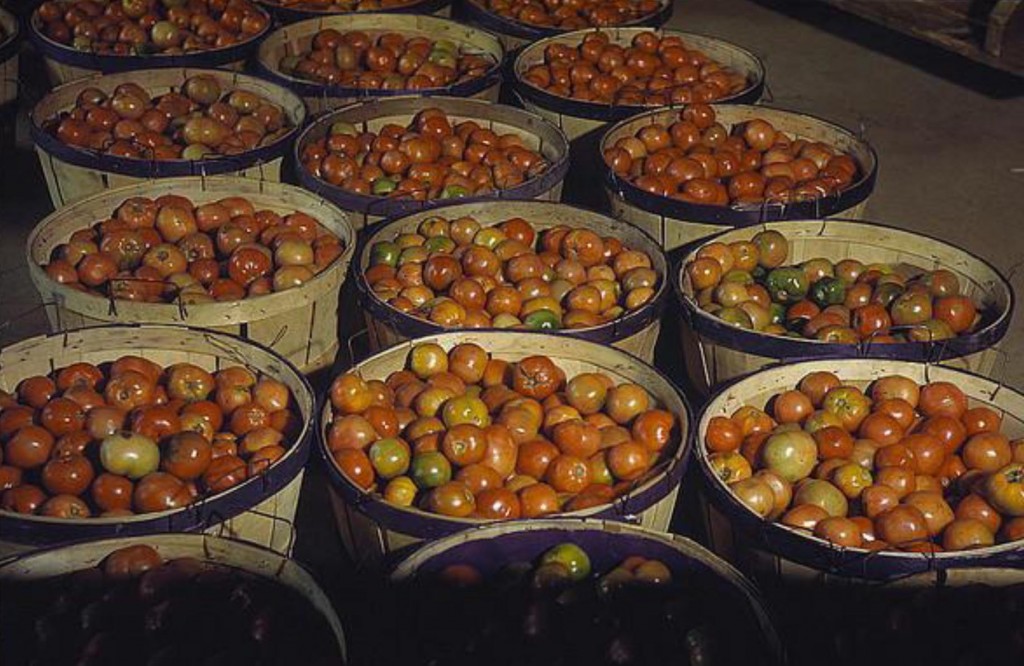
What is the difference between a homegrown tomato and one brought from other lands?

When at the social welfare office, Mr. Law starts to beat me, everyone stands and watches idly, and the tomato and cucumber, the racist and intolerant people, believe that the tomato and cucumber are more important than a human being!

Possibly the homegrown tomato and cucumber are gold and the most expensive vegetables in the world for some racists. Thank GOD that they don’t have any taste buds and can’t either smell or think so they’d know what normal is.

Tomatoes…                             Source: Flickr.

But wait a moment! Maybe they have high values. They claim that only a white hand can touch the seed that is planted. LOL!

It’s good that in this country there aren’t any fruit, arbor, and flower gardens, otherwise our destiny would be worse and sicker than now. If this land had the four seasons of more benign climates together with mountains, plains and valleys, perhaps they’d build a wall around it, an ironic wall like the one in China where no-one could come in.

What is all this pride and honor bestowed to the tomato and cucumber?!

What is ur traditional food?

…and cucumbers.                              Source: Flickr.

What about technology, do you have any? Has it grown?

Tell me what percentage of immigrants and refugees have worked in your land and how many do u hire.

Tell me about your philosophers, your authors and poets – what about a good movie? Have you ever seen any in this country…only copied TV programs, copied, copied…

Have u ever heard of a good movie??? A great singer?? An actress, actor, maybe?

Houses are very simple here, apartments are so simple, only one room, dark, small windows…what do they say about the architects…I don’t believe your compliments, claim, claim, claim what you will! Can u prove ur claims? Can U?

What about art, its technique and the profession? Do u have any idea what life is? What does life mean to u? Have you ever had an open-minded journalist, intellectuals, even a genus among your ranks?

You don’t even have one magazine or newspaper that speaks up for immigrants, refugees, drunkards, the poor, old people; ur alone, no family, children with two mothers and fathers, high rate of divorce, lazy people in parliament, racist, racism, nationals who work in foreign companies and organizations, in hotels, at the Hilton Hotel, export, import and now they are so important for economic growth. How many real stories are sleeping in chests, in courts, in the ombudsman’s office?

Cucumber, tomato, and 4 different types of brown bread, and being blonde and white at the end of the line, the line of the world, is nothing to be proud of.

Yes dear bother, living in the Land of Intolerance is sheer hell!


Migrant Tales Literary: Summer blooms in Finland*

Posted on July 1, 2012 by Migrant Tales

Growing up and being a Finn in the last century was especially tough. If wars and conflicts didn’t do you in, it was the option of being an immigrant and living with that near-constant yearning and separation in faraway lands. Between 1860 and1999, over 1.2 million Finns emigrated mainly to North America and Sweden.

I was more fortunate than my grandparents, Harald and Aino, who were born in Finland in the early 1890s. Before they turned twenty they had already witnessed enough strife and bloodshed to last them a lifetime: Russification and the struggle that led to Finland’s independence in 1917, the assassination of Governor General Nikolai Bobrikov in 1904, and the terrible Civil War of 1918 between the Whites and Reds, which tore the country in two.

The Finland I knew before I turned twenty was very different from the one my grandparents witnessed. The Cold War and the Vietnam War raged on the other side of the Pacific Ocean. Every day I’d on the news about how the U.S. was bombing North Vietnam back to the stone age, when, in fact, the war was severely weakening us as a nation.

Even my grandparents’ early adulthood was characterized by extremes: the New York Stock Market Crash of October 1929 that ushered in the Great Depression, which in turn ignited a new Great War that would end up claiming an estimated 60 million lives.

So many rivers of blood flowed by them during their lifetime that it is quite remarkable that they survived to tell about those days. However, Harald and Aino never spoke about them, and their anguish. They chose silence to reviving with their tales those phantoms that once brought so much terror and death to Europe.

I have read a lot about World War 2. I think it is important to know about that period in order not to go down that slippery slope ever again. Understanding what happened back then isn’t easy, however, and may take more than one lifetime to understand. How are you supposed to grasp the systematic murder of six million Jews or that of 20 million people that died in Russia?

I have so many questions I’d ask my grandparents. Do they remember the day when Finland became an independent nation? What about when the Winter War broke out on a Thursday? What was a typical day of their lives like? No matter how much I try and wish, it’s too late to ask them any questions. Only silence answers back.

***

Contrary to my grandparents, I will share some of my anecdotes with the dear reader like when I spent the most beautiful moment of my life. I was eleven years at the time and it happened at our summerhouse near Mikkeli. Like magic, I was awoken by the sound of my grandfather sawing wood while the warm sunlight entered my room and mixed with the cool semi-darkness.

How beautiful the forest is in summer with its towering spruces, clean-white birches and sparkling lakes. These images raced through my mind and heart during that special morning pleading with the day and moment to never end.

Finnish summer blooms between June and August. 

What was it that made that morning so memorable? Was it summer that was blooming inside of me as sheer beauty? Or was it because I had by chance learned to capture the full moment without the past and future pulling me in opposite directions?

After so much war and suffering during the first twenty-five years of Finland’s independence, our country needed a similar magic moment to rebuild and heal itself from the devastation of war.

Many times I wonder what would be needed for people to turn their backs on war and their destructive social behavior. Would the answer be in more social equality, or tasa-arvo as they call it in Finnish?

Another important characteristic about our successful society today in Finland is that we enjoy a strong sense of community and belonging. Not everyone, however, is part of such an important family. Some of these are visible minorities like the Roma, Saami, non-white Finns, gays as well as other groups.

As we race deeper into the depths of the new century, we need more than ever those very models that turned us after 1945 into a successful nation at peace with itself and its neighbors. Inclusion is one of those very important values.

A lot more work is still needed on this front but we are getting there little by little. I am confident that social equality for all based on mutual acceptance, respect and equal opportunities will take us to a bright future in Finland.

*This column was originally published in the summer 2012 issue of New World Finn.


Have the PS and MP Tossavainen of Finland ever heard of the Non-Discrimination Act?

Posted on June 26, 2012 by Migrant Tales

If the future of Finland were ever left to the populist Perussuomalaiset (PS) party, it’s quite certain that this country would be doomed. The ones that would suffer the most would be immigrants and visible minorities. Outright discrimination would be  the rule.

The PS, who should know better, sent a formal request to the council of state last week asking whether it was possible to only hire Finnish workers to refurbish its recently acquired party headquarters in Helsinki.

In a blog entry on Uusi Suomi, Migrant Tales answered a question that the PS asked the council of state in a blog entry: Is it discrimination only to hire Finnish workers?

We answered PS MP Anssi Joutsenlahti’s question with a flat yes. Thanks to JusticeDemon’s help, we were able to show to the PS MP which part of the Non-Discrimination Act prohibits discrimination on the grounds of nationality.

Paragraph 1 of subsection 1 of section 2: “This Act applies to both public and private activities in the following contexts: 1) conditions for access to self-employment or means of livelihood, and support for business activities.”

For some reason the PS, the country’s third-largest party in parliament with 39 seats, does not – or does not want to – get it.

Instead of engaging in a meaningful debate about discrimination in Finland, PS MP Reijo Tossavainen writes the following comment in a Migrant Tales’ posting on Uusi Suomi: “This blog entry’s headline [Is it discrimination to only hire Finnish workers? Certainly!]  is  frankly shocking.Are Finnish labor, Finnish entrepreneurship, and Finnish identity in general something marginal in Finland?”

PS MP Reijo Tossavainen appears to have never heard of the Non-Discrimination Act.

Tossavainen even takes a below-the-belt hit at Migrant Tales in another comment. My mother is Finnish, I am a Finnish citizen and have lived in this country for 33 years.

“In a blog entry on Uusi Suomi two foreigners [Farzad Moghaddam pour and I] who live in Finland write about hiring only Finnish workers [to refurbish] the party’s headquarters. Their writings and comments make for uncomfortable reading because they respect too little Finland and Finnish identity. But what is even more shocking is to see that there are a lot of native Finns who think like them.”

Just because a populist politician has probably never read the Non-Discrimination Act in his life, doesn’t give him the right to erroneously claim that I don’t respect Finland or Finnish identity. It is an insult like many others that have come to characterize the PS after last year’s elections.

The PS are a threat to Finland, but especially to immigrants, visible minorities and expat Finns.


  • Previous
  • 1
  • 2
  • 3
  • 4
  • 5
  • 6
  • 7
  • 8
  • Next
Read more about documentary film
Read more

Recent Posts

  • Finland’s tabloids Iltalehti and Ilta-Sanomat are the pits
  • Riikka Purra’s Dr Jekyll and Mr Hyde mask
  • Double standards
  • Perussuomalaiset: Uusi logo, sama vanha juttu
  • Taco Trump

Recent Comments

  1. Absolutely Socking: Racist Finnish Facebook group against human rights gets flooded with socks on Musta Barbaari’s mother and sister charged by the police in “ethnic profiling” case
  2. Ilkka Nuotio on Pekka Myrskylä: “Tilastot kertovat toista kuin poliittinen keskustelu”
  3. Genrih Soinkara on The war in Ukraine and the Russian-Finnish border crisis are showing Finland’s ugly side
  4. Ahti Tolvanen on Comment by Ahti Tolvanen on the Helsinki +50 conference
  5. Angel Barrientos on Angel Barrientos is one of the kind beacons of Finland’s Chilean community

Archives

  • June 2026
  • May 2026
  • April 2026
  • March 2026
  • February 2026
  • January 2026
  • December 2025
  • November 2025
  • October 2025
  • September 2025
  • August 2025
  • July 2025
  • June 2025
  • May 2025
  • April 2025
  • March 2025
  • February 2025
  • January 2025
  • December 2024
  • November 2024
  • October 2024
  • September 2024
  • August 2024
  • July 2024
  • June 2024
  • May 2024
  • April 2024
  • March 2024
  • February 2024
  • January 2024
  • December 2023
  • November 2023
  • October 2023
  • September 2023
  • August 2023
  • July 2023
  • June 2023
  • May 2023
  • April 2023
  • March 2023
  • February 2023
  • January 2023
  • December 2022
  • November 2022
  • October 2022
  • September 2022
  • August 2022
  • July 2022
  • June 2022
  • May 2022
  • April 2022
  • March 2022
  • February 2022
  • January 2022
  • December 2021
  • November 2021
  • October 2021
  • September 2021
  • August 2021
  • July 2021
  • June 2021
  • May 2021
  • April 2021
  • March 2021
  • February 2021
  • January 2021
  • December 2020
  • November 2020
  • October 2020
  • September 2020
  • August 2020
  • July 2020
  • June 2020
  • May 2020
  • April 2020
  • March 2020
  • February 2020
  • January 2020
  • December 2019
  • November 2019
  • October 2019
  • September 2019
  • August 2019
  • July 2019
  • June 2019
  • May 2019
  • April 2019
  • March 2019
  • February 2019
  • January 2019
  • December 2018
  • November 2018
  • October 2018
  • September 2018
  • August 2018
  • July 2018
  • June 2018
  • May 2018
  • April 2018
  • March 2018
  • February 2018
  • January 2018
  • December 2017
  • November 2017
  • October 2017
  • September 2017
  • August 2017
  • July 2017
  • June 2017
  • May 2017
  • April 2017
  • March 2017
  • February 2017
  • January 2017
  • December 2016
  • November 2016
  • October 2016
  • September 2016
  • August 2016
  • July 2016
  • June 2016
  • May 2016
  • April 2016
  • March 2016
  • February 2016
  • January 2016
  • December 2015
  • November 2015
  • October 2015
  • September 2015
  • August 2015
  • July 2015
  • June 2015
  • May 2015
  • April 2015
  • March 2015
  • February 2015
  • January 2015
  • December 2014
  • November 2014
  • October 2014
  • September 2014
  • August 2014
  • July 2014
  • June 2014
  • May 2014
  • April 2014
  • March 2014
  • February 2014
  • January 2014
  • December 2013
  • November 2013
  • October 2013
  • September 2013
  • August 2013
  • July 2013
  • June 2013
  • May 2013
  • April 2013
  • March 2013
  • February 2013
  • January 2013
  • December 2012
  • November 2012
  • October 2012
  • September 2012
  • August 2012
  • July 2012
  • June 2012
  • May 2012
  • April 2012
  • March 2012
  • February 2012
  • January 2012
  • December 2011
  • November 2011
  • October 2011
  • September 2011
  • August 2011
  • July 2011
  • June 2011
  • May 2011
  • April 2011
  • March 2011
  • February 2011
  • January 2011
  • December 2010
  • November 2010
  • October 2010
  • September 2010
  • August 2010
  • July 2010
  • June 2010
  • May 2010
  • April 2010
  • March 2010
  • February 2010
  • January 2010
  • December 2009
  • November 2009
  • October 2009
  • September 2009
  • August 2009
  • July 2009
  • December 2008
  • November 2008
  • October 2008
  • September 2008
  • August 2008
  • July 2008
  • June 2008
  • May 2008
  • April 2008
  • March 2008
  • February 2008
  • January 2008
  • November 2007
  • October 2007
  • September 2007
  • August 2007
  • July 2007
  • June 2007
  • May 2007

Categories

  • ?? Gia L?c
  • ????? ?????? ????? ???????? ?? ??????
  • ???????
  • @HerraAhmed
  • @mondepasrond
  • @nohatefinland
  • @oula_silver
  • @Varathas
  • A Pakistani family
  • äärioikeisto
  • Abbas Bahmanpour
  • Abdi Muhis
  • Abdirahim Hussein Mohamed
  • Abdirahim Husu Hussein
  • Abdirisak Mahamed
  • About Migrant Tales
  • activism
  • Adam Al-Sawad
  • Adel Abidin
  • Afrofinland
  • Ahmed IJ
  • Ahti Tolvanen
  • Aino Pennanen
  • Aisha Maniar
  • Alan Ali
  • Alan Anstead
  • Alejandro Díaz Ortiz
  • Alekey Bulavsev
  • Aleksander Hemon
  • Aleksanterinliitto
  • Aleksanterinliitto ry
  • Aleksanterinliitto ry:n hallitus
  • Alex Alex
  • Alex Mckie
  • Alexander Nix
  • Alexandra Ayse Albayrak
  • Alexis Neuberg
  • Ali Asaad Hasan Alzuhairi
  • Ali Hossein Mir Ali
  • Ali Rashid
  • Ali Sagal Abdikarim
  • Alina Tsui
  • Aline Müller
  • All categories
  • Aman Heidari
  • Amiirah Salleh-Hoddin & Jana Turk
  • Amin A. Alem
  • Amir Zuhairi
  • Amkelwa Mbekeni
  • Ana María Gutiérrez Sorainen
  • Anachoma
  • Anders Adlecreutz
  • Angeliina Koskinen
  • Anna De Mutiis
  • Anna María Gutiérrez Sorainen
  • Anna-Kaisa Kuusisto ja Jaakko Tuominen
  • Annastiina Kallius
  • Anneli Juise Friman Lindeman
  • Announcement
  • Anonymous
  • Antero Leitzinger
  • anti-black racism
  • Anti-Hate Crime Organisation Finland
  • Anudari Boldbaatar
  • Arshiya Nasser
  • Aspergers Syndrome
  • Asylum Corner
  • Asylum seeker 406
  • Athena Griffin and Joe Feagin
  • Autism
  • Avaaz.org
  • Awale Olad
  • Ayan Said Mohamed
  • AYY
  • Barachiel
  • Bashy Quraishy
  • Beatrice Kabutakapua
  • Beri Jamal
  • Beri Jamal and Enrique Tessieri
  • Bertolt Brecht
  • Boiata
  • Boodi Kabbani
  • Bruno Gronow
  • Carmen Pekkarinen
  • Çelen Oben and Sheila Riikonen
  • Chiara Costa-Virtanen
  • Chiara Costa-Virtanen
  • Chiara Sorbello
  • Christian Thibault
  • Christopher Wylie
  • Clara Dublanc
  • Dana
  • Daniel Malpica
  • Danilo Canguçu
  • David Papineau
  • David Schneider
  • Dexter He
  • Don Flynn
  • Dr Masoud Kamali
  • Dr. Faith Mkwesha
  • Dr. Theodoros Fouskas
  • Edna Chun
  • Eeva Kilpi
  • Emanuela Susheela
  • En castellano
  • ENAR
  • Enrique
  • Enrique Tessieri
  • Enrique Tessieri & Raghad Mchawh
  • Enrique Tessieri & Yahya Rouissi
  • Enrique Tessieri and Muhammed Shire
  • Enrique Tessieri and Sira Moksi
  • Enrique Tessieri and Tom Vandenbosch
  • Enrique Tessieri and Wael Che
  • Enrique Tessieri and Yahya Rouissi
  • Enrique Tessieri and Zimema Mhone
  • Epäluottamusmies
  • EU
  • Europe
  • European Islamophobia Report
  • European Islamophobia Report 2019,
  • European Union
  • Eve Kyntäjä
  • Ezequiel Caldeiro
  • Facebook
  • Fadumo Dayib
  • Faisa Kahiye
  • Farhad Manjoo
  • Fasismi
  • Finland
  • Fizza Qureshi
  • Flyktingar och asyl
  • Foreign Student
  • Fozia Mir-Ali
  • Frances Webber
  • Frida Selim
  • Gareth Rice
  • Ghyslain Vedeaux
  • Global Art Point
  • Great Replacement
  • Habiba Ali
  • Hami Bahadori
  • Hami Bahdori
  • Hamid
  • Hamid Alsaameere
  • Hamid Bahdori
  • Handshake
  • Harmit Athwal
  • Hassan Abdi Ali
  • Hassan Muhumud
  • Heikki Huttunen
  • Heikki Wilenius
  • Helsingin Sanomat
  • Henning van der Hoeven
  • Henrika Mälmsröm
  • Hser Hser
  • Hser Hser ja Mustafa Isman
  • Husein Muhammed
  • Hussain Kazemian
  • Hussain Kazmenian
  • Ibrahim Khan
  • Ida
  • Ignacio Pérez Pérez
  • Iise Ali Hassan
  • Ilari Kaila & Tuomas Kaila
  • Imam Ka
  • inside-an-airport
  • Institute of Race Relations
  • Iraqi asylum seeker
  • IRR European News Team
  • IRR News Team
  • Islamic Society of Norhern FInland
  • Islamic Society of Northern Finland
  • Islamophobia
  • Jacobinmag.com
  • Jallow Momodou
  • Jan Holmberg
  • Jane Elliott
  • Jani Mäkelä
  • Jari Luoto
  • Jari Taponen
  • Jegor Nazarov
  • Jenni Stammeier
  • Jenny Bourne
  • Jessie Daniels
  • Joe Davidow
  • Johannes Koski
  • John D. Foster
  • John Grayson
  • John Marriott
  • Jon Burnett
  • Jorma Härkönen
  • Jos Schuurmans
  • José León Toro Mejías
  • Josue Tumayine
  • Jouni Karnasaari
  • Juan Camilo
  • Jukka Eräkare
  • Julian Abagond
  • Julie Pascoet
  • Jussi Halla-aho
  • Jussi Hallla-aho
  • Jussi Jalonen
  • JusticeDemon
  • Kadar Gelle
  • Kaksoiskansalaisuus
  • Kansainvälinen Mikkeli
  • Kansainvälinen Mikkeli ry
  • Katherine Tonkiss
  • Kati Lepistö
  • Kati van der Hoeven-Lepistö
  • Katie Bell
  • Kättely
  • Kerstin Ögård
  • Keshia Fredua-Mensah & Jamie Schearer
  • Khadidiatou Sylla
  • Khadra Abdirazak Sugulle
  • Kiihotus kansanryhmää vastaan
  • Kirsi Crowley
  • Koko Hubara
  • Kristiina Toivikko
  • Kubra Amini
  • KuRI
  • La Colectiva
  • La incitación al odio
  • Laura Huhtasaari
  • Lauri Finér
  • Leif Hagert
  • Léo Custódio
  • Leo Honka
  • Leontios Christodoulou
  • Lessie Branch
  • Lex Gaudius
  • Leyes de Finlandia
  • Liikkukaa!
  • Linda Hyökki
  • Liz Fekete
  • M. Blanc
  • Maarit Snellman
  • Mahad Sheikh Musse
  • Maija Vilkkumaa
  • Malmin Kebab Pizzeria Port Arthur
  • Marcell Lorincz
  • Mari Aaltola
  • María Paz López
  • Maria Rittis Ikola
  • Maria Tjader
  • Marja-Liisa Tolvanen
  • Mark
  • Markku Heikkinen
  • Marshall Niles
  • Martin Al-Laji
  • Maryan Siyad
  • Matt Carr
  • Mauricio Farah Gebara
  • Media Monitoring Group of Finland
  • Micah J. Christian
  • Michael McEachrane
  • Michele Levoy
  • Michelle Kaila
  • Migrant Tales
  • Migrant Tales Literary
  • Migrantes News
  • Migrants' Rights Network
  • MigriLeaks
  • Mikko Kapanen
  • Miriam Attias and Camila Haavisto
  • Mohamed Adan
  • Mohammad Javid
  • Mohammad M.
  • Monikulttuurisuus
  • Monisha Bhatia and Victoria Canning
  • Mor Ndiaye
  • Muh'ed
  • Muhamed Abdimajed Murshid
  • Muhammed Shire
  • Muhammed Shire and Enrique Tessieri
  • Muhis Azizi
  • Musimenta Dansila
  • Muslimiviha
  • Musulmanes
  • Namir al-Azzawi
  • Natsismi
  • Neurodiversity
  • New Women Connectors
  • Nils Muižnieks
  • No Labels No Walls
  • Noel Dandes
  • Nuor Dawood
  • Omar Khan
  • Otavanmedia
  • Oula Silvennoinen
  • Paco Diop
  • Pakistani family
  • Pentti Stranius
  • Perussuomalaiset
  • perustuslaki
  • Petra Laiti
  • Petri Cederlöf
  • Pia Grochowski
  • Podcast-lukija Bea Bergholm
  • Pohjois – Suomen Islamilainen Yhdyskunta
  • Pohjois Suomen Islamilainen Yhyskunta
  • Polina Kopylova
  • Race Files
  • racism
  • Racism Review
  • Raghad Mchawh
  • Ranska
  • Rashid H. and Migrant Tales
  • Rasismi
  • Raul Perez
  • Rebecka Holm
  • Reem Abu-Hayyeh
  • Refugees
  • Reija Härkönen
  • Remiel
  • Reza Nasri
  • Richard Gresswell
  • Riikka Purra
  • Risto Laakkonen
  • Rita Chahda
  • Ritva Kondi
  • Robito Ibrahim
  • Roble Bashir
  • Rockhaya Sylla
  • Rodolfo Walsh
  • Roger Casale
  • Rostam Atai
  • Roxana Crisólogo Correa
  • Ruth Grove-White
  • Ruth Waweru-Folabit
  • S-worldview
  • Sadio Ali Nuur
  • Sami Rusanen
  • Sandhu Bhamra
  • Sara de Jong
  • Sarah Crowther
  • Sari Alhariri
  • Sarkawt Khalil
  • Sasu
  • Scot Nakagawa
  • Shabana Ahmadzai
  • Shada Islam
  • Sharon Chang blogs
  • Shenita Ann McLean
  • Shirlene Green Newball
  • Sini Savolainen
  • Sira Moksi
  • Sonia K.
  • Sonia Maria Koo
  • Steverp
  • Stop Deportations
  • Suldaan Said Ahmed
  • Suomen mediaseurantakollektiivi
  • Suomen Muslimifoorumi ry
  • Suomen viharikosvastainen yhdistys
  • Suomen viharikosvastainen yhdistys ry
  • Suomi
  • Supermen
  • Susannah
  • Suva
  • Syrjintä
  • Talous
  • Tapio Tuomala
  • Taw Reh
  • Teivo Teivainen
  • The Daily Show
  • The Heino
  • The Supermen
  • Thomas Elfgren
  • Thulfiqar Abdulkarim
  • Tim McGettigan
  • Tino Singh
  • Tito Moustafa Sliem
  • Tobias Hübinette and L. Janelle Dance
  • Transport
  • Trica Danielle Keaton
  • Trilce Garcia
  • Trish Pääkkönen
  • Trish Pääkkönen and Enrique Tessieri
  • Tuulia Reponen
  • Uncategorized
  • UNITED
  • University of Eastern Finland
  • Uyi Osazee
  • Väkivalta
  • Vapaa Liikkuvuus
  • Venla-Sofia Saariaho
  • Vieraskynä
  • W. Che
  • W. Che an Enrique Tessieri
  • Wael Ch.
  • Wan Wei
  • Women for Refugee Women
  • Xaan Kaafi Maxamed Xalane
  • Xassan Kaafi Maxamed Xalane
  • Xassan-Kaafi Mohamed Halane & Enrique Tessieri
  • Yahya Rouissi
  • Yasmin Yusuf
  • Yassen Ghaleb
  • Yle Puhe
  • Yuliet Tresa
  • Yve Shepherd
  • Zahra Khavari
  • Zaker
  • Zalina Ametova
  • Zamzam Ahmed Ali
  • Zeinab Amini ja Soheila Khavari
  • Zimema Mahone and Enrique Tessieri
  • Zimema Mhone
  • Zoila Forss Crespo Moreyra
  • ZT
  • Zulma Sierra
  • Zuzeeko Tegha Abeng
© 2026 Migrant tales | Powered by Minimalist Blog WordPress Theme