Migrant tales
Menu
  • #MakeRacismHistory “In Your Eyes”
  • About Migrant Tales
  • It’s all about Human Rights
  • Literary
  • Migrant Tales Media Monitoring
  • NoHateFinland.org
  • Tales from Europe
Menu

Tag: identity

Mistaking your identity

Posted on January 14, 2025January 14, 2025 by Migrant Tales

In a world where migration constantly weaves new identities and is even seen as a threat to national identities, countries in Europe are throwing all their political weight to slow such a natural process. Being from a multicultural and multinational background can be a problem in a world that sees new identities as a threat.

On my life’s journey, I made over four decades ago one of the greatest discoveries and found peace with my multicultural self in my native Buenos Aires, Argentina, at the Finnish Seaman’s Church.  Even if such pleasant landscapes no longer witness my patient silence and stance, they are now memories that have turned into imaginary cities of the mind, where every building stands out eager to tell you a story.

Even though I have visited the Finnish Seaman’s Church on many occasions, the days I spent there as a brief tenant in 1999 brought me back to the beginning of a long journey I began in the 1990s.


The Finnish Seaman’s Church at aт San Juan 234, Buenos Aires. Photo by Enrique Tessieri.


For months, I kept the secret to myself. I didn’t even dare reveal it to my wife. Living a few years later in the northern part of South America, in the twilight quagmire of the violence and strife that has gripped Colombia for decades, I have decided to share the secret with you.

Dante and Jacob

William Blake (1757-1827) once said that improvements make straight roads but the crooked ones without improvement are roads of genius. Was my multicultural background my crooked road?

Both of my great-grandparents had migrant migrant backgrounds. One of them, Dante, was an anarchist sent to a prison on the island of Pantelleria, located between Sicily and Tunisia. Jacob’s great-grandfather, Jacob Weikain, a tinsmith, had emigrated to Finland from Latvia in 1799.

My family has been on the move for generations. A journey may take generations to complete, if ever. Is this the reason why in my deepest thoughts I am always traveling somewhere else, searching elsewhere? Does it reveal why I feel many times like standing alone in a railway station waiting for the last train home, feeling like being in the land of nowhere with a sense of being somewhere else?

At the end of the last century, the Finns were sowing the seeds of their independence from the Russian Empire. Italy comprising several kingdoms, duchies, and city-states, became a unified country in 1861.

Even if Dante and Jacob are talks of the past, and when they were alive I was talk of the future, I can say confidently that the yearning and restlessness that I feel is because of them or possibly it has to do with the fact that I was born in an enormous transit lounge called Argentina. I am like many that were born in that land: my great-grandparents arrived as migrants and after three generations, their great-grandchildren became migrants again.

Due to my multinational background, I used to feel out of place but understand such feelings were nothing more than my prejudices. Thanks to the Finnish Seamen’s Church of Buenos Aires, I don’t feel out of place at all no matter where I am.

The world is becoming a very small place as time races ahead. For this reason, I believe that my children and grandchildren will be luckier than I am. In the millennium we’ll be able to enter and leave cultures and lifestyles and be if I wish – from many places and will not be judged as a result.

As long as we are not overcome by racial hatred, greed, and power, life in the millennium will be like being in a vast city like Buenos Aires, London, or New York, where everyone is from somewhere but where no one is a real or imagined native.

If we all learned to  understand that we are nothing more than temporary beings on Earth searching endlessly for that hill where the grass is greener on the other side where we can be from nowhere to be from everywhere.

Migrant Tales Literary: Juan and the mysterious stone

Posted on November 4, 2023November 4, 2023 by Migrant Tales

If you’re not careful, the newspapers will have you hating the people who are oppressing and loving the people who are doing the oppressing.

Malcolm X

Juan is a seven-year-old boy who enjoys playing alone rather than with friends. He was known for his wild imagination. From a short distance he was playing in the sandbox with his toy cars he heard a faint voice asking for help. Going to the source of the voice he noticed a tiny stone.

“Oh thank you for taking that heavy stone off me,” the tiny stone said relieved. “Some naughty boys placed me under the larger stone.”

Surprised by what he was hearing, Juan picked up the tiny stone that would not stop thanking him.

“It’s hard being a tiny stone in a large city like Helsinki,” it continued. “It’s not like in the countryside where stones are left alone. In the city, it’s different. Not a day does y when you’re pushed around. Some can even throw you in the sea.”


Source: Open Source


The stone was so grateful to Juan that he granted him a wish.

“Do you mean that I can wish anything I want?”

Juan thought for a long silent pause and then said that all he’d want was to become white. He said that if his skin color changed from dark brown to white, his schoolmates would stop ridiculing him at school and want to play with him.

In an instant, Juan’s wish was granted His skin was now white, his eyes blue and his hair blonde.

Placing the mysterious stone in his pocket, Juan ran back home, where his parents were surprised to see him ethnically changed.

“My God, Juan!” the mother said. “What has happened to you?”

“I saved this tiny stone, and it granted me a wish. for my good deed I asked it to change the color of my skin to white.”

Juan’s father, who was from Colombia and had lived many yards in Finland, was first speechless and then totally confused by what had happened to his son.

“My friends won’t bully me anymore,” Juan continued. “Imagine, I am now the same color as them.”

Days went by and Juan’s initial happiness started to wean, even if some of his school friends were happy that he was white. But some were taken aback and seemed to like Juan more when he had dark skin.

The change in ethnicity ended up causing Juan a lot of unhappiness. By erasing his old self, Juan lost a part of himself. It was like getting used to using new clothes he wasn’t used to.

Juan ended up miserable. He pleaded with the stone to take him back to his old self. It wasn’t possible because he was granted only one wish by the magic stone.

A familiar voice was calling Juan to wake up for school. She noticed her son was in tears.

“What’s wrong, my love?”

“I don’t want to be white. I want to be my old self!”

To his surprise and relief, Juan noted that he had a nightmare.

The nightmare had taught him an important lesson: No matter what anyone thinks, your background is a sense of pride.

On telling his mother about the nightmare, Juan reasoned that changing your ethnicity would be a mistake.

“Let’s face it, elephants would be miserable if they changed into ants and ants would end up missing who they were if they changed into elephants.”

Not understanding the full meaning behind Juan’s words, his mother ordered him to rush out of bed and hurry to school.

Migrant Tales Literary (Suomen Silta 1990s): Mistaken identity

Posted on May 16, 2020January 3, 2025 by Migrant Tales

We don’t see things as they are, we see things as we are.

Anaïs Niin

The date and year are not important, but it is a weekday, not too long ago. Spring has arrived and spreads its magic to these sub-arctic latitudes after a long slumber. Leaves are budding everywhere; trees are stretching out their branch tips like a human with their arms upon awakening. The full moon, which seems like a white hole peeking into the darkness, shyly lightens the night as it follows you with thin clouds moving beside it, like waving silk in the sleepy wind.

I am driving alone on the motorway from Porvoo to Helsinki amid these ebon landscapes overflowing with beauty. Even if the night has robbed the forest of its individuality because it is now a solid clump of varying hues of darkness, everything is not what it seems…

Source: Statistics Finland.

We see things as they are

Like the dark forest teeming with life on the motorway to Helsinki, it is made up of infinite particles of matter and spontaneous events. It is very much like an image of our culture, also made up of individuals and endless intentions.

When I moved to Finland in 1978, my ethnic perceptions of the Finns did not differ very much from what was common knowledge at the time. The way we saw ourselves as a people and a nation had very much to do with the geopolitical circumstances of the cold war. Even if we were culturally hamstrung by such a reality, our political leaders, ethnographers, linguists, and others added to our sense of isolation.

On the foreign policy front, Finland did not officially belong to the East of the West. It was in a no man’s land reaping the best of both worlds. Linguistically and ethnically, we considered ourselves distant from the rest of Western Europe as well.

The forest is a mysterious place because its identity changes constantly. Photo: Enrique Tessieri

How many times as a child had I heard from my relatives that the Finns are a people that are not related to anyone in Europe except for with the Sami, Hungarians, and Estonian?

Ethnically speaking, the cold war was the most castrating period in Finland’s search for its cultural identity. Through the difficult circumstances of Superpower politics, Finns lost contact with their ethnic relatives like the Estonians, Ingrians, and in many ways with the children of the hundreds of thousands of Finnish migrants who lived abroad.

If it were for the parents of these migrant children, who encouraged them to visit their grandparents in Finland during summer, such cultural bonds would not have been lost forever.

It does not surprise me that even after the Soviet Union’s fall from grace in the last decade, some policymakers in the country are slowly acknowledging a new group of Finns called the New Finns. What these bureaucrats do not understand, however, is that these so-called New Finns have always existed but had not been acknowledged by the authorities.

Things as we are

One of the first scientific books given to me on Finland was written by social policy professor Heikki Waris. In his good on the Finns, he stated that one of the outstanding features that characterized Finland was its homogeneous population.

But how ethnically and homogenous it is? At the time of Wars’ statement, close to one million Finns lived as migrants outside of Finland’s borders. What about the children of these Finnish migrants, who grew up in both cultures, and kept strong bonds with Finland by visiting this country regularly during the summers?

Possibly Wars’ claim could have shed more truth if it read in the following manner: Finns are not ethnically homogenous but have been made culturally homogenous through the circumstances of history, geography, and geopolitics.

Some studies now claim that Finns are not ethnically isolated as previously believed and that they are quite “mixed” genetically with other groups in Central Europe.

The US government asked American anthropologist Margaret Mead after the bombing of Pearl Harbor by the Japanese in 1942 to carry out a national character study on the new nation America was at war with. The reasoning behind the study was to bring forth some “national traits” of the Japanese so that the US could wage a more effective war against its new foe.

The so-called national character study by Mead did not bear any fruit and concluded that it was impossible to produce a clean list of traits that characterize the Japanese. On the contrary, Japanese culture is made up of an infinite number of sub-cultures and, therefore, impossible to categorize stereotypically.

Considering that Japan must have been a much more isolated country at the time when compared with Finland, what would have Mead’sconclusions been if she had done a similar study of the Finns?

To go back once again to the sublime forest and night that hugs the motorway from Provoo and Helsinki, who can seriously say that there are not an infinite amount of factors at play in creating such a state of beauty?

We must also begin to see ourselves as we are, and not like historical and geopolitical circumstances have dictated in the past.

QUOTE OF THE DAY: Finnish identity isn’t a monolithic slab held together by power, privilege, prejudice, and bigotry

Posted on January 1, 2018 by Migrant Tales

The biggest challenge facing our culturally and ethnically (non-white) community this century is the narrow definition of who we are.  As long as our definition excludes others,  all efforts at “integrating” newcomers and ensuring that they become members of society will fail. The aims of our schools to teach children of foreign parents to become active citizens will fail, too.

Our non-white community will help Finland one day to understand that we’re not monolithic slabs of identity held together by our power, privilege, prejudice, and bigotry. Our Finnish identity, which lives inside all of us, can manifest itself in many ways that deviate from the narrow definition. 


Who determines who we are?

Posted on September 11, 2016 by Migrant Tales

Here’s a simple question: By law, a person is a Finn if he or she is a Finnish citizen. Why, then, are some of these Finnish citizens spoken of and near-constantly reminded by society that they are so-called “people with foreign backgrounds?”

What does it really mean to be labelled “a person with foreign background” in a country like Finland, where migrants and minorities are targets of fearmongering, xenophobia, and bigotry?

multicultural

The only person who determines your identity is yourself. Picture by Enrique Tessieri.

In Sweden, a country that has many more migrants than Finland uses as well the label “person with foreign background.”

Philosopher Michael McEachran of Stockholm said that a person who is labelled “with foreign background” in Sweden is code used by officials to mean non-Europeans or non-white people.

Continue reading “Who determines who we are?”

Migrant Tales (April 14, 2015): My identity is mine, not yours, so stop labeling me according to your prejudices

Posted on August 13, 2016 by Migrant Tales

Don’t let anyone, no one, ever define who you are. That’s your right and never give it away.

Why do some public services like the police even some migrants believe they have the right to define who are? The police do it constantly. Every time they label a person or group as a person with “foreign” or “migrant” background they are effectively relegating that person publicly to second- or third-class status in society. 

Like in neighboring Sweden, where “a person with migrant background” is code for non-European or non-white, in Finland, it is used to remind you that white Finns run this country politically, culturally, economically and socially.

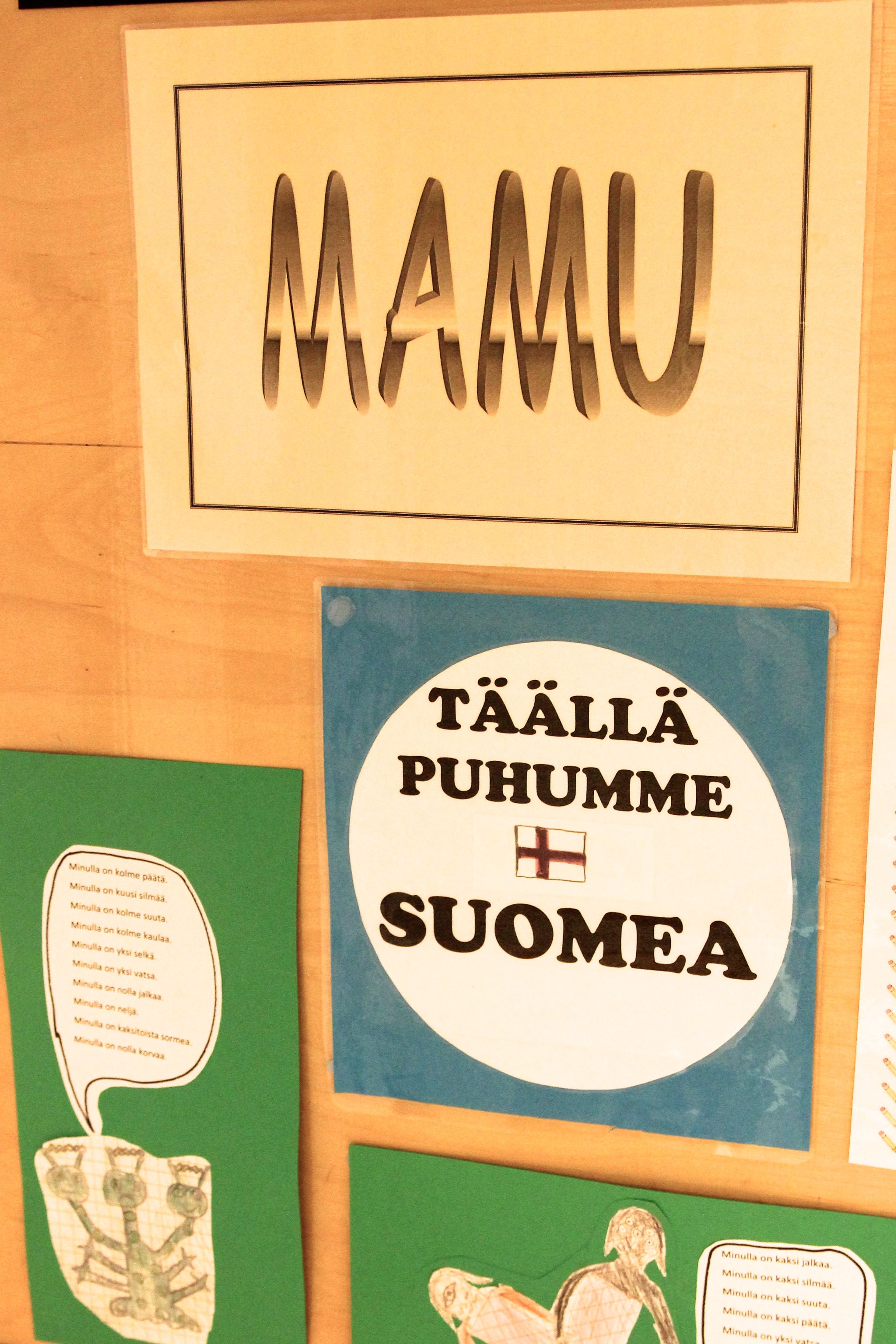
What’s even worse is the usage of the term mamu, which is used by anti-immigration politicians near-constantly in this country whenever they speak disrespectfully of migrants.

A recent example of how the term was used was by Perussuomalaiset (PS)* MP Maria Tolppanen, who said she wants to see less mamus and more people at Vaasa’s city square.

Some claim that Tolppanen’s usage of the term mamu was code for Somalis.

The term mamu is in the same league as the n-word or if you call a member of the Romany minority mustalainen. These three labels can be used by members of those groups but it is inappropriate for white Finns to use them since it would be disrespectful and offensive.

Continue reading “Migrant Tales (April 14, 2015): My identity is mine, not yours, so stop labeling me according to your prejudices”

Migration Pulse: What the refugee crisis says about race in Europe

Posted on November 3, 2015 by Migrant Tales

Omar Khan*

Näyttökuva 2015-11-3 kello 10.27.20


While many Europeans have felt growing humanitarian concern on being confronted with images of desperation among refugees seeking entry, across the continent a large minority have suggested any sympathy is misplaced.

Some arguments about the refugee crisis focus more on practical concerns – that encouraging people to come to Europe will lead to greater danger, or that we cannot afford to take more than a few hundred or thousand. These concerns don’t really respond to the horrible conditions and even poorer economies of Iraq, Jordan, Lebanon and Turkey where most refugees are currently living in camps, but they at least recognise shared humanity and European values.

Questioning their humanity

Some rejectionist responses, however, question the humanity of the refugees or our (Europe’s) obligation to do anything to help them. These rejections flirt to variously open degrees with two sorts of claims. First is the denial that all human beings have equal moral worth. In discussions of racial discrimination the focus is often on the labour market or criminal justice system, and on the socially unequal outcomes that Black and minority ethnic people experience across Europe. Such evidence should be more widely understood and directly combated, but the basic denial of our shared humanity is arguably the foundational harm of racism. Our continued inability to address historic violence and racism is so damaging not only because it leaves us ignorant of our own history, but also because it fails to recognise the deep pain and indignity suffered by millions of people, an indignity that apparently is still happily flouted by some of Europe’s leaders and publics.

A second claim is less overtly racist, but more widely affirmed, namely that there is (or should be) an ethno-religious account of who counts as ‘European’. Democracy, equality, liberty, fraternity, humanitarianism: all these are nice values, the thought goes, but what really counts is if you’re a white Christian. A more sophisticated version of this claim might be that Christian Europeans are uniquely suited to or committed to values of tolerance, humanitarianism and democracy, but proponents obviously don’t think undemocratic or intolerant white Christian people should be expelled from or denied citizenship by Europe’s different nation-states. However this sort of view is expressed, the key point for us is that Syrians or Eritreans could never become British or Hungarian even if they are the most committed democrats.

Vocal politicians

Central European politicians are most vocal and also publicly criticised for such views. But it’s not only the Hungarian Prime Minister who thinks that ethnicity and religion matter more than values. A significant proportion of Europeans now vote for far-right parties and so fail to affirm ‘European values’. This isn’t simply an ‘Eastern’ problem; when asked to imagine a prototypical Norwegian or Dane, it’s not only nationalists who will conjure up a blonde-haired blue-eyed individual. And despite the undoubted progress we’ve made in Britain, there’s a sense in which thugs from the English Defence League are more ‘English’ than a London-born Black person.

Continue reading “Migration Pulse: What the refugee crisis says about race in Europe”

Children of immigrants: “Only Finnish spoken here and you’re a mamu”

Posted on February 17, 2014 by Migrant Tales

We claim that Finland has one of the best educational systems in the world. We claim that we teach our children social equality and that they have equal rights to advance in life. Why then are children of immigrants called at some schools mamus and why do we force them to speak only Finnish?

The term mamu derives from the Finnish word maahanmuuttaja, or immigrant.

Finnish schools basically do the same thing today that they did in the 1970s, when they punished Saami children for speaking their native language at schools.

If we forbid and make clear that children shouldn’t speak their mother or father tongue at school, isn’t this outright discrimination and a lack of respect for the child’s ethnic and cultural background?

IMG_3371-1

We only speak Finnish here reads a sign on the door of a Finnish elementary school.


Certainly if one or both of the child’s parents are migrants, it’s important that the child learns Finnish or Swedish. The better the child learns these languages, the better his or her chances of succeeding in this country. This is a good goal but it shouldn’t be done at the expense of the child’s native language and identity.

IMG_3370-1

You can’t speak any other language but Finnish and on top of that you’re labelled a mamu. Who labels you a mamu? The majority culture.

Why do some schools in Finland continue to call third-culture children, who have lived here most of their lives or were born here, mamus?

Why don’t we call them Finns who have a different cultural and ethnic background from white Finns?

Why is this still so difficult to understand?

Migrant Tales Literary: Unleashed hope (Part I)

Posted on August 9, 2013 by Migrant Tales

By Anonymous

Migrant Tales…Migrant Tales…Migrant Tales!

you gave others and myself hope

when there was nope


for East and West I probe

South and North nope

I drop for there was no one nope


unheard around the globe

nor nothing to hang the rope

for there was a steep slope


of a painful experience lope

initiated mechanisms to cope

not sufficient as a torch globe


for its can not illuminate hope

to the nightmare – my life mope

as put in black and white gave hope


to flash it in a blog that gives hope

of the voiceless without hope

become heard with a voice gives hope


because it cause a shrill to the ear-lobe

and says here, I am!…………. there is hope!

hear me here ………….I am the hope


here I am dear ……for we bring hope

to the voiceless is dear and gives hope

welcome where hope is…. what we hope!


and light with us the candle of hope

you are not alone… for you are with us I hope

you are not alone ….nope….nope……..nope


for we are many around the globe

and being alive means we hope

for there is always……….. hope


even if we can’t see …. the hope

nor hear nor smell it sweet fragrance nope

its out there we………………… hope


for in life there is always…….. hope

so let us all hope! hope! and hope!

Migrant Tales! Lives and doesn’t loose hope


continue to gives us a space of hope

in the blog of hope

to share our ordeals in the hope


for our hope helps us cope

and face a new brighter day with hope

tells us life means having some hope


that tomorrow will be better I hope

even when the darkness unfolds the hope

hope is all that we hope !!!!!!!!!!!!!!!!!!


Migrant Tales! we all hope!

you will always be our best friend of hope

never give-up upon us- even when there is no hope

but walk with us in the struggle to find that hope

for hope is all that…….. we all.. …hope!


Ariela Patterson: The right to be me on my terms

Posted on June 17, 2013 by Migrant Tales

One of the biggest challenges facing Finland in the new century is to come to terms with its ever-growing cultural diversity. While some Finns have no problems with this, others oppose it. Finland’s cultural diversity is, however, something that nobody can stop. There are today tens of thousands of Finns with multicultural backgrounds.

Ariela Patterson, 23, is one of them. Her father is from the United States and her mother is Finnish. How does she see Finland’s new face and what challenges await it today and tomorrow?

Migrant Tales: How did you feel about your Finnish identity when you were growing up in Finland?

Ariela Patterson: Since I haven’t travelled abroad a lot I can’t really compare because I am Finnish. I know I have as much of a right to be here as any person.

MT: What was the most important decision you made to come to terms with your identity?

AP: The most important decision I made was to accept who I am. It happened through an internet forum that touched briefly on race/ethnicities. I can’t remember what the person wrote, but it shook me to my core. It was something like,”don’t let others define you as a person. We are all individuals, human beings. Someone will love you because of who you are, not because of your skin color or the ethnicity you represent.”

MT: How old were you then?

AP: I was eighteen. I had trouble with my identity before I made that discovery about myself that changed my life. I felt before that I didn’t belong to either my African-American or Caucasian side. I was raised by my Finnish mother in Finland so it was difficult to identify with my African American side, especially because of the way the media portrayed, and still does to some extent, African-Americans.

MT: Did you fit in easily before?

AP: I was always the ”American girl” in Finland. So when I went to visit my relatives in the US, I thought I’d feel right at home. I did until my cousin introduced me to her friends as her ”Finnish cousin.” I now found myself in the same situation as in Finland but reversed. The feeling of not belonging anywhere was slowly eating away at me from the inside and I felt like my mother didn’t understand either because she’d never been in my situation.

MT: What happened then?

AP: So one evening, when I was 18, I decided that I won’t live up to stereotypes imposed by others. All I wanted is to just be me. It hasn’t been easy for me after this revelation since I’m still in the process of fully accepting who I am. Even so, I can now look back and look at myself in the mirror with pride because I am “me.”

MT: Another important decision you made was to extend your hand to those who don’t accept you.

AP: The majority of people, or all I’d say, who don’t accept me have never taken the time to know me. They have their prejudices that fence them in even before I’ve managed to blink an eye in their direction. Maybe they’ve had bad experiences with others and that’s why they generalize and stereotype people. They may have other reasons as well. I bet if they’d sit down and got to know me they’d walk out with a totally different view.

MT: What kind of pressure do you feel for being different from the majority?

AP: I feel that I represent every person who looks ”foreign” in this country. If I act badly, I feel I help them to judge every foreign-looking person in the future in a negative manner. This is a very stressful situation to be in considering that I was born and lived here all my life.

MT: What is racism to you?

AP: Racism is to me a worldwide disease that spreads. It’s a mixture of prejudice, ignorance, envy, anger and fear. In my opinion, only a fool will willingly pass it along to their children. I don’t know if racism will ever fully disappear but I hope that we can live one day in a post racist world.

MT: What does Finnishness mean to you?

AP: Being tolerant, acceptant and respecting other people.

MT: Do you feel that Finnish society is more open of its cultural diversity?

AP: Some people are more acceptant than others. But I’ve noticed that the darker your skin tone is, the more skeptical people are towards you.

MT: Do you think Finland will become a more tolerant society in the future?

AP: I think it will change for the better. But I also think there will always be an opposing group that will pin the blame for their problems on others.


  • 1
  • 2
  • Next
Read more about documentary film
Read more

Recent Posts

  • Finland’s tabloids Iltalehti and Ilta-Sanomat are the pits
  • Riikka Purra’s Dr Jekyll and Mr Hyde mask
  • Double standards
  • Perussuomalaiset: Uusi logo, sama vanha juttu
  • Taco Trump

Recent Comments

  1. Absolutely Socking: Racist Finnish Facebook group against human rights gets flooded with socks on Musta Barbaari’s mother and sister charged by the police in “ethnic profiling” case
  2. Ilkka Nuotio on Pekka Myrskylä: “Tilastot kertovat toista kuin poliittinen keskustelu”
  3. Genrih Soinkara on The war in Ukraine and the Russian-Finnish border crisis are showing Finland’s ugly side
  4. Ahti Tolvanen on Comment by Ahti Tolvanen on the Helsinki +50 conference
  5. Angel Barrientos on Angel Barrientos is one of the kind beacons of Finland’s Chilean community

Archives

  • June 2026
  • May 2026
  • April 2026
  • March 2026
  • February 2026
  • January 2026
  • December 2025
  • November 2025
  • October 2025
  • September 2025
  • August 2025
  • July 2025
  • June 2025
  • May 2025
  • April 2025
  • March 2025
  • February 2025
  • January 2025
  • December 2024
  • November 2024
  • October 2024
  • September 2024
  • August 2024
  • July 2024
  • June 2024
  • May 2024
  • April 2024
  • March 2024
  • February 2024
  • January 2024
  • December 2023
  • November 2023
  • October 2023
  • September 2023
  • August 2023
  • July 2023
  • June 2023
  • May 2023
  • April 2023
  • March 2023
  • February 2023
  • January 2023
  • December 2022
  • November 2022
  • October 2022
  • September 2022
  • August 2022
  • July 2022
  • June 2022
  • May 2022
  • April 2022
  • March 2022
  • February 2022
  • January 2022
  • December 2021
  • November 2021
  • October 2021
  • September 2021
  • August 2021
  • July 2021
  • June 2021
  • May 2021
  • April 2021
  • March 2021
  • February 2021
  • January 2021
  • December 2020
  • November 2020
  • October 2020
  • September 2020
  • August 2020
  • July 2020
  • June 2020
  • May 2020
  • April 2020
  • March 2020
  • February 2020
  • January 2020
  • December 2019
  • November 2019
  • October 2019
  • September 2019
  • August 2019
  • July 2019
  • June 2019
  • May 2019
  • April 2019
  • March 2019
  • February 2019
  • January 2019
  • December 2018
  • November 2018
  • October 2018
  • September 2018
  • August 2018
  • July 2018
  • June 2018
  • May 2018
  • April 2018
  • March 2018
  • February 2018
  • January 2018
  • December 2017
  • November 2017
  • October 2017
  • September 2017
  • August 2017
  • July 2017
  • June 2017
  • May 2017
  • April 2017
  • March 2017
  • February 2017
  • January 2017
  • December 2016
  • November 2016
  • October 2016
  • September 2016
  • August 2016
  • July 2016
  • June 2016
  • May 2016
  • April 2016
  • March 2016
  • February 2016
  • January 2016
  • December 2015
  • November 2015
  • October 2015
  • September 2015
  • August 2015
  • July 2015
  • June 2015
  • May 2015
  • April 2015
  • March 2015
  • February 2015
  • January 2015
  • December 2014
  • November 2014
  • October 2014
  • September 2014
  • August 2014
  • July 2014
  • June 2014
  • May 2014
  • April 2014
  • March 2014
  • February 2014
  • January 2014
  • December 2013
  • November 2013
  • October 2013
  • September 2013
  • August 2013
  • July 2013
  • June 2013
  • May 2013
  • April 2013
  • March 2013
  • February 2013
  • January 2013
  • December 2012
  • November 2012
  • October 2012
  • September 2012
  • August 2012
  • July 2012
  • June 2012
  • May 2012
  • April 2012
  • March 2012
  • February 2012
  • January 2012
  • December 2011
  • November 2011
  • October 2011
  • September 2011
  • August 2011
  • July 2011
  • June 2011
  • May 2011
  • April 2011
  • March 2011
  • February 2011
  • January 2011
  • December 2010
  • November 2010
  • October 2010
  • September 2010
  • August 2010
  • July 2010
  • June 2010
  • May 2010
  • April 2010
  • March 2010
  • February 2010
  • January 2010
  • December 2009
  • November 2009
  • October 2009
  • September 2009
  • August 2009
  • July 2009
  • December 2008
  • November 2008
  • October 2008
  • September 2008
  • August 2008
  • July 2008
  • June 2008
  • May 2008
  • April 2008
  • March 2008
  • February 2008
  • January 2008
  • November 2007
  • October 2007
  • September 2007
  • August 2007
  • July 2007
  • June 2007
  • May 2007

Categories

  • ?? Gia L?c
  • ????? ?????? ????? ???????? ?? ??????
  • ???????
  • @HerraAhmed
  • @mondepasrond
  • @nohatefinland
  • @oula_silver
  • @Varathas
  • A Pakistani family
  • äärioikeisto
  • Abbas Bahmanpour
  • Abdi Muhis
  • Abdirahim Hussein Mohamed
  • Abdirahim Husu Hussein
  • Abdirisak Mahamed
  • About Migrant Tales
  • activism
  • Adam Al-Sawad
  • Adel Abidin
  • Afrofinland
  • Ahmed IJ
  • Ahti Tolvanen
  • Aino Pennanen
  • Aisha Maniar
  • Alan Ali
  • Alan Anstead
  • Alejandro Díaz Ortiz
  • Alekey Bulavsev
  • Aleksander Hemon
  • Aleksanterinliitto
  • Aleksanterinliitto ry
  • Aleksanterinliitto ry:n hallitus
  • Alex Alex
  • Alex Mckie
  • Alexander Nix
  • Alexandra Ayse Albayrak
  • Alexis Neuberg
  • Ali Asaad Hasan Alzuhairi
  • Ali Hossein Mir Ali
  • Ali Rashid
  • Ali Sagal Abdikarim
  • Alina Tsui
  • Aline Müller
  • All categories
  • Aman Heidari
  • Amiirah Salleh-Hoddin & Jana Turk
  • Amin A. Alem
  • Amir Zuhairi
  • Amkelwa Mbekeni
  • Ana María Gutiérrez Sorainen
  • Anachoma
  • Anders Adlecreutz
  • Angeliina Koskinen
  • Anna De Mutiis
  • Anna María Gutiérrez Sorainen
  • Anna-Kaisa Kuusisto ja Jaakko Tuominen
  • Annastiina Kallius
  • Anneli Juise Friman Lindeman
  • Announcement
  • Anonymous
  • Antero Leitzinger
  • anti-black racism
  • Anti-Hate Crime Organisation Finland
  • Anudari Boldbaatar
  • Arshiya Nasser
  • Aspergers Syndrome
  • Asylum Corner
  • Asylum seeker 406
  • Athena Griffin and Joe Feagin
  • Autism
  • Avaaz.org
  • Awale Olad
  • Ayan Said Mohamed
  • AYY
  • Barachiel
  • Bashy Quraishy
  • Beatrice Kabutakapua
  • Beri Jamal
  • Beri Jamal and Enrique Tessieri
  • Bertolt Brecht
  • Boiata
  • Boodi Kabbani
  • Bruno Gronow
  • Carmen Pekkarinen
  • Çelen Oben and Sheila Riikonen
  • Chiara Costa-Virtanen
  • Chiara Costa-Virtanen
  • Chiara Sorbello
  • Christian Thibault
  • Christopher Wylie
  • Clara Dublanc
  • Dana
  • Daniel Malpica
  • Danilo Canguçu
  • David Papineau
  • David Schneider
  • Dexter He
  • Don Flynn
  • Dr Masoud Kamali
  • Dr. Faith Mkwesha
  • Dr. Theodoros Fouskas
  • Edna Chun
  • Eeva Kilpi
  • Emanuela Susheela
  • En castellano
  • ENAR
  • Enrique
  • Enrique Tessieri
  • Enrique Tessieri & Raghad Mchawh
  • Enrique Tessieri & Yahya Rouissi
  • Enrique Tessieri and Muhammed Shire
  • Enrique Tessieri and Sira Moksi
  • Enrique Tessieri and Tom Vandenbosch
  • Enrique Tessieri and Wael Che
  • Enrique Tessieri and Yahya Rouissi
  • Enrique Tessieri and Zimema Mhone
  • Epäluottamusmies
  • EU
  • Europe
  • European Islamophobia Report
  • European Islamophobia Report 2019,
  • European Union
  • Eve Kyntäjä
  • Ezequiel Caldeiro
  • Facebook
  • Fadumo Dayib
  • Faisa Kahiye
  • Farhad Manjoo
  • Fasismi
  • Finland
  • Fizza Qureshi
  • Flyktingar och asyl
  • Foreign Student
  • Fozia Mir-Ali
  • Frances Webber
  • Frida Selim
  • Gareth Rice
  • Ghyslain Vedeaux
  • Global Art Point
  • Great Replacement
  • Habiba Ali
  • Hami Bahadori
  • Hami Bahdori
  • Hamid
  • Hamid Alsaameere
  • Hamid Bahdori
  • Handshake
  • Harmit Athwal
  • Hassan Abdi Ali
  • Hassan Muhumud
  • Heikki Huttunen
  • Heikki Wilenius
  • Helsingin Sanomat
  • Henning van der Hoeven
  • Henrika Mälmsröm
  • Hser Hser
  • Hser Hser ja Mustafa Isman
  • Husein Muhammed
  • Hussain Kazemian
  • Hussain Kazmenian
  • Ibrahim Khan
  • Ida
  • Ignacio Pérez Pérez
  • Iise Ali Hassan
  • Ilari Kaila & Tuomas Kaila
  • Imam Ka
  • inside-an-airport
  • Institute of Race Relations
  • Iraqi asylum seeker
  • IRR European News Team
  • IRR News Team
  • Islamic Society of Norhern FInland
  • Islamic Society of Northern Finland
  • Islamophobia
  • Jacobinmag.com
  • Jallow Momodou
  • Jan Holmberg
  • Jane Elliott
  • Jani Mäkelä
  • Jari Luoto
  • Jari Taponen
  • Jegor Nazarov
  • Jenni Stammeier
  • Jenny Bourne
  • Jessie Daniels
  • Joe Davidow
  • Johannes Koski
  • John D. Foster
  • John Grayson
  • John Marriott
  • Jon Burnett
  • Jorma Härkönen
  • Jos Schuurmans
  • José León Toro Mejías
  • Josue Tumayine
  • Jouni Karnasaari
  • Juan Camilo
  • Jukka Eräkare
  • Julian Abagond
  • Julie Pascoet
  • Jussi Halla-aho
  • Jussi Hallla-aho
  • Jussi Jalonen
  • JusticeDemon
  • Kadar Gelle
  • Kaksoiskansalaisuus
  • Kansainvälinen Mikkeli
  • Kansainvälinen Mikkeli ry
  • Katherine Tonkiss
  • Kati Lepistö
  • Kati van der Hoeven-Lepistö
  • Katie Bell
  • Kättely
  • Kerstin Ögård
  • Keshia Fredua-Mensah & Jamie Schearer
  • Khadidiatou Sylla
  • Khadra Abdirazak Sugulle
  • Kiihotus kansanryhmää vastaan
  • Kirsi Crowley
  • Koko Hubara
  • Kristiina Toivikko
  • Kubra Amini
  • KuRI
  • La Colectiva
  • La incitación al odio
  • Laura Huhtasaari
  • Lauri Finér
  • Leif Hagert
  • Léo Custódio
  • Leo Honka
  • Leontios Christodoulou
  • Lessie Branch
  • Lex Gaudius
  • Leyes de Finlandia
  • Liikkukaa!
  • Linda Hyökki
  • Liz Fekete
  • M. Blanc
  • Maarit Snellman
  • Mahad Sheikh Musse
  • Maija Vilkkumaa
  • Malmin Kebab Pizzeria Port Arthur
  • Marcell Lorincz
  • Mari Aaltola
  • María Paz López
  • Maria Rittis Ikola
  • Maria Tjader
  • Marja-Liisa Tolvanen
  • Mark
  • Markku Heikkinen
  • Marshall Niles
  • Martin Al-Laji
  • Maryan Siyad
  • Matt Carr
  • Mauricio Farah Gebara
  • Media Monitoring Group of Finland
  • Micah J. Christian
  • Michael McEachrane
  • Michele Levoy
  • Michelle Kaila
  • Migrant Tales
  • Migrant Tales Literary
  • Migrantes News
  • Migrants' Rights Network
  • MigriLeaks
  • Mikko Kapanen
  • Miriam Attias and Camila Haavisto
  • Mohamed Adan
  • Mohammad Javid
  • Mohammad M.
  • Monikulttuurisuus
  • Monisha Bhatia and Victoria Canning
  • Mor Ndiaye
  • Muh'ed
  • Muhamed Abdimajed Murshid
  • Muhammed Shire
  • Muhammed Shire and Enrique Tessieri
  • Muhis Azizi
  • Musimenta Dansila
  • Muslimiviha
  • Musulmanes
  • Namir al-Azzawi
  • Natsismi
  • Neurodiversity
  • New Women Connectors
  • Nils Muižnieks
  • No Labels No Walls
  • Noel Dandes
  • Nuor Dawood
  • Omar Khan
  • Otavanmedia
  • Oula Silvennoinen
  • Paco Diop
  • Pakistani family
  • Pentti Stranius
  • Perussuomalaiset
  • perustuslaki
  • Petra Laiti
  • Petri Cederlöf
  • Pia Grochowski
  • Podcast-lukija Bea Bergholm
  • Pohjois – Suomen Islamilainen Yhdyskunta
  • Pohjois Suomen Islamilainen Yhyskunta
  • Polina Kopylova
  • Race Files
  • racism
  • Racism Review
  • Raghad Mchawh
  • Ranska
  • Rashid H. and Migrant Tales
  • Rasismi
  • Raul Perez
  • Rebecka Holm
  • Reem Abu-Hayyeh
  • Refugees
  • Reija Härkönen
  • Remiel
  • Reza Nasri
  • Richard Gresswell
  • Riikka Purra
  • Risto Laakkonen
  • Rita Chahda
  • Ritva Kondi
  • Robito Ibrahim
  • Roble Bashir
  • Rockhaya Sylla
  • Rodolfo Walsh
  • Roger Casale
  • Rostam Atai
  • Roxana Crisólogo Correa
  • Ruth Grove-White
  • Ruth Waweru-Folabit
  • S-worldview
  • Sadio Ali Nuur
  • Sami Rusanen
  • Sandhu Bhamra
  • Sara de Jong
  • Sarah Crowther
  • Sari Alhariri
  • Sarkawt Khalil
  • Sasu
  • Scot Nakagawa
  • Shabana Ahmadzai
  • Shada Islam
  • Sharon Chang blogs
  • Shenita Ann McLean
  • Shirlene Green Newball
  • Sini Savolainen
  • Sira Moksi
  • Sonia K.
  • Sonia Maria Koo
  • Steverp
  • Stop Deportations
  • Suldaan Said Ahmed
  • Suomen mediaseurantakollektiivi
  • Suomen Muslimifoorumi ry
  • Suomen viharikosvastainen yhdistys
  • Suomen viharikosvastainen yhdistys ry
  • Suomi
  • Supermen
  • Susannah
  • Suva
  • Syrjintä
  • Talous
  • Tapio Tuomala
  • Taw Reh
  • Teivo Teivainen
  • The Daily Show
  • The Heino
  • The Supermen
  • Thomas Elfgren
  • Thulfiqar Abdulkarim
  • Tim McGettigan
  • Tino Singh
  • Tito Moustafa Sliem
  • Tobias Hübinette and L. Janelle Dance
  • Transport
  • Trica Danielle Keaton
  • Trilce Garcia
  • Trish Pääkkönen
  • Trish Pääkkönen and Enrique Tessieri
  • Tuulia Reponen
  • Uncategorized
  • UNITED
  • University of Eastern Finland
  • Uyi Osazee
  • Väkivalta
  • Vapaa Liikkuvuus
  • Venla-Sofia Saariaho
  • Vieraskynä
  • W. Che
  • W. Che an Enrique Tessieri
  • Wael Ch.
  • Wan Wei
  • Women for Refugee Women
  • Xaan Kaafi Maxamed Xalane
  • Xassan Kaafi Maxamed Xalane
  • Xassan-Kaafi Mohamed Halane & Enrique Tessieri
  • Yahya Rouissi
  • Yasmin Yusuf
  • Yassen Ghaleb
  • Yle Puhe
  • Yuliet Tresa
  • Yve Shepherd
  • Zahra Khavari
  • Zaker
  • Zalina Ametova
  • Zamzam Ahmed Ali
  • Zeinab Amini ja Soheila Khavari
  • Zimema Mahone and Enrique Tessieri
  • Zimema Mhone
  • Zoila Forss Crespo Moreyra
  • ZT
  • Zulma Sierra
  • Zuzeeko Tegha Abeng
© 2026 Migrant tales | Powered by Minimalist Blog WordPress Theme