Migrant tales
Menu
  • #MakeRacismHistory “In Your Eyes”
  • About Migrant Tales
  • It’s all about Human Rights
  • Literary
  • Migrant Tales Media Monitoring
  • NoHateFinland.org
  • Tales from Europe
Menu

Tag: Europe

ENAR press statement: British soldier’s murder is unacceptable but should not result in a racist backlash

Posted on May 25, 2013 by Migrant Tales

Comment: This statement by the European Network Against Racism (ENAR) says that all types of violence should be condemned. We strongly condemn the murder committed against a member of the British armed forces. 

_______

Brussels, 23 May 2013 – The European Network Against Racism (ENAR) strongly condemns the hateful murder committed against a British member of the Armed Forces in London yesterday (Thursday). Violence based on hatred should be firmly combated, no matter who commits it and who the victim is. ENAR at the same time urges that this brutal act should not result in a racist and Islamophobic backlash for millions of Muslims across Britain and indeed Europe. We are concerned about the chain reaction from extremist groups in the wake of the murder. The far-right English Defence League has staged an anti-Muslim rally in London, clashed with the police, and two mosques have been attacked elsewhere in the UK.

ENAR Chair Chibo Onyeji said: “All communities need to stand together in solidarity to ensure ideologies based on hatred do not win the day. We should also not let the voices of racist and xenophobic groups exploit the situation and stir up hatred and violence against Muslim and ethnic minority communities. Politicians across Europe have a responsibility to work on dialogue between communities and ensure everyone feels part of society, instead of adopting to discourse of restrictive policies that curtail the human rights of all individuals.” 

Read original statement here. 

Statement by the Council of Europe’s Human Rights Commissioner: “Europe must combat racist extremism and uphold human rights”

Posted on May 20, 2013 by Migrant Tales

Migrant Tales comment: This statement by the  the Council of Europe’s Human Rights commissioner, Nils Muižnieks, is a good example of  how racist anti-immigration groups are gaining more power in Europe. In Finland we saw the spectacular rise of the Perussuomalaiset (PS) party in 2011. Finland’s anti-EU, anti-immigration and anti-Islam voice got stronger in parliament.  Matters in Europe appear they will get far worse before before the threat of racism, xenophobia and nationalism are contained.  

______________

Europe has been experiencing a worrying intensification of activities of racist extremist organisations, including political parties. According to some commentators, the upsurge has even reached the point of “an early form of far right terror”. It worries me deeply that the European community and national political leaders appear not to be fully aware of the serious threat that these organisations pose to the rule of law and human rights.

shutterstock68839390_racistextremism

The philosophy of racist extremist organisations is centred on denying the entitlement of “others” – mainly migrants and members of national, ethnic and religious minorities – to human rights and fundamental freedoms. They invent “enemies” who have to be fought and eliminated.

In Greece, for example, between October 2011 and December 2012 around 220 racist attacks were reported to the Racist Violence Recording Network headed by UNHCR and the National Commission for Human Rights. That is about one attack every other day. In my recent report concerning Greece I underlined the need to curb hate crime and combat impunity for hate crimes.

Influencing national parliaments

The phenomenon is all the more serious as it is paired with an increased influence of racist extremist political parties in national parliaments and governments, and endeavours by these parties to strengthen their position at European level through alliances.

For example in Hungary, Jobbik, self-described as “radically patriotic”, entered the parliament in 2010 as the third largest party. In Sweden polls show a rise in popularity for the Sweden Democrats (SD), a party with neo-Nazi roots, and the same goes for the neo-Nazi Golden Dawn in Greece.

This political presence lends legitimacy and credibility to political extremism that is often linked to racist and other hate crimes. The main targets are migrants and Muslims, as well as particularly vulnerable social groups such as Roma and other minorities. Many such cases are recorded, for example in Hungary, Italy and Serbia.

Low awareness among politicians and law-enforcement

European political parties and national parliaments should be more aware of this trend. Instead, on many occasions political leaders, through their statements and policies, add force to racist extremism expressed by xenophobic and intolerant far-right political organisations.

Some serious cases also point to failures on the part of the police and intelligence services to adequately address racist extremism. For example in Germany members of the National Socialist Underground murdered 10 persons between 2000 and 2007 without the police connecting the dots. The same thing happened in Sweden where a man shot seven persons, two of them fatally, in 2009-10. For a long time the murders were described as “gang-related” by the police.

What should be done

  • European states must fully abide by and give effect to the standards contained in the 1966 International Convention on the Elimination of All Forms of Racial Discrimination, especially its core provision of Article 4 concerning the sanctioning of racist organisations.
  • In this context, states should revise their legislation to effectively penalise participation in racist extremist groups.
  • Existing national legislation concerning racist extremism needs to be updated and strengthened along the lines of Framework Decision 2008/913/JHA of the Council of the European Union concerning the combating of racism and xenophobia.
  • The use of hate speech and participation in racist activities should be a basis for serious, dissuasive disciplinary measures to be imposed on MPs by parliaments and political parties.
  • Countries should take measures to provide systematic, continuous anti-racism training of all law enforcement officials, prosecutors and judges involved in the investigation and prosecution of racist crimes.
  • States should ensure that victims of extremism have unimpeded access to national justice and effective protection. Particular attention should be paid to migrant victims without residence status.
  • National authorities should be particularly vigilant concerning racist extremism within law enforcement authorities and eradicate impunity notably through independent and effective complaint mechanisms.
  • Human rights education should be systematically included and emphasised in schools.

A human rights based approach necessary

Racist violence, as opposed to other forms of violence, has a broader destructive impact on human dignity and social cohesion. This is why it should be treated more seriously than other forms of violence and extremism.

Individuals and organisations involved in such acts are a threat to the pillars of democracy. They erode human rights to which democratic countries adhere, and undermine the rule of law. States have to ensure the protection of human rights through the eradication of impunity, effective protection of victims, and systematic, on-going awareness work notably through education.

National authorities need to be vigilant and combat racism and extremism at all levels of society.

Nils Muižnieks

Useful documents:

  • Council of Europe Committee of Ministers Recommendation No. R (97) 20 on “hate speech”.
  • PACE Resolution 1754 (2010), Fight against extremism: achievements, deficiencies and failures.
  • ECRI’s General Policy Recommendation No. 10 on combating racism and racial discrimination in and through school education.
  • The Charter of European Political Parties for a Non-Racist Society (1998).
  • The Council of Europe Committee of Ministers Guidelines on eradicating impunity for serious human rights violations (2011).
  • FRA findings about the necessity of access of victims to justice and effective protection.

We speak of two-way integration but too many still believe in assimilation

Posted on May 3, 2013 by Migrant Tales

Finland’s integration law is exemplary in many respects because it aims to integrate newcomers as equals in our society. No law is, however, written in stone and is only as good as the institutions and people that enforce it. One of the matters that some have a difficult time grasping is what two-way adaption, or integration, means and implies. 

Integration is the opposite to assimilation, which is one-way integration. Those who are in favor of assimilation, believe that most if not all of the adapting to cultural diversity will be done on their terms. One of their favorite arguments is: “Why should I adapt to them if they are in my country.”

Assimilation is a lazy and convenient way to exclude and keep others corralled with the help of our suspicion. This integration model is one of the reasons why intolerance is still the rule instead of the exception in many European countries.

Assimilation not only is a lazy model and sustains itself with the help of ethnocentrism, prejudice, white privilege, outright discrimination of whole groups and, worse, by defensive and repeated denials that we don’t have any issue with intolerance.

Take for example Finland’s Romany minority, which have suffered the greatest hostility in our society. They are a good example if any of outright social exclusion.

A US state department human rights report stated recently: ”Groups of Roma have lived in the country for centuries, and Roma are classified as a ’traditional ethnic minority’ in the ombudsman’s report. The Romany minority was the most frequent target of racially motivated discrimination, followed by Russian-speakers, Somalis, and Sami.”

Some Finns are still waiting after 500 years for the Roma, which number about 10,000 in Finland, to turn “white.” By turning white, I mean giving up their traditional dress, identity and ways of life in order to gain greater acceptance.

The paradox, however, is that if they gave up their identity they’d be in worse shape then they are today. The aim of  intolerance and the victimization of groups like the Roma, is to wipe them off the Finnish cultural map.

One matter we should be careful to avoid when promoting two-way integration is exclusion by default. The best of example of this is when elementary schools continue to call third-culture children as students with immigrant backgrounds (maahanmuuttajataustainen) irrespective that they were born and have lived all their lives in this country.

Living in a culturally diverse society where two-way adaption, or integration, is the rule is the most effective and less-expensive way to adapt newcomers.

Even if our society promotes mutual acceptance, our laws and human rights play important roles.

The greatest integrators of all are social justice and equal opportunities – the very values we promote in our laws.

Whiteness and white privilege speak European languages

Posted on April 18, 2013 by Migrant Tales

As we hold our collective breaths and await to know the identity of the bombings in Boston Monday, too many don’t see a suspect but a whole ethnicity or religious group. Tim Wise put it very well in an opinion piece where he makes some distributing revelations about the power of whiteness.

If we understand in Finland, the Nordic Region and Europe that white privilege in the United States means the same thing here, we can begin to understand the social ills that have inflicted us as well.

Being “white” in Europe means that you are a member and identify with the dominant ethnic group of a country. You can speak Italian, be a white Romanian, Estonian-speaking Estonian, or an Englishman or a white Englishwoman to enjoy white privilege over other groups that are visible minorities.

Wise affirms that the Boston bombings are another lesson about ethnicity, whiteness, and specifically of white privilege.

He writes: “White privilege is knowing that even if the Boston Marathon bomber  turns out to be white, his or her identity will not result in white folks generally being singled out for suspicion by law enforcement, or the TSA, or the FBI…And if he turns out [the killer] to be a member of the Irish Republican Army we won’t bomb Belfast. And if he’s an Italian American Catholic we won’t bomb the Vatican.”

Anders Breivik, who killed in cold blood 77 victims on July 22, 2011, is a good example of white privilege in the Nordic and Europe. Despite his horrific act, nobody in this part of the world thinks that all white people are mass murderers.

On the contrary. Whites privilege and time make us forget such horrors. Wasn’t Breivik a deranged lone wolf?

We should start to speak more about white privilege.

Not talking about it  shows another feat by white privilege: Playing down the issue.

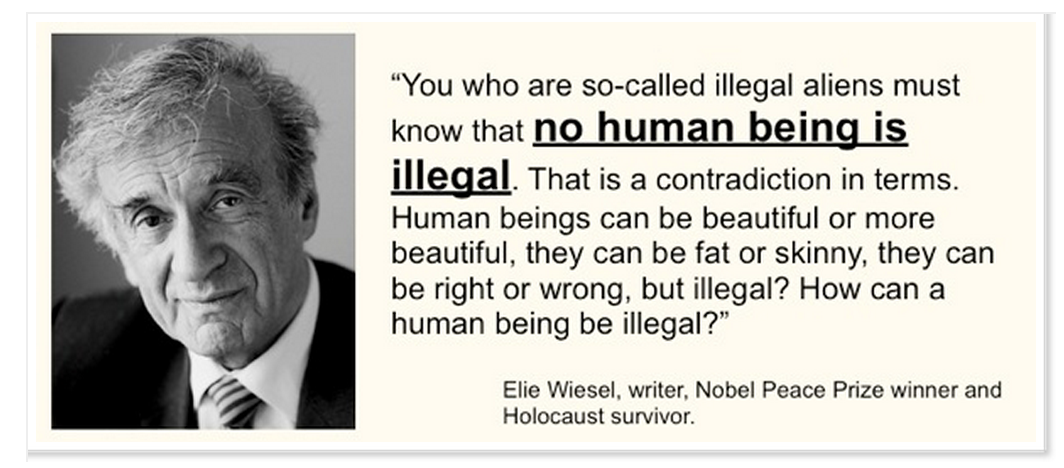
Julian Abagond: The term “illegal immigrant”

Posted on April 14, 2013 by Migrant Tales

By Julian Abagond

The term “illegal immigrant” (1930s- ) means an undocumented immigrant, one without papers to stay in the country. The older term was ”illegal alien”, common in English in the 1970s and 1980s, rare in American news stories since 2003.

An illegal immigrant can mean someone who:

  1. crossed the border illegally,
  2. overstayed a student or tourist visa,
  3. was brought to the country as a child,
  4. is waiting for a green card,

Etc.

It was first applied to Jews in Palestine in the 1930s. In America it first appeared in the Republican platform in 1986, in the Democratic one in 1996.

Since the 1980s there has been a push to get rid of it: actions are illegal, not people. Huffington Post got rid of it in 2008. The Miami Herald and MSNBC no longer use it. Then, on April 2nd 2013, the Associated Press (AP) stylebook got rid of it, saying in part:

illegal immigration Entering or residing in a country in violation of civil or criminal law. Except in direct quotes essential to the story, use illegal only to refer to an action, not a person: illegal immigration, but not illegal immigrant. Acceptable variations include living in or entering a country illegally or without legal permission.

That is huge: most American news reporters and editors follow the AP stylebook. The Los Angeles Times and the New York Times, two of the country’s biggest newspapers, are now thinking of getting rid of the term.

Why get rid of it:

  1. It makes racism respectable. It dehumanizes not just the 11 million people in America who are without papers, who are mostly people of colour (3 million are black), but 52 million Latinos, whom many assume to be undocumented even though most are American citizens. It has become a slur: Just before Marcelo Lucero was killed in a hate crime on Long Island he was called a “fucking illegal”. Yet, as Touré points out, no one calls Martha Stewart an “illegal business woman” – even though she was found guilty of insider trading in a court of law.
  2. It frames the debate on immigration: It pins the blame on immigrants, not those who employ them and often take advantage of them, whom no one ever seems to call “illegal employers”. Nor does it blame the American government’s immigration policy, which is at least 11 million cases behind in meeting the country’s labour needs. It makes it seem like the answer is to punish immigrants – even though some are undocumented through no fault of their own. It makes police raids on Latino neighbourhoods seem reasonable – as well as racial profiling (Arizona SB 1070). It makes it easy for Republicans to kill reasonable reform by calling it “amnesty for illegals”, as they did in 2006. And, worst of all, it makes it seem like undocumented immigrants should have no rights at all.

Linguist John McWhorter of Columbia University says in ten years “undocumented immigrant” will seem just as dismissive as “illegal immigrant”.

Linguist George Lakoff of UC Berkeley says that in debating and making laws framing is huge: words matter.

Kuvankaappaus 2013-4-14 kello 15.06.28


Read original story here.

 This piece was reprinted by Migrant Tales with permission.


Three news stories that expose the challenges facing Europe: Islamophobia, anti-Semitism, anti-Roma and official approval of the latter

Posted on April 6, 2013 by Migrant Tales

Three stories this week spoke volumes about the challenges facing Europe during these times: discrimination against Muslims is widespread in many European countries; a string of anti-Semitic attacks have been reported in Eastern Europe; and Hungary’s top journalism prize is awarded to an anti-Semitic and Roma basher. 

Despite their geographic differences, all three stories are related shedding light on the cancer that is spreading in our region. Intolerance is exceptionally resilient, surviving in the postcolonial era even after two devastating world wars that cost the lives of an estimated 100 million people.

If we had to picture how xenophobic groups are using hate speech to further their agendas, we could use a rabid vicious-looking dog being walked on a short leash by a zealous owner. The dog attracts lots of attention and the owner is happy about this.

What the owner doesn’t know is that the dog knows no master and can bite back hard like he did with Anders Breivik, who murdered on his counterjihadist crusade 77 victims in Norway in July 2011.

Another matter that the rabid dog owner doesn’t want to know, or is ignorant of, is that numerous rabid dogs on short leashes with owners can spark conflicts and wars between nations.

A shadow report on racism by ENAR, the European Network Against Racism, expresses concern about widespread Islamophobia in many European countries.

It claims:  ”…damage to Islamic buildings, and protests against the building of mosques even in countries, such as Poland, where some Muslim communities have been established and integrated for centuries. Muslim women and girls are particularly affected, facing an extreme form of double discrimination on the basis of both their religion and their gender. In France for instance, 85% of all Islamophobic acts target women.”

In Eastern Europe, where the economic recession has hit some countries very hard, nationalism and neo-Nazi anti-immigration groups have been on the rise. A spate of anti-Semitic attacks were recorded in the Ukraine, Poland and Hungary in recent days.

Anti-Semitism, which is one of the poisonous fruits of intolerance inflicting Europe these days, is not only on the rise in Eastern Europe but throughout the continent.

The media plays a crucial role in forging attitudes. Even so, the media mirrors what their readers think.

Rerenc Szaniszlo, an anti-Semitic radio broadcaster in Hungary who got fined for calling the Roma ”apes,” was awarded Hungary’s top journalism prize. He has a dubious reputation for spreading anti-Semitic conspiracy theories on his shows.

It’s a good matter that there are some self-respecting Hungarian journalists still around who saw this as a sham. Ten Transcics Prize for journalism winners from other categories handed their prizes in protest, according to The Independent.

All three cases above reveal something disturbing but known to us for a long time in Europe. Attacks on minorities have become so common in some parts of Europe that even journalists, who fuel such intolerance, are awarded coveted journalism awards.

The day will come when the crimes against minorities will be exposed. Their horrors, which reveal social exclusion, wrecked lives, abuse and exploitation, will one day awaken a wider audience to act and defend those democratic values we hold so dear and which are under threat these days.


ENAR announcement: Recycling hatred – racism(s) in Europe today

Posted on March 1, 2013 by Migrant Tales

The European Network Against Racism (ENAR) will organize a policy forum at the Institute for European Studies (IES),  Vrije Universiteit Brussel, on 7th March 2013 in order to launch the ENAR publication, entitled “Recylcing hatred: racism(s) in Europe today.”

For more information go to the following link.

Recyling hatred #1

Recyling hatred #2

Making torture and hate acceptable

Posted on January 26, 2013 by Migrant Tales

Even if the media in the United States speaks of torture as something recent, the truth is that it has been going on for a very long time. These type of barbaric interrogation techniques were widely used in the last century in regions like Latin America. The CIA and the United States trained and promoted torture and state-sponsored terrorism in places like the School of the Americas.

http://www.youtube.com/watch?v=V4eLYXJIZfg

Torture is not only a part of my history, but the legacy of millions of Latin Americans, Africans and Asians who are gripped today by drug wars, violence and poverty.  Matters have got so bad in the underdeveloped world that people are ready to risk their lives to migrate and work for slave wages.

One has to connect the historical dots when looking at undocumented migrants and immigration in general. It’s the same story taking place over and over again: we colonize, enslave, pillage, support dictatorships; we reap the greatest profit by promoting poverty and underdevelopment in these regions.

If you devastate a country’s democratic institutions and make a mockery of human rights, how can you on top of it ask people to live in the destruction you created?

It is surprising, if not incredible, that politicians in Europe still stigmatize migrants and refugees as “welfare shoppers.” Apart from exposing their greed, these types of politicians are making a clear statement: You have no right to opportunity and a better life.

The George W. Bush era (2000-08) not only brought to light the ugly face of USAmerica when it comes to torture and meddling in other countries’ affairs, it has inspired some critics to claim that Hollywood is now condoning it.

I personally have not seen the movie but if one surfs the web, one will find arguments for and against it.

Slavoj Žižek, a Slovenian cultural critic, wrote about Kathryn Bigelow’s film, Zero Dark Thirty,  on The Guardian:

”One doesn’t need to be a moralist, or naive about the urgencies of fighting terrorist attacks, to think that torturing a human being is in itself something so profoundly shattering that to depict it neutrally – ie to neutralise this shattering dimension – is already a kind of endorsement.”

Kuvankaappaus 2013-1-26 kello 8.30.39

Even Republican US Senator John McCain, a Vietnam POW who was tortured, has condemned the film.

”The story is torture does not work, it is hateful, it is harmful, incredibly harmful to the United States of America. And to somehow make people believe that it was responsible for the elimination of Osama Bin Laden is in my view unacceptable.”

In the same way some try to sell torture as acceptable is the same reasoning being used to convince us that social exclusion and exploitation of immigrants and visible minority group is fine.

Greedy businesses, and politicians at the service of the latter, reveal to us why matters will get worse before they improve.

Racism, prejudice, discrimination and social exclusion is all about defending the privilege of certain groups at the cost of others.

Undocumented immigrants are welcomed to Europe because it’s profitable in the short-term.

In the long-term, however, such contradictions and values will end up destroying us in the same way we destroyed other countries.


Rule number one about racism: Don’t generalize!

Posted on January 20, 2013 by Migrant Tales

It is amazing that people who should know better have never learned one very important fact: Don’t generalize about ethnic groups.  We’d avoid a lot of harm to ourselves (living in the narrow world of hate and racism) and others (labeling and victimizing) if we stopped generalizing about ethnic groups.

The suggestion by Kai Haavisto, a Perussuomalaiset (PS) Uusimaa regional committee member, who wrote on a Uusi Suomi blog that certain refugee groups should be chemically castrated before permitting them to live in Finland, is a perfect example of how racism is spread and maintained in this country.

PS MP James Hirvisaari, who was fined in December for inciting ethnic hatred, adds more hate and racism to Haavisto’s suggestion by stating that “we should talk openly about gang rape” because in some African countries, like South Africa, such a crime is a genetic trait and “a national pastime.”

Hirvisaari only has a high school degree but PS MP Jussi Halla-aho has a PhD in linguistics. Halla-aho got convicted for defaming a religion and spreading ethnic hatred when he suggested that Somalis live off social welfare because it is a genetic trait.

In Finland and elsewhere, racism is kept alive because some people believe in old wise tales about ethnic groups. They believe these old wise tales in the same way as children believe in fairy tales or in Santa Claus.

When people are hostile and racist to other groups when they generalize, their aim is to show how different they are from us. Since they are so “different” it permits me to be racist towards them because they are “a threat.”

The big difference between fairy tales and racism is that the latter causes harm to society and especially to their victims.

Let’s get one matter straight: There is no such thing as national character because societies are too complex. This a fact that should be taught at school and to adults. The behavior we have is learned – not instinctual.

If we want to undermine racism and control those prejudices we learned, it is important that we start teaching our children at school that it is a grave mistake to generalize about ethnic groups.

If anything, such a lesson would be one big blow to our racism.


Why was Finland “tolerant” of Jews when it was an ally of Nazi Germany?

Posted on January 16, 2013 by Migrant Tales

Finns claim proudly – followed by an obvious sigh of relief – that even if we were an ally of Nazi Germany during World War 2, anti-Semitism never reached the same levels as in Hungary, Romania and in other parts of Nazi-dominated Europe. 

While Finland offers an interesting case with respect to anti-Semitism in war-ravaged Nazi Europe, was tolerance the principal factor that kept Finns from persecuting Jews? Could the underwhelming size of the Jewish community and the fact that they were accepted as Finns offer us better explanations?

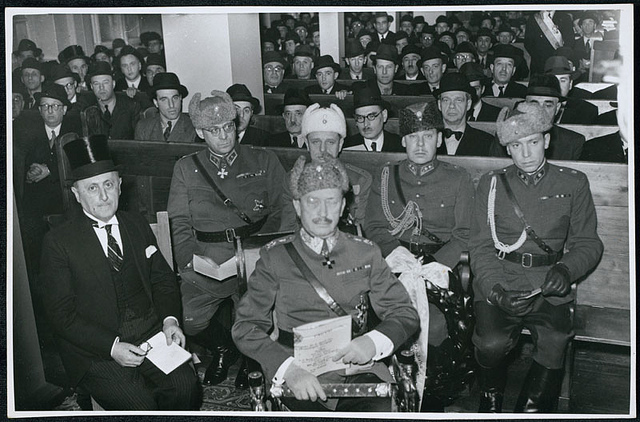
5164322092_0db1ae431e_z

Memorial ceremony for Jewish soldiers who fell in World War II presided by Marshal Carl Mannerheim in Helsinki, Finland. Source: Flickr. 

The size of the Jewish community in Finland has been small. In the 1870 census, there were 460 Jews and by 1883 they are said to have risen to 1,000. In 1929, it peaked to 1,763.*

Today there are about 1,500 Jews living in Finland.

The Jews were granted Finnish citizenship in 1918. Finland was the last country in Europe together with Romania to do so.

Even if there appears that Finland tolerated Finnish Jews in World War 2, former Prime Minister Paavo Lipponen formally apologized in November 2000 to the Jewish community for the extradition of eight Jews to Germany in 1942. Only one of the eight survived after they were sent to Auschwitz.

While the Jewish question never reached the same proportions in this country as elsewhere in Nazi-dominated Europe, would anti-Semitism have soared if the size of the Jewish community were many times bigger?

There seems to be a connection between the recent rise of racism, xenophobia and growth of far-right parties in Finland and the size of the immigrant community. Certainly factors like the economic recession and rising unemployment play important roles as well.

How can xenophobia grow if the immigrant community is minuscule? How can there be anti-Semitism if there are only a handful of Jews?

Sometimes size does not matter. In neighboring Estonia, an estimated half of the Jewish population, which totaled 4,000, died in the Holocaust.  In countries like Poland 3 million Jews perished under Nazi rule.

If we look at history, Finland was far from being “tolerant.” The Restricting Act of 1939 is one of many laws that showed how Finland perceived the world as a threat.

The Jews were in part saved by their acceptance as Finns in the 1940s, but a very important factor must have been their underwhelming numbers.

* Migration Patterns among Jews – Finland. See following link. 


  • Previous
  • 1
  • …
  • 3
  • 4
  • 5
  • 6
  • 7
  • 8
  • 9
  • …
  • 12
  • Next
Read more about documentary film
Read more

Recent Posts

  • Finland’s tabloids Iltalehti and Ilta-Sanomat are the pits
  • Riikka Purra’s Dr Jekyll and Mr Hyde mask
  • Double standards
  • Perussuomalaiset: Uusi logo, sama vanha juttu
  • Taco Trump

Recent Comments

  1. Absolutely Socking: Racist Finnish Facebook group against human rights gets flooded with socks on Musta Barbaari’s mother and sister charged by the police in “ethnic profiling” case
  2. Ilkka Nuotio on Pekka Myrskylä: “Tilastot kertovat toista kuin poliittinen keskustelu”
  3. Genrih Soinkara on The war in Ukraine and the Russian-Finnish border crisis are showing Finland’s ugly side
  4. Ahti Tolvanen on Comment by Ahti Tolvanen on the Helsinki +50 conference
  5. Angel Barrientos on Angel Barrientos is one of the kind beacons of Finland’s Chilean community

Archives

  • June 2026
  • May 2026
  • April 2026
  • March 2026
  • February 2026
  • January 2026
  • December 2025
  • November 2025
  • October 2025
  • September 2025
  • August 2025
  • July 2025
  • June 2025
  • May 2025
  • April 2025
  • March 2025
  • February 2025
  • January 2025
  • December 2024
  • November 2024
  • October 2024
  • September 2024
  • August 2024
  • July 2024
  • June 2024
  • May 2024
  • April 2024
  • March 2024
  • February 2024
  • January 2024
  • December 2023
  • November 2023
  • October 2023
  • September 2023
  • August 2023
  • July 2023
  • June 2023
  • May 2023
  • April 2023
  • March 2023
  • February 2023
  • January 2023
  • December 2022
  • November 2022
  • October 2022
  • September 2022
  • August 2022
  • July 2022
  • June 2022
  • May 2022
  • April 2022
  • March 2022
  • February 2022
  • January 2022
  • December 2021
  • November 2021
  • October 2021
  • September 2021
  • August 2021
  • July 2021
  • June 2021
  • May 2021
  • April 2021
  • March 2021
  • February 2021
  • January 2021
  • December 2020
  • November 2020
  • October 2020
  • September 2020
  • August 2020
  • July 2020
  • June 2020
  • May 2020
  • April 2020
  • March 2020
  • February 2020
  • January 2020
  • December 2019
  • November 2019
  • October 2019
  • September 2019
  • August 2019
  • July 2019
  • June 2019
  • May 2019
  • April 2019
  • March 2019
  • February 2019
  • January 2019
  • December 2018
  • November 2018
  • October 2018
  • September 2018
  • August 2018
  • July 2018
  • June 2018
  • May 2018
  • April 2018
  • March 2018
  • February 2018
  • January 2018
  • December 2017
  • November 2017
  • October 2017
  • September 2017
  • August 2017
  • July 2017
  • June 2017
  • May 2017
  • April 2017
  • March 2017
  • February 2017
  • January 2017
  • December 2016
  • November 2016
  • October 2016
  • September 2016
  • August 2016
  • July 2016
  • June 2016
  • May 2016
  • April 2016
  • March 2016
  • February 2016
  • January 2016
  • December 2015
  • November 2015
  • October 2015
  • September 2015
  • August 2015
  • July 2015
  • June 2015
  • May 2015
  • April 2015
  • March 2015
  • February 2015
  • January 2015
  • December 2014
  • November 2014
  • October 2014
  • September 2014
  • August 2014
  • July 2014
  • June 2014
  • May 2014
  • April 2014
  • March 2014
  • February 2014
  • January 2014
  • December 2013
  • November 2013
  • October 2013
  • September 2013
  • August 2013
  • July 2013
  • June 2013
  • May 2013
  • April 2013
  • March 2013
  • February 2013
  • January 2013
  • December 2012
  • November 2012
  • October 2012
  • September 2012
  • August 2012
  • July 2012
  • June 2012
  • May 2012
  • April 2012
  • March 2012
  • February 2012
  • January 2012
  • December 2011
  • November 2011
  • October 2011
  • September 2011
  • August 2011
  • July 2011
  • June 2011
  • May 2011
  • April 2011
  • March 2011
  • February 2011
  • January 2011
  • December 2010
  • November 2010
  • October 2010
  • September 2010
  • August 2010
  • July 2010
  • June 2010
  • May 2010
  • April 2010
  • March 2010
  • February 2010
  • January 2010
  • December 2009
  • November 2009
  • October 2009
  • September 2009
  • August 2009
  • July 2009
  • December 2008
  • November 2008
  • October 2008
  • September 2008
  • August 2008
  • July 2008
  • June 2008
  • May 2008
  • April 2008
  • March 2008
  • February 2008
  • January 2008
  • November 2007
  • October 2007
  • September 2007
  • August 2007
  • July 2007
  • June 2007
  • May 2007

Categories

  • ?? Gia L?c
  • ????? ?????? ????? ???????? ?? ??????
  • ???????
  • @HerraAhmed
  • @mondepasrond
  • @nohatefinland
  • @oula_silver
  • @Varathas
  • A Pakistani family
  • äärioikeisto
  • Abbas Bahmanpour
  • Abdi Muhis
  • Abdirahim Hussein Mohamed
  • Abdirahim Husu Hussein
  • Abdirisak Mahamed
  • About Migrant Tales
  • activism
  • Adam Al-Sawad
  • Adel Abidin
  • Afrofinland
  • Ahmed IJ
  • Ahti Tolvanen
  • Aino Pennanen
  • Aisha Maniar
  • Alan Ali
  • Alan Anstead
  • Alejandro Díaz Ortiz
  • Alekey Bulavsev
  • Aleksander Hemon
  • Aleksanterinliitto
  • Aleksanterinliitto ry
  • Aleksanterinliitto ry:n hallitus
  • Alex Alex
  • Alex Mckie
  • Alexander Nix
  • Alexandra Ayse Albayrak
  • Alexis Neuberg
  • Ali Asaad Hasan Alzuhairi
  • Ali Hossein Mir Ali
  • Ali Rashid
  • Ali Sagal Abdikarim
  • Alina Tsui
  • Aline Müller
  • All categories
  • Aman Heidari
  • Amiirah Salleh-Hoddin & Jana Turk
  • Amin A. Alem
  • Amir Zuhairi
  • Amkelwa Mbekeni
  • Ana María Gutiérrez Sorainen
  • Anachoma
  • Anders Adlecreutz
  • Angeliina Koskinen
  • Anna De Mutiis
  • Anna María Gutiérrez Sorainen
  • Anna-Kaisa Kuusisto ja Jaakko Tuominen
  • Annastiina Kallius
  • Anneli Juise Friman Lindeman
  • Announcement
  • Anonymous
  • Antero Leitzinger
  • anti-black racism
  • Anti-Hate Crime Organisation Finland
  • Anudari Boldbaatar
  • Arshiya Nasser
  • Aspergers Syndrome
  • Asylum Corner
  • Asylum seeker 406
  • Athena Griffin and Joe Feagin
  • Autism
  • Avaaz.org
  • Awale Olad
  • Ayan Said Mohamed
  • AYY
  • Barachiel
  • Bashy Quraishy
  • Beatrice Kabutakapua
  • Beri Jamal
  • Beri Jamal and Enrique Tessieri
  • Bertolt Brecht
  • Boiata
  • Boodi Kabbani
  • Bruno Gronow
  • Carmen Pekkarinen
  • Çelen Oben and Sheila Riikonen
  • Chiara Costa-Virtanen
  • Chiara Costa-Virtanen
  • Chiara Sorbello
  • Christian Thibault
  • Christopher Wylie
  • Clara Dublanc
  • Dana
  • Daniel Malpica
  • Danilo Canguçu
  • David Papineau
  • David Schneider
  • Dexter He
  • Don Flynn
  • Dr Masoud Kamali
  • Dr. Faith Mkwesha
  • Dr. Theodoros Fouskas
  • Edna Chun
  • Eeva Kilpi
  • Emanuela Susheela
  • En castellano
  • ENAR
  • Enrique
  • Enrique Tessieri
  • Enrique Tessieri & Raghad Mchawh
  • Enrique Tessieri & Yahya Rouissi
  • Enrique Tessieri and Muhammed Shire
  • Enrique Tessieri and Sira Moksi
  • Enrique Tessieri and Tom Vandenbosch
  • Enrique Tessieri and Wael Che
  • Enrique Tessieri and Yahya Rouissi
  • Enrique Tessieri and Zimema Mhone
  • Epäluottamusmies
  • EU
  • Europe
  • European Islamophobia Report
  • European Islamophobia Report 2019,
  • European Union
  • Eve Kyntäjä
  • Ezequiel Caldeiro
  • Facebook
  • Fadumo Dayib
  • Faisa Kahiye
  • Farhad Manjoo
  • Fasismi
  • Finland
  • Fizza Qureshi
  • Flyktingar och asyl
  • Foreign Student
  • Fozia Mir-Ali
  • Frances Webber
  • Frida Selim
  • Gareth Rice
  • Ghyslain Vedeaux
  • Global Art Point
  • Great Replacement
  • Habiba Ali
  • Hami Bahadori
  • Hami Bahdori
  • Hamid
  • Hamid Alsaameere
  • Hamid Bahdori
  • Handshake
  • Harmit Athwal
  • Hassan Abdi Ali
  • Hassan Muhumud
  • Heikki Huttunen
  • Heikki Wilenius
  • Helsingin Sanomat
  • Henning van der Hoeven
  • Henrika Mälmsröm
  • Hser Hser
  • Hser Hser ja Mustafa Isman
  • Husein Muhammed
  • Hussain Kazemian
  • Hussain Kazmenian
  • Ibrahim Khan
  • Ida
  • Ignacio Pérez Pérez
  • Iise Ali Hassan
  • Ilari Kaila & Tuomas Kaila
  • Imam Ka
  • inside-an-airport
  • Institute of Race Relations
  • Iraqi asylum seeker
  • IRR European News Team
  • IRR News Team
  • Islamic Society of Norhern FInland
  • Islamic Society of Northern Finland
  • Islamophobia
  • Jacobinmag.com
  • Jallow Momodou
  • Jan Holmberg
  • Jane Elliott
  • Jani Mäkelä
  • Jari Luoto
  • Jari Taponen
  • Jegor Nazarov
  • Jenni Stammeier
  • Jenny Bourne
  • Jessie Daniels
  • Joe Davidow
  • Johannes Koski
  • John D. Foster
  • John Grayson
  • John Marriott
  • Jon Burnett
  • Jorma Härkönen
  • Jos Schuurmans
  • José León Toro Mejías
  • Josue Tumayine
  • Jouni Karnasaari
  • Juan Camilo
  • Jukka Eräkare
  • Julian Abagond
  • Julie Pascoet
  • Jussi Halla-aho
  • Jussi Hallla-aho
  • Jussi Jalonen
  • JusticeDemon
  • Kadar Gelle
  • Kaksoiskansalaisuus
  • Kansainvälinen Mikkeli
  • Kansainvälinen Mikkeli ry
  • Katherine Tonkiss
  • Kati Lepistö
  • Kati van der Hoeven-Lepistö
  • Katie Bell
  • Kättely
  • Kerstin Ögård
  • Keshia Fredua-Mensah & Jamie Schearer
  • Khadidiatou Sylla
  • Khadra Abdirazak Sugulle
  • Kiihotus kansanryhmää vastaan
  • Kirsi Crowley
  • Koko Hubara
  • Kristiina Toivikko
  • Kubra Amini
  • KuRI
  • La Colectiva
  • La incitación al odio
  • Laura Huhtasaari
  • Lauri Finér
  • Leif Hagert
  • Léo Custódio
  • Leo Honka
  • Leontios Christodoulou
  • Lessie Branch
  • Lex Gaudius
  • Leyes de Finlandia
  • Liikkukaa!
  • Linda Hyökki
  • Liz Fekete
  • M. Blanc
  • Maarit Snellman
  • Mahad Sheikh Musse
  • Maija Vilkkumaa
  • Malmin Kebab Pizzeria Port Arthur
  • Marcell Lorincz
  • Mari Aaltola
  • María Paz López
  • Maria Rittis Ikola
  • Maria Tjader
  • Marja-Liisa Tolvanen
  • Mark
  • Markku Heikkinen
  • Marshall Niles
  • Martin Al-Laji
  • Maryan Siyad
  • Matt Carr
  • Mauricio Farah Gebara
  • Media Monitoring Group of Finland
  • Micah J. Christian
  • Michael McEachrane
  • Michele Levoy
  • Michelle Kaila
  • Migrant Tales
  • Migrant Tales Literary
  • Migrantes News
  • Migrants' Rights Network
  • MigriLeaks
  • Mikko Kapanen
  • Miriam Attias and Camila Haavisto
  • Mohamed Adan
  • Mohammad Javid
  • Mohammad M.
  • Monikulttuurisuus
  • Monisha Bhatia and Victoria Canning
  • Mor Ndiaye
  • Muh'ed
  • Muhamed Abdimajed Murshid
  • Muhammed Shire
  • Muhammed Shire and Enrique Tessieri
  • Muhis Azizi
  • Musimenta Dansila
  • Muslimiviha
  • Musulmanes
  • Namir al-Azzawi
  • Natsismi
  • Neurodiversity
  • New Women Connectors
  • Nils Muižnieks
  • No Labels No Walls
  • Noel Dandes
  • Nuor Dawood
  • Omar Khan
  • Otavanmedia
  • Oula Silvennoinen
  • Paco Diop
  • Pakistani family
  • Pentti Stranius
  • Perussuomalaiset
  • perustuslaki
  • Petra Laiti
  • Petri Cederlöf
  • Pia Grochowski
  • Podcast-lukija Bea Bergholm
  • Pohjois – Suomen Islamilainen Yhdyskunta
  • Pohjois Suomen Islamilainen Yhyskunta
  • Polina Kopylova
  • Race Files
  • racism
  • Racism Review
  • Raghad Mchawh
  • Ranska
  • Rashid H. and Migrant Tales
  • Rasismi
  • Raul Perez
  • Rebecka Holm
  • Reem Abu-Hayyeh
  • Refugees
  • Reija Härkönen
  • Remiel
  • Reza Nasri
  • Richard Gresswell
  • Riikka Purra
  • Risto Laakkonen
  • Rita Chahda
  • Ritva Kondi
  • Robito Ibrahim
  • Roble Bashir
  • Rockhaya Sylla
  • Rodolfo Walsh
  • Roger Casale
  • Rostam Atai
  • Roxana Crisólogo Correa
  • Ruth Grove-White
  • Ruth Waweru-Folabit
  • S-worldview
  • Sadio Ali Nuur
  • Sami Rusanen
  • Sandhu Bhamra
  • Sara de Jong
  • Sarah Crowther
  • Sari Alhariri
  • Sarkawt Khalil
  • Sasu
  • Scot Nakagawa
  • Shabana Ahmadzai
  • Shada Islam
  • Sharon Chang blogs
  • Shenita Ann McLean
  • Shirlene Green Newball
  • Sini Savolainen
  • Sira Moksi
  • Sonia K.
  • Sonia Maria Koo
  • Steverp
  • Stop Deportations
  • Suldaan Said Ahmed
  • Suomen mediaseurantakollektiivi
  • Suomen Muslimifoorumi ry
  • Suomen viharikosvastainen yhdistys
  • Suomen viharikosvastainen yhdistys ry
  • Suomi
  • Supermen
  • Susannah
  • Suva
  • Syrjintä
  • Talous
  • Tapio Tuomala
  • Taw Reh
  • Teivo Teivainen
  • The Daily Show
  • The Heino
  • The Supermen
  • Thomas Elfgren
  • Thulfiqar Abdulkarim
  • Tim McGettigan
  • Tino Singh
  • Tito Moustafa Sliem
  • Tobias Hübinette and L. Janelle Dance
  • Transport
  • Trica Danielle Keaton
  • Trilce Garcia
  • Trish Pääkkönen
  • Trish Pääkkönen and Enrique Tessieri
  • Tuulia Reponen
  • Uncategorized
  • UNITED
  • University of Eastern Finland
  • Uyi Osazee
  • Väkivalta
  • Vapaa Liikkuvuus
  • Venla-Sofia Saariaho
  • Vieraskynä
  • W. Che
  • W. Che an Enrique Tessieri
  • Wael Ch.
  • Wan Wei
  • Women for Refugee Women
  • Xaan Kaafi Maxamed Xalane
  • Xassan Kaafi Maxamed Xalane
  • Xassan-Kaafi Mohamed Halane & Enrique Tessieri
  • Yahya Rouissi
  • Yasmin Yusuf
  • Yassen Ghaleb
  • Yle Puhe
  • Yuliet Tresa
  • Yve Shepherd
  • Zahra Khavari
  • Zaker
  • Zalina Ametova
  • Zamzam Ahmed Ali
  • Zeinab Amini ja Soheila Khavari
  • Zimema Mahone and Enrique Tessieri
  • Zimema Mhone
  • Zoila Forss Crespo Moreyra
  • ZT
  • Zulma Sierra
  • Zuzeeko Tegha Abeng
© 2026 Migrant tales | Powered by Minimalist Blog WordPress Theme