Migrant tales
Menu
  • #MakeRacismHistory “In Your Eyes”
  • About Migrant Tales
  • It’s all about Human Rights
  • Literary
  • Migrant Tales Media Monitoring
  • NoHateFinland.org
  • Tales from Europe
Menu

Tag: enrique tessieri

Facebook: Argentina in context and the struggle for social justice

Posted on July 29, 2016 by Migrant Tales

One of the matters that Argentineans can be proud of is its history, especially those that never gave up their hope for social justice. Reading Argentinean history especially from the 1880s to the present is like reading a novel of an ongoing and never-ending struggle.

What does that history tell us? It reveals to us of a people who have won and lost and won and lost again in their hope to build a country that is based on social justice.

One of the biggest instigators of change in Argentina were the millions of immigrants who came here like my great grandparents.

In light of the latter, it is surprising that the present discourse in Finland tends to show that immigration and immigrants are “a problem.”

That is how off base the debate is in Finland is and how little we know about our own immigrant history. Over 1.2 million Finns emigrated between 1860 and 1999. They

Over 1.2 million Finns emigrated between 1860 and 1999. They

They too led the way and gave us roots, which, unfortunately, aren’t still acknowledged in Finland.

Na?ytto?kuva 2016-7-29 kello 16.39.46

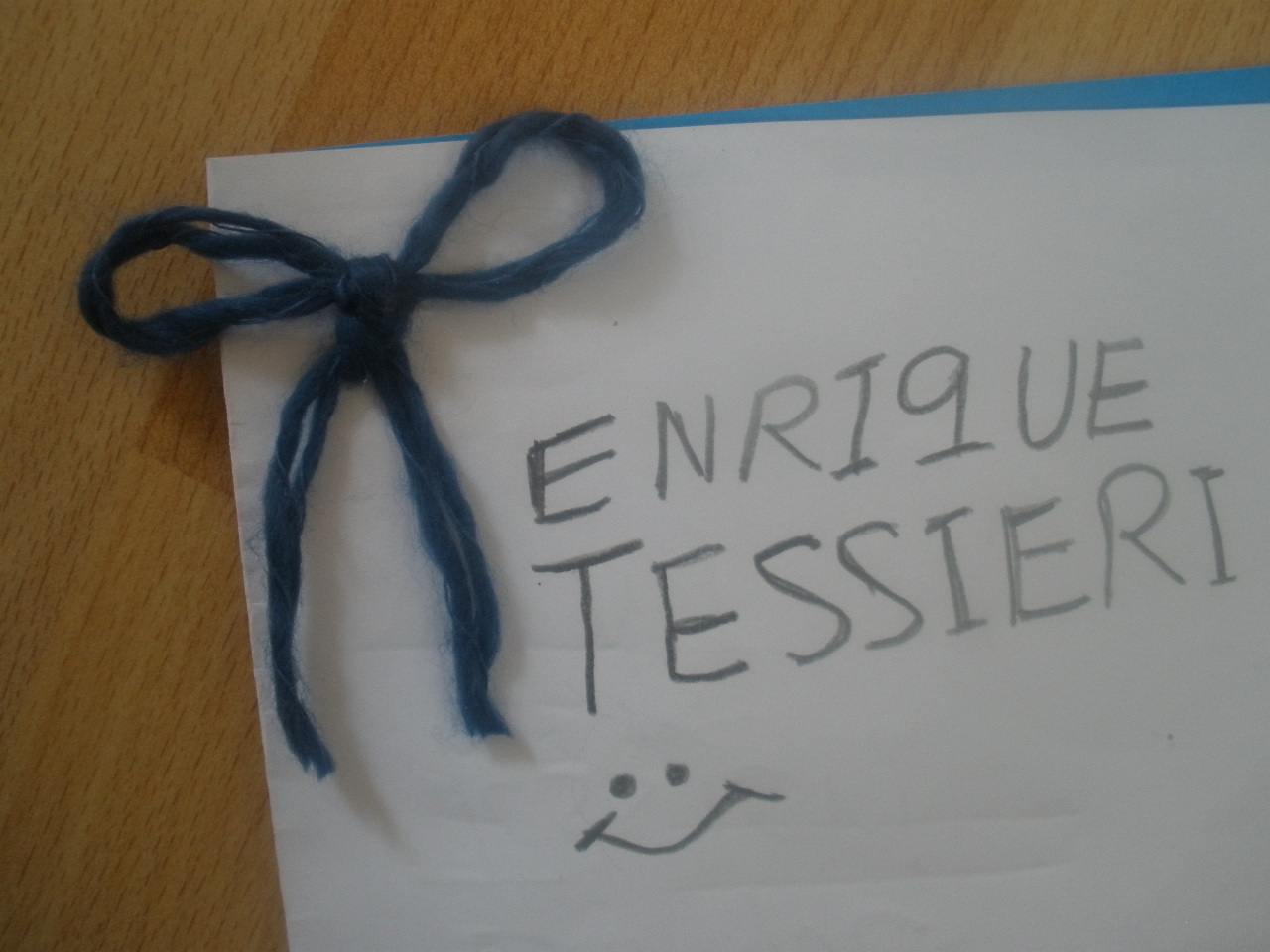
Letter from Dana: This is especially for you Enrique Tessieri

Posted on July 21, 2013 by Migrant Tales

MT Comment: Dana’s letter is humbling to say the least and proves that we have the strength as a community to change matters. The words and opinions we publish can move mountains, or at least those mountains that reside in us. Thank you Dana. 

___________

By Dana

OLYMPUS DIGITAL CAMERA

I’m standing up for me…for my spirit… for me in me and for me in air…my words will never die.

It is a stand for a human and humans that are standing for human rights and these words are a present to Enrique Tessieri who stands up with his heart for many people that he never saw.

These words are a tribute to Migrant Tales…Thank you so much for all you’ve done and are doing on MT…

A compliment as well to all the people who visit MT, even for a short while, to make their point. I love you all even if we don’t know each other personally and may live in faraway places.

I was searching and searching and searching

I was looking and looking and looking

I was trying and trying and trying

I wanted to find a human

even one was enough for me

And finally

one day

There was me and my computer

There was me and the net

There was me and GOD

and I found

Migrant Tales on the net

And I found Enrique Tessieri.

I opened up and told him my story of what happened and is happening to me in Finland…

He accepted me and that was good news

He could see me even i had never given him a picture of me and that was great in Finland

I could not believe that i had found a human in Finland

It happened after i finished my case in court with the judge and law in Finland… in that time i could not believe there were any humans living in Finland

BUT wow

I saw them:

Enrique Tessieri

Mark

And some other people… it was like a small garden in the middle of a desert.

A garden that has shadows under  its trees, where you can find voices and where u can have a voice… my wings flapped and flapped and flapped and i saw myself with MT… My soul talked and talked and talked and i find myself in that garden with the help of words.

Now i have my own trees on MT and many of them have fruits; my trees won’t dry, won’t die… they will be alive over and over again in air, and everywhere.


Finland’s darkest period: 2011-15

Posted on March 14, 2012 by Migrant Tales

In the future, when Finnish historians of different ethnic backgrounds look at the present parliamentary term 2011-15,  they will most likely conclude that it was the darkest period for Finland and immigrants in the new century.  A prelude to this sombre period were  the municipal election of 2008 and how it reflected a shift in the national mood. 

It would be naive, even an exercise in self-deceit, to claim that the Perussuomalaiset (PS) party isn’t one  obvious culprit. The municipal elections of 2008 and 2003, when PS MP Tony Halme was elected to parliament,  speak volumes about how racism and xenophobia started to lift their heads in this country.

Despite being one of the worst periods in our recent history, where some groups and politicians aim to make racism and xenophobia as normal and acceptable as karjalanpiirakka, it has brought out the best in some of us. For some, like Migrant Tales, it has been a clarion call.

If this period has brought out the best in some of us, it has brought out the worst as well.

Some regretful examples come form of silence and lack of leadership by the Finnish media and some politicians. The success of the PS in the April elections is proof of the inarticulateness, complacency and even the flirting of these two groups with anti-immigration parties and groups.

The PS has provided us with monthly scandals beginning with MP Teuvo Hakkarainen’s first day in parliament to the recent suggestion by councilman Tommi Rautio’s  to give a medal to a cold-blooded killer.

A word of advice to anti-immigration extremists: Everything you write will come under scrutiny by future generations. Those future generations, which will be made up of Finnish researchers from different ethnic backgrounds, will highlight the racism and xenophobia that inflicted part of our society today.

When they give their lectures at our universities on ethnic studies or history, they will show to their students the shameful evidence left in the writings of numerous anti-immigration politicians like PS MP Jussi Halla-aho and his Suomen Sisu crowd, for example.

Time will increase the shamefulness of these racist writings. What is written today by some of these racists will look eerily similar to what some groups wrote about blacks during the U.S. Civil Rights Movement of the 1950s and 1960s. Recognizing this will be the first important step in liberating our society from the illness that has inflicted it.

What should an immigrant do if he cannot find work in Finland?

Posted on January 15, 2012 by Migrant Tales

By Enrique Tessieri

What should you do if you live in Finland and cannot find employment? The lucky ones can move to another country but for many it is a crude dead-end street lined with little hope: fragmented work life, lower salary than average, health problems and, worse, discrimination that will discourage you to integrate.  

There is an interesting article in Sunday’s Helsingin Sanomat on page A8 about a U.S. citizen, Ryan Savage, who is married to a Finn.

“USAmerican Ryan Savage is a dream come true for the immigration officials:  university graduate that moved with his spouse to Finland. He speaks the most widely spoken language in the world [English]. The problem is that Savage cannot find any work in Finland.”

Helsingin Sanomat claims that immigrant men make on average 10,000 euros less than Finnish men, while the difference [6,000 euros] is less between immigrant and Finnish women.

Other sad realities about being an immigrant in this country are that you have a greater chance of living in poverty than Finnish families and have twice as greater chance of being attacked by another person than a Finn. One study showed that immigrant men have 50% more ear ailments than Finnish males.

If the above is true, we should be especially concerned and critical about those parties that play down the role prejudice and racism in this country. All these social and physical symptoms mentioned above are indirectly or directly related to social ills like exclusion.

But if a politician, political party or society deny that racism is not a big social problem in this country and that everything is fine, it is effectively telling you that they will not do anything to tackle the problems of our ever-growing immigrant community.  Thus you do not exist. Since you don’t exist there is no reason to even worry never mind begin addressing your problems.

There are many ways of confronting the apathy or denial of the majority concerning our community: get involved in a political party, form a social movement, start up a blog like Migrant Tales or Facebook page like My Finland is International, or simply leave Finland for greener pastures.

Everyone isn’t that fortunate that he or she can just move to anther country. Some are forced to face that depressing  music that eats away at your self-esteem and keeps you from realizing your full potential in this society.

A society like ours that claims to be for social justice and equality cannot accept prejudice, exclusion and inequality in any form.

While first-generation immigrants should raise their voices in Finland and demand changes, it is their children  that are our hope.

Some of them have seen enough of how their parents have been excluded from the labor market and are getting the short end of society’s stick.

They, rightfully, have a valid gripe and should demand far better than what their parents got.

It’s time to organize, be and think proactively.

Lip service or action by Finnish municipal authorities?

Posted on January 10, 2012 by Migrant Tales

By Enrique Tessieri

The role of accepting refugees in remote municipalities as a way of slowing the number of people who move out of the community is a half-way solution to the challenging demographic problem facing many parts of Finland. While there is a lot of good will to accommodate refugees in their municipality, many of these people end up moving to bigger cities like Helsinki after short stay. 

One of the problems why refugees and immigrants avoid small municipalities or stay a short while is because there are few opportunities, jobs and near-nonexistent immigrant community.

Another important matter that encourages such refugees to move out of such municipalities when possible is the lack of a clear idea by city officials of what these people’s role is in the community.  Directing them to their umpteenth Finnish-language course, employment office or to The Social Insurance Institution of Finland (Kela)  are not effective ways of dealing with the issue but a method of brushing the problem under the rug.

While some municipalities do a better job than others at integrating refugees and immigrants, those that do a poor job are the ones who do no envisage any “real” place for them. By “real place” I mean hiring refugees and immigrants to work for the municipality and doing everything possible that they’ll work, invest and raise their families in our community.

Mikkeli (pop. 48,676) is a municipality located about 230km northeast of Helsinki.  It’s a typical city that faces serious demographic challenges (aging population) and needs outside investment to create more jobs.  What makes matters worse is that the city does not have any concrete plan or roadmap on how it plans to meet these future demographic and economic challenges.

Believe it or not, Mikkeli has no international director coordinating such efforts except for the assistant mayor.

Some estimates see Finland needing by 2040 two million immigrants to maintain the same age structure it had in 2007, when 17% of the population was over 65 years.  Since such a large number of immigrants are needed to maintain the present age structure, the role of immigration can only slow the process of aging at municipalities like Mikkeli.

In the region of Etelä-Savo where I live, 2040 is already here in some municipalities. In Puumala, 29.3% of the population is over 65 years while the average for Etelä-Savo is 22.7%. In Mikkeli, 19.1% of the inhabitants are pensioners.

In many respects the rise of an anti-immigration party like the Perussuomalaiset (PS) comes at a very bad moment for Finland and regions like Etelä-Savo.

If local authorities are struggling to figure out the big picture for refugees and immigrants in their respective municipalities, they have to deal as well with ever-growing nationalism and anti-immigration sentiment.

Hiding one’s head in the sand is not a solution. Smaller municipalities throughout Finland need not only a viable plan that will promote mutual acceptance, respect, equal opportunities and most importantly jobs for refugees, immigrants and their local inhabitants, they need to implement such a plan now.

Finland & Cultural Diversity 2011

Posted on December 29, 2011 by Migrant Tales

By Enrique Tessieri

In many respects 2011 was a watershed year for Finland and Europe concerning the rise of anti-immigration parties and xenophobia. The biggest news to hit Finland this year was without a doubt the April 17 election, which saw the anti-immigration Perussuomalaiset (PS) party win 39 seats compared with only 5 in 2007. On July 22 Anders Breivik gunned down most of his 77 victims in Norway. 

If you are an immigrant or a visible minority in Finland,  2011 will go down as one the worst years in a very long time. Certainly anti-immigration parties in Europe have gained strength by the ever-worsening economic situation, the euro crisis and financial bailouts of countries like Greece, Ireland and Portugal.

Below is a quarter-by-quarter account of what made news on the immigration front in Finland during 2011:

First quarter 

The year kicked off in January with news of the death of Eveline Fadayel, an Egyptian grandmother who was granted a  residence permit after a lengthy process with immigration officials. The late woman’s legal battle to remain in Finland with her naturalized Finnish son triggered lots of concern and public debate over her plight as well as on immigration policy.

Her case highlights problems with our immigration policy and family reunification. A similar example are minors who have been granted refugee status by this country but who are forced to live separated from their parents. The government has announced plans to tighten family reunification rules further.

With the PS looking better in the polls as the historic April election neared, the party published its election manifesto in February. What is odd about the PS’ manifesto is that it does not differ radically from the government’s immigration policy, which suggests that most political parties in Finland take a tough line on immigration policy.

PS chairman, Timo Soini, told a group of German journalists in April before the election that he supported the government’s immigration policy.

With the anti-immigration atmosphere thickening in Finland, concern over the rights of minorities like the Swedish speakers in Finland was expressed by Sweden’s Integration Minister Erik Ullenhage. Then foreign minister, Alexander Stubb, said the debating atmosphere on immigrants and refugees in this country had become “oppressive.”

Second quarter

The election on April 17 dominated national and even international attention for quite a while. Newly elected PS MPs like Teuvo Hakkarainen became instant household names and the darlings of the tabloids with their racist and derogatory statements about blacks, refugees and immigrants. Racism, holocaust denial and off-the-cuff remarks by PS MPs and others would put Soini under the media spotlight throughout the year.

While Soini tried to calm Europe after the election by stating that the PS wasn’t an extremist party and that “Europe could sleep safely,” the news of the PS’ election victory did not go down well with some. Writer Sofi Oksanen was quoted as saying on Rome-based daily La Reppublica that the PS has its roots in Hitler’s Germany.

Emboldened by the election result, the Finnish media started to report more closely hate crimes. One of these that was reported by a tabloid about the speaker of parliament, Ben Zyskowicz, who was almost attacked by an unidentified person after he was called a Jew.

PS MP Jussi Halla-aho, who leads the far-right Suomen Sisu anti-immigration wing of Soini’s party, was elected to chair the administration committee, which among other things oversees immigration policy.

Despite the election victory fanfare of the PS, a group of 1,000 immigrants and Finns demonstrated in front of parliament against the PS.  The demonstration was organized by My Finland is International on Facebook. It was a historic event since the last time that immigrants and Finns demonstrated together in such large numbers was in October 1982.

The PS decided to sit it out in the opposition instead of forming part of government due to differences over EU policy. Even if the PS are now in the opposition, it does not mean that the other parties can’t feel its shadow. This became clear when the government appointed Christian Democrat Päivi Räsänen to head the interior ministry in charge of immigration policy.

The PS has approved and expressed satisfaction with Räsänen’s appointment. The Christian Democrat’s provocative views on homosexuality caused a large exodus of people to abandon the Lutheran Church.

Third quarter

The holiday month of July in Finland was rudely awoken when news of  Breivik’s mass-killing crusade to save Europe from “Islamization” and “cultural Marxists” became known to the world.  While Breivik had quoted Halla-aho in his manifesto, far-right parties and Islamophobic websites like the Gates of Vienna and anti-immigration politicians distanced themselves from the mass killer.

Others like PS MP James Hirvissari blamed the mass killings in Norway on the “100% rapes” committed by foreigners in Norway.

Europe and especially the Nordic region was never the same after 22/7. The ever-growing support that anti-immigration party’s thought that would never end hit a wall. For some Finnish parties like the Social Democrats, it was a wake up call to the threat that the far right and populist parties pose on society.

The tragic evens in Norway had as well an  impact on elections in Norway and Denmark.  Even the far-right Sweden Democrats had taken a hit in the opinion polls. One explanation why we haven’t seen a big fall in support for the PS in Finland is because it has profiled itself for now as an anti-EU party as one opposed to immigration and Islam.

There was more news that we read about in the third quarter like the  Romany minority evictions in Helsinki, former President Martti Ahtisaari asking Finns to invite immigrants for coffee, and news of hate crimes and racism emerging in Eastern Finnish towns like  Iisalmi and Lieksa.

Like in the beginning of the year, another poll showed that parents in Southern Finland want to limit at their school the number of children with immigrant backgrounds.

The Police College of Finland reported in October that hate crimes had fallen in 2010 by 15% compared with the previous year. Some, like Migrant Tales, treated this news with skepticism.

Finns learned in the end of July of Ulla Pyysalo, PS MP Juho Eerola’s aide, who posted a racist joke  on Facebook about Green Party MP Jani Toivola, who is black and gay.  She would gain more notoriety in early November when hackers uncovered her name on a neo-Nazi association membership list. MP Eerola, who has written positively about Benito Mussolini’s economic policies, does not believe belonging to a neo-Nazi association is grounds for dismissal.

Researcher Vesa Puuronen claimed  at the end of July that there are “tens of thousands” of far-right supporters in Finland. Secret police Supo does not consider the far right to be a threat in Finland  but is keeping a close eye on such groups.

My Finland is International organized in the end of July a demonstration in show of support for Breivik’s victims and against a culture of silence with respect to hate crimes and racism.

The PS change their English name to “The Finns.”

Fourth quarter

As in the previous three quarters of the year, there was no shortage of news on the immigration and hate-speech and crime front.  Migrant Tales has criticized on a number of occasions the Finnish media, politicians and public officials for their lack of leadership concerning the growth of racism and parties like the PS.

Helsingin Sanomat editor,  Riikka Venäläinen, offered in early November a humble mea culpa.  She said: “…our job is to give background information, analysis and develop the story from a certain angle.When that is done  on a tight schedule, it’s pretty certain that we are guilty of very short-sighted conclusions. I accept the criticism that has to do with reporting on immigration issues.”

Former Helsingin Sanomat Janne Virkkunen was not as apologetic. He expressed concern over the anti-immigration atmosphere in Finland and partly blamed its rise on the PS.

If the media turned a partial blind eye on PS candidates for their membership in extremist associations like Suomen Sisu,  the silence of too many politicians and the PS’ lame stance on racism and neo-Nazi groups is equally worrying. One of the biggest anti-immigration extremists of the PS and Suomen Sisu member, MP Hirvisaari, got fined in mid-December for hate speech.

All eyes are now on PS chairman Soini, who has said publicly that any member who got “convicted for racism” would be kicked out of the party. Soini said that he will make a decision on Hirvisaari after an appeal has been heard by the Supreme Court.

PS MP Pentti Oinonen refused to attend the president’s independence day reception on December 6 because he thought homosexuals dancing together at the reception were an insult to veterans. A local party boss of the PS claimed the homosexuality led to pedophilia.

In order to show the government’s get-tough stance against immigrants, refugees and in the process steal some of the political thunder of the PS, Minister of Interior Räsänen reinforced plans to tighten family reunification rules.

One of the bright spots in December has been President Tarja Halonen, who has been outspoken against discrimination and exclusion.  In early December she said   on a popular talk show that racism will not do away with injustice. She said that journalists, politicians, the clergy and teachers must break the cycle of hate speech.

Halonen commented as well on a poll by Helsingin Sanomat, which showed that two thirds of Finns felt there is much or a fair amount of racism in Finland. The poll revealed that PS supporters were twice as likely to recognize racism in themselves than others surveyed.  “People who recognise racism in themselves have ended up voting for the True Finns,” said Halonen. The comment angered a lot of PS supporters including Soini.

The credibility of such surveys, which highlight a serious social problem in Finland, have been questioned by researchers like Migration Institute director Ismo Söderling.

With a pretty dismal year ending, what kind of  new year do we expect in 2012 concerning immigration and our ever-growing cultural diversity as a society?

At the present pace it’s evident that there will be no shortages of news next year!

A matter of perspective and the real issue in the Finnish immigration debate

Posted on December 23, 2011 by Migrant Tales

By Enrique Tessieri

Perspective is one reason why Migrant Tales has grown especially after the April 17 election and become a home for a large and ever-growing number of bloggers. Thank you for your support! We have, in my opinion,  become for some that critical “voice for those whose views and situation are understood poorly and heard faintly by the media, politicians and public.”

No matter what your opinion may be about the ongoing debate on the role of cultural diversity, immigrants and immigration to Finland, perspective and the role of institutional racism are some factors we must take into account when looking at the issue.

A white Finn may have a different view of the impact of racism compared with a visible immigrant or minority.

An interesting editorial by Ismo Söderling in the recent issue of Siirtolaisuus-Migration offers some interesting food for thought on the present debate.  Söderling is the director of the  Migration Institute.

He writes: “Researchers and experts have been familiar with anti-immigration sentiment since the 1990s — the events that took place in Joensuu are probably among its best known manifestations. There is ample research on the topic. But to put a stop to the public name-calling and labeling, we needed an experienced researcher to send a calm, modulated letter to the editor of said newspaper [Helsingin Sanomat].”

“Special researcher Minna Säävälä at Väestöliitto, the Family Federation, noted in her response that “Support for racism seems to be waning.” According to Säävälä, “a change in attitudes cannot be established on the basis of a single statement.”

Söderling drives home a valid point. Can we judge a whole country on a single survey whose sample size numbers 1,000?

In the same way we can measure a certain social ills in Finland like racism, have these polls fueled the rise of  certain parties like the Persussuomalaiset (PS)? Migrant Tales has questioned some recent polls  that ask loaded questions like “do you want more immigrants to move to Finland?”

Which country in the world believes there are too few immigrants? Very few if none today.

Certainly there are a lot of racist views in the PS but we unfortunately find them in other Finnish parties as well.  Some are better at hiding their views on this social ill than others.

When we correctly criticize a party like the PS and some of its most notorious anti-immigration MPs  like Jussi Halla-aho, are we pulling a fast one on the issue and not confronting it? Are we conveniently brushing the widespread problem under the rug?

In order to make out who holds the high ground in the ongoing debate on our ever-growing cultural diversity as a society, we have to return to perspective. Who are the alleged culprits and who are the victims. Are we hearing the victims?

Thus the way to confront racism, populism and the rise of the far right in Finland is not by attacking a single party but the issue on a national level.  What role does institutional racism play in the rise of the PS. How does the silence of other parties maintain and fuel the institutional racism status quo?

I have learned an important lesson after working as a writer and journalist for about 25 years. It’s not the answers that are revealing in an interview but what the person does not say.

What is the silence emanating from of the ongoing debate on immigration in Finland?

Not hearing and acknowledging the victims of racism and exclusion but scapegoating the problem to a single party or to a group within that party.

By no means are we claiming here that two wrongs make a right. However, if we are to challenge the problem of racism and the rise nationalist populism in Finland, which gets its fuel from xenophobia, we have to attack the real culprits: ourselves and especially our institutions.

A bitter taste of the PS’ idea of press freedom

Posted on December 21, 2011 by Migrant Tales

By Enrique Tessieri

I read with some dismay that 12 Perussuomalaiset (PS) party MPs have filed a complaint to the Council for Mass Media in Finland (JSN) about a cartoon that was published in the  Helsinki Lutheran Church’s weekly Kirkko ja Kaupunki, according to Helsingin Sanomat. The cartoon showed PS chairman Timo Soini and a number of MPs wishing those who weren’t white, conservative and heterosexual Finns a shitty Christmas.

This story and the action taken by a group of PS MPs is highly revealing since it shows that some in the PS are just as much in the dark about free speech as they are about racism and other cultural groups.

They expose as well their distorted view of the world. It is ok to insult Muslims but not ok to make fun of the PS.

Moreover it shows that the PS considers the cartoon more offensive than the racism and hatred of some of its MPs like James Hirvisaari, who got fined for hate speech or if its members belong to neo-Nazi and racist associations like SKV.

Getting a taste of one’s medicine can be humbling experience although I think these MPs are out for blood.

They are not going to get it for a number of reasons. For one, the PS is a political party and those portrayed in the cartoon are public figures.

Another important fact is that the cartoonist, Ville Ranta, succeeded at portraying the PS as seen by some Finns: A narrow-minded racist and conservative party.

Of course the PS will try to level the playing field in favor by cheating.  It will try to make a point that racism against white Finns by immigrants is the same thing. Before the PS sticks its foot in the mouth again, they should read a column on  Psychology Today that asked a timely question,  “Racism against whites vs. minorities: Is it the same thing?”

Migrant Tales Literary: The expatriate and the meaning of the four seasons of Finland

Posted on December 18, 2011 by Migrant Tales

By Enrique Tessieri

Three matters happen to some of us when we move to a foreign country: We learn to live with separation and yearning. Some of us grasp as well that in each farewell we die a little as the French poet, Edmond  Haraucourt, once wrote.

In distant lands we learn to hear those lachrymose tunes emanating from the woods and that in each season the concert is different but the same.

Winter: Assurance

The forest under sub-zero temperatures has many personalities. Contrary to humans, and since trees and plants cannot move like humans, they must travel with their imagination and with the help of the seasons.

Do they feel separation, yearning and change as we do? The answer may lie in the many flakes of snow that descend on our faces, each having a different weight thawing into water.

Is the acceptance of winter to my silence and stance an assurance that Finland has never forgotten me, even if I live today in faraway lands?

A group of Finnish settlers in Misiones, Argentina, in the 1920s.

Spring: Separation

In foreign lands I have heard spring water trickling and budding leaves thousands of kilometers from the source in Finland. In foreign lands, I’ve paid closer attention to the three springs: early spring; mid-spring; and late-spring. I especially miss mid-spring, or those days that begin to announce faintly summer’s approach.

Such days overflow with sunlight, with nights still infatuated with pitch-darkness.  Nature’s susurrations are everywhere. Under the sweet scent of birches, spruces and firs, lichen releases a soft crackling sound that sounds like an enormous just-opened bottle of lightly carbonated mineral water.

The separation of late-spring and early-summer ends with a furious knockout punch to the former.

Summer: Longing

There are two types of longing that some experienced: faint and strong. They are no different from the sub-seasons you’ll find in spring and in summer. Summer is so short in these latitudes that you can almost count the days with your fingers.

Days continue to get longer in early-summer until they reach their zenith in midsummer. Summer eventually learns to balance itself over the landscape in harmony and is at a perfect distance from its predecessor and successor, spring and autumn.

I occasionally take afternoon naps on summer. Rain makes me drowsy. If you listen closely, each raindrop that splashes on the roof has a different sound. It is like a lullaby that puts me to sleep.

Around mid-July, the sun barely winks or hints of dark night. Now twilight and darkness appear on tiptoes and with great care begin rearranging the landscapes for autumn.

Summer can be a tragedy for some. 

Autumn: Farewell

When autumn leaves and colors begin to abound, it is a time for some of us to bid Finland farewell and return to our homes in foreign lands. If you still haven’t left, darkness is now so thick that one feels as if he were floating in the abyss like in early and mid-spring.

The real reason why some of us return to Finland in summer is because we fear that our former childhood landscapes may forsake us. Every time we return to our former homes and say farewell we are modestly reaffirming that we are and continue to be Finns irrespective of our new religious, ethnic and linguistic backgrounds.

Even if some would want to banish us for good from this land, its useless because everyone knows that you cannot intimidate your deepest feelings and memories.

Fairy tale worlds with the help of hate speech in Finland and elsewhere

Posted on December 17, 2011 by Migrant Tales

By Enrique Tessieri

The recent anti-immigration killings in Norway at the hands of Anders Breivik and this week in Italy by Gianluca Casseri show how xenophobic fairy tales can turn a person into a killer. As populist and far-right parties in Europe continue to throw petrol at the flames of their hate speech, it is only a question of time when new Breiviks and Casseris will appear on the scene. 

The delusion and lack of resolve by our societies does not only hinge today on the EU’s lack of resolve to tackle its serious financial issues, but the belief that we can keep our rising nationalism and hate speech on a short leash.

This social ogre, which has been let out of the cage in Finland as well, is trying its hardest to convince us that its pathological social behavior is normal. There is nothing normal about racism never mind spreading hatred of other groups especially if our society is based on social justice.

These groups that the term “fatherland” to justify their actions are playing with fire. Not only are they weakening our national icons and cherished symbols of our society that are supposed to stand for noble values such as acceptance, they are shooting them in the head.

When looking at any far-right or right-wing populist parties in Europe, we should as concerned citizens walk that extra mile and ask what is the real message behind their populist soundbites. The fact that they don’t tell us what they are is the clearest indication of not only of their reckless opportunism, but the fact that society would never accept their real views.

Certainly spreading urban myths peppered with racism and xenophobia have an impact on Europe. Apart from threatening to weaken our present values, they encourage and offer smoking guns for future and present killers to terrorize our societies with real weapons and/or hate speech.

Breivik and Casseri are fresh examples of what Europe has in store for itself if it does not face the challenge posed by parties that attack society with their hate speech.

We must act now or suffer the consequences by others who paint our world with the somber colors of hate speech.

  • 1
  • 2
  • Next
Read more about documentary film
Read more

Recent Posts

  • Finland’s tabloids Iltalehti and Ilta-Sanomat are the pits
  • Riikka Purra’s Dr Jekyll and Mr Hyde mask
  • Double standards
  • Perussuomalaiset: Uusi logo, sama vanha juttu
  • Taco Trump

Recent Comments

  1. Absolutely Socking: Racist Finnish Facebook group against human rights gets flooded with socks on Musta Barbaari’s mother and sister charged by the police in “ethnic profiling” case
  2. Ilkka Nuotio on Pekka Myrskylä: “Tilastot kertovat toista kuin poliittinen keskustelu”
  3. Genrih Soinkara on The war in Ukraine and the Russian-Finnish border crisis are showing Finland’s ugly side
  4. Ahti Tolvanen on Comment by Ahti Tolvanen on the Helsinki +50 conference
  5. Angel Barrientos on Angel Barrientos is one of the kind beacons of Finland’s Chilean community

Archives

  • June 2026
  • May 2026
  • April 2026
  • March 2026
  • February 2026
  • January 2026
  • December 2025
  • November 2025
  • October 2025
  • September 2025
  • August 2025
  • July 2025
  • June 2025
  • May 2025
  • April 2025
  • March 2025
  • February 2025
  • January 2025
  • December 2024
  • November 2024
  • October 2024
  • September 2024
  • August 2024
  • July 2024
  • June 2024
  • May 2024
  • April 2024
  • March 2024
  • February 2024
  • January 2024
  • December 2023
  • November 2023
  • October 2023
  • September 2023
  • August 2023
  • July 2023
  • June 2023
  • May 2023
  • April 2023
  • March 2023
  • February 2023
  • January 2023
  • December 2022
  • November 2022
  • October 2022
  • September 2022
  • August 2022
  • July 2022
  • June 2022
  • May 2022
  • April 2022
  • March 2022
  • February 2022
  • January 2022
  • December 2021
  • November 2021
  • October 2021
  • September 2021
  • August 2021
  • July 2021
  • June 2021
  • May 2021
  • April 2021
  • March 2021
  • February 2021
  • January 2021
  • December 2020
  • November 2020
  • October 2020
  • September 2020
  • August 2020
  • July 2020
  • June 2020
  • May 2020
  • April 2020
  • March 2020
  • February 2020
  • January 2020
  • December 2019
  • November 2019
  • October 2019
  • September 2019
  • August 2019
  • July 2019
  • June 2019
  • May 2019
  • April 2019
  • March 2019
  • February 2019
  • January 2019
  • December 2018
  • November 2018
  • October 2018
  • September 2018
  • August 2018
  • July 2018
  • June 2018
  • May 2018
  • April 2018
  • March 2018
  • February 2018
  • January 2018
  • December 2017
  • November 2017
  • October 2017
  • September 2017
  • August 2017
  • July 2017
  • June 2017
  • May 2017
  • April 2017
  • March 2017
  • February 2017
  • January 2017
  • December 2016
  • November 2016
  • October 2016
  • September 2016
  • August 2016
  • July 2016
  • June 2016
  • May 2016
  • April 2016
  • March 2016
  • February 2016
  • January 2016
  • December 2015
  • November 2015
  • October 2015
  • September 2015
  • August 2015
  • July 2015
  • June 2015
  • May 2015
  • April 2015
  • March 2015
  • February 2015
  • January 2015
  • December 2014
  • November 2014
  • October 2014
  • September 2014
  • August 2014
  • July 2014
  • June 2014
  • May 2014
  • April 2014
  • March 2014
  • February 2014
  • January 2014
  • December 2013
  • November 2013
  • October 2013
  • September 2013
  • August 2013
  • July 2013
  • June 2013
  • May 2013
  • April 2013
  • March 2013
  • February 2013
  • January 2013
  • December 2012
  • November 2012
  • October 2012
  • September 2012
  • August 2012
  • July 2012
  • June 2012
  • May 2012
  • April 2012
  • March 2012
  • February 2012
  • January 2012
  • December 2011
  • November 2011
  • October 2011
  • September 2011
  • August 2011
  • July 2011
  • June 2011
  • May 2011
  • April 2011
  • March 2011
  • February 2011
  • January 2011
  • December 2010
  • November 2010
  • October 2010
  • September 2010
  • August 2010
  • July 2010
  • June 2010
  • May 2010
  • April 2010
  • March 2010
  • February 2010
  • January 2010
  • December 2009
  • November 2009
  • October 2009
  • September 2009
  • August 2009
  • July 2009
  • December 2008
  • November 2008
  • October 2008
  • September 2008
  • August 2008
  • July 2008
  • June 2008
  • May 2008
  • April 2008
  • March 2008
  • February 2008
  • January 2008
  • November 2007
  • October 2007
  • September 2007
  • August 2007
  • July 2007
  • June 2007
  • May 2007

Categories

  • ?? Gia L?c
  • ????? ?????? ????? ???????? ?? ??????
  • ???????
  • @HerraAhmed
  • @mondepasrond
  • @nohatefinland
  • @oula_silver
  • @Varathas
  • A Pakistani family
  • äärioikeisto
  • Abbas Bahmanpour
  • Abdi Muhis
  • Abdirahim Hussein Mohamed
  • Abdirahim Husu Hussein
  • Abdirisak Mahamed
  • About Migrant Tales
  • activism
  • Adam Al-Sawad
  • Adel Abidin
  • Afrofinland
  • Ahmed IJ
  • Ahti Tolvanen
  • Aino Pennanen
  • Aisha Maniar
  • Alan Ali
  • Alan Anstead
  • Alejandro Díaz Ortiz
  • Alekey Bulavsev
  • Aleksander Hemon
  • Aleksanterinliitto
  • Aleksanterinliitto ry
  • Aleksanterinliitto ry:n hallitus
  • Alex Alex
  • Alex Mckie
  • Alexander Nix
  • Alexandra Ayse Albayrak
  • Alexis Neuberg
  • Ali Asaad Hasan Alzuhairi
  • Ali Hossein Mir Ali
  • Ali Rashid
  • Ali Sagal Abdikarim
  • Alina Tsui
  • Aline Müller
  • All categories
  • Aman Heidari
  • Amiirah Salleh-Hoddin & Jana Turk
  • Amin A. Alem
  • Amir Zuhairi
  • Amkelwa Mbekeni
  • Ana María Gutiérrez Sorainen
  • Anachoma
  • Anders Adlecreutz
  • Angeliina Koskinen
  • Anna De Mutiis
  • Anna María Gutiérrez Sorainen
  • Anna-Kaisa Kuusisto ja Jaakko Tuominen
  • Annastiina Kallius
  • Anneli Juise Friman Lindeman
  • Announcement
  • Anonymous
  • Antero Leitzinger
  • anti-black racism
  • Anti-Hate Crime Organisation Finland
  • Anudari Boldbaatar
  • Arshiya Nasser
  • Aspergers Syndrome
  • Asylum Corner
  • Asylum seeker 406
  • Athena Griffin and Joe Feagin
  • Autism
  • Avaaz.org
  • Awale Olad
  • Ayan Said Mohamed
  • AYY
  • Barachiel
  • Bashy Quraishy
  • Beatrice Kabutakapua
  • Beri Jamal
  • Beri Jamal and Enrique Tessieri
  • Bertolt Brecht
  • Boiata
  • Boodi Kabbani
  • Bruno Gronow
  • Carmen Pekkarinen
  • Çelen Oben and Sheila Riikonen
  • Chiara Costa-Virtanen
  • Chiara Costa-Virtanen
  • Chiara Sorbello
  • Christian Thibault
  • Christopher Wylie
  • Clara Dublanc
  • Dana
  • Daniel Malpica
  • Danilo Canguçu
  • David Papineau
  • David Schneider
  • Dexter He
  • Don Flynn
  • Dr Masoud Kamali
  • Dr. Faith Mkwesha
  • Dr. Theodoros Fouskas
  • Edna Chun
  • Eeva Kilpi
  • Emanuela Susheela
  • En castellano
  • ENAR
  • Enrique
  • Enrique Tessieri
  • Enrique Tessieri & Raghad Mchawh
  • Enrique Tessieri & Yahya Rouissi
  • Enrique Tessieri and Muhammed Shire
  • Enrique Tessieri and Sira Moksi
  • Enrique Tessieri and Tom Vandenbosch
  • Enrique Tessieri and Wael Che
  • Enrique Tessieri and Yahya Rouissi
  • Enrique Tessieri and Zimema Mhone
  • Epäluottamusmies
  • EU
  • Europe
  • European Islamophobia Report
  • European Islamophobia Report 2019,
  • European Union
  • Eve Kyntäjä
  • Ezequiel Caldeiro
  • Facebook
  • Fadumo Dayib
  • Faisa Kahiye
  • Farhad Manjoo
  • Fasismi
  • Finland
  • Fizza Qureshi
  • Flyktingar och asyl
  • Foreign Student
  • Fozia Mir-Ali
  • Frances Webber
  • Frida Selim
  • Gareth Rice
  • Ghyslain Vedeaux
  • Global Art Point
  • Great Replacement
  • Habiba Ali
  • Hami Bahadori
  • Hami Bahdori
  • Hamid
  • Hamid Alsaameere
  • Hamid Bahdori
  • Handshake
  • Harmit Athwal
  • Hassan Abdi Ali
  • Hassan Muhumud
  • Heikki Huttunen
  • Heikki Wilenius
  • Helsingin Sanomat
  • Henning van der Hoeven
  • Henrika Mälmsröm
  • Hser Hser
  • Hser Hser ja Mustafa Isman
  • Husein Muhammed
  • Hussain Kazemian
  • Hussain Kazmenian
  • Ibrahim Khan
  • Ida
  • Ignacio Pérez Pérez
  • Iise Ali Hassan
  • Ilari Kaila & Tuomas Kaila
  • Imam Ka
  • inside-an-airport
  • Institute of Race Relations
  • Iraqi asylum seeker
  • IRR European News Team
  • IRR News Team
  • Islamic Society of Norhern FInland
  • Islamic Society of Northern Finland
  • Islamophobia
  • Jacobinmag.com
  • Jallow Momodou
  • Jan Holmberg
  • Jane Elliott
  • Jani Mäkelä
  • Jari Luoto
  • Jari Taponen
  • Jegor Nazarov
  • Jenni Stammeier
  • Jenny Bourne
  • Jessie Daniels
  • Joe Davidow
  • Johannes Koski
  • John D. Foster
  • John Grayson
  • John Marriott
  • Jon Burnett
  • Jorma Härkönen
  • Jos Schuurmans
  • José León Toro Mejías
  • Josue Tumayine
  • Jouni Karnasaari
  • Juan Camilo
  • Jukka Eräkare
  • Julian Abagond
  • Julie Pascoet
  • Jussi Halla-aho
  • Jussi Hallla-aho
  • Jussi Jalonen
  • JusticeDemon
  • Kadar Gelle
  • Kaksoiskansalaisuus
  • Kansainvälinen Mikkeli
  • Kansainvälinen Mikkeli ry
  • Katherine Tonkiss
  • Kati Lepistö
  • Kati van der Hoeven-Lepistö
  • Katie Bell
  • Kättely
  • Kerstin Ögård
  • Keshia Fredua-Mensah & Jamie Schearer
  • Khadidiatou Sylla
  • Khadra Abdirazak Sugulle
  • Kiihotus kansanryhmää vastaan
  • Kirsi Crowley
  • Koko Hubara
  • Kristiina Toivikko
  • Kubra Amini
  • KuRI
  • La Colectiva
  • La incitación al odio
  • Laura Huhtasaari
  • Lauri Finér
  • Leif Hagert
  • Léo Custódio
  • Leo Honka
  • Leontios Christodoulou
  • Lessie Branch
  • Lex Gaudius
  • Leyes de Finlandia
  • Liikkukaa!
  • Linda Hyökki
  • Liz Fekete
  • M. Blanc
  • Maarit Snellman
  • Mahad Sheikh Musse
  • Maija Vilkkumaa
  • Malmin Kebab Pizzeria Port Arthur
  • Marcell Lorincz
  • Mari Aaltola
  • María Paz López
  • Maria Rittis Ikola
  • Maria Tjader
  • Marja-Liisa Tolvanen
  • Mark
  • Markku Heikkinen
  • Marshall Niles
  • Martin Al-Laji
  • Maryan Siyad
  • Matt Carr
  • Mauricio Farah Gebara
  • Media Monitoring Group of Finland
  • Micah J. Christian
  • Michael McEachrane
  • Michele Levoy
  • Michelle Kaila
  • Migrant Tales
  • Migrant Tales Literary
  • Migrantes News
  • Migrants' Rights Network
  • MigriLeaks
  • Mikko Kapanen
  • Miriam Attias and Camila Haavisto
  • Mohamed Adan
  • Mohammad Javid
  • Mohammad M.
  • Monikulttuurisuus
  • Monisha Bhatia and Victoria Canning
  • Mor Ndiaye
  • Muh'ed
  • Muhamed Abdimajed Murshid
  • Muhammed Shire
  • Muhammed Shire and Enrique Tessieri
  • Muhis Azizi
  • Musimenta Dansila
  • Muslimiviha
  • Musulmanes
  • Namir al-Azzawi
  • Natsismi
  • Neurodiversity
  • New Women Connectors
  • Nils Muižnieks
  • No Labels No Walls
  • Noel Dandes
  • Nuor Dawood
  • Omar Khan
  • Otavanmedia
  • Oula Silvennoinen
  • Paco Diop
  • Pakistani family
  • Pentti Stranius
  • Perussuomalaiset
  • perustuslaki
  • Petra Laiti
  • Petri Cederlöf
  • Pia Grochowski
  • Podcast-lukija Bea Bergholm
  • Pohjois – Suomen Islamilainen Yhdyskunta
  • Pohjois Suomen Islamilainen Yhyskunta
  • Polina Kopylova
  • Race Files
  • racism
  • Racism Review
  • Raghad Mchawh
  • Ranska
  • Rashid H. and Migrant Tales
  • Rasismi
  • Raul Perez
  • Rebecka Holm
  • Reem Abu-Hayyeh
  • Refugees
  • Reija Härkönen
  • Remiel
  • Reza Nasri
  • Richard Gresswell
  • Riikka Purra
  • Risto Laakkonen
  • Rita Chahda
  • Ritva Kondi
  • Robito Ibrahim
  • Roble Bashir
  • Rockhaya Sylla
  • Rodolfo Walsh
  • Roger Casale
  • Rostam Atai
  • Roxana Crisólogo Correa
  • Ruth Grove-White
  • Ruth Waweru-Folabit
  • S-worldview
  • Sadio Ali Nuur
  • Sami Rusanen
  • Sandhu Bhamra
  • Sara de Jong
  • Sarah Crowther
  • Sari Alhariri
  • Sarkawt Khalil
  • Sasu
  • Scot Nakagawa
  • Shabana Ahmadzai
  • Shada Islam
  • Sharon Chang blogs
  • Shenita Ann McLean
  • Shirlene Green Newball
  • Sini Savolainen
  • Sira Moksi
  • Sonia K.
  • Sonia Maria Koo
  • Steverp
  • Stop Deportations
  • Suldaan Said Ahmed
  • Suomen mediaseurantakollektiivi
  • Suomen Muslimifoorumi ry
  • Suomen viharikosvastainen yhdistys
  • Suomen viharikosvastainen yhdistys ry
  • Suomi
  • Supermen
  • Susannah
  • Suva
  • Syrjintä
  • Talous
  • Tapio Tuomala
  • Taw Reh
  • Teivo Teivainen
  • The Daily Show
  • The Heino
  • The Supermen
  • Thomas Elfgren
  • Thulfiqar Abdulkarim
  • Tim McGettigan
  • Tino Singh
  • Tito Moustafa Sliem
  • Tobias Hübinette and L. Janelle Dance
  • Transport
  • Trica Danielle Keaton
  • Trilce Garcia
  • Trish Pääkkönen
  • Trish Pääkkönen and Enrique Tessieri
  • Tuulia Reponen
  • Uncategorized
  • UNITED
  • University of Eastern Finland
  • Uyi Osazee
  • Väkivalta
  • Vapaa Liikkuvuus
  • Venla-Sofia Saariaho
  • Vieraskynä
  • W. Che
  • W. Che an Enrique Tessieri
  • Wael Ch.
  • Wan Wei
  • Women for Refugee Women
  • Xaan Kaafi Maxamed Xalane
  • Xassan Kaafi Maxamed Xalane
  • Xassan-Kaafi Mohamed Halane & Enrique Tessieri
  • Yahya Rouissi
  • Yasmin Yusuf
  • Yassen Ghaleb
  • Yle Puhe
  • Yuliet Tresa
  • Yve Shepherd
  • Zahra Khavari
  • Zaker
  • Zalina Ametova
  • Zamzam Ahmed Ali
  • Zeinab Amini ja Soheila Khavari
  • Zimema Mahone and Enrique Tessieri
  • Zimema Mhone
  • Zoila Forss Crespo Moreyra
  • ZT
  • Zulma Sierra
  • Zuzeeko Tegha Abeng
© 2026 Migrant tales | Powered by Minimalist Blog WordPress Theme