Migrant tales
Menu
  • #MakeRacismHistory “In Your Eyes”
  • About Migrant Tales
  • It’s all about Human Rights
  • Literary
  • Migrant Tales Media Monitoring
  • NoHateFinland.org
  • Tales from Europe
Menu

Tag: discrimination

Defining white Finnish privilege #2: Third culture children versus “pupil with immigrant background”

Posted on June 12, 2014 by Migrant Tales

In many respects white privilege, or specifically white Finnish privilege, is a good way to understand some of the challenges that migrants and especially non-white Finns face in this country. Migrant Tales invites its readers to share their thoughts on the social ill.

Please send your comments on the topic to [email protected]. We’d love to hear from you.

1236552_10202115824077934_1256797555_n

Do you live or kill time?
Are the days of white Finnish privilege counted or extended?

Understanding what white privilege is essential if we want to challenge intolerance in Finland. It’s pretty clear that the way white privilege works in the United States or in the United Kingdom shouldn’t differ greatly from white Finnish privilege.

Let’s look at some definitions of this social ill below.

Harry Brod states the following: “It [white privilege] is something that society gives me, and unless I change the institutions which give it to me, they will continue to give it, and I will continue to have it, however noble and equalitarian my intentions.”

Francis E. Kendall defines white privilege:

Privileges are bestowed on us by the institution with which we interact solely because of our race, not because we are deserving as individuals. While each of us is always a member of a race or races, we are sometimes granted opportunities because we, as individuals, deserve them; often we are granted them because we, as individuals, belong to one or more of the favored groups in our society.

Urban Dictionary defines it the following words:

The racist idea that simply being white benefits people in some unexplainable way, and that discriminating against white people is not only okay, but enlightened and necessary. The excuse some extremists use to justify pretty much any level of racism, as long as it is coming from people of color. A young American woman died because in college she was brainwashed into believing that her white privilege would protect her from being run over by a bulldozer.

And Time Wise says:

White privilege refers to any advantage, opportunity, benefit, head start, or general protection from negative societal mistreatment, which persons deemed white will typically enjoy, but which others will generally not enjoy.

If white privilege is detrimental to non-whites, the only way to challenge it is to expose and challenge it. This won’t be easy since who in their right minds wants to give up their privileges?

One way to start is to show the negative impact that white privilege not only has on minorities but on all of society.

A good question to ask if “since when was racism and prejudice good for society?”

____________

Definition #2

Why are third-culture children being called openly at Finnish schools pupils “with immigrant backgrounds,” or maahanmuuttajataustainen in Finnish? Is it to strengthen their identity and self-esteem or to let them know at an early age that they lost out in Finland because they’re the wrong ethnicity and background? Are our schools teaching them to challenge labels such as maahanmuuttajataustainen and white Finnish privilege when they grow up?

With the power white ethnic Finns have over migrants and minorities, it’s clear that we are educating such youngsters to be complacent and apathetic second- and third-class citizens.

See also:

  • Defining white Finnish privilege #1: I have it and you don’t


How long will the Finnish police resist ethnic and cultural diversity?

Posted on June 8, 2014 by Migrant Tales

Much of Finland is still living in a world where nothing is supposed to change as our society becomes ever-culturally and ethnically diverse. We read about the Sikh busman Gill Sukhdarshan Singh, who had to wait for a year to get the right to wear a turban at work, a Muslim woman who was fired the first day at work for wearing a headscarf, and yet another case of a Muslim woman who was not admitted to the police training school because she wouldn’t take off her headscarf during working hours. 

While some companies are allowing their workers to use headscarves, institutions like the police service appear to be resisting tooth and nail our cultural and ethnic diversity.

Näyttökuva 2014-6-8 kello 15.37.13

Migrant Tales wrote in April about a Muslim woman who could not enter the police training school because she wore a headscarf. Read full story here.

Peter Holley, a PhD candidate, highlighted on his Facebook page the official reasons why the National Police Board of Finland prohibits religious headwear:

  • Scarves and turbans could cause health and safety risk to the wearer or his colleague (strangulation or other injury);
  • Headgear could cause aggression or a negative attitude in people the police come in contact with;
  • Allowing headgear could lead to other requests for religion-related rights, for example the right to break for prayer;
  • Use of headgear could risk the police reputation for impartiality and trustworthiness.

Holley responds to each of the arguments put by the National Police Board of Finland:

  •  If other countries (such as the UK and Sweden) have managed to include religious headwear in their uniforms without endangering officers’ safety, why is the Finnish Police Force unable to do so?
  • This justification could be used for prohibiting women and ethnic minorities from serving in the police force. Is this perhaps why we see so few women and ethnic minorities in Poliisi uniforms?
  •  Does allowing such headwear really open the floodgates for such claims? This seems highly suspect to me. 
  • Is the Poliisi uniform responsible for the its reputation as impartial and trustworthy? Or to put this question another way, is the reputation the police as an institution dependent to a large extent upon the uniform its officers wear? I’m of the opinion that the reputation of the police as impartial and trustworthy would be strengthened by the accommodation of religious headwear and the inclusion of ethnic minorities. Can one remain impartial and trustworthy if others remain unrepresented?

Migrant Tales got in touch with Dr. Jonathan Hadley, a consultant and senior fellow at UNICRI – United Nations Interregional Crime and Justice research Institute.

His approach to the decision by the National Police Board of Finland not to allow headscarves is highlighted in a long paper, Policing and Integration in Britain: A Question of Social Change,* which we’ll publish a part of the introduction below. In a nuthsel, the matter hinges a lot on inclusion of multicultural individuals and acknowledging that that shouldn’t be a disadvantage.

One of the questions I asked Dr. Hadley is what we observe too many time in Finland: integration is the rule in theory but what happens too often is assimilation.

He writes in an email:

…Based on work by David Theo Goldberg in the 1990s that seems even more relevant today than then, it basically rejects models of ‘assimilation’ and ‘integration’ as flawed by the same premise of the host’s power relationship over the ‘immigrant’. Instead, it advocates an ‘incorporative’ model as a more ‘authentic multiculturalism’ premised on the equalization of power relations through the transformational impact of cultural hybridity.   

Below are a quote and two paragraphs of Policing and Integration in Britain; A Question of Social Change that synthesize the issue in Finland.

A truly multicultural society is one which is composed of multicultural individuals; people who are able to synthesize different worlds in one body and live comfortably with these different worlds. In order for a society to tolerate such individuals the society must by definition be open, fluid and confident. In other words, the society must be everything that Britain was not when the first Caribbean migrants stepped off the ships in the 1940s and 1950s.”[1]

(Caryl Phillips 2002. The Pioneers)

Introduction

Born in postcolonial St Kitts, Caryl Phillips reflects deeply upon what it means to be both of and not of Britain as the country of his parent’s migration in the late fifties. His argument, in a collection of essays that acknowledge the continued legacy of racism in Britain, is that there is ‘a new world order’ of cultural plurality emerging – one that is being promoted by the increasingly central role of the migrant and the refugee in the modern world[2]. This may be a challenge for policing: for where the police role is to maintain the status quo, at a societal and symbolic level that can also include conservative ideas of national identity and related values. Thus policing may find itself in conflict with a culturally diverse society and contemporary ideas of multiculturalism.

In an anthology of positive police roles for immigrant integration in Finland, the contribution of this chapter is to reflect upon the long and deeply troubled experience of policing and immigrant integration in modern Britain. It is told primarily, but not exclusively, through the post-war experience of West Indian/African-Caribbean migration to Britain. The central argument, however, is that contemporary policing – in Britain, Finland or elsewhere – needs to see itself as presiding over a period of significant social change characterized by the cultural plurality brought on by today’s global migration flows. This is not confined to countries with colonial histories. Countries with strong national histories may also feel their sense of identity challenged by European integration on the one hand and immigration from around the world on the other. To be sure, eastern European immigration is fast becoming a populist scapegoat for the present array of perennial social ills.

[1](Phillips 2002) page 279

[2](Phillips 2002)

* Policing and Integration in Britain’. This was translated into Finnish and published as a chapter entitled ‘Poliisitoiminta ja kotouttaminen Britanniassa: sosiaalisen muutoksen merkitys.’ in a 2008 Police College of Finland Publication: Poliisi ja Maahanmuuttajat (Edited by Arno Tanner), Polamk Report 67/2008.


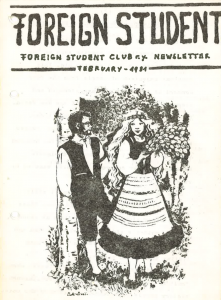
Foreign Student editorial (February 1981): On immigrants living in Finland

Posted on April 30, 2014 by Migrant Tales

The Foreign Student was a short-lived but courageous newsletter of the Foreign Student Club of Helsinki. The humble publication appeared from January 1981 to January 1982 and lasted 11 issues. Much of the things the newsletter wrote about 35 years ago are still valid today. 

Surprisingly those that opposed what we wrote weren’t officials or Finns, but some migrants who were nervous about rocking too much the boat. As our reporting got bolder, the more opposition we got.

Despite what happened, we’re very proud of the Foreign Student for speaking out at the time against Finland’s discriminatory and arbitrary immigration policy.

Below is an editorial from the February 1981 issue.

Näyttökuva 2014-4-30 kello 10.37.35

ON IMMIGRANTS LIVING IN FINLAND

Immigration has been a major factor in the growth of countries in America such as the United States, Canada, Argentina etc. This constant injection of people from the four corners of the Earth put new strength and progress into the mainstream of the New World. This was essential to its greatness today.

The day and life of immigrants have changed if we compare it with a hundred or two hundred years ago. Today it is harder to immigrate because stricter controls have been enacted by receiving countries.

I am an Argentine-American-Finn (I still haven’t figured out how I should group these words, either alphabetically or just at rancom, from my mother’s side a Finn with Swedish and Dutch blood and from my father’s side with Italian and French ancestry.

The world has changed to say the least when “culture” and “ethnicity” are involved. Through history people have tended to mix more and more. This trend has not subsided.

The Swedish-Finns are the largest minority in this country. Also, we have the Gypsies and the Lapps as small minorities. According to the Finnish Statistical Yearbook for 1977 we find around 12,000 people living in Finland with non-Finnish passports. of course we have within this group a large minority of Finns who have opted for Swedish nationality and who are also living in Finland. Weill the future put new minority groups in Finland? The answer is in the affirmative. I have a Finnish fiancée and when we have children they will be part of a minority. Talking about Swedish-Finns we could also mention the Japanese-Finns, Italian-Finns, German-Finns, Kenyan-Finns, British-Finns, Thai-Finns and the list has almost no end.

The Interior Ministry must understand that our children and even we are becoming a larger and ever more important minority in Finland. We want to grow with our children having the same rights as anyone else. Finland is a humanistic, progressive and technologically advanced nation in the eyes of the world. Could we also see this tradition fall on the foreigners living her as permanent residents?

  Enrique Tessieri

Chairman, F.S.C

Why do we consider Timo Soini to be “a good cop” if he brought all these “bad cops” to power?

Posted on April 23, 2014 by Migrant Tales

Doesn’t Perussuomalaiset (PS) leader Timo Soini bear responsibility for giving people like Jussi Halla-aho, James Hirvisaari, Teuvo Hakkarainen, Olli Immonen and a very long list of others a platform to spread their hatred and intolerance?  Why does the media let Soini get off the hook so easily?

Is Soini the culprit for anti-immigration sentiment and xenophobia or does he represent something much deeper about ourselves that we’re not yet ready to openly admit never mind challenge in earnest?

If I’d draw a cartoon of Soini, I’d put him in a concentration camp standing in front of people like Jussi Halla-aho, Olli Immonen, Teuvo Hakkarainen and many others. Soini would tell the media with a poker face and then smile at the end of the following statement: “I’m against anti-Semitism and racism.”

One matter that has perplexed me for quite a while is how the media and journalists, who should know better, is that they treat Soini as some “good guy” in the face of the party’s near-constant anti-EU, anti-immigration, anti-Islam, homophobic and conservative values.

If we search through the maze of answers and explanations, I believe that what we’ll find at the end of the day will find the word denial as the root of the problem.

I’ll never forget April 17, 2011 when the PS won their historic election victory, rising from the minor leagues with 5 to 39 MPs! Some thought it was something passing that wouldn’t last too long. They claimed that it’s only a question of time when internal bickering would cause the PS to implode like the Rural Party did in the 1970s.

One of the most incredible matters about the rise of the PS is how little opposition it has had and how easily it has been allowed to spread its intolerance. Institutions like the media have played a helping role. From a migrant’s or minority’s standpoint, however, the view is quite different since the PS is seen as hostile and dangerous.

Since one of the PS’ main messages is that non-white migrants and refugees should not be allowed to move to Finland never mind marry Finns because they are lazy and even stupid, it’s pretty clear how the PS exploits fear and racism.

Certainly the denial that takes place in our society of the PS wouldn’t be possible without the help as well of the other parties, which may have the same closest racists among their ranks like the most outspoken anti-immigration voices of Soini’s party.

The PS are not a threat to Finland per se, but our denial of them and our own intolerance are.

Sweden’s white paper on the abuses and rights violations against the Roma will have a positive effect on Finland

Posted on April 2, 2014 by Migrant Tales

Sweden published on March 26 a white paper on abuses and rights violations against the Roma during the last century. The white paper is significant since it is the first time that the Swedish government has published and acknowledged Sweden’s long history of discrimination against the Roma minority. Should Finland follow Sweden’s example?

If sociologist and economist Gunnar Myrdal (1898-1987) pointed out that “discrimination breeds discrimination,” contrarily positive concrete steps that challenge discrimination help undermine it. Myrdal referred to this type of knock-on effect as cumulative causation.

Näyttökuva 2014-4-2 kello 12.53.41

Read full story here.

Despite the white paper, discrimination against the Roma is still very much alive in Sweden. Migrant Tales reported last week that a Roma wearing her traditional dress was escorted out of the hotel’s breakfast room. The woman was an invited speaker at the event where the white paper was announced.

In Sweden, compulsory sterilization of the Roma took place between 1934 and 1974.

Already in the middle ages the Roma, which are the biggest ethnic minority in Europe with 6 million members, European states enacted laws that were specifically designed to marginalize and victimize them.

Writes the European Roma Information Office (ERIO): “In fact, a number of heads of state legalized the killing of Roma and anti-Gypsyism became widespread amongst the generation population across the continent. The long-held and socially ingrained prejudice
against Roma, culminated in the destructive and violent ideologies of the Nazi’s in the Third Reich…Along with numerous other
communities, the Roma were classified as Untermenschen (subhuman creatures) by the Nazi regime, and between 220,000 and 1.5 million Roma were systematically exterminated in the Holocaust.”
While the number of the Roma has been smaller in Finland than Sweden, today numbering about 10,000, greater official recognition pf the wrongs committed against the Roma in Sweden, effective anti-discrimination legislation and the role of education on cultural diversity play key roles in not only improving the lives of the Roma in this country but other minorities and migrants.
“This is a step in the right direction,” said a Roma official in Finland. “But there’s a lot of work that needs to be done.”

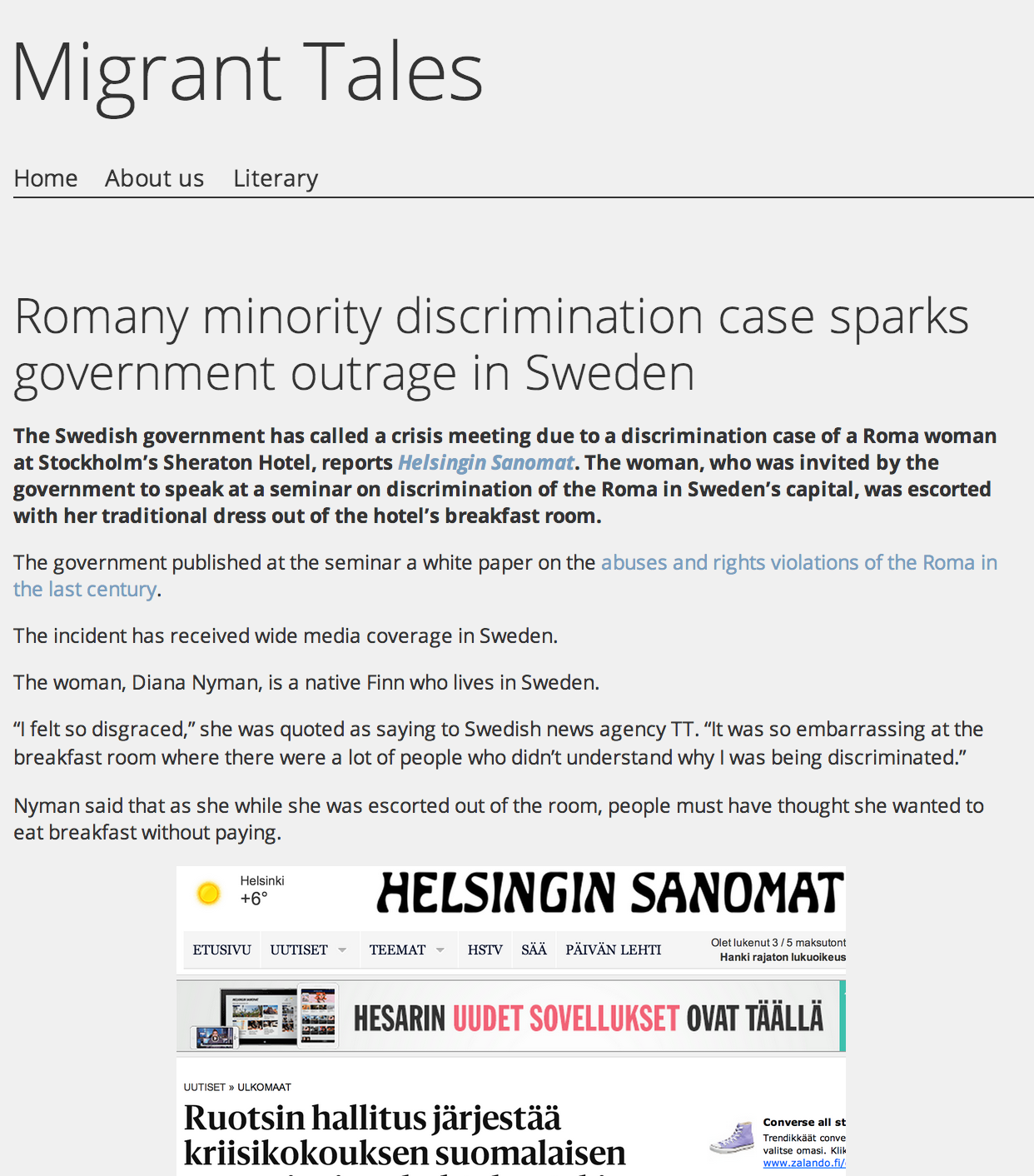
Romany minority discrimination case sparks government outrage in Sweden

Posted on March 27, 2014 by Migrant Tales

The Swedish government has called a crisis meeting due to a discrimination case of a Roma woman at Stockholm’s Sheraton Hotel, reports Helsingin Sanomat. The woman, who was invited by the government to speak at a seminar on discrimination of the Roma in Sweden’s capital, was escorted with her traditional dress out of the hotel’s breakfast room.

The government published at the seminar a white paper on the abuses and rights violations of the Roma in the last century.

The incident has received wide media coverage in Sweden.

The woman, Diana Nyman, is a native Finn who lives in Sweden.

“I felt so disgraced,” she was quoted as saying to Swedish news agency TT. “It was so embarrassing at the breakfast room where there were a lot of people who didn’t understand why I was being discriminated.”  

Nyman said that as she while she was escorted out of the room, people must have thought she wanted to eat breakfast without paying.

Näyttökuva 2014-3-27 kello 11.34.44

Read full story (in Finnish) here.

Sweden’s integration minister, Erik Ullenhag, said that Nyman’s case shows that discrimination happens daily in Sweden and that there is a need to debate the issue.

One positive matter about Sweden is that the government does take a stand against discrimination and shuns the xenophobic and far-right Sweden Democrats.

Finland could learn a lot from Sweden on how to combat intolerance and discrimination.

Helsinki District Court fines clothing store managers for firing Muslim woman

Posted on March 24, 2014 by Migrant Tales

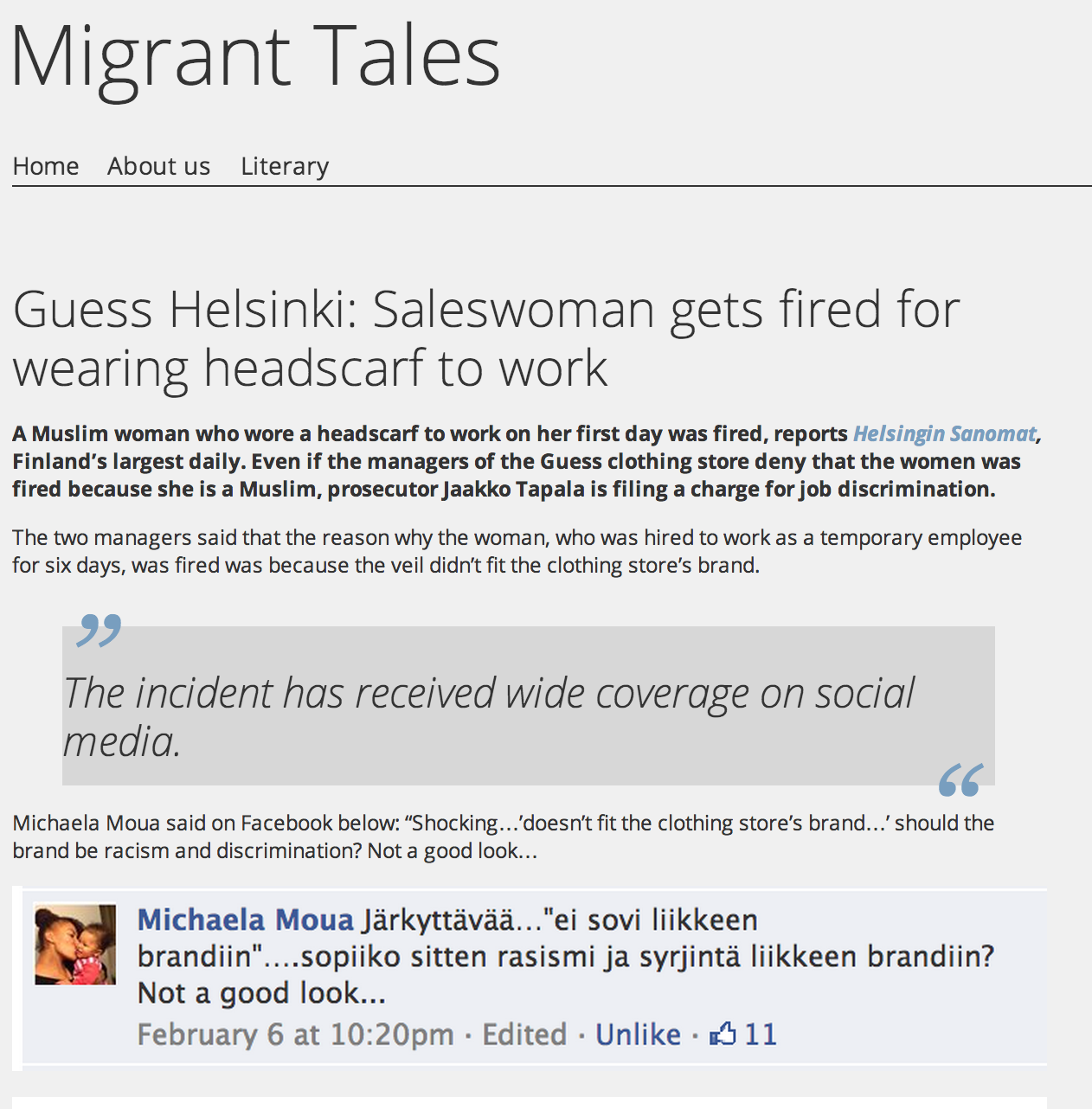
The managers of Guess, a Helsinki clothing store, have been fined for firing a Muslim woman for wearing a headscarf to work, reports YLE in English. It is the first case ever decided by the Helsinki District Court, according to YLE. 

Näyttökuva 2014-3-24 kello 20.08.44

Read full story here.

Reports YLE in English: “Helsinki District court has fined managers at a Helsinki clothing retailer for discriminating an employee on the basis of religion. They receive 20 day-fines for sacking a Muslim worker who was told she should not wear a headscarf.”

The new worker was fired on the first day of work.

The Guess store managers denied that their decision to fire the worker was discriminatory. They claimed that the headscarf did not fit the company’s brand.

“Migrants” lag two years behind “ethnic Finns” in Pisa results

Posted on March 9, 2014 by Migrant Tales

Here’s an interesting story on the Finnish News Agency (STT) wires: Migrant students at school lag two years behind so-called ethnic Finns in the Program for International Student Assessment (Pisa) results.

Of all the OECD countries, Finland’s Pisa result saw the biggest drop in 2013 from the previous year.

Kuvankaappaus 2014-3-9 kello 8.26.59

Read full story here.

Anti-immigration Perussuomalaiset (PS) MPs like Olli Immonen have been quick to point the finger at migrants and Finland’s ever-growing cultural diversity for the sharp drop in Pisa results.

Any sensible person understands that searching for a scapegoat is useless and counterproductive. We should instead look for the reasons behind the fall and take effective steps to resolve the matter.

It’s clear that if Finland wants to make this country successful  in this century, one of the matters it must stop doing is blaming and scapegoating migrants and members of the visible minority community and doing too little to challenge intolerance.

Migrants aren’t the only ones being integrated into Finnish society. Finns too are integrating to a society that is ever-culturally diverse.

Here’s an important question: The law states clearly that we’re supposed to integrate people instead of assimilate them. Are we doing enough to promote two-way integration or is the rule one-way assimilation?

I believe that one of the magic words to raise Pisa scores of New Finns is respect and inclusion. How do the lack of these latter two important factors promote disenfranchisement and disempowerment? How do they impact studying and test scores at school?

Social exclusion costs a lot of money to the tax payer. That’s why we must find effective solutions to empower migrants and minorities to do everything possible to make them a part of our society.

Since Finland has one of the best educational systems in the world, it’s clear that we have the will and the means to find a solution to why New Finns not migrants lag behind in Pisa results.

Results of the findings will be published this summer at the latest, according to Aamulehti, which cites STT.


Language plays an important role in migrant adaption but so do acceptance, respect and equal opportunities

Posted on February 28, 2014 by Migrant Tales

With the help of migrants, YLE Uutiset Suoralinja television program Monday at 7.20 pm wants to find out how much do Finnish and Swedish language skills help you integrate and find employment. When teaching migrants one of Finland’s two official languages, what works and what doesn’t?

One interesting question that we could ask is why are we asking this important question today? When speaking of migrant adaption, is the emphasis only language without looking at other important issues as acceptance, respect and equal opportunities?

The answer to that question could reveal a lot about how we integrate and accept newcomers to our society.

Even if we speak of two-way adaption, or integration in the integration act, the expectation and aim appears to be assimilation, or one-way adaption. This means that the migrant does all the adapting while we are not required to change at all.

This, I believe, integration in theory but assimilation is usually the rule, is the crux of the issue. Migrants, and especially Finns who control political and economic power in this country, must do much more to fuel two-way integration.

You can read more about Monday’s program here. What are your thoughts on the topic. You can send your answers to yjr Suora linja team directly at [email protected]  or [email protected].

Kuvankaappaus 2014-2-28 kello 11.02.23
There’s nothing wrong with this, but why does the Finnish media many times picture immigrants as blacks or if they are women with head covering?

Here’s what I wrote to YLE Uutiset Suora linja:

Learning Finnish or Swedish is crucial and helps in the integration process of the newcomer. However, language is used in Finland to discriminate people and seen as a panacea on how to integrate successfully into Finnish society. Language is part of your “ethnicity” in Finnish society. Russians are white but still they suffer from discrimination.

The question we should ask as well is why aren’t there enough Finnish-language classes offered to migrants? Is this a way to “control” migrants and keep some groups on short leashes?

There are many countries like Spain that show us that language is only one important factor in the migrant’s adaption process. Why aren’t Latin Americans from Peru, Ecuador and other countries, who speak Spanish as their native language, are Catholics and live in former Spanish colonies, accepted and suffer from discrimination in Spain?

Let’s bring the issue closer to home and look at the history of the Romany minority and Saami in this country. They’ve lived here for centuries and still suffer from discrimination and social exclusion.

So, when you speak of just language as the key to Finnish integration to society and believe that this will help a migrant or a visible minority get employed, you should give that thought a major rethink.

Best wishes,

Children of immigrants: “Only Finnish spoken here and you’re a mamu”

Posted on February 17, 2014 by Migrant Tales

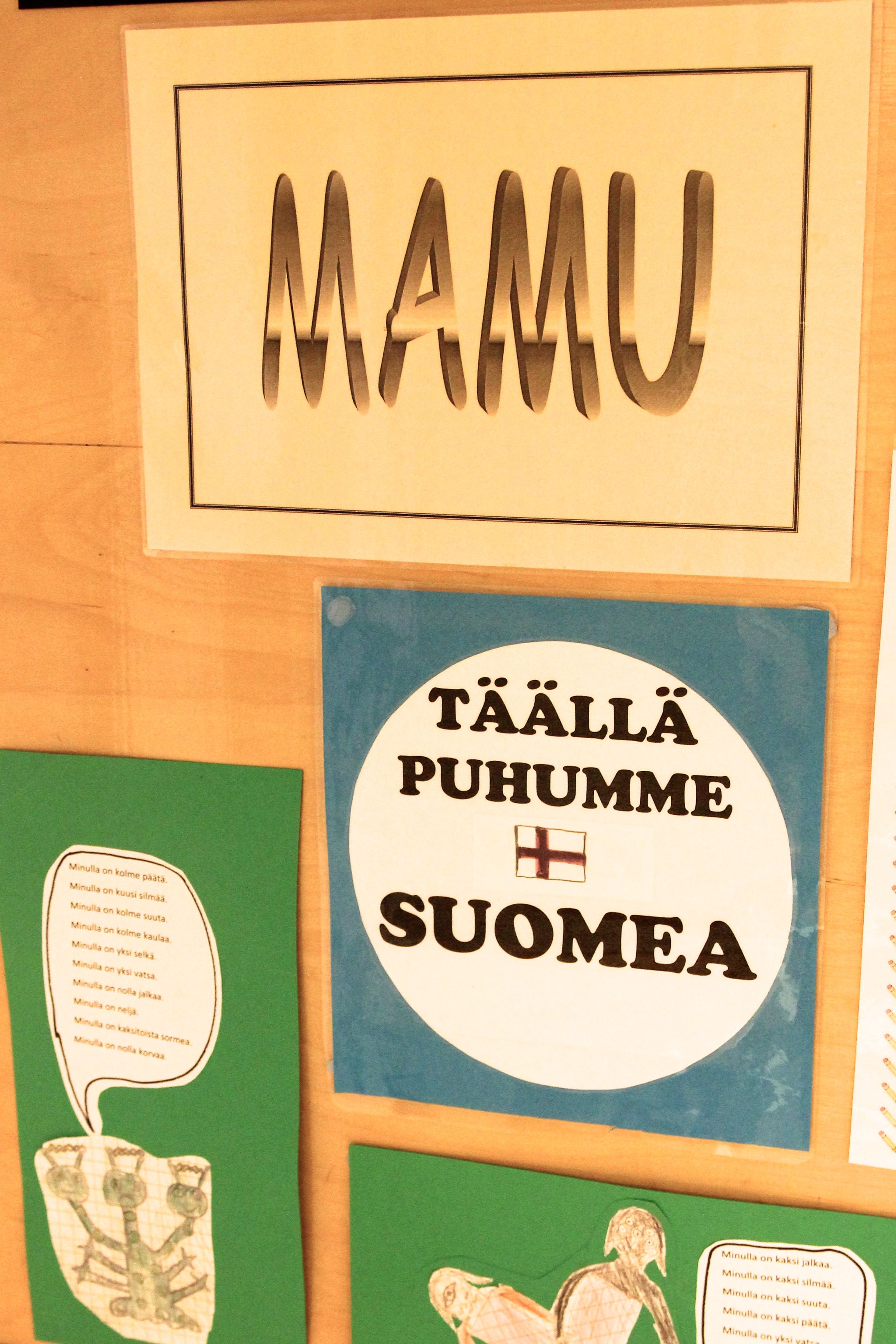
We claim that Finland has one of the best educational systems in the world. We claim that we teach our children social equality and that they have equal rights to advance in life. Why then are children of immigrants called at some schools mamus and why do we force them to speak only Finnish?

The term mamu derives from the Finnish word maahanmuuttaja, or immigrant.

Finnish schools basically do the same thing today that they did in the 1970s, when they punished Saami children for speaking their native language at schools.

If we forbid and make clear that children shouldn’t speak their mother or father tongue at school, isn’t this outright discrimination and a lack of respect for the child’s ethnic and cultural background?

IMG_3371-1

We only speak Finnish here reads a sign on the door of a Finnish elementary school.


Certainly if one or both of the child’s parents are migrants, it’s important that the child learns Finnish or Swedish. The better the child learns these languages, the better his or her chances of succeeding in this country. This is a good goal but it shouldn’t be done at the expense of the child’s native language and identity.

IMG_3370-1

You can’t speak any other language but Finnish and on top of that you’re labelled a mamu. Who labels you a mamu? The majority culture.

Why do some schools in Finland continue to call third-culture children, who have lived here most of their lives or were born here, mamus?

Why don’t we call them Finns who have a different cultural and ethnic background from white Finns?

Why is this still so difficult to understand?

  • Previous
  • 1
  • …
  • 6
  • 7
  • 8
  • 9
  • 10
  • 11
  • 12
  • …
  • 15
  • Next
Read more about documentary film
Read more

Recent Posts

  • Finland’s tabloids Iltalehti and Ilta-Sanomat are the pits
  • Riikka Purra’s Dr Jekyll and Mr Hyde mask
  • Double standards
  • Perussuomalaiset: Uusi logo, sama vanha juttu
  • Taco Trump

Recent Comments

  1. Absolutely Socking: Racist Finnish Facebook group against human rights gets flooded with socks on Musta Barbaari’s mother and sister charged by the police in “ethnic profiling” case
  2. Ilkka Nuotio on Pekka Myrskylä: “Tilastot kertovat toista kuin poliittinen keskustelu”
  3. Genrih Soinkara on The war in Ukraine and the Russian-Finnish border crisis are showing Finland’s ugly side
  4. Ahti Tolvanen on Comment by Ahti Tolvanen on the Helsinki +50 conference
  5. Angel Barrientos on Angel Barrientos is one of the kind beacons of Finland’s Chilean community

Archives

  • June 2026
  • May 2026
  • April 2026
  • March 2026
  • February 2026
  • January 2026
  • December 2025
  • November 2025
  • October 2025
  • September 2025
  • August 2025
  • July 2025
  • June 2025
  • May 2025
  • April 2025
  • March 2025
  • February 2025
  • January 2025
  • December 2024
  • November 2024
  • October 2024
  • September 2024
  • August 2024
  • July 2024
  • June 2024
  • May 2024
  • April 2024
  • March 2024
  • February 2024
  • January 2024
  • December 2023
  • November 2023
  • October 2023
  • September 2023
  • August 2023
  • July 2023
  • June 2023
  • May 2023
  • April 2023
  • March 2023
  • February 2023
  • January 2023
  • December 2022
  • November 2022
  • October 2022
  • September 2022
  • August 2022
  • July 2022
  • June 2022
  • May 2022
  • April 2022
  • March 2022
  • February 2022
  • January 2022
  • December 2021
  • November 2021
  • October 2021
  • September 2021
  • August 2021
  • July 2021
  • June 2021
  • May 2021
  • April 2021
  • March 2021
  • February 2021
  • January 2021
  • December 2020
  • November 2020
  • October 2020
  • September 2020
  • August 2020
  • July 2020
  • June 2020
  • May 2020
  • April 2020
  • March 2020
  • February 2020
  • January 2020
  • December 2019
  • November 2019
  • October 2019
  • September 2019
  • August 2019
  • July 2019
  • June 2019
  • May 2019
  • April 2019
  • March 2019
  • February 2019
  • January 2019
  • December 2018
  • November 2018
  • October 2018
  • September 2018
  • August 2018
  • July 2018
  • June 2018
  • May 2018
  • April 2018
  • March 2018
  • February 2018
  • January 2018
  • December 2017
  • November 2017
  • October 2017
  • September 2017
  • August 2017
  • July 2017
  • June 2017
  • May 2017
  • April 2017
  • March 2017
  • February 2017
  • January 2017
  • December 2016
  • November 2016
  • October 2016
  • September 2016
  • August 2016
  • July 2016
  • June 2016
  • May 2016
  • April 2016
  • March 2016
  • February 2016
  • January 2016
  • December 2015
  • November 2015
  • October 2015
  • September 2015
  • August 2015
  • July 2015
  • June 2015
  • May 2015
  • April 2015
  • March 2015
  • February 2015
  • January 2015
  • December 2014
  • November 2014
  • October 2014
  • September 2014
  • August 2014
  • July 2014
  • June 2014
  • May 2014
  • April 2014
  • March 2014
  • February 2014
  • January 2014
  • December 2013
  • November 2013
  • October 2013
  • September 2013
  • August 2013
  • July 2013
  • June 2013
  • May 2013
  • April 2013
  • March 2013
  • February 2013
  • January 2013
  • December 2012
  • November 2012
  • October 2012
  • September 2012
  • August 2012
  • July 2012
  • June 2012
  • May 2012
  • April 2012
  • March 2012
  • February 2012
  • January 2012
  • December 2011
  • November 2011
  • October 2011
  • September 2011
  • August 2011
  • July 2011
  • June 2011
  • May 2011
  • April 2011
  • March 2011
  • February 2011
  • January 2011
  • December 2010
  • November 2010
  • October 2010
  • September 2010
  • August 2010
  • July 2010
  • June 2010
  • May 2010
  • April 2010
  • March 2010
  • February 2010
  • January 2010
  • December 2009
  • November 2009
  • October 2009
  • September 2009
  • August 2009
  • July 2009
  • December 2008
  • November 2008
  • October 2008
  • September 2008
  • August 2008
  • July 2008
  • June 2008
  • May 2008
  • April 2008
  • March 2008
  • February 2008
  • January 2008
  • November 2007
  • October 2007
  • September 2007
  • August 2007
  • July 2007
  • June 2007
  • May 2007

Categories

  • ?? Gia L?c
  • ????? ?????? ????? ???????? ?? ??????
  • ???????
  • @HerraAhmed
  • @mondepasrond
  • @nohatefinland
  • @oula_silver
  • @Varathas
  • A Pakistani family
  • äärioikeisto
  • Abbas Bahmanpour
  • Abdi Muhis
  • Abdirahim Hussein Mohamed
  • Abdirahim Husu Hussein
  • Abdirisak Mahamed
  • About Migrant Tales
  • activism
  • Adam Al-Sawad
  • Adel Abidin
  • Afrofinland
  • Ahmed IJ
  • Ahti Tolvanen
  • Aino Pennanen
  • Aisha Maniar
  • Alan Ali
  • Alan Anstead
  • Alejandro Díaz Ortiz
  • Alekey Bulavsev
  • Aleksander Hemon
  • Aleksanterinliitto
  • Aleksanterinliitto ry
  • Aleksanterinliitto ry:n hallitus
  • Alex Alex
  • Alex Mckie
  • Alexander Nix
  • Alexandra Ayse Albayrak
  • Alexis Neuberg
  • Ali Asaad Hasan Alzuhairi
  • Ali Hossein Mir Ali
  • Ali Rashid
  • Ali Sagal Abdikarim
  • Alina Tsui
  • Aline Müller
  • All categories
  • Aman Heidari
  • Amiirah Salleh-Hoddin & Jana Turk
  • Amin A. Alem
  • Amir Zuhairi
  • Amkelwa Mbekeni
  • Ana María Gutiérrez Sorainen
  • Anachoma
  • Anders Adlecreutz
  • Angeliina Koskinen
  • Anna De Mutiis
  • Anna María Gutiérrez Sorainen
  • Anna-Kaisa Kuusisto ja Jaakko Tuominen
  • Annastiina Kallius
  • Anneli Juise Friman Lindeman
  • Announcement
  • Anonymous
  • Antero Leitzinger
  • anti-black racism
  • Anti-Hate Crime Organisation Finland
  • Anudari Boldbaatar
  • Arshiya Nasser
  • Aspergers Syndrome
  • Asylum Corner
  • Asylum seeker 406
  • Athena Griffin and Joe Feagin
  • Autism
  • Avaaz.org
  • Awale Olad
  • Ayan Said Mohamed
  • AYY
  • Barachiel
  • Bashy Quraishy
  • Beatrice Kabutakapua
  • Beri Jamal
  • Beri Jamal and Enrique Tessieri
  • Bertolt Brecht
  • Boiata
  • Boodi Kabbani
  • Bruno Gronow
  • Carmen Pekkarinen
  • Çelen Oben and Sheila Riikonen
  • Chiara Costa-Virtanen
  • Chiara Costa-Virtanen
  • Chiara Sorbello
  • Christian Thibault
  • Christopher Wylie
  • Clara Dublanc
  • Dana
  • Daniel Malpica
  • Danilo Canguçu
  • David Papineau
  • David Schneider
  • Dexter He
  • Don Flynn
  • Dr Masoud Kamali
  • Dr. Faith Mkwesha
  • Dr. Theodoros Fouskas
  • Edna Chun
  • Eeva Kilpi
  • Emanuela Susheela
  • En castellano
  • ENAR
  • Enrique
  • Enrique Tessieri
  • Enrique Tessieri & Raghad Mchawh
  • Enrique Tessieri & Yahya Rouissi
  • Enrique Tessieri and Muhammed Shire
  • Enrique Tessieri and Sira Moksi
  • Enrique Tessieri and Tom Vandenbosch
  • Enrique Tessieri and Wael Che
  • Enrique Tessieri and Yahya Rouissi
  • Enrique Tessieri and Zimema Mhone
  • Epäluottamusmies
  • EU
  • Europe
  • European Islamophobia Report
  • European Islamophobia Report 2019,
  • European Union
  • Eve Kyntäjä
  • Ezequiel Caldeiro
  • Facebook
  • Fadumo Dayib
  • Faisa Kahiye
  • Farhad Manjoo
  • Fasismi
  • Finland
  • Fizza Qureshi
  • Flyktingar och asyl
  • Foreign Student
  • Fozia Mir-Ali
  • Frances Webber
  • Frida Selim
  • Gareth Rice
  • Ghyslain Vedeaux
  • Global Art Point
  • Great Replacement
  • Habiba Ali
  • Hami Bahadori
  • Hami Bahdori
  • Hamid
  • Hamid Alsaameere
  • Hamid Bahdori
  • Handshake
  • Harmit Athwal
  • Hassan Abdi Ali
  • Hassan Muhumud
  • Heikki Huttunen
  • Heikki Wilenius
  • Helsingin Sanomat
  • Henning van der Hoeven
  • Henrika Mälmsröm
  • Hser Hser
  • Hser Hser ja Mustafa Isman
  • Husein Muhammed
  • Hussain Kazemian
  • Hussain Kazmenian
  • Ibrahim Khan
  • Ida
  • Ignacio Pérez Pérez
  • Iise Ali Hassan
  • Ilari Kaila & Tuomas Kaila
  • Imam Ka
  • inside-an-airport
  • Institute of Race Relations
  • Iraqi asylum seeker
  • IRR European News Team
  • IRR News Team
  • Islamic Society of Norhern FInland
  • Islamic Society of Northern Finland
  • Islamophobia
  • Jacobinmag.com
  • Jallow Momodou
  • Jan Holmberg
  • Jane Elliott
  • Jani Mäkelä
  • Jari Luoto
  • Jari Taponen
  • Jegor Nazarov
  • Jenni Stammeier
  • Jenny Bourne
  • Jessie Daniels
  • Joe Davidow
  • Johannes Koski
  • John D. Foster
  • John Grayson
  • John Marriott
  • Jon Burnett
  • Jorma Härkönen
  • Jos Schuurmans
  • José León Toro Mejías
  • Josue Tumayine
  • Jouni Karnasaari
  • Juan Camilo
  • Jukka Eräkare
  • Julian Abagond
  • Julie Pascoet
  • Jussi Halla-aho
  • Jussi Hallla-aho
  • Jussi Jalonen
  • JusticeDemon
  • Kadar Gelle
  • Kaksoiskansalaisuus
  • Kansainvälinen Mikkeli
  • Kansainvälinen Mikkeli ry
  • Katherine Tonkiss
  • Kati Lepistö
  • Kati van der Hoeven-Lepistö
  • Katie Bell
  • Kättely
  • Kerstin Ögård
  • Keshia Fredua-Mensah & Jamie Schearer
  • Khadidiatou Sylla
  • Khadra Abdirazak Sugulle
  • Kiihotus kansanryhmää vastaan
  • Kirsi Crowley
  • Koko Hubara
  • Kristiina Toivikko
  • Kubra Amini
  • KuRI
  • La Colectiva
  • La incitación al odio
  • Laura Huhtasaari
  • Lauri Finér
  • Leif Hagert
  • Léo Custódio
  • Leo Honka
  • Leontios Christodoulou
  • Lessie Branch
  • Lex Gaudius
  • Leyes de Finlandia
  • Liikkukaa!
  • Linda Hyökki
  • Liz Fekete
  • M. Blanc
  • Maarit Snellman
  • Mahad Sheikh Musse
  • Maija Vilkkumaa
  • Malmin Kebab Pizzeria Port Arthur
  • Marcell Lorincz
  • Mari Aaltola
  • María Paz López
  • Maria Rittis Ikola
  • Maria Tjader
  • Marja-Liisa Tolvanen
  • Mark
  • Markku Heikkinen
  • Marshall Niles
  • Martin Al-Laji
  • Maryan Siyad
  • Matt Carr
  • Mauricio Farah Gebara
  • Media Monitoring Group of Finland
  • Micah J. Christian
  • Michael McEachrane
  • Michele Levoy
  • Michelle Kaila
  • Migrant Tales
  • Migrant Tales Literary
  • Migrantes News
  • Migrants' Rights Network
  • MigriLeaks
  • Mikko Kapanen
  • Miriam Attias and Camila Haavisto
  • Mohamed Adan
  • Mohammad Javid
  • Mohammad M.
  • Monikulttuurisuus
  • Monisha Bhatia and Victoria Canning
  • Mor Ndiaye
  • Muh'ed
  • Muhamed Abdimajed Murshid
  • Muhammed Shire
  • Muhammed Shire and Enrique Tessieri
  • Muhis Azizi
  • Musimenta Dansila
  • Muslimiviha
  • Musulmanes
  • Namir al-Azzawi
  • Natsismi
  • Neurodiversity
  • New Women Connectors
  • Nils Muižnieks
  • No Labels No Walls
  • Noel Dandes
  • Nuor Dawood
  • Omar Khan
  • Otavanmedia
  • Oula Silvennoinen
  • Paco Diop
  • Pakistani family
  • Pentti Stranius
  • Perussuomalaiset
  • perustuslaki
  • Petra Laiti
  • Petri Cederlöf
  • Pia Grochowski
  • Podcast-lukija Bea Bergholm
  • Pohjois – Suomen Islamilainen Yhdyskunta
  • Pohjois Suomen Islamilainen Yhyskunta
  • Polina Kopylova
  • Race Files
  • racism
  • Racism Review
  • Raghad Mchawh
  • Ranska
  • Rashid H. and Migrant Tales
  • Rasismi
  • Raul Perez
  • Rebecka Holm
  • Reem Abu-Hayyeh
  • Refugees
  • Reija Härkönen
  • Remiel
  • Reza Nasri
  • Richard Gresswell
  • Riikka Purra
  • Risto Laakkonen
  • Rita Chahda
  • Ritva Kondi
  • Robito Ibrahim
  • Roble Bashir
  • Rockhaya Sylla
  • Rodolfo Walsh
  • Roger Casale
  • Rostam Atai
  • Roxana Crisólogo Correa
  • Ruth Grove-White
  • Ruth Waweru-Folabit
  • S-worldview
  • Sadio Ali Nuur
  • Sami Rusanen
  • Sandhu Bhamra
  • Sara de Jong
  • Sarah Crowther
  • Sari Alhariri
  • Sarkawt Khalil
  • Sasu
  • Scot Nakagawa
  • Shabana Ahmadzai
  • Shada Islam
  • Sharon Chang blogs
  • Shenita Ann McLean
  • Shirlene Green Newball
  • Sini Savolainen
  • Sira Moksi
  • Sonia K.
  • Sonia Maria Koo
  • Steverp
  • Stop Deportations
  • Suldaan Said Ahmed
  • Suomen mediaseurantakollektiivi
  • Suomen Muslimifoorumi ry
  • Suomen viharikosvastainen yhdistys
  • Suomen viharikosvastainen yhdistys ry
  • Suomi
  • Supermen
  • Susannah
  • Suva
  • Syrjintä
  • Talous
  • Tapio Tuomala
  • Taw Reh
  • Teivo Teivainen
  • The Daily Show
  • The Heino
  • The Supermen
  • Thomas Elfgren
  • Thulfiqar Abdulkarim
  • Tim McGettigan
  • Tino Singh
  • Tito Moustafa Sliem
  • Tobias Hübinette and L. Janelle Dance
  • Transport
  • Trica Danielle Keaton
  • Trilce Garcia
  • Trish Pääkkönen
  • Trish Pääkkönen and Enrique Tessieri
  • Tuulia Reponen
  • Uncategorized
  • UNITED
  • University of Eastern Finland
  • Uyi Osazee
  • Väkivalta
  • Vapaa Liikkuvuus
  • Venla-Sofia Saariaho
  • Vieraskynä
  • W. Che
  • W. Che an Enrique Tessieri
  • Wael Ch.
  • Wan Wei
  • Women for Refugee Women
  • Xaan Kaafi Maxamed Xalane
  • Xassan Kaafi Maxamed Xalane
  • Xassan-Kaafi Mohamed Halane & Enrique Tessieri
  • Yahya Rouissi
  • Yasmin Yusuf
  • Yassen Ghaleb
  • Yle Puhe
  • Yuliet Tresa
  • Yve Shepherd
  • Zahra Khavari
  • Zaker
  • Zalina Ametova
  • Zamzam Ahmed Ali
  • Zeinab Amini ja Soheila Khavari
  • Zimema Mahone and Enrique Tessieri
  • Zimema Mhone
  • Zoila Forss Crespo Moreyra
  • ZT
  • Zulma Sierra
  • Zuzeeko Tegha Abeng
© 2026 Migrant tales | Powered by Minimalist Blog WordPress Theme