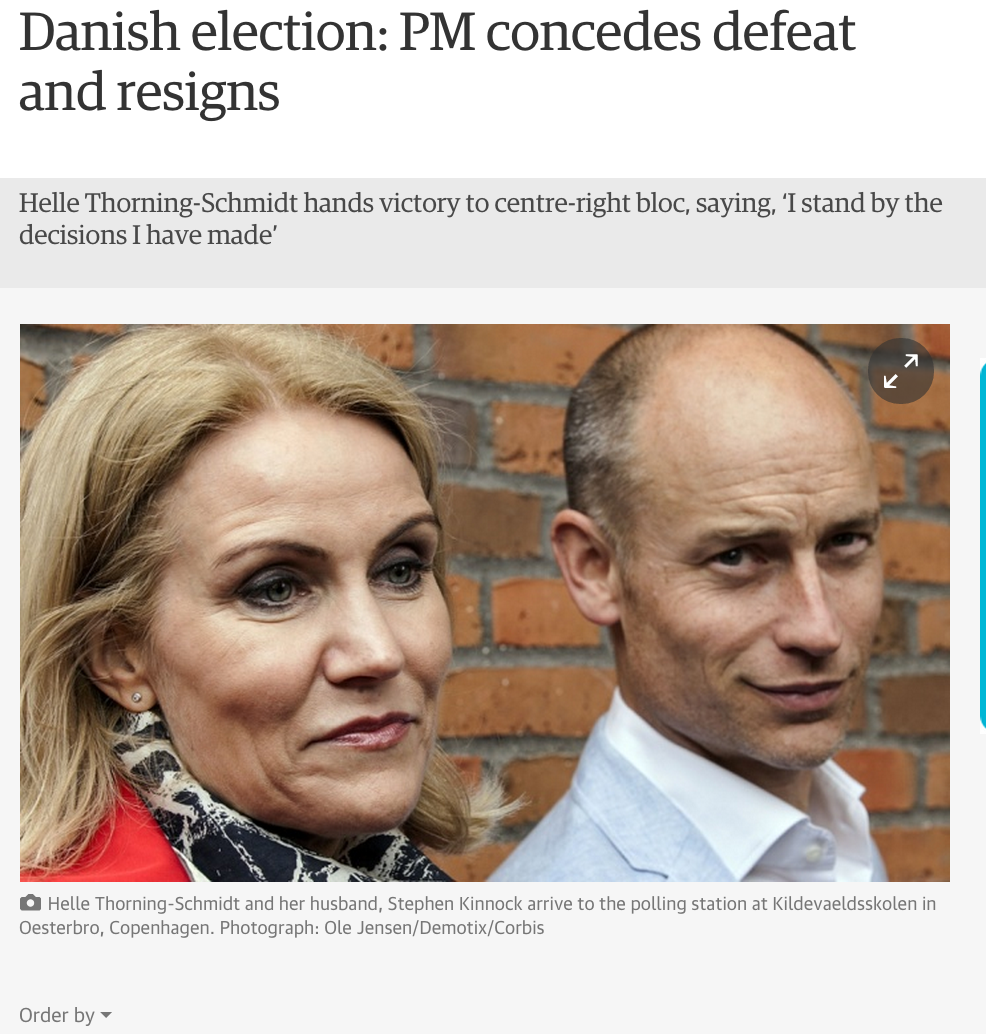
The Danish elections are the latest example of what happens to mainstream parties when they parrot populist and xenophobic rhetoric. In the sad case of Denmark, all of the parties attempted to match the Danish People’s Party (DPP) anti-immigration message.
Perussuomalaiset (PS)* chairman and foreign minister, Timo Soini, was elated by the Danish election result. He wrote in his blog that the PS are no longer alone in the Nordic region and Europe thanks to the good showing of the DPP.
Islamophobia is big in Denmark, very big and ugly. The Perussuomalaiset (PS)* have a special relationship with the Islamophobic Danish People’s Party (DPP). Don’t be surprised if Finland we’ll have one day ministers like Mette Frederiksen who spread Islamophobia as if it were the most normal thing in the world.
Frederiksen isn’t a member of the DPP but of the Social Democratic Party.
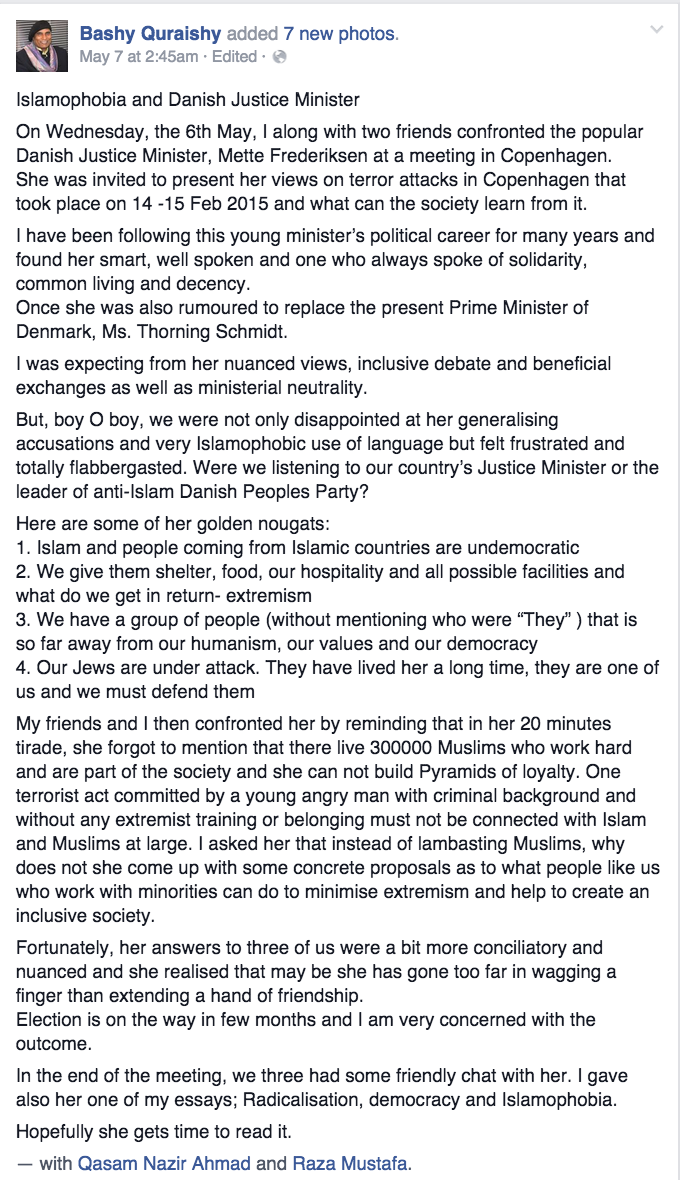
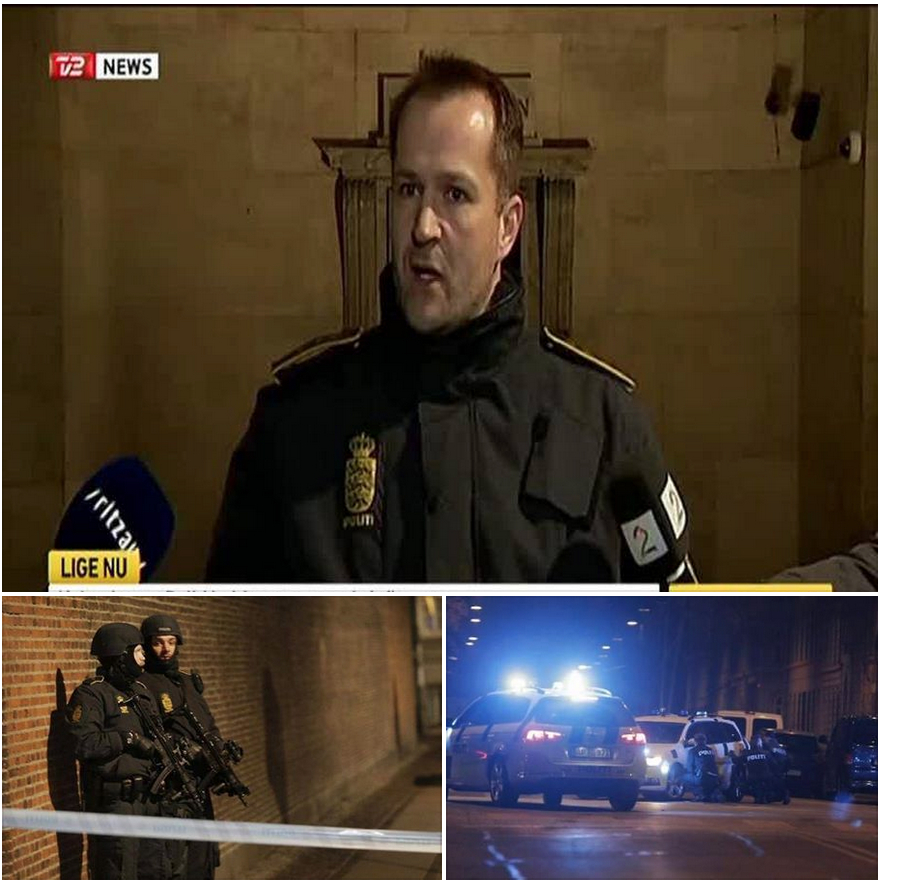
Migrant Tales insight: My Muslim friend in Denmark, Bashy Quaraishy, courageously continues to write on Facebook about the attacks that took place in Denmark. He not only condemns the terrorist acts that left two dead and five wounded, but the Danish People’s Party (DPP), which has turned the country into an intolerable place for Muslims and migrants.
The Perussuomalaiset (PS)* are a close ideological ally of the DPP. If allowed to, they would become as radical and the same political thugs as their Danish counterparts.
Violence can, however, come in many forms: bombs and killing people in cold blood. You can also use “a silencer” to hide the bombs and bullets and target whole groups in subtler and more effective ways like social exclusion, racism and bigotry.
Both are unacceptable and put at risk our own values.
Both the DPP and the PS are those “silencers.”
_______________
Bashy Quraishy
Denmark is an open, democratic, safe and functioning society; all praise worthy and appreciable qualities but over the period of 2 decades, it has also become a very confrontational, warmongering and hateful place to be, especially for Muslims communities.
Many Danes do not know or do not care to know that our beautiful Denmark is undisputedly that European country whose parliament has the strongest anti-Islam and xenophobic right-wing Danish People’s Party. In the next election in Sept 2015, it is projected to be the country’s largest party. Its views on Islam, ethnic minorities and foreign aid as well as open borders are scary to say the least. Sadly, this party’s views are more or less shared – but not in the same ferocious manner – by a majority of parliamentary parties, including the Social Democrats.
And now these deadly attacks that killed two and injured 5 innocent people has opened the flood gates of hateful statements that put the whole question of integration, majority/minorities relations, unlimited freedom of speech to demonize Islam and Muslims and the need to monitor minorities in a whole new perspective.
After this weekend’s assassinations, all Danish Muslims would be considered guilty until they it is proven otherwise.
Unfortunately this carnage has given unlimited ammunition to those rightwing and Islamophobic movements that are already active to paint Islam and Muslims as inherently violent, undemocratic and enemies of Freedom of Speech. Many politicians in Denmark were quick to call this heinous act of a lone young gunman as a direct attack on democracy, absolute freedom of speech and “OUR” way of living.
While I understand the frustration, anger and angst in the society very well but what happened on Saturday, the 13th Feb 2015 did not come out of blue. It is the result of years of insults, misinformation and political and media denomination of ethnic minorities, especially Muslim communities.
We should be thankful that in response to all that shit which has been thrown at minorities, they are still very peaceful and docile.
Violence begets violence and as long as Denmark keeps acting like a war lord in other countries, the situation will not get better but worst.
We Danes, especially the civil society has to stand up against this opportunistic political hard line and misuse of freedom of expression. We need to bring back that loving Denmark, I fell in love in 1969 when I came here as a tourist.
* The English name of the Perussuomalaiset (PS) is officially the Finns Party. The names adopted by the PS, like True Finns or Finns Party, promote in our opinion nativist nationalism and xenophobia. We therefore prefer to use the Finnish name of the party on our postings.
Violence shouldn’t have any place in our society but neither should we lose sight of why these violent acts occur in Europe today. In a society that defends civil rights such as freedom of expression, violence has no place and should be condemned.
Violence can, however, come in many forms: bombs and killing people in cold blood. You can also use “a silencer” to hide the bombs and bullets and target whole groups in subtler and more effective ways like social exclusion, racism and bigotry.
Both are unacceptable and put at risk our own values.
Even if we still do not know the motives behind the attacks in Copenhagen, is it appropriate to begin labeling whole groups with a single brush?
Here is the message from my Muslim friend Bashy Quraishy in Copenhagen:
Many of my foreign friends have sent me SMS, emails and even called from far away lands to enquire if I was OK. They have heard about the fatal shootings in Copenhagen and were worried about my safety…
While it is absolutely important for all of us to condemn and denounce any act of violence, it is also necessary to do it with clear heart and conscious and not for any populist gains. It is always sad and unfortunate when violence is committed against civilians, resulting in death and injuries.
In my books, it does not matter who commits violence, from what culture, class, religion or ethnicity, the criminal belongs to. Violence is violence and we must distance ourselves from such inhumane acts.
Unfortunately, like it happened in 9/11 and even in Paris attacks, the experts and journalists have quickly started using the terms such as; Islamic terrorist, Jihadi and ISIS sympathizer to describe the lone gunman. The fact is that police has no clue, authorities have not mentioned the religion and media has not seen the person but on TV2, Breaking News coverage, DR2 Deadline and in newspaper Internet editions, Islam is already being dragged in the picture.
On the national TV2 channel, the gunman is described on the screen – from the first moment – as; Arabic looking and with very fair color. Someone must ask these Islamophobes on TV2; what is an Arabic looking person and how do they know he was an Arab?
Some sound thoughts during this moment of grieving.
We’ve seen a lot of xenophobia and anti-immigration rhetoric thrown at us in the past by politicians like Geert Wilders, who likes to test the waters of hate to see if he can take another step towards his grand plan, which is to make Holland white again.
Wilders’ plan against cultural and ethnic diversity is a recurring message we read over again from anti-immigration politicians. In plain English it means that we must do everything possible to stop the growth of cultural and ethnic diversity.
An interesting question we could ask is what does “white” mean? Sensible people understand that Europe has always been ethically and culturally diverse so what does “white” mean in the anti-immigration context? Coming from the mouths of politicians like Wilders, it’s a declaration of war against migrants and minorities.
The “everything possible” to keep our society white poses a scary question. How far will politicians like Wilders and others go to make their society white? If Wilders’ party or that of the Perussuomalaiset of Finland get enough support, what will they mutate to?
Many far-right anti-immigration politicians, however, won’t reveal their master plan for fear of losing and outraging voters.
That is exactly what Wilders did this week when he crossed the line and ensured a group of supporters that there would be fewer Moroccans in Holland, reports The Guardian.
Wilders’ comment not only sheds light on such a politician’s Islamophobia, it is the penultimate step on a slippery slope.
Wilders isn’t the only anti-immigration politicians who plays with fire. Marine Le Pen, Pia Kjærsgaard, Timo Soini, Nigel Farage and many others play the same dangerous game.
Racism and intolerance know no master. It might serve you and you may keep it on a short leash. But the truth is that it can bite back and hard as we saw on 22/7 in Norway, the former Yugoslavia of the 1990s and in the extermination camps of Nazi Germany.
The racism and intolerance we are seeing today across Europe didn’t come recently but has always been with us. It has taken many forms and has its roots in European colonialism and imperialism from 1492.
Keeping a society white is not only a pipe dream but a racist ideal based on hocus-pocus myths.
The answer against such intolerance in acceptance, respect and equal opportunities for everyone irrespective of their background.
It’s all about respect and inclusion – not exclusion or spreading ethnic hatred.
The landslide victory of Norway’s opposition Conservatives (Høyre) on Monday was short-lived after the country’s next prime minister, Erna Solberg, faced tough coalition talks with the anti-immigration and populist Progress party (Fremskrittspartiet) of which Anders Breivik was a member and whose cold-blooded killings continue to haunt the country, reports Reuters.
Outgoing Labor Party Prime Minister Jens Stoltenberg and his allies were able to win 72 seats compared with the 96 that Solberg and its allies won, which is 11 more needed for a majority.
Høyre won 48 seats, Progress party (29), Christian Democratic Party (10) and the Liberals (9).
Even if the Progress party has tried to distance itself from the xenophobic Sweden Democrats and Danish People’s Party, Breivik’s shadow continues to haunt the party as well as the country.
After 22/7, when Breivik gunned down in cold blood 69 Labor Party youths on the island of Utøya (69 dead) and eight more from a bomb explosion in Oslo, life has not changed in Norway but in the Nordic region as well.
The election result of the Progress party lags behind pre-22/7 results. In September 2011, it lost 6.1% percentage points in the municipal elections and on Monday it lost 12 seats.
Even if some believe that Norway has forgotten what happened on 22/7, it’s unlikely that anti-immigration rhetoric and populism can make something so horrific disappear.
Charges have been dropped against an Odense, Denmark, head teacher who had reportedly abused a group of Muslim students in class, reports The Copenhagen Post. Far-right anti-Islam Danish People’s Party former head, Pia Kjaersgaard, described the whole affair as ”ridiculous.”
“It’s crazy that the police have to get involved in such a case,” Danish People’s Party former chairwoman Pia Kjærsgaard told Fyens Stiftstidende. “I am so affronted on the head teacher’s behalf that she has to meet at the council, and whatever else might happen, because of this nonsense apologised already. Anyone can say something wrong without thinking sometimes.”
One matter that always surprises me about anti-immigration white politicians like Kjaersgaard is how they play down racism and discrimination. According to them, these types of social ills are “insignificant” never mind “ridiculous.”
Even so, their constant attacks and labeling of immigrants and Muslims in a negative light is always ”important” and ”sensible.”
So what happened at the Ejerslykkeskolen School in Odense and what did the teacher, Birgitte Sonsby, say? According to The Copenhagen Post, the head teacher of the school burst out saying to a group of students in class: ”I’m so bloody tired of you Muslims running the teaching lessons.”
The teacher later apologized for her outburst.
”A situation arose in the classroom and some children needed to be reprimanded,” said Sonsby. They started laughing at me and I lost control. I said some things that I deeply regret and I apologize.”
Shaib Mansoor, the father of one of the children racially reproached by Sonsby and who reported the head teacher to the police, dropped the charges after the media picked up the story and reported what happened at the school.
”I wanted to establish a debate and make people realize that there is a problem,” he said. ”It is the only way to get the attention of the politicians.”
Despite having dropped the charges, Mansoor expects Sonsby to get sacked from her job.
Exactly a year ago Anders Breivik carried out his mass killings, which ended up causing the death of 77 innocent victims. Have we learned anything from that tragic Saturday that shook the Nordic region and changed it permanently?
In order to answer that question, we’d have to travel back in time to see how things were prior to that day.
In Finland, the right-wing populist Perussuomalaiset (PS) had just won a historic election victory that enabled the party to increase the number of its MPs to 39 from 5 in 2007. While party leader Timo Soini played down anti-immigration sentiment as one important factor behind the PS’ election victory, others disagreed.
Before Breivik erupted on the stage, anti-immigration parties like the PS were the new political force to contend with in Finland. It seemed that nothing could stop them from adding new election victories in the future. The louder and cruder their anti-immigration and anti-EU stances were, the more supporters they’d rally to their cause.
http://www.youtube.com/watch?v=xjVD0ztWaKA
In Norway, Denmark and Sweden, far-right populist anti-immigration parties had grown as well and were openly challenging traditional parties.
Everything changed, however, after July 22.
The first blow came in Norway to the Progress Party (FrP), which saw its support in the September municipal election plummet by 6.1 percentage points to 11.5%. In the same month, another anti-immigration party, the Danish People’s Party (DPP), suffered an election setback.
Since 2001, the Islamophobic DPP had supported minority right-wing government in exchange for tighter immigration policy.
In many respect, Breivik was a wake-up call that woke up for Finland and the Nordic region to the threat of intolerance and hate speech.
A recent supreme court ruling against Jussi Hall-aho is a case in point. The PS MP was not only fined for defaming a religion but for inciting ethnic hatred as well. The ruling wasn’t only a big blow to the PS but to the far-right Suomen Sisu wing of the party. Halla-aho was forced to resign as chairman of the administration committee, which, among other matters, sets immigration policy.
The presidential election was another important example of how Finland is distancing itself after 22/7 from the anti-immigration and populist rhetoric of parties like the PS.
Two conservative anti-EU candidates, Timo Soini of the PS and Paavo Väyrynen of the Center Party, lost to Green Party hopeful Pekka Haavisto in the first round of voting. Haavisto is openly gay and pro-EU.
The next test for the PS will come in the October municipal elections. If polls are anything to go by, the party will suffer another election setback.
In light of the above, can we claim that Breivik had had a direct impact on the popularity of the PS and other parties in the Nordic region that are anti-EU, anti-immigration and anti-Islam?
Your answer to that questions will probably reveal more than anything else your political views on immigration, Islam and cultural diversity.
But if we ask Norwegian Prime Minister Jens Stoltenberg, Norway had become after July 22 “more tolerant, [and] more careful not to judge people” by ethnic origin.
Even if Stoltenberg has shown leadership on how a wounded society should react to intolerance, it’s still unclear what impact Breivik will have on our societies. We are still healing from the wound and can matters return back to “normal” in Norway after Breivik?
If we set aside politics and try to understand the impact Breivik had on the region, one matter is certain: We are outraged by what happened but dread even more the possibility that it could happen again.
Competing for the anti-immigration thunder and rhetoric of parties like the PS, DPP, FrP and Sweden Democrats are far-right groups like the Finnish Defense League, which are copy-and-paste clones of the English Defense League.
Breivk scared the wits out of some of us and proved that anti-immigration and Counter-Jihad rhetoric can convert itself into a monster that has the ability to wreak terror and change our societies for good.
That I believe is the real message and threat of 22/7.
It is a tragedy that 77 people had to die at the hands of Anders Breivik on July 22. Ironically the mass killer did more than anyone to undermine the ideology of anti-immigration populist parties and hate groups in the Nordic region and Europe.
The political fallout of Breivik’s deeds was clear: The first blow came to the Progress Party (FrP) of Norway, which saw its support plummet in the municipal election by 6.1 percentage points to 11.5%. That was followed by election setbacks in Denmark and Finland.
Norway’s Prime Minister Jens Stoltenberg became an exemplary leader after the mass killings of Norway. His reaction was totally the opposite from what we saw in the United States after the September 11 attacks. Contrary to President George W. Bush, the Norwegian prime minister said that his country’s reponse to the mass killings will be more openness and more democracy.
The question that hounds us, however, is if Breivik were a Muslim instead of a white Norwegian, what kind of an anti-immigration backlash would we have seen in the Nordic region and Europe?
On a BBC documentary, Stoltenberg said that Norway had become after July 22 “more tolerant,[and] more careful not to judge people” by ethnic origin.
Wise words by a wise leader of a country that suffered one of its worst tragedies in recent history.
As the demonic rumors and stereotypes spread by Finland’s anti-immigration groups lose their appeal among voters, expect a new round of vicious attacks by them as the municipal election nears on October 28. The good news, however, is that using the usual crime statistics and racist arguments that gave some Perussuomalaiset (PS) candidates their ticket to parliament in the April 2011 election will be a hard sell in October.
One of the main reasons is the PS itself, which has given us a good taste of what kind of a party it is thanks to the numerous scandals that have rocked it. Voters are wiser today about the PS than they were on April 17.
Another important reasons is Anders Breivik, who shocked Norway and the world with his outlandish mass killings on July 22. All parties in the Nordic region that are anti-EU, anti-immigration and especially anti-Islam suffered as a result significant losses in recent elections and in the polls.
Racism is like an ogre that you cannot control once you let it out of the cage and give it an opportunity to flood society with hate. It can bite back, and hard, as we saw when Breivik went on his mass-killing rampage.
On a much wider scale racism can as well lead to wars and conflicts as it has in the past, according to the U.N.
“Racism and racial discrimination have been used as weapons to engender fear and hatred,” said U.N. Secretary-General Ban Ki-moon in his message marking this year’s International Day for the Elimination of Racial Discrimination. “Racism undermines peace, security, justice and social progress.”
Another reason why extremist and populist anti-immigration politicians will have a difficult time selling their message in the municipal election is because it is utter baloney based on exaggerated fiction. The media, some politicians and the general public have learned after close to one year of watching PS shenanigans in Parliament the distinction between fact and populist fiction.
Jussi K. Niemelä, a writer and editor of the Vallan vahtikoira blog, told Migrant Tales that the PS has the highest number of convicted criminals among their ranks when compared with other political parties. Many of their MPs are members of the far-right Suomen Sisu association.
Niemelä has been threatened by two PS members for his critical stance against the party. The police are presently investigating the matter.
More and more Finns understand racism, like hate, is a serious threat to our society.