Migrant tales
Menu
  • #MakeRacismHistory “In Your Eyes”
  • About Migrant Tales
  • It’s all about Human Rights
  • Literary
  • Migrant Tales Media Monitoring
  • NoHateFinland.org
  • Tales from Europe
Menu

Tag: Cultural diversity

Pia Grochowski: Shifting our focus

Posted on March 10, 2013 by Migrant Tales

By Pia Grochowski 

“My friends, love is better than anger. Hope is better than fear. Optimism is better than despair. So let us be loving, hopeful and optimistic. And we’ll change the world.”

These were the final words written by the late Canadian leader of the opposition, Jack Layton, just hours before his untimely death of cancer. I reflect upon these words with a desire in my heart to challenge the current status quo in Finland. While the words were part of a message towards all Canadians to carry us through period of darkness with the untimely passing of one of our leaders; these words have enormous relevance.  

I wish to question what appears to be, to me at least, too much coverage of the far right, racism, the perussuomalaiset. I question the tactics from many liberally minded people that discussions I have had always tend to fall down the path of concern for what the äärioikeus, or far right, said; many are rightfully shocked, disgusted, and concerned at the long-term implications of their dogma, their horrific ideas. Rather than despair in such statements, I feel we must look with optimism towards alternatives. To allow us to be channels wherein people with the capacity to change, with a vision for inclusion can get a voice. The more I read of äärioikeus, the more I realize how silly it all is. These individuals promote sensational ideas, which I believe will never be manifested, but can be framed in such a way that will shock and awe the public and sell newspapers. The more they are covered and discuss in the media, the more we are at risk of having them get the promotion we want. While criticizing their views, we must take care to provide a reasoned answer that defines out values and ideals with the means of seeing them through.

My plea in writing this is that we need to hear more visionary voices; we need to see more alternatives. Now is the time to act, now is the time to hope, and be optimistic. There are so many wonderful people in this country with great messages of diversity, great potential for change; why do we let a character like Soini win the walls of our facebook pages with his blatant incompetence, and subtle racism in a BBC interview. In the last presidential election an openly homosexual man, with a foreign partner came to the final round. This wouldn’t be possible without some desire of the people in this country accepting and supporting the very things the äärioikeus hopes to remove. I am becoming more inclined not let the äärioikeus use me as a channel for their voices, as I believe such spaces are better used by alternatives, reasoned voices that can offer real solutions rather than fear. I believe they have fed us with enough proof that they are no longer worth our time, our anger. I believe that we can deal with this problem; I believe that we can lead by example, we can provide ideas, we can solve problems, and we can do better.

Don’t get me wrong, covering racism is important, and some may, still, be unaware of the extent of it all; but we also need to reflect on giving more space to voices that have a vision for an inclusive, dynamic, progressive Finland. At times I worry that all these ideological extremes victimize immigrants. While focusing on all that frustrates us, all the problems, we also need to take time and focus on all that we can and will change. Love is better than anger.

Racism Review: Does Cultural Diversity Promote Economic Growth?

Posted on March 8, 2013 by Migrant Tales

By Racism Review

Diversity has sometimes been considered as an abstract principle, divorced from macro-economic trends and global realities. Research by Quamrul Ashraf and Oded Galor of Brown University, suggests otherwise. In a paper released by the National Bureau of Economic Research in 2011, Ashraf and Galor crystallize their findings on the interplay between cultural assimilation and cultural diffusion in relation to economic development. They theorize that pre-industrial societies in agricultural stages of development may have benefitted from geographical isolation, but the lack of cultural diversity had a negative impact on the adaption to a new technological paradigm and income per capita in the course of industrialization. This “Great Divergence” in the developmental paths of nations has occurred since the Industrial Revolution.

Ashraf and Galor indicate that cultural assimilation enhances the accumulation of society-specific human capital, reducing diversity through standardization of sociocultural traits. Cultural diffusion, by contrast, promotes greater cultural fluidity and flexibility that expands knowledge allowing greater adaption to new technological paradigms.

One of the prominent questions long debated by scholars is why China failed to industrialize at the time of the Industrial Revolution and suffered from “economic retardation,” a question raised by Joseph Chai in Chapter VI of his new book An Economic History of Modern China. In their paper, Ashraf and Galor outline the early benefits of China’s geographical isolation as the “Middle Kingdom” or the center of civilization as evidence of the benefits of cultural assimilation in the agricultural stage of development. They also refer to the state-imposed isolation throughout the Ming (1368-1644) and Ching eras (1644-1911) that caused China to remain impervious to external influences. Although Ashraf and Galor do not expand upon the further ramifications of their theory in this example, the absence of cultural diffusion was clearly a major factor in China’s late development in the sciences and technology.

What does all this mean for diversity practitioners in the United States today? Clearly, the important benefits of cultural diversity need to be understood in broader, global, and historic terms. As Alvin Evans and I argue in Bridging the Diversity Divide: Globalization and Reciprocal Empowerment in in Higher Education, globalization is a catalyst for diversity change, representing an urgent mandate that can no longer be ignored. With the erosion of barriers of time and place, rapid evolution of technological modes of communication, increasing diversity of the American population, rising demands from diverse consumers, and importance of talent as a differentiator in organizational performance, organizations now must focus upon creation of inclusive talent management practices. In our forthcoming book, The New Talent Frontier: Integrating HR and Diversity Strategy (Stylus, 2013), we examine this global imperative and the emergence of common themes in diversity transformation across all sectors including private corporations, not-for-profits, and institutions of higher education.

As Richard Florida, author of The Rise of the Creative Class, puts it in his blog that discusses Ashraf and Galor’s contributions:

It’s time for diversity’s skeptics and naysayers to get over their hang-ups. The evidence is mounting that geographical openness and cultural diversity and tolerance are not by-products but key drivers of economic progress. . . . Indeed, one might even go so far as to suggest that they provide the motive force of intellectual, technological, and artistic evolution.

Read original blog entry here.

This piece was reprinted by Migrant Tales with permission.

Migrant Tales (October 1, 2011): Multicultural Finns – “Accepting yourself is the first step”

Posted on March 7, 2013 by Migrant Tales

Darkness cannot drive out darkness; only light can do that. Hate cannot drive out hate; only love can do that. 
Martin Luther King, Jr.

A guest speaker gave on Friday her recipe on how young adolescents from different countries living in Finland could build a space for themselves in society. Two matters struck me from the twenty-one-year-old young woman’s talk: The first and foremost matter is acceptance of oneself and to reach out — if possible — to those who loathe you.

382245_4888595286585_544781931_n

Thank you Nura Farah for the heads-up.

The woman, whose father is a Black USAmerican and mother Finnish, kept the class mesmerized by these two key points.

She said that in Finland and the United States she was always seen as a foreigner. “In Finland people asked me where I was from and in the United States people thought I was from Finland,” she said. “One day it dawned on me that instead of looking for people’s acceptance, I had to first accept myself. It happened on a chat site when I read a comment by a black woman.”

Some may claim that being white in Finland is easier than being a visible minority. Since visible minorities cannot hide from the sometimes hostile stares of society, visible minorities can. Hiding, even denying, one’s identity can, however, have devastating impact on one’s self-esteem.

If one would want to write a shocking book about racism in Finland, all they’d have to do is find Russians who attended elementary and middle school during the 1990s. Apart from being ridiculed at school for having a Russian background by the classmates, this happened with the silent approval of the teachers.

Even if my mother is Finnish, I am happy that I did all my schooling in the United States from grade two. How much ridicule would I have had to take in the Finnish school system in the 1960s and 1970s? At least my otherness was acknowledged, even respected, in the United States.

How do Finnish schools treat cultural diversity?

Posted on March 7, 2013 by Migrant Tales

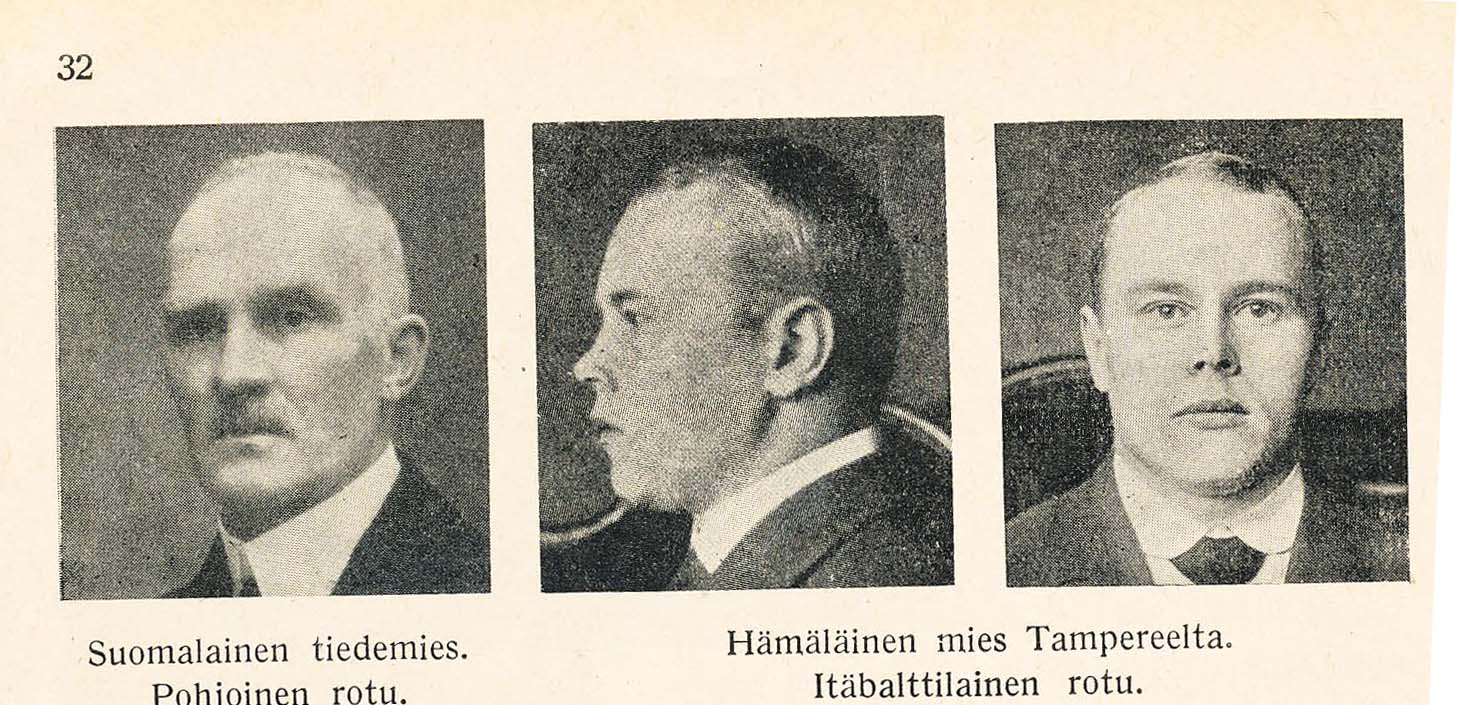
In theory, the answer is straightforward: Finnish schools should respect cultural diversity but a lot depends on the school and the principle.  If we compare how elementary and middle schools treated visible minority students in the 1990s, we hope that matters have improved since then.  But have they? 

races of finland

Cultural diversity in Finland up to the 1970s divided Finns in some history books into the “Nordic and Eastern Baltic races.” This picture was taken from an elementary school book published in 1941.

If our expectations are on the right path and we have the right values as a society to make cultural diversity work, what then is the challenge? The answer is the following: If we don’t have yet as a society a big picture of what immigrants and their children are doing here, it means that we are still walking blindly towards the future with a seeing-eye dog called Chance.

Migrant Tales has documented numerous cases of racist harassment and bullying at Finnish schools from people like Ida, Micha and Abdulah.

Abdulah was seven when he moved from Somalia to Finland in the early 1990s and attended elementary school for the first time in Hyvinkää, a city located near Helsinki.

“I’ve been bullied, called names like the n-word, insulted, kicked and hit hard at school,” he said. “The only way to survive was to be quiet and roll with the punches. There was nothing else I could do because the teachers never believed me. They were always on the side of the white students.”

Not only is the hostile behavior they received from their classmates at school shameful, but more worrying has been the silence of some of the teachers.

I know of one student who, like a gay person coming out of the closet, proudly accepted as a young adult her Russian background. According to her, she was bullied so much at school because of her background, that her former classmates still harass her at her hometown of North Karelia. She has a better weapon against this type of hostility: She is today proud of her Russian and Finnish heritage.

If somebody would like to expose the ogre of racism in this country, I am certain you’d find it in the tales of those immigrant children who attended Finnish school  in the 1990s and even today.

It saddened me to hear that the mother of a black child from my hometown of Mikkeli, moved to Helsinki because of the racist bullying her child got at elementary school.

What did his classmates say? Every insult in the book to reinforce that he was different from his classmates and to destroy his self-esteem.

Part of the global fame that the Finnish educational system has enjoyed in recent years comes from the high scores achieved on the PISA exam, which focuses on young people’s ability to use their reading, mathematics and science skills.  How would Finnish schools fare if they had to resolve and adapt to diversity at school?

Would their scores be as impressive if they had to resolve and adapt to cultural diversity at school?

The Finnish National Board of Education’s core curriculum for primary and pre-primary education is a reflection of our noble values as a Nordic state. The existing curriculum, which was published in 2004, states the following: “The values and aims of the curriculum hinge on human rights, social equality, democracy, biodiversity, maintaining environmental sustainability as well as the acceptance of multiculturalism.“

It is incredible but pupils who aren’t your typical white Finn, even though they were born or have lived most of their lives in this country, are called at schools students with immigrant backgrounds, or maahanmuuttajataustainen.  The interesting question to ask is why this label, which in my opinion promotes social inequality, is used in the first place if many of these children are Finns with different ethnic backgrounds.

If Finland has the laws and the resources to build a successful culturally diverse society in this century, what are the challenges we face?

The biggest one are our prejudices and the tools we use to confront them.

How can we integrate people into our society if we are rejecting them with our prejudices?

Thus the laws and what happens on the ground at school reveal our expectations and reality concerning cultural diversity.

The fact that we still hear dear little about the racist bullying and harassment at Finnish schools reveals a wider problem we haven’t yet tackled as a society.

Helsinki’s and Greater Helsinki’s immigrant population to rise by over 131% in 20 years

Posted on February 11, 2013 by Migrant Tales

A forecast that will be published Monday by Statistics Finland sees the immigrant population of Helsinki and its surroundings rising by over 131% in two decades to around 300,000 from 130,000, reports YLE in English, citing Swedish-language daily Hufvustadsbladet.

Kuvankaappaus 2013-2-11 kello 6.49.48

Writes Yle in English: “Most non-Finnish speakers come to Finland and the Helsinki region from Africa and the Middle East. The forecast indicates most of them reside in Helsinki. Those arriving from Asia tend to move into Espoo while those from Russia prefer to live in Vantaa.”

If the population of Helsinki and surroundings will rise in the next twenty years, Finland’s total immigrant population will see strong growth as well from the present 257,248 persons (4.8% of the population). Helsinki has the highest share of immigrants today  (11.8%), followed by Vantaa (11.2%) and Espoo (10.5%).

If these forecasts are reliable, Finland will be a very different country this century when compared with the last, when it was predominantly white.

As more immigrants move to Finland, it’ll be harder to deny these newcomers and their children their rights and their neighborhoods.

If we compare the over 1.2 million Finns that emigrated from this country between 1860 and 1999, some of them even founded ethnic colonies in countries like Argentina.

Finland’s past and even present attitude of cultural diversity isn’t anything to write home about. When Vietnamese boat people came as quota refugees to Finland in the 1980s, the official policy was to pepper them throughout Finland to make sure that they’d integrate and not form ethnic neighborhoods.

This was a dreadful mistake. Assimilation (one-way integration) doesn’t work unless it’s the aim of the majority culture to divide and conquer different ethnic groups.

A very worrying sign, however, is how some Finns want to deny cultural diversity its rightful place and recognition in society by placing caps on how man children with immigrant backgrounds can attend a schoolroom.

Finland is today an ever-growing culturally diverse society.

That’s a fact. No matter how much some wish to still cover their eyes and deny it.

What does Finland’s integration law reveal about our society and expectations?

Posted on January 30, 2013 by Migrant Tales

A good question we can ask about Finland’s integration act is what it reflects about our views and expectations of newcomers. Can any law integrate people effectively?  

If you want to speak of one- or two-way adaption, one should ask some of Finland’s oldest minorities like the Roma and Saami what memories such a law may evoke.

Considering that children who spoke Saami at school in the 1960s were punished in Finland, it’s natural that there are a lot of bad feelings and distrust of white Finns’ intentions.

If we look at second- and third-generation Finns, we don’t even know what these people were supposed to integrate to. It’s sad that the answer to this question has been in some cases society’s indifference and rejection.

Apart form the lack of resources that the present integration law faces, another challenge is if it offers a big picture of our ever-growing culturally diverse society. How, for example, does it promote acceptance as well as respect for new Finnishness and other new identities?

It would be too simplistic to claim that the integration law is a utter failure. For one it keeps those who are hostile to our ever-growing cultural diversity at bay. Its existence permits it to indirectly integrate Finns as well to the idea that we are becoming a culturally diverse society.

What does the act reflect about our views and expectations of newcomers? In many respects it reflects our expectations and too little of those that are being integrated.  Thus we speak of two-way integration but in practice it’s one-way.

Canadian Social psychologist J. W. Berry highlighted three important matters in order to manage successfully a culturally diverse society. Even if he speaks of multiculturalism, it can apply well to Finland, which accepts culturally diversity in its laws.

Writes Berry:

  • In our view there needs to be general support for cultural diversity as a valuable resource for a society;
  • There should be overall low levels of prejudice in the population;  
  • There should be generally positive mutual attitudes among the various ethnocultural groups that constitute the society;
  • There needs to be a degree of attachment to the larger national society.

Do you agree?

Labels that fuel discrimination and racism in Finland

Posted on January 28, 2013 by Migrant Tales

When will Finns drop this discriminatory term: Finns with immigrant backgrounds? Many, I suspect, are and should be proud of their background. I am but what happens if these labels and terms ensure that you will continue to be treated as something less equal? 

What do you do if being labeled in such a way undermines your career chances and competing with white Finns for the best jobs?

Fred Dervin, a professor of multicultural education at the University of Helsinki, said the usage of such labels create inequality, especially if the person was born in this country.

“It is dangerous because we create [a sense of] inequality, since not everyone is given the same treatment or opportunities,” he was quoted as saying on YLE in English. 

Kuvankaappaus 2013-1-28 kello 6.59.02Part of the problem aren’t Finns labeling “others” as eternal outsiders, but those who are being labeled accept it! Some of them fall into the trap  and actually believe they are somehow less equal, or don’t have the right to be on equal terms with a white Finn because of their immigrant background.

Some will struggle during their lives to be as white as possible without ever understanding the beauty of their roots.  A valid question we should ask about integration in Finland is what are newcomers supposed to integrate to?  

If Dervin makes a case for those who were born in this country, I would take it even further: What about those that came here as children and have lived most of their lives in this country?

Why are they still considered “foreigners?” How many generations must they live in Finland in order to be accepted as equals?

The same matter that happens in countries with immigrants is happening in Finland but in a different context.  It’s the same discriminatory standard  used to exclude others from being treated as equals in society.

Identity is a personal matter. You are who you think you are. If some have an problem with this, it’s their problem, not yours. 

No matter how you cut it, we should start to better identify and discard from our speech those terms that fuel discrimination and inequality.


Red Herring tales (Part I): City of Vaasa plans to prohibit the use of burquinis

Posted on January 24, 2013 by Migrant Tales

Ever heard of the burquini, a swimming outfit consisting of head scarf, tunic and trousers designed for Muslim women? The western Finnish city of Vaasa plans to prohibit the use of these swimming suits at a city committee* meeting next Wednesday. The reason? Because it is a security risk and not hygienic, according to a City of Vaasa official contacted by Migrant Tales.

The use of  burquinis in Finland is generally prohibited at public swimming pools, according to Suomen Uimaopetus- ja Hengenpelastusliitto (SUH), the Finnish swimming instruction and lifesaver’s association.

The SUH is drawing up guidelines that aims at prohibiting the use of burquinis at all public swimming pools in Finland.

Kuvankaappaus 2013-1-24 kello 10.39.28


France and England can be cited as two examples of how public swimming pools have treated the issue.

Two Muslim women wearing burquinis in France, which outlaws the use of the Muslim veil together with Belgium, were asked to either change into conventional bikinis or one-piece suits or leave the swimming pool.

Contrarily in England, a London Croydon council dropped the guidelines from its website that prohibited the use of burquinis for all swimmers after it sparked a backlash of protests from non-Muslims.

One of the matters one senses when speaking to the representative of the City of Vaasa and SUH, is that there has been little to no contact with the Muslim community concerning the issue.

The City of Vaasa official asked why Muslim women should be given special liberties if  men cannot wear shorts at swimming pools.

The SUH representative said that it had got in touch with the Somali association of Finland and a Somali city councillor but none of them had commented on the matter.

While safety and hygiene are important when using a public swimming pool, it’s odd that both representatives have not even bothered to explore how the issue was solved by the Croydon council, which must have addressed the same issues (safety and hygiene) that the City of Vaasa and SUH are arguing to prohibit the use of the burquini.

The question that the whole issue surrounding the use of the burquini in Finland is whether those that want to prohibit it are honestly interested in finding a compromise and a solution. That is why the arguments used to prohibit the use of the burquini are red herrings disguising a wider issue: our rejection of other cultures.

If I had to give both the City of Vaasa and SUH a grade on two-way integration, that grade would be a D- (needs improvement)!

*The City of Vaasa leisure committee comprises of nine members of the following parties: National Coalition Party (2), Social Democratic Party (2), Swedish People’s Party (2), Perussuomalaiset (1), Center Party (1) and Christian Democrats (1).  


Journalists should question instead of spread racism and prejudice

Posted on January 17, 2013 by Migrant Tales

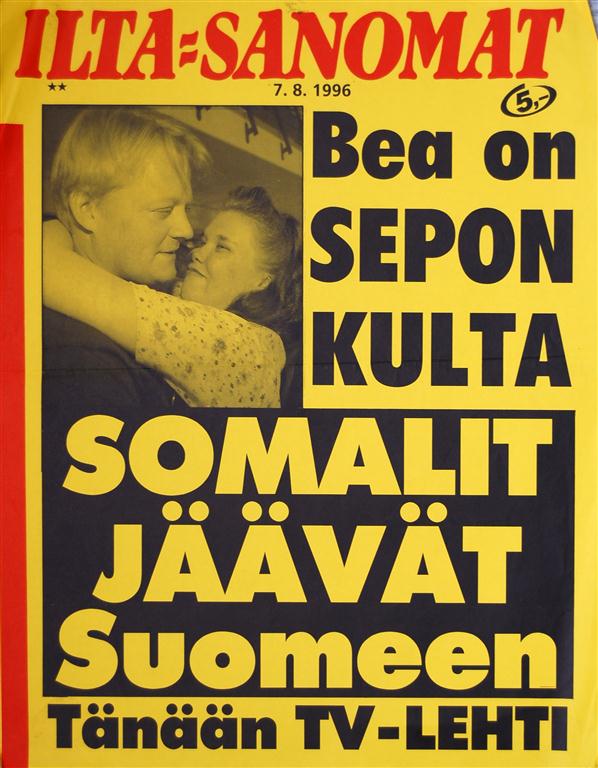
Journalists are one group that have helped to spread and reinforce our prejudices and racism of other groups. There’s nothing surprising about this considering that journalists, like the media that employs them, mirror in part what the public feels. 

l_1084-medium1

Ilta-Sanomat is one tabloid resonsible for spreading racism in Finland during the 1990s. This billboard tells us that Somali refugees will stay put in Finland.

Even if this may be the case, the difference between a sharp and mediocre journalist is how well he or she can question and expose abuses in our society. The job of the media is to be a watchdog and ensure that our system of checks and balances functions properly.

Too many journalists and the media, however,  forget what their primary role is. Instead of questioning social ills, they have helped to spread prejudice, racism and xenophobia in our society.

Closing one’s eyes to racism or going after such a social ill without teeth is unfortunate because we all lose. The spirit of our laws, like our Constitution, should be our moral shield and benchmark.

Check out section seven of Finland’s  Constitution:

No one shall, without an acceptable reason, be treated differently from other persons on the ground of sex, age, origin, language, religion, conviction, opinion, health, disability or other reason that concerns his or her person.

Even if the highest law of the land tells us convincingly that discrimination is wrong, why do some journalists and the media have a difficult time figuring out what is intolerance and what should our response to such a social ill be?

One of the most racist papers in Finland is tabloids like Iltalehti and Ilta-Sanomat, which markets news like a used car salesman, who would even sell his or her mother if the price were right. Another publication is Uusi Suomi, which helped Perussuomalaiset (PS) politicians like Jussi Halla-aho, James Hirvisaari and a long list of others to become household names.

Online publications like Uusi Suomi and tabloids like Iltalehti are responsible for spreading stereotypes like that immigrants are lazy, rape and commit crimes in this country.

A good example of how prejudice and stereotypes of foreigners are maintained and spread by the media is a reent story on Länsi-Savo, teaching Russians how to use the toilet bowl.

Another example that fuels stereotypes and racism in this country is a non-story about banning in Finland the use of the burqa and niqab.

I have never seen a woman wearing such clothing in Finland. I wonder how many of the journalists at Iltalehti have never mind anti-immigration PS MPs, who want to ban the use of such clothes in our country.

Coverage of racism, hate speech and  social exclusion has improved thanks to much better reporting by Helsingin Sanomat, Etelä-Suomen Sanomat, Keskisuomalainen, Savon Sanomat, Kainuun Sanomat, Karjalainen, Turun Sanomat, Kansan Uutiset and others.

These papers have done a good job at doing their job.


Why was Finland “tolerant” of Jews when it was an ally of Nazi Germany?

Posted on January 16, 2013 by Migrant Tales

Finns claim proudly – followed by an obvious sigh of relief – that even if we were an ally of Nazi Germany during World War 2, anti-Semitism never reached the same levels as in Hungary, Romania and in other parts of Nazi-dominated Europe. 

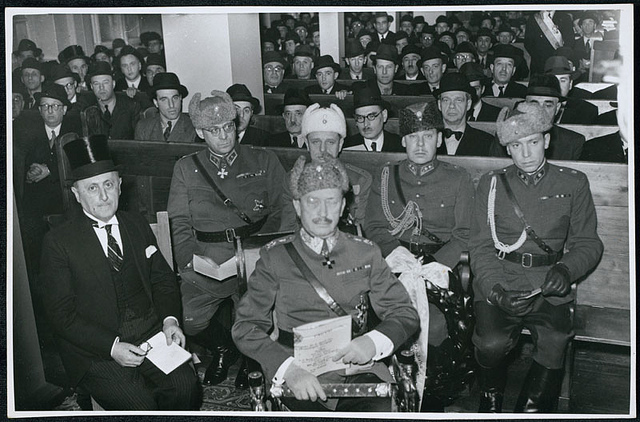
While Finland offers an interesting case with respect to anti-Semitism in war-ravaged Nazi Europe, was tolerance the principal factor that kept Finns from persecuting Jews? Could the underwhelming size of the Jewish community and the fact that they were accepted as Finns offer us better explanations?

5164322092_0db1ae431e_z

Memorial ceremony for Jewish soldiers who fell in World War II presided by Marshal Carl Mannerheim in Helsinki, Finland. Source: Flickr. 

The size of the Jewish community in Finland has been small. In the 1870 census, there were 460 Jews and by 1883 they are said to have risen to 1,000. In 1929, it peaked to 1,763.*

Today there are about 1,500 Jews living in Finland.

The Jews were granted Finnish citizenship in 1918. Finland was the last country in Europe together with Romania to do so.

Even if there appears that Finland tolerated Finnish Jews in World War 2, former Prime Minister Paavo Lipponen formally apologized in November 2000 to the Jewish community for the extradition of eight Jews to Germany in 1942. Only one of the eight survived after they were sent to Auschwitz.

While the Jewish question never reached the same proportions in this country as elsewhere in Nazi-dominated Europe, would anti-Semitism have soared if the size of the Jewish community were many times bigger?

There seems to be a connection between the recent rise of racism, xenophobia and growth of far-right parties in Finland and the size of the immigrant community. Certainly factors like the economic recession and rising unemployment play important roles as well.

How can xenophobia grow if the immigrant community is minuscule? How can there be anti-Semitism if there are only a handful of Jews?

Sometimes size does not matter. In neighboring Estonia, an estimated half of the Jewish population, which totaled 4,000, died in the Holocaust.  In countries like Poland 3 million Jews perished under Nazi rule.

If we look at history, Finland was far from being “tolerant.” The Restricting Act of 1939 is one of many laws that showed how Finland perceived the world as a threat.

The Jews were in part saved by their acceptance as Finns in the 1940s, but a very important factor must have been their underwhelming numbers.

* Migration Patterns among Jews – Finland. See following link. 


  • Previous
  • 1
  • …
  • 19
  • 20
  • 21
  • 22
  • 23
  • 24
  • 25
  • …
  • 30
  • Next
Read more about documentary film
Read more

Recent Posts

  • Finland’s tabloids Iltalehti and Ilta-Sanomat are the pits
  • Riikka Purra’s Dr Jekyll and Mr Hyde mask
  • Double standards
  • Perussuomalaiset: Uusi logo, sama vanha juttu
  • Taco Trump

Recent Comments

  1. Absolutely Socking: Racist Finnish Facebook group against human rights gets flooded with socks on Musta Barbaari’s mother and sister charged by the police in “ethnic profiling” case
  2. Ilkka Nuotio on Pekka Myrskylä: “Tilastot kertovat toista kuin poliittinen keskustelu”
  3. Genrih Soinkara on The war in Ukraine and the Russian-Finnish border crisis are showing Finland’s ugly side
  4. Ahti Tolvanen on Comment by Ahti Tolvanen on the Helsinki +50 conference
  5. Angel Barrientos on Angel Barrientos is one of the kind beacons of Finland’s Chilean community

Archives

  • June 2026
  • May 2026
  • April 2026
  • March 2026
  • February 2026
  • January 2026
  • December 2025
  • November 2025
  • October 2025
  • September 2025
  • August 2025
  • July 2025
  • June 2025
  • May 2025
  • April 2025
  • March 2025
  • February 2025
  • January 2025
  • December 2024
  • November 2024
  • October 2024
  • September 2024
  • August 2024
  • July 2024
  • June 2024
  • May 2024
  • April 2024
  • March 2024
  • February 2024
  • January 2024
  • December 2023
  • November 2023
  • October 2023
  • September 2023
  • August 2023
  • July 2023
  • June 2023
  • May 2023
  • April 2023
  • March 2023
  • February 2023
  • January 2023
  • December 2022
  • November 2022
  • October 2022
  • September 2022
  • August 2022
  • July 2022
  • June 2022
  • May 2022
  • April 2022
  • March 2022
  • February 2022
  • January 2022
  • December 2021
  • November 2021
  • October 2021
  • September 2021
  • August 2021
  • July 2021
  • June 2021
  • May 2021
  • April 2021
  • March 2021
  • February 2021
  • January 2021
  • December 2020
  • November 2020
  • October 2020
  • September 2020
  • August 2020
  • July 2020
  • June 2020
  • May 2020
  • April 2020
  • March 2020
  • February 2020
  • January 2020
  • December 2019
  • November 2019
  • October 2019
  • September 2019
  • August 2019
  • July 2019
  • June 2019
  • May 2019
  • April 2019
  • March 2019
  • February 2019
  • January 2019
  • December 2018
  • November 2018
  • October 2018
  • September 2018
  • August 2018
  • July 2018
  • June 2018
  • May 2018
  • April 2018
  • March 2018
  • February 2018
  • January 2018
  • December 2017
  • November 2017
  • October 2017
  • September 2017
  • August 2017
  • July 2017
  • June 2017
  • May 2017
  • April 2017
  • March 2017
  • February 2017
  • January 2017
  • December 2016
  • November 2016
  • October 2016
  • September 2016
  • August 2016
  • July 2016
  • June 2016
  • May 2016
  • April 2016
  • March 2016
  • February 2016
  • January 2016
  • December 2015
  • November 2015
  • October 2015
  • September 2015
  • August 2015
  • July 2015
  • June 2015
  • May 2015
  • April 2015
  • March 2015
  • February 2015
  • January 2015
  • December 2014
  • November 2014
  • October 2014
  • September 2014
  • August 2014
  • July 2014
  • June 2014
  • May 2014
  • April 2014
  • March 2014
  • February 2014
  • January 2014
  • December 2013
  • November 2013
  • October 2013
  • September 2013
  • August 2013
  • July 2013
  • June 2013
  • May 2013
  • April 2013
  • March 2013
  • February 2013
  • January 2013
  • December 2012
  • November 2012
  • October 2012
  • September 2012
  • August 2012
  • July 2012
  • June 2012
  • May 2012
  • April 2012
  • March 2012
  • February 2012
  • January 2012
  • December 2011
  • November 2011
  • October 2011
  • September 2011
  • August 2011
  • July 2011
  • June 2011
  • May 2011
  • April 2011
  • March 2011
  • February 2011
  • January 2011
  • December 2010
  • November 2010
  • October 2010
  • September 2010
  • August 2010
  • July 2010
  • June 2010
  • May 2010
  • April 2010
  • March 2010
  • February 2010
  • January 2010
  • December 2009
  • November 2009
  • October 2009
  • September 2009
  • August 2009
  • July 2009
  • December 2008
  • November 2008
  • October 2008
  • September 2008
  • August 2008
  • July 2008
  • June 2008
  • May 2008
  • April 2008
  • March 2008
  • February 2008
  • January 2008
  • November 2007
  • October 2007
  • September 2007
  • August 2007
  • July 2007
  • June 2007
  • May 2007

Categories

  • ?? Gia L?c
  • ????? ?????? ????? ???????? ?? ??????
  • ???????
  • @HerraAhmed
  • @mondepasrond
  • @nohatefinland
  • @oula_silver
  • @Varathas
  • A Pakistani family
  • äärioikeisto
  • Abbas Bahmanpour
  • Abdi Muhis
  • Abdirahim Hussein Mohamed
  • Abdirahim Husu Hussein
  • Abdirisak Mahamed
  • About Migrant Tales
  • activism
  • Adam Al-Sawad
  • Adel Abidin
  • Afrofinland
  • Ahmed IJ
  • Ahti Tolvanen
  • Aino Pennanen
  • Aisha Maniar
  • Alan Ali
  • Alan Anstead
  • Alejandro Díaz Ortiz
  • Alekey Bulavsev
  • Aleksander Hemon
  • Aleksanterinliitto
  • Aleksanterinliitto ry
  • Aleksanterinliitto ry:n hallitus
  • Alex Alex
  • Alex Mckie
  • Alexander Nix
  • Alexandra Ayse Albayrak
  • Alexis Neuberg
  • Ali Asaad Hasan Alzuhairi
  • Ali Hossein Mir Ali
  • Ali Rashid
  • Ali Sagal Abdikarim
  • Alina Tsui
  • Aline Müller
  • All categories
  • Aman Heidari
  • Amiirah Salleh-Hoddin & Jana Turk
  • Amin A. Alem
  • Amir Zuhairi
  • Amkelwa Mbekeni
  • Ana María Gutiérrez Sorainen
  • Anachoma
  • Anders Adlecreutz
  • Angeliina Koskinen
  • Anna De Mutiis
  • Anna María Gutiérrez Sorainen
  • Anna-Kaisa Kuusisto ja Jaakko Tuominen
  • Annastiina Kallius
  • Anneli Juise Friman Lindeman
  • Announcement
  • Anonymous
  • Antero Leitzinger
  • anti-black racism
  • Anti-Hate Crime Organisation Finland
  • Anudari Boldbaatar
  • Arshiya Nasser
  • Aspergers Syndrome
  • Asylum Corner
  • Asylum seeker 406
  • Athena Griffin and Joe Feagin
  • Autism
  • Avaaz.org
  • Awale Olad
  • Ayan Said Mohamed
  • AYY
  • Barachiel
  • Bashy Quraishy
  • Beatrice Kabutakapua
  • Beri Jamal
  • Beri Jamal and Enrique Tessieri
  • Bertolt Brecht
  • Boiata
  • Boodi Kabbani
  • Bruno Gronow
  • Carmen Pekkarinen
  • Çelen Oben and Sheila Riikonen
  • Chiara Costa-Virtanen
  • Chiara Costa-Virtanen
  • Chiara Sorbello
  • Christian Thibault
  • Christopher Wylie
  • Clara Dublanc
  • Dana
  • Daniel Malpica
  • Danilo Canguçu
  • David Papineau
  • David Schneider
  • Dexter He
  • Don Flynn
  • Dr Masoud Kamali
  • Dr. Faith Mkwesha
  • Dr. Theodoros Fouskas
  • Edna Chun
  • Eeva Kilpi
  • Emanuela Susheela
  • En castellano
  • ENAR
  • Enrique
  • Enrique Tessieri
  • Enrique Tessieri & Raghad Mchawh
  • Enrique Tessieri & Yahya Rouissi
  • Enrique Tessieri and Muhammed Shire
  • Enrique Tessieri and Sira Moksi
  • Enrique Tessieri and Tom Vandenbosch
  • Enrique Tessieri and Wael Che
  • Enrique Tessieri and Yahya Rouissi
  • Enrique Tessieri and Zimema Mhone
  • Epäluottamusmies
  • EU
  • Europe
  • European Islamophobia Report
  • European Islamophobia Report 2019,
  • European Union
  • Eve Kyntäjä
  • Ezequiel Caldeiro
  • Facebook
  • Fadumo Dayib
  • Faisa Kahiye
  • Farhad Manjoo
  • Fasismi
  • Finland
  • Fizza Qureshi
  • Flyktingar och asyl
  • Foreign Student
  • Fozia Mir-Ali
  • Frances Webber
  • Frida Selim
  • Gareth Rice
  • Ghyslain Vedeaux
  • Global Art Point
  • Great Replacement
  • Habiba Ali
  • Hami Bahadori
  • Hami Bahdori
  • Hamid
  • Hamid Alsaameere
  • Hamid Bahdori
  • Handshake
  • Harmit Athwal
  • Hassan Abdi Ali
  • Hassan Muhumud
  • Heikki Huttunen
  • Heikki Wilenius
  • Helsingin Sanomat
  • Henning van der Hoeven
  • Henrika Mälmsröm
  • Hser Hser
  • Hser Hser ja Mustafa Isman
  • Husein Muhammed
  • Hussain Kazemian
  • Hussain Kazmenian
  • Ibrahim Khan
  • Ida
  • Ignacio Pérez Pérez
  • Iise Ali Hassan
  • Ilari Kaila & Tuomas Kaila
  • Imam Ka
  • inside-an-airport
  • Institute of Race Relations
  • Iraqi asylum seeker
  • IRR European News Team
  • IRR News Team
  • Islamic Society of Norhern FInland
  • Islamic Society of Northern Finland
  • Islamophobia
  • Jacobinmag.com
  • Jallow Momodou
  • Jan Holmberg
  • Jane Elliott
  • Jani Mäkelä
  • Jari Luoto
  • Jari Taponen
  • Jegor Nazarov
  • Jenni Stammeier
  • Jenny Bourne
  • Jessie Daniels
  • Joe Davidow
  • Johannes Koski
  • John D. Foster
  • John Grayson
  • John Marriott
  • Jon Burnett
  • Jorma Härkönen
  • Jos Schuurmans
  • José León Toro Mejías
  • Josue Tumayine
  • Jouni Karnasaari
  • Juan Camilo
  • Jukka Eräkare
  • Julian Abagond
  • Julie Pascoet
  • Jussi Halla-aho
  • Jussi Hallla-aho
  • Jussi Jalonen
  • JusticeDemon
  • Kadar Gelle
  • Kaksoiskansalaisuus
  • Kansainvälinen Mikkeli
  • Kansainvälinen Mikkeli ry
  • Katherine Tonkiss
  • Kati Lepistö
  • Kati van der Hoeven-Lepistö
  • Katie Bell
  • Kättely
  • Kerstin Ögård
  • Keshia Fredua-Mensah & Jamie Schearer
  • Khadidiatou Sylla
  • Khadra Abdirazak Sugulle
  • Kiihotus kansanryhmää vastaan
  • Kirsi Crowley
  • Koko Hubara
  • Kristiina Toivikko
  • Kubra Amini
  • KuRI
  • La Colectiva
  • La incitación al odio
  • Laura Huhtasaari
  • Lauri Finér
  • Leif Hagert
  • Léo Custódio
  • Leo Honka
  • Leontios Christodoulou
  • Lessie Branch
  • Lex Gaudius
  • Leyes de Finlandia
  • Liikkukaa!
  • Linda Hyökki
  • Liz Fekete
  • M. Blanc
  • Maarit Snellman
  • Mahad Sheikh Musse
  • Maija Vilkkumaa
  • Malmin Kebab Pizzeria Port Arthur
  • Marcell Lorincz
  • Mari Aaltola
  • María Paz López
  • Maria Rittis Ikola
  • Maria Tjader
  • Marja-Liisa Tolvanen
  • Mark
  • Markku Heikkinen
  • Marshall Niles
  • Martin Al-Laji
  • Maryan Siyad
  • Matt Carr
  • Mauricio Farah Gebara
  • Media Monitoring Group of Finland
  • Micah J. Christian
  • Michael McEachrane
  • Michele Levoy
  • Michelle Kaila
  • Migrant Tales
  • Migrant Tales Literary
  • Migrantes News
  • Migrants' Rights Network
  • MigriLeaks
  • Mikko Kapanen
  • Miriam Attias and Camila Haavisto
  • Mohamed Adan
  • Mohammad Javid
  • Mohammad M.
  • Monikulttuurisuus
  • Monisha Bhatia and Victoria Canning
  • Mor Ndiaye
  • Muh'ed
  • Muhamed Abdimajed Murshid
  • Muhammed Shire
  • Muhammed Shire and Enrique Tessieri
  • Muhis Azizi
  • Musimenta Dansila
  • Muslimiviha
  • Musulmanes
  • Namir al-Azzawi
  • Natsismi
  • Neurodiversity
  • New Women Connectors
  • Nils Muižnieks
  • No Labels No Walls
  • Noel Dandes
  • Nuor Dawood
  • Omar Khan
  • Otavanmedia
  • Oula Silvennoinen
  • Paco Diop
  • Pakistani family
  • Pentti Stranius
  • Perussuomalaiset
  • perustuslaki
  • Petra Laiti
  • Petri Cederlöf
  • Pia Grochowski
  • Podcast-lukija Bea Bergholm
  • Pohjois – Suomen Islamilainen Yhdyskunta
  • Pohjois Suomen Islamilainen Yhyskunta
  • Polina Kopylova
  • Race Files
  • racism
  • Racism Review
  • Raghad Mchawh
  • Ranska
  • Rashid H. and Migrant Tales
  • Rasismi
  • Raul Perez
  • Rebecka Holm
  • Reem Abu-Hayyeh
  • Refugees
  • Reija Härkönen
  • Remiel
  • Reza Nasri
  • Richard Gresswell
  • Riikka Purra
  • Risto Laakkonen
  • Rita Chahda
  • Ritva Kondi
  • Robito Ibrahim
  • Roble Bashir
  • Rockhaya Sylla
  • Rodolfo Walsh
  • Roger Casale
  • Rostam Atai
  • Roxana Crisólogo Correa
  • Ruth Grove-White
  • Ruth Waweru-Folabit
  • S-worldview
  • Sadio Ali Nuur
  • Sami Rusanen
  • Sandhu Bhamra
  • Sara de Jong
  • Sarah Crowther
  • Sari Alhariri
  • Sarkawt Khalil
  • Sasu
  • Scot Nakagawa
  • Shabana Ahmadzai
  • Shada Islam
  • Sharon Chang blogs
  • Shenita Ann McLean
  • Shirlene Green Newball
  • Sini Savolainen
  • Sira Moksi
  • Sonia K.
  • Sonia Maria Koo
  • Steverp
  • Stop Deportations
  • Suldaan Said Ahmed
  • Suomen mediaseurantakollektiivi
  • Suomen Muslimifoorumi ry
  • Suomen viharikosvastainen yhdistys
  • Suomen viharikosvastainen yhdistys ry
  • Suomi
  • Supermen
  • Susannah
  • Suva
  • Syrjintä
  • Talous
  • Tapio Tuomala
  • Taw Reh
  • Teivo Teivainen
  • The Daily Show
  • The Heino
  • The Supermen
  • Thomas Elfgren
  • Thulfiqar Abdulkarim
  • Tim McGettigan
  • Tino Singh
  • Tito Moustafa Sliem
  • Tobias Hübinette and L. Janelle Dance
  • Transport
  • Trica Danielle Keaton
  • Trilce Garcia
  • Trish Pääkkönen
  • Trish Pääkkönen and Enrique Tessieri
  • Tuulia Reponen
  • Uncategorized
  • UNITED
  • University of Eastern Finland
  • Uyi Osazee
  • Väkivalta
  • Vapaa Liikkuvuus
  • Venla-Sofia Saariaho
  • Vieraskynä
  • W. Che
  • W. Che an Enrique Tessieri
  • Wael Ch.
  • Wan Wei
  • Women for Refugee Women
  • Xaan Kaafi Maxamed Xalane
  • Xassan Kaafi Maxamed Xalane
  • Xassan-Kaafi Mohamed Halane & Enrique Tessieri
  • Yahya Rouissi
  • Yasmin Yusuf
  • Yassen Ghaleb
  • Yle Puhe
  • Yuliet Tresa
  • Yve Shepherd
  • Zahra Khavari
  • Zaker
  • Zalina Ametova
  • Zamzam Ahmed Ali
  • Zeinab Amini ja Soheila Khavari
  • Zimema Mahone and Enrique Tessieri
  • Zimema Mhone
  • Zoila Forss Crespo Moreyra
  • ZT
  • Zulma Sierra
  • Zuzeeko Tegha Abeng
© 2026 Migrant tales | Powered by Minimalist Blog WordPress Theme