Migrant tales
Menu
  • #MakeRacismHistory “In Your Eyes”
  • About Migrant Tales
  • It’s all about Human Rights
  • Literary
  • Migrant Tales Media Monitoring
  • NoHateFinland.org
  • Tales from Europe
Menu

Tag: Continuation War

How can you, Finland, loathe migrants and refugees if you were one?

Posted on April 27, 2014 by Migrant Tales

How can a country like Finland, which saw over 1.2 million people emigrate during 1860-1999 and resettled 420,000 Karelian refugees after the Continuation War (1941-44) with the former Soviet Union, loathe migrants and speak contemptuously against refugees?  How do you explain the rise of an anti-immigration party like the Perussuomalaiset (PS) that grew from a mere 5 MPs in the 2007 elections to 39 MPs in 2011?

How is it possible that the president of that party, Timo Soini, could claim on national television Thursday that it was immoral if people fled war and came to Europe as refugees instead of fight for social justice in their war-ravaged homelands?

10259284_10203610764176734_3556884218605012086_o

Posing next to a monument for those Finnish migrants and refugees in the southern Finnish city of Hanko that left this country during 1880-1930. The picture was taken in 1980 by Erkki Siirilä.

Why do we continue to call evacuees those who fled their former homes and lands because they were ceded to the USSR? Why do we still refer to Soviet citizens who fled the country to the West as defectors and not refugees?

The answer is pretty clear: Denial of our history mixed with the shadow of the cold war, which ended with the demise of the Soviet Union in 1991.

Add to the latter the fact that we’ve done everything to kill diversity in the last century and a picture emerges. Our identity rests in that diversity. Erasing it is like erasing ourselves and our history.

Such a one-sided view of who we are and our history was and still is possible thanks to a closed and exclusive view.

Certainly it was politically correct to call Karelians and people from Petsamo and Salla “evacuees” and Soviet citizens “defectors” as opposed to refugees. Our giant eastern neighbor wouldn’t have liked it.

Our own prejudices and racism is nothing more than denial of who we are. We still lack courage to challenge this denial. However, time is on our side and one day we’ll be able to see the last century in a different light. This will make us stronger, not weaker.

The ethnic and racist fairy tales of some Finnish politicians and parties like the PS is based on your ignorance and theirs.

YLE in English: Finnish Sports Federation apologizes after 75 years to a Finnish-Jewish runner

Posted on September 21, 2013 by Migrant Tales

As Finland races into the depths of the new century and distances itself from the Winter (1939-40) and especially from the Continuation War (1941-44), I’m certain that there will be more proof about our collusion with Nazi Germany. One such story appeared Friday, when YLE in English reported on the Finnish Sports Federation’s (SUL) apology to a Jewish runner. 

Kuvankaappaus 2013-9-21 kello 11.17.33

Read full story here.

In a 1938 athletics meet, a Jewish runner of the Helsinki Makkabi sports club was placed fourth despite winning the 100-meter dash race.

The sprint runner, Abraham Tokazier, won the race but Arne Savolainen was declared the winner with Tokazier coming in fourth.

The apology by SUL took 75 years and was only possible after Finnish author Kjell Westö mentioned the incident in his new book, “Kangastus 38.”

”Any manipulation or distortion of results is shocking and against basic sporting values,” SUL chairman Vesa Harmaakorpi said in a statement. ”The judges clearly made a mistake in the 1938 meet. I would like to offer a humble apology to the athlete and his relatives on behalf of the Finnish Sports Federation.”

Leo-dan Bensky, honorary chairman of Makkabi Helsinki, said that the apology wasn’t good enough since SUL doesn’t want to retrospectively change the result of the race.

”It’s a step in the right direction, but until the result has been corrected, we don’t see the matter as resolved,” he was quoted as saying on YLE in English.

Historians like Simo Muir and Malthe Gasche state in a book called “Finland’s Holocaust” that Urho Kekkonen, the Finnish Sports Federation chairman and Finland’s president (1953-81), may have influenced the final result of the 1938 race.

Image1-3_edited-11

Finland was allied militarily with Nazi Germany during the Continuation War. Why is it still so difficult to open up this questionable period? Was Finland Adolf Hitler’s ally because it hated and wanted revenge against the Soviet Union or was it because it generally believed in Nazi Germany’s new world order and racial policies?

Citing newspapers from the time, Muir and Gasche state that there was a drive to make sure that Finnish Jewish athletes did not participate or represent the country in the 1940 Olympic Games in Helsinki.

Helsingin Sanomat claims that there may have been high-ranking Nazi German officials at the 1938 athletics meet, which forced SUL to change the final result.


Where are you from?

Posted on June 10, 2013 by Migrant Tales

Even if I have lived most of my adult life in Finland and my mother is Finnish, I’m still asked occasionally where I’m from. In a spirit of mutual respect, I ask the person the same question. Some don’t like it. 

The innocent question, where are you from, reveals a lot about our prejudices and ignorance about who we consider Finns.

In order to emphasize their Finnishness at the cost of your Otherness, you’ll even get sometimes a lesson in race-and-blood myths and how their ancestors have lived for centuries in Finland.

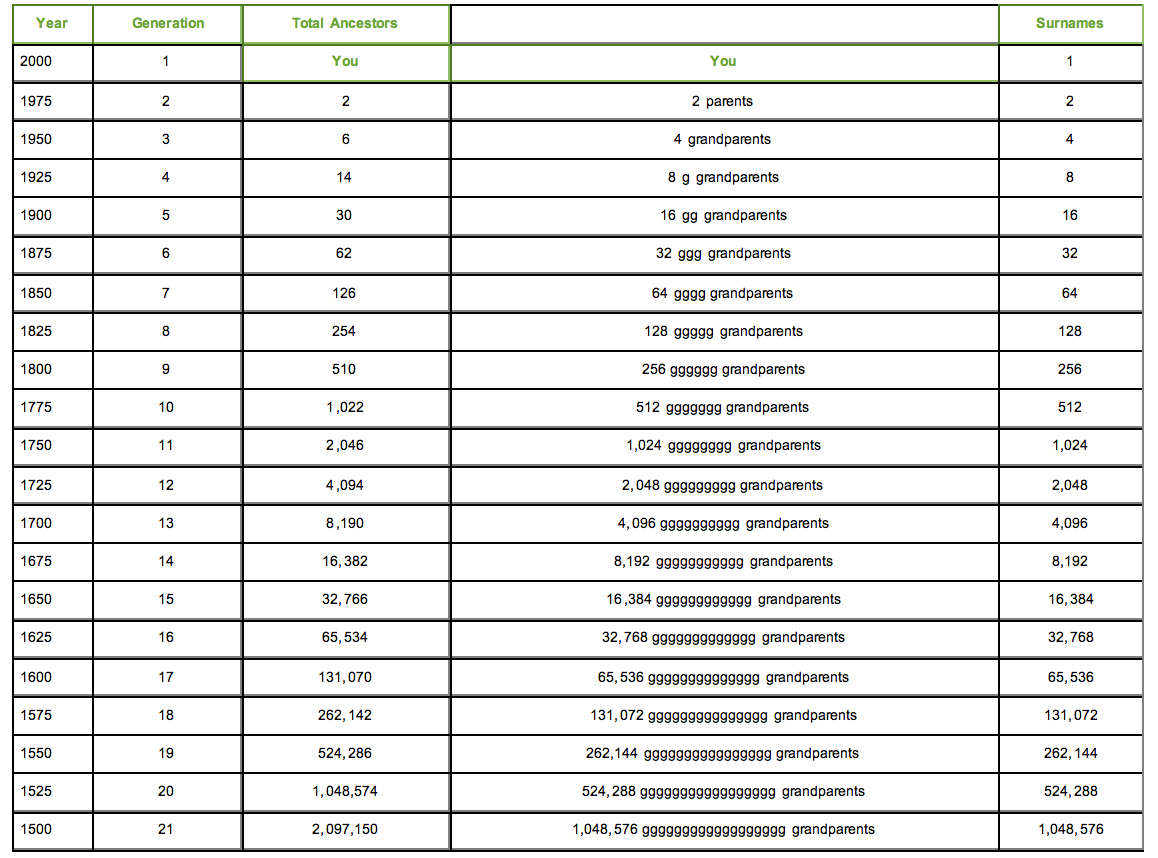
When faced with such exclusive views of who is a Finn, I ask them how many ancestors they’d have if they went back 20 generations. The answer is about one million.

Kuvankaappaus 2013-6-10 kello 8.23.30Read full story here.

Then there are those who claim they are as old as Methuselah, a biblical figure who died at the age of 969. Those who play Methuselah claim that their great grandparents fought in this and that war and built this land from scratch even if they had never seen war never mind suffered poverty.

I ask them a simple question: Are you 150 years old?

One matter that gives hope about building a more inclusive society is that we are still a young nation. Our national identity, which is nothing more than a social construct,  was built by and large on wars and our loathing of Russia. This must change in order to make our society more inclusive and acceptant of cultural diversity.

Certainly we should respect our veterans. Even if they had no choice but to fight in trenches and die in battlefields, we don’t have to be there with them since the Winter (1939-40) and Continuation War (1941-44) ended over sixty years ago. We have to forgive and move on. The longer we stay in those trenches the longer we’ll be resentful and suspicious of the outside world.

Despite all the challenges facing us during this century as we become a culturally diverse society, I’m confident that we’ll succeed at the task.

Our Nordic democratic social welfare state values and the spirit of our laws ensure success.


How can Finland tackle intolerance today if it cannot come to terms with its past?

Posted on April 9, 2013 by Migrant Tales

Finland’s present political and social dilemma could be best described in the following manner: On the one side it has a difficult time acknowledging ever-growing intolerance in its society, but on the other slowly understands that one major source of that intolerance are groups like the Perussuomalaiset (PS) party.

The PS has grown into a major political force in Finland not by its own merits per se, but because other political parties and the media have been near-silent to its right-wing populist anti-EU, anti-immigration and especially anti-Islam political message.

If the PS ever got to government, and if its chairman Timo Soini ever became prime minister, it would make conservative Christian Democrat interior minister, Päivi Räsänen, look like a liberal.

If this ever happened, the situation of immigrants and visible minorities in Finland would deteriorate further. They would feel the full brunt of populism and intolerance that is openly promoted by the PS.

While we can debate the extent of intolerance in Finland, probably one matter that we can state safely is that our tolerance for cultural diversity needs to improve. We cannot improve on this front as long as we close our eyes and plug our ears to the social ills that racism, prejudice and discrimination are fueling in our society.

It’s futile for a white Finn to state if there is racism or not in our society because he or she has never experienced it. How could he?

We do ourselves great harm by denying or playing down those voices that claim they are victims of racism, prejudice and outright discrimination.  This type of silence only encourages and fuels more intolerance.

But back to our dilemma: If we are to challenge the sources of our intolerance, our society needs to do a lot more soul-searching that will carry us back to the depths of the last century. Certainly there we’ll find the sources of our intolerance and the causes for the rise of an anti-immigration party like the PS.

Kuvankaappaus 2013-4-9 kello 1.02.06

Here’s an interesting article on Yliopppilaslehti about one of those historical skeletons in our collective closet.

It’s futile to understand who we are today if we don’t come to terms with our past. Some sticky unanswered questions include our relationship with Germany and the Nazi regime, the Continuation War, our hatred for the Russians, the Civil War of 1918, cold war-era censorship, and the social construct of Finnish national identity in the last century as well as other ones.

This is the dilemma facing Finland today: If we don’t come to grips with our past, we will be in danger of repeating the same mistakes.


How sincere is PS MP Immonen about Finnish Karelia?

Posted on September 8, 2012 by Migrant Tales

Finnish Karelia, Salla, and Petsamo were territories ceded to the former Soviet Union after the Continuation War (1941-44).  Counterjihadist Perussuomalaiset (PS) MP Olli Immonen sent a parliamentary question Friday asking the government to investigate whether Russia offered in 1991 then President Mauno Koivisto (1982-94) the possibility to buy back the ceded region.

Koivisto, who was the country’s last cold war president, denied in a Helsingin Sanomat interview in 2007 (15 years later!) that then Russian President Boris Yeltsin had offered Finland the opportunity to buy back Finnish Karelia.

Finland used to look like a maiden before 1944. It lost part of its skirt (Finnish Karelia) and an arm (Petsamo) to the former Soviet Union after the war. 

Finnish Karelia represents everything that was and went wrong with Europe at the time. It is a small jigsaw puzzle of a terrible war that ended up costing the lives of an estimated 60 million people.

If the offer by Moscow to Helsinki is true, speculation has it that the sizable Russian population in the ceded region was one important reason why President Koivisto did not want to negotiate with the Russians.

In 1991, Finland’s immigrant population was miniscule, totaling 26,255, or 0.5% of the population.

Finns were back then – as today – very set in their ethnic perceptions of themselves and suspicion of the Russians continues to be high in Finland.

The interesting question to ask about the purchase of Finnish Karelia is what role did issues like ethnic and national ”purity,” Finland’s deep-seated cold war mentality and fear of its giant neighbor.

What kinds of passions does PS MP Immonen’s parliamentary question awaken? Is it another PS election ploy to incite nationalist sentiment and lure voters to the embattled party?

If Karelia were returned to Finland under the leadership of Immonen and the PS, what would they do about the Russian population and other ethnic minorities living there? What kind of ethnic cleansing would take place and how would it affect relations with Moscow? Would we return back to the same tensions that characterized Finnish-Soviet relations in the 1930s?

Since Immonen is a radical Counterjihadist who predicts a war between the Christian West and Islam, we should ask what political mileage does the PS MP want to get from such a parliamentary question.

While it is positive to debate our history openly, Immonen’s parliamentary question should be seen as a sham that exposes his ultra-nationalistic credentials.

Politicians  like Immonen don’t bring us closer to understanding the Karlian question, but take us further from it.


Ilta-Sanomat tabloid ad (lööppi) from December 28, 1992

Posted on March 12, 2012 by Migrant Tales

Migrant Tales will begin to publish Finnish tabloid ads* (lööppi in Finnish) from the 1990s. Taking into account that Finland’s immigrant population started to grow during that decade, it is easy at least through the main stories of tabloids like Ilta-Sanomat and Iltalehti to see how they reflected some people’s xenophobic and racist views.  

We apologize to readers for the racist and xenophobic content of the material. Our intention is not to spread these social ills but to exposed it.

One of the good things that former President Mauno Koivisto did during his term (1982-92) was the long-overdue recognition of the Ingrians as part of the Finnish ethnic family.  The first question that many asked at the time was who are the Ingrians? They are Finnish-speakers who were settled in the St Petersberg area and surroundings when Finland was a part of the Swedish Empire (1150-1809).

The cold war had buried these people from our collective memory.

During World War 2, or the Continuation War (1941-44), many Ingrians fought in the Finnish army against the Soviet Union. After the war ended, Finland was required to return an estimated 55,000 Ingrians back to the former Soviet Union.  Some of these ended up in Siberia.

Despite the wrongdoings of history, Ilta-Sanomat showed how some were making money off the Ingrians at 1,000-mark daily rates for dwellings offered to the newly arrived immigrants.

While I did not have access to the story, JusticeDemon and Joku cleared the matter up for me. Thank you.

*Migration Institute archive. 

Forgiving our past enemies and mending relations with new ones in Finland

Posted on February 18, 2012 by Migrant Tales

 This struggle to banish our hatred of others is a long journey that will take generations to complete.  In it hides as well the seed of racism. What are we waiting for? 

By Enrique Tessieri

I have never understood why some Finns are capable of expressing  so much hatred for religious groups like Muslims, Somalis, blacks, and especially the Romany minority and Russians.  Even if the Continuation War (1941-44) ended 67 years ago, some of us still sound as if we were in those trenches waiting for the enemy to attack.

What good can come out of being in such trenches and glorifying a questionable war that took place a long time ago? Very little, I suspect, especially if those historical events hinder today our ability to make amends with our former enemies and poison our views of our ever-culturally diverse society.

My grandfather fought in the Civil War of 1918, Winter War (1839-40) and Continuation War. I have a lot of respect for him as well as all those who were put in harm’s way.

Are these wars and rivers of blood the best we can do as a nation? Do we have to continue to search in such ghastly places our identity and strength as a nation? Can’t we do better?

Certainly we can.

But in order to understand the issue we must ask why some of us still persist in glorifying past wars and hating those countries that fought against. Groups like the Defense Forces, Finnish Border Guard, the police, far-right politicians, political parties like the Perussuomalaiset and a long list of others benefit economically and politically by instilling such fear.

Those that endured past wars didn’t come out of them unscathed but traumatized and impoverished. My mother, who lived right across Marshall Carl Mannerheim’s headquarters in Mikkeli, told me that she saw an orange the first time in her life when she went to Stockholm in the early 1950s.

That trauma and hurt from those conflicts are still there but too little has been done to overcome them. We are still their captives and because of that some of us have problems in trusting foreigners.

But don’t we have to put to an end one day our suspicions of groups like the Russians? What about if we started today?

Yes, I do think that today would be a good day to forgive and cast aside my deepest fears of others not for my sake but for my children and grandchildren.

Now is a better time than ever to embark on such a journey because it will be a long one but well worth it.

The "Winter War" that visible minorities face in Finland

Posted on January 20, 2012 by Migrant Tales

By Enrique Tessieri

Even if we speak proudly about the heroism of the men and women who fought against a formidable foe in the Winter (1939-40) and questionable Continuation War (1941-44), many Finns with culturally diverse backgrounds are facing today a different yet similar kind of war on a daily basis. One of these “veterans” is fourteen-year-old Rebecka Holm, who published her moving story on Swedish-language daily HBL.

If Migrant Tales could, it would offer an award highlighting the adolescent’s bravery to speak out against racism. She doesn’t speak out for herself but for many others who are the silent daily victims of such harassment.

The racist bullying that Holm has faced publicly is a shameful realty and unacceptable. It still happens too often because too many of us approve this type of anti-social behavior willingly or unwillingly with our silence.

In many respects those that go around insulting Finns who are visible minorities and immigrants are no worse than autocratic governments that trample on people’s rights. They carry out their abuse and hostility because they  can do it with impunity.

Holm writes: “I did not want to change schools [in Helsinki] when I started third grade we moved [to another neighborhood]…It was then [on the Helsinki metro to the Herttoniemi Station] that the racist comments and attacks began. I could sit quietly in the metro when some stranger would tell me that I should go back to where I came from. After that, I have been called many things, including mutanaama (mud face), n-word, monkey. And the worst thing of all has always been the silence of the adult passengers when I was verbally attacked.”

Like the costly wars that our country fought in World War 2, many visible minorities are veterans of a very different yet similarly sinister war.

Like these wars it was all about survival but most importantly for acceptance and respect.

What opinion polls tell us about Finland and anti-immigration

Posted on February 19, 2011 by Migrant Tales

By Enrique Tessieri

A lot of people are scratching their heads at the stellar rise of the True Finns in the polls. Even though we have to wait for the ballot boxes to have their final say in April, certainly the polls and the success of the True Finns tell us something about where Finland is at this moment and where it is heading.

According to a poll published by Helsingin Sanomat on February 17, the popularity of the True Finns now stands at 17.9%, which is the same as the Social Democrats and close behind the Center Party (18.2%) and Kokoomus (20.2%).  A  supporter of the True Finns told me candidly that  everyone in his party is lying low to not say or do anything that would put in jeopardy their popularity.

Even though the head of the True Finns, Timo Soini, claims that anti-immigration only accounts for 10% of the party’s supporters, some believe that immigration is one of the key driving forces behind its popularity.

In Sweden, were the far-right Sweden Democrats got 5.7% of the votes, immigrants make up 14.3% of the population.  Contrarily in Finland, our immigrant population totals 2.9%.  Alexis Kouros correctly asks in his column in Magma if these figures are out of proportion when compared with Sweden and the support that  other anti-immigration parties have elsewhere in Europe.

Any historian and person who lived during the 1930s in Finland can tell you that one characteristic of our society back then was  fear of foreigners and the outside world, especially the former Soviet Union.

The True Finns’ rising popularity and anti-immigration sentiment in Finland may reveal that we have not yet begun as a society to deal seriously and effectively with issues such as immigration, racism and exclusion. Even though sensible Finns may give their thumbs down to racism, it does not mean that political parties like Kokoomus and others have an effective strategy to combat such a social ill. We are still novices on this front.

Moreover, our geography and long geopolitical isolation from Western Europe during the cold war never gave us a chance to study deeper what happened during the Continuation War (1941-44) and what it meant to be a cobelligerant (the official term) of Nazi Germany. That question, in my opinion, has never been answered properly by Finnish historians.

Many of the concepts about ethnic groups and nationalities were never openly questioned because our country’s isolation never gave cause to challenge these views after the war.  But how can you debate immigration, racism and stereotypes if there were hardly any foreigners living in Finland at the time?

Today we have that opportunity thanks to the rise of our immigrant population.  We are now facing what other societies have gone or are going through: asking questions about our ever-growing cultural diversity and what it means in larger context. The questions that are being asked may vary from Armageddon-type threats to Finnish culture to sensible ones that look at it with a cool head.

The rise of the True Finns in the polls reveals, in my opinion, that that debate is now going on in earnest.

Read more about documentary film
Read more

Recent Posts

  • Finland’s tabloids Iltalehti and Ilta-Sanomat are the pits
  • Riikka Purra’s Dr Jekyll and Mr Hyde mask
  • Double standards
  • Perussuomalaiset: Uusi logo, sama vanha juttu
  • Taco Trump

Recent Comments

  1. Absolutely Socking: Racist Finnish Facebook group against human rights gets flooded with socks on Musta Barbaari’s mother and sister charged by the police in “ethnic profiling” case
  2. Ilkka Nuotio on Pekka Myrskylä: “Tilastot kertovat toista kuin poliittinen keskustelu”
  3. Genrih Soinkara on The war in Ukraine and the Russian-Finnish border crisis are showing Finland’s ugly side
  4. Ahti Tolvanen on Comment by Ahti Tolvanen on the Helsinki +50 conference
  5. Angel Barrientos on Angel Barrientos is one of the kind beacons of Finland’s Chilean community

Archives

  • June 2026
  • May 2026
  • April 2026
  • March 2026
  • February 2026
  • January 2026
  • December 2025
  • November 2025
  • October 2025
  • September 2025
  • August 2025
  • July 2025
  • June 2025
  • May 2025
  • April 2025
  • March 2025
  • February 2025
  • January 2025
  • December 2024
  • November 2024
  • October 2024
  • September 2024
  • August 2024
  • July 2024
  • June 2024
  • May 2024
  • April 2024
  • March 2024
  • February 2024
  • January 2024
  • December 2023
  • November 2023
  • October 2023
  • September 2023
  • August 2023
  • July 2023
  • June 2023
  • May 2023
  • April 2023
  • March 2023
  • February 2023
  • January 2023
  • December 2022
  • November 2022
  • October 2022
  • September 2022
  • August 2022
  • July 2022
  • June 2022
  • May 2022
  • April 2022
  • March 2022
  • February 2022
  • January 2022
  • December 2021
  • November 2021
  • October 2021
  • September 2021
  • August 2021
  • July 2021
  • June 2021
  • May 2021
  • April 2021
  • March 2021
  • February 2021
  • January 2021
  • December 2020
  • November 2020
  • October 2020
  • September 2020
  • August 2020
  • July 2020
  • June 2020
  • May 2020
  • April 2020
  • March 2020
  • February 2020
  • January 2020
  • December 2019
  • November 2019
  • October 2019
  • September 2019
  • August 2019
  • July 2019
  • June 2019
  • May 2019
  • April 2019
  • March 2019
  • February 2019
  • January 2019
  • December 2018
  • November 2018
  • October 2018
  • September 2018
  • August 2018
  • July 2018
  • June 2018
  • May 2018
  • April 2018
  • March 2018
  • February 2018
  • January 2018
  • December 2017
  • November 2017
  • October 2017
  • September 2017
  • August 2017
  • July 2017
  • June 2017
  • May 2017
  • April 2017
  • March 2017
  • February 2017
  • January 2017
  • December 2016
  • November 2016
  • October 2016
  • September 2016
  • August 2016
  • July 2016
  • June 2016
  • May 2016
  • April 2016
  • March 2016
  • February 2016
  • January 2016
  • December 2015
  • November 2015
  • October 2015
  • September 2015
  • August 2015
  • July 2015
  • June 2015
  • May 2015
  • April 2015
  • March 2015
  • February 2015
  • January 2015
  • December 2014
  • November 2014
  • October 2014
  • September 2014
  • August 2014
  • July 2014
  • June 2014
  • May 2014
  • April 2014
  • March 2014
  • February 2014
  • January 2014
  • December 2013
  • November 2013
  • October 2013
  • September 2013
  • August 2013
  • July 2013
  • June 2013
  • May 2013
  • April 2013
  • March 2013
  • February 2013
  • January 2013
  • December 2012
  • November 2012
  • October 2012
  • September 2012
  • August 2012
  • July 2012
  • June 2012
  • May 2012
  • April 2012
  • March 2012
  • February 2012
  • January 2012
  • December 2011
  • November 2011
  • October 2011
  • September 2011
  • August 2011
  • July 2011
  • June 2011
  • May 2011
  • April 2011
  • March 2011
  • February 2011
  • January 2011
  • December 2010
  • November 2010
  • October 2010
  • September 2010
  • August 2010
  • July 2010
  • June 2010
  • May 2010
  • April 2010
  • March 2010
  • February 2010
  • January 2010
  • December 2009
  • November 2009
  • October 2009
  • September 2009
  • August 2009
  • July 2009
  • December 2008
  • November 2008
  • October 2008
  • September 2008
  • August 2008
  • July 2008
  • June 2008
  • May 2008
  • April 2008
  • March 2008
  • February 2008
  • January 2008
  • November 2007
  • October 2007
  • September 2007
  • August 2007
  • July 2007
  • June 2007
  • May 2007

Categories

  • ?? Gia L?c
  • ????? ?????? ????? ???????? ?? ??????
  • ???????
  • @HerraAhmed
  • @mondepasrond
  • @nohatefinland
  • @oula_silver
  • @Varathas
  • A Pakistani family
  • äärioikeisto
  • Abbas Bahmanpour
  • Abdi Muhis
  • Abdirahim Hussein Mohamed
  • Abdirahim Husu Hussein
  • Abdirisak Mahamed
  • About Migrant Tales
  • activism
  • Adam Al-Sawad
  • Adel Abidin
  • Afrofinland
  • Ahmed IJ
  • Ahti Tolvanen
  • Aino Pennanen
  • Aisha Maniar
  • Alan Ali
  • Alan Anstead
  • Alejandro Díaz Ortiz
  • Alekey Bulavsev
  • Aleksander Hemon
  • Aleksanterinliitto
  • Aleksanterinliitto ry
  • Aleksanterinliitto ry:n hallitus
  • Alex Alex
  • Alex Mckie
  • Alexander Nix
  • Alexandra Ayse Albayrak
  • Alexis Neuberg
  • Ali Asaad Hasan Alzuhairi
  • Ali Hossein Mir Ali
  • Ali Rashid
  • Ali Sagal Abdikarim
  • Alina Tsui
  • Aline Müller
  • All categories
  • Aman Heidari
  • Amiirah Salleh-Hoddin & Jana Turk
  • Amin A. Alem
  • Amir Zuhairi
  • Amkelwa Mbekeni
  • Ana María Gutiérrez Sorainen
  • Anachoma
  • Anders Adlecreutz
  • Angeliina Koskinen
  • Anna De Mutiis
  • Anna María Gutiérrez Sorainen
  • Anna-Kaisa Kuusisto ja Jaakko Tuominen
  • Annastiina Kallius
  • Anneli Juise Friman Lindeman
  • Announcement
  • Anonymous
  • Antero Leitzinger
  • anti-black racism
  • Anti-Hate Crime Organisation Finland
  • Anudari Boldbaatar
  • Arshiya Nasser
  • Aspergers Syndrome
  • Asylum Corner
  • Asylum seeker 406
  • Athena Griffin and Joe Feagin
  • Autism
  • Avaaz.org
  • Awale Olad
  • Ayan Said Mohamed
  • AYY
  • Barachiel
  • Bashy Quraishy
  • Beatrice Kabutakapua
  • Beri Jamal
  • Beri Jamal and Enrique Tessieri
  • Bertolt Brecht
  • Boiata
  • Boodi Kabbani
  • Bruno Gronow
  • Carmen Pekkarinen
  • Çelen Oben and Sheila Riikonen
  • Chiara Costa-Virtanen
  • Chiara Costa-Virtanen
  • Chiara Sorbello
  • Christian Thibault
  • Christopher Wylie
  • Clara Dublanc
  • Dana
  • Daniel Malpica
  • Danilo Canguçu
  • David Papineau
  • David Schneider
  • Dexter He
  • Don Flynn
  • Dr Masoud Kamali
  • Dr. Faith Mkwesha
  • Dr. Theodoros Fouskas
  • Edna Chun
  • Eeva Kilpi
  • Emanuela Susheela
  • En castellano
  • ENAR
  • Enrique
  • Enrique Tessieri
  • Enrique Tessieri & Raghad Mchawh
  • Enrique Tessieri & Yahya Rouissi
  • Enrique Tessieri and Muhammed Shire
  • Enrique Tessieri and Sira Moksi
  • Enrique Tessieri and Tom Vandenbosch
  • Enrique Tessieri and Wael Che
  • Enrique Tessieri and Yahya Rouissi
  • Enrique Tessieri and Zimema Mhone
  • Epäluottamusmies
  • EU
  • Europe
  • European Islamophobia Report
  • European Islamophobia Report 2019,
  • European Union
  • Eve Kyntäjä
  • Ezequiel Caldeiro
  • Facebook
  • Fadumo Dayib
  • Faisa Kahiye
  • Farhad Manjoo
  • Fasismi
  • Finland
  • Fizza Qureshi
  • Flyktingar och asyl
  • Foreign Student
  • Fozia Mir-Ali
  • Frances Webber
  • Frida Selim
  • Gareth Rice
  • Ghyslain Vedeaux
  • Global Art Point
  • Great Replacement
  • Habiba Ali
  • Hami Bahadori
  • Hami Bahdori
  • Hamid
  • Hamid Alsaameere
  • Hamid Bahdori
  • Handshake
  • Harmit Athwal
  • Hassan Abdi Ali
  • Hassan Muhumud
  • Heikki Huttunen
  • Heikki Wilenius
  • Helsingin Sanomat
  • Henning van der Hoeven
  • Henrika Mälmsröm
  • Hser Hser
  • Hser Hser ja Mustafa Isman
  • Husein Muhammed
  • Hussain Kazemian
  • Hussain Kazmenian
  • Ibrahim Khan
  • Ida
  • Ignacio Pérez Pérez
  • Iise Ali Hassan
  • Ilari Kaila & Tuomas Kaila
  • Imam Ka
  • inside-an-airport
  • Institute of Race Relations
  • Iraqi asylum seeker
  • IRR European News Team
  • IRR News Team
  • Islamic Society of Norhern FInland
  • Islamic Society of Northern Finland
  • Islamophobia
  • Jacobinmag.com
  • Jallow Momodou
  • Jan Holmberg
  • Jane Elliott
  • Jani Mäkelä
  • Jari Luoto
  • Jari Taponen
  • Jegor Nazarov
  • Jenni Stammeier
  • Jenny Bourne
  • Jessie Daniels
  • Joe Davidow
  • Johannes Koski
  • John D. Foster
  • John Grayson
  • John Marriott
  • Jon Burnett
  • Jorma Härkönen
  • Jos Schuurmans
  • José León Toro Mejías
  • Josue Tumayine
  • Jouni Karnasaari
  • Juan Camilo
  • Jukka Eräkare
  • Julian Abagond
  • Julie Pascoet
  • Jussi Halla-aho
  • Jussi Hallla-aho
  • Jussi Jalonen
  • JusticeDemon
  • Kadar Gelle
  • Kaksoiskansalaisuus
  • Kansainvälinen Mikkeli
  • Kansainvälinen Mikkeli ry
  • Katherine Tonkiss
  • Kati Lepistö
  • Kati van der Hoeven-Lepistö
  • Katie Bell
  • Kättely
  • Kerstin Ögård
  • Keshia Fredua-Mensah & Jamie Schearer
  • Khadidiatou Sylla
  • Khadra Abdirazak Sugulle
  • Kiihotus kansanryhmää vastaan
  • Kirsi Crowley
  • Koko Hubara
  • Kristiina Toivikko
  • Kubra Amini
  • KuRI
  • La Colectiva
  • La incitación al odio
  • Laura Huhtasaari
  • Lauri Finér
  • Leif Hagert
  • Léo Custódio
  • Leo Honka
  • Leontios Christodoulou
  • Lessie Branch
  • Lex Gaudius
  • Leyes de Finlandia
  • Liikkukaa!
  • Linda Hyökki
  • Liz Fekete
  • M. Blanc
  • Maarit Snellman
  • Mahad Sheikh Musse
  • Maija Vilkkumaa
  • Malmin Kebab Pizzeria Port Arthur
  • Marcell Lorincz
  • Mari Aaltola
  • María Paz López
  • Maria Rittis Ikola
  • Maria Tjader
  • Marja-Liisa Tolvanen
  • Mark
  • Markku Heikkinen
  • Marshall Niles
  • Martin Al-Laji
  • Maryan Siyad
  • Matt Carr
  • Mauricio Farah Gebara
  • Media Monitoring Group of Finland
  • Micah J. Christian
  • Michael McEachrane
  • Michele Levoy
  • Michelle Kaila
  • Migrant Tales
  • Migrant Tales Literary
  • Migrantes News
  • Migrants' Rights Network
  • MigriLeaks
  • Mikko Kapanen
  • Miriam Attias and Camila Haavisto
  • Mohamed Adan
  • Mohammad Javid
  • Mohammad M.
  • Monikulttuurisuus
  • Monisha Bhatia and Victoria Canning
  • Mor Ndiaye
  • Muh'ed
  • Muhamed Abdimajed Murshid
  • Muhammed Shire
  • Muhammed Shire and Enrique Tessieri
  • Muhis Azizi
  • Musimenta Dansila
  • Muslimiviha
  • Musulmanes
  • Namir al-Azzawi
  • Natsismi
  • Neurodiversity
  • New Women Connectors
  • Nils Muižnieks
  • No Labels No Walls
  • Noel Dandes
  • Nuor Dawood
  • Omar Khan
  • Otavanmedia
  • Oula Silvennoinen
  • Paco Diop
  • Pakistani family
  • Pentti Stranius
  • Perussuomalaiset
  • perustuslaki
  • Petra Laiti
  • Petri Cederlöf
  • Pia Grochowski
  • Podcast-lukija Bea Bergholm
  • Pohjois – Suomen Islamilainen Yhdyskunta
  • Pohjois Suomen Islamilainen Yhyskunta
  • Polina Kopylova
  • Race Files
  • racism
  • Racism Review
  • Raghad Mchawh
  • Ranska
  • Rashid H. and Migrant Tales
  • Rasismi
  • Raul Perez
  • Rebecka Holm
  • Reem Abu-Hayyeh
  • Refugees
  • Reija Härkönen
  • Remiel
  • Reza Nasri
  • Richard Gresswell
  • Riikka Purra
  • Risto Laakkonen
  • Rita Chahda
  • Ritva Kondi
  • Robito Ibrahim
  • Roble Bashir
  • Rockhaya Sylla
  • Rodolfo Walsh
  • Roger Casale
  • Rostam Atai
  • Roxana Crisólogo Correa
  • Ruth Grove-White
  • Ruth Waweru-Folabit
  • S-worldview
  • Sadio Ali Nuur
  • Sami Rusanen
  • Sandhu Bhamra
  • Sara de Jong
  • Sarah Crowther
  • Sari Alhariri
  • Sarkawt Khalil
  • Sasu
  • Scot Nakagawa
  • Shabana Ahmadzai
  • Shada Islam
  • Sharon Chang blogs
  • Shenita Ann McLean
  • Shirlene Green Newball
  • Sini Savolainen
  • Sira Moksi
  • Sonia K.
  • Sonia Maria Koo
  • Steverp
  • Stop Deportations
  • Suldaan Said Ahmed
  • Suomen mediaseurantakollektiivi
  • Suomen Muslimifoorumi ry
  • Suomen viharikosvastainen yhdistys
  • Suomen viharikosvastainen yhdistys ry
  • Suomi
  • Supermen
  • Susannah
  • Suva
  • Syrjintä
  • Talous
  • Tapio Tuomala
  • Taw Reh
  • Teivo Teivainen
  • The Daily Show
  • The Heino
  • The Supermen
  • Thomas Elfgren
  • Thulfiqar Abdulkarim
  • Tim McGettigan
  • Tino Singh
  • Tito Moustafa Sliem
  • Tobias Hübinette and L. Janelle Dance
  • Transport
  • Trica Danielle Keaton
  • Trilce Garcia
  • Trish Pääkkönen
  • Trish Pääkkönen and Enrique Tessieri
  • Tuulia Reponen
  • Uncategorized
  • UNITED
  • University of Eastern Finland
  • Uyi Osazee
  • Väkivalta
  • Vapaa Liikkuvuus
  • Venla-Sofia Saariaho
  • Vieraskynä
  • W. Che
  • W. Che an Enrique Tessieri
  • Wael Ch.
  • Wan Wei
  • Women for Refugee Women
  • Xaan Kaafi Maxamed Xalane
  • Xassan Kaafi Maxamed Xalane
  • Xassan-Kaafi Mohamed Halane & Enrique Tessieri
  • Yahya Rouissi
  • Yasmin Yusuf
  • Yassen Ghaleb
  • Yle Puhe
  • Yuliet Tresa
  • Yve Shepherd
  • Zahra Khavari
  • Zaker
  • Zalina Ametova
  • Zamzam Ahmed Ali
  • Zeinab Amini ja Soheila Khavari
  • Zimema Mahone and Enrique Tessieri
  • Zimema Mhone
  • Zoila Forss Crespo Moreyra
  • ZT
  • Zulma Sierra
  • Zuzeeko Tegha Abeng
© 2026 Migrant tales | Powered by Minimalist Blog WordPress Theme