Migrant tales
Menu
  • #MakeRacismHistory “In Your Eyes”
  • About Migrant Tales
  • It’s all about Human Rights
  • Literary
  • Migrant Tales Media Monitoring
  • NoHateFinland.org
  • Tales from Europe
Menu

Tag: Argentina

The oddly unspoken topic of racism

Posted on December 25, 2012 by Migrant Tales

“Racism is a refuge for the ignorant. It seeks to divide and to destroy. It is the enemy of freedom, and deserves to be met head-on and stamped out.”
Pierre Berton (1920-2004)

Many visitors have come and gone on Migrant Tales. Those that jump the MT ship the soonest are those who choose to justify a social ill like racism. Some have gone as far as to claim that there is no racism in Finland.

A recent blog entry by Mark highlights how hate and racism are perpetuated even by the police.

Establishing an autocratic regime is relatively easy in a country with poor infrastructure. In Argentina, where the country’s telephone network was mostly out of order, it was simple to shut the country from the outside world and spoonfeed censored news by the military rulers to the public.

Irrespective of the censorship that was imposed on Argentina in the 1970s, people did have access to newspapers like Le Monde, The Guardian, Washington Post and others that wrote regularly about the human rights violations committed by the military junta.

If we have in Europe enough historical information and evidence that show us beyond any doubt the destruction that xenophobia and racism have caused on our continent, why do we still consider such social ills worthy of our support?

If you are a pessimist, the answer you may hear may shock you: People and politicians support xenophobic and racist behavior because they are xenophobic and racist themselves.  In Argentina, the military regime, which was one of the most ruthless in Latin America in the last century, was able to carry out its crimes thanks to the support it had from the public.

There must be something wrong with our educational system if we’re still influenced so much by xenophobia, racism or autocratic regimes, which are the enemies of our freedom.

A journalist from a local newspaper told me recently that the reason why they don’t write a lot about racism cases is because they don’t want to give racism any attention.

That kind of a stance is exactly what has made xenophobia and racism grow in Finland and Europe. Not noticing it, or ignoring such a social ill, will not help it go away. It will, contrarily, encourage it to become bolder.

We cannot afford to be silent in the face of those forces that aim to usurp our freedom and well-being.

Like Berton pointed out, racism must be faced head-on and stamped out.

Finland and cultural diversity in 2012 will be published on December 28

Posted on December 23, 2012 by Migrant Tales

Migrant Tales will publish on December 28 its review of the major events that shaped 2012 on the cultural diversity and immigration front in Finland. Contrary to 2011, this year’s review will be called Finland and cultural diversity in 2012.

8_eelisheikkila-copy_edited-1

Finns colonized Argentina in 1906. Some, like Eelis Heikkilä, made a meager living by picking bananas.

Why have we changed the name?

The answer is simple: The real issue being debated in this country isn’t immigration per se but acceptance of cultural diversity. How inclusive is our society to “otherness?”

As far as we can tell, there is one party as well as many politicians from other parties who are fighting tooth and nail to keep Finland white physically and spiritually. In their myopic world, the only “good” Finn is a white Finn.

We disagree. Being Finnish is a personal matter and does not hinge on how anti-immigration parties and groups define it.

Thanks to the over 1.2 million Finns that left this country between 1860 and 1999, Finnish culture and identity is richer than some people would like to admit.

No matter how many obstacles these anti-immigration and counterjihadist groups place on our path, the tide turned many decades ago. The ever-growing cultural diversity we see within our borders today is fueling a new sense of Finnishness that is proud and diverse.

If you have any suggestions you would like to make concerning the most important events that took place in Finland in 2012 on the cultural diversity and immigration front, please drop us a line ([email protected]).

Thank you for your support and for making Migrant Tales one of Finland’s most successful blogs.


Exposición de Colonia Finlandesa, Argentina

Posted on December 4, 2012 by Migrant Tales

Esta exposición sobre la Colonia Finlandesa, Argentina, fue expuesta en las ciudades finlandesas de Kitee, Helsinki, Peräseinäjoki, Mikkeli, Tampere y Turku entre 2007 y 2010. La colonización finlandesa nace en 1906, cuando Arthur Thesleff lleva un grupo de ciento y pico de finlandeses a colonizar las selvas de Misiones en el noreste argentino. Los inmigrantes son mayormente sueco-parlantes y de ciudades como Helsinki. 

Esta exposición de la Colonia Finlandesa es una muestra humilde de esas historias que contarían si estuvieran vivos hoy.

Pinche aquí si quiere escuchar a los fino-argentinos que están en la exposición.

1/9: Llegada a Colonia Finlandesa

En la primera colina

a la derecha un yerbatal

a la izquierda una zona desmontada

los troncos cortados esperan

ser transportados a un aserradero.

Caminando colonia adentro

se acerca un hombre

de unos sesenta años

no es finlandés

con un diente de oro.

No se conocen

pero se saludan

porque el ladrido lejano de un perro

no hay nadie más que ustedes;

en alguna parte se escucha el viento

que acaricia los pinos

pero también se esfuma.

Todo parece tan vacío.

(Miércoles, 29 de agosto de 1984)

2/9: Svea Gumberg: Nacer en la historia

Tengo que admitir algo:

siempre he tenido miedo

de irme de esta colonia

proque es aquí

donde me siento segura.

Cuando venía

la gente del censo o autoridades,

yo me escapaba al monte.

Nunca me he ido de aquí

a no ser por una emergencía.

No tengo documentos

y por eso ninguna

autoridad sabe que existo.

Me da miedo que algún día

alguna autoridad me lleve de aquí.

Nadie en la Argentina se atreve

salir de su casa sin documentos

la policía y el ejército paran

a cualquiera hoy en día

con mucha facilidad.

Me voy otra vez de visita.

Me puse mi mejor ropa:

un vestido blanco,

decorado con flores azules.

Y zapatos nuevos.

(Svea murió el día siguiente cuando la entrevisté el 19 de diciembre de 1977. Ella murió cuando una víbora la picó. Nació en 1906, el mismo año que fue fundada Colonia Finlandesa.)

3/9: De Kitee a las selvas de Misiones

Karelianos, principalmente de Kitee,

buenos agricultores

plantaban tabaco y yerba mate (un té local)

que los finlandeses llamaban kuija.

También plantaban otros cultivos.

Los karelianos trajeron consigo

a Colonia Finlandesa läskisoosi

(salsa de tocino acompañado con papas)

y los carelianos la disfrutaron con buen apetito

aún con una temperatura ambiente de 35 grados;

algunos la comían diariamente.

Drante los 1920

llegó a Colonia Finlandesa

de Kitee casi un pueblo entero:

Los Laasonen, los Pirhonen, los Heino, los Malinen

dos familias Hirvonen y cuatro familias Lemmetyinen,

muchos Putkuri.

De soltero de Kitee llegaron

por lo menos Jussi Makkonen y Eino Parkkulainen.

Eran diferentes a los finlandeses de origen sueco

que llegaron en 1906

a muy pocos gustaba trabajar como agricultores.

Los de Kitee se identificaban con el trabajo de la tierra.
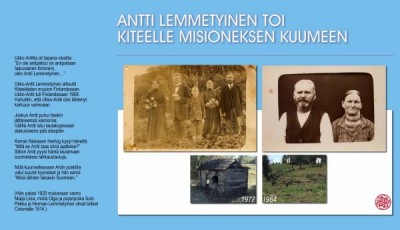
 

4/9: Antti Lemmetyinen despertó el interés en Misiones

El viejo Antti solía decir:

“No soy antipático, soy Antti Lemmetyinen.”

…Era el viejo Antti Lemmetyinen

quien despertó el interes de muchos de Kitee

a Colonia Finlandesa.

El viejo Antti llegó a la Finlandesa en 1908.

Se decía que él se había fugado de su mujer.

A veces Antti contaba

que había dejado a su mujer.

Algunas veces él se sentaba sobre

una caja de madera

deprimido y con la cabeza agachada.

Una ves Hedvig Niskanen le preguntó:

“¿Qué estás pensando?”

Entonces Antti le pediía que cantara

canciones finlandesas de amor.

Al escucharlas a Antti

le empezaba a caer

grandes lágrimas y dijo:

“Vuelvo a Finlandia.”

(Regresó a Misiones en 1920 con su esposa Maija Liisa, y su yerna Olga y su nieto Sulo. Pekka y Herman Lemmetyinen se establicieron en Colonia Finlandesa en 1914.)

5/9: Eino Parkkulainen: El Chermau Blanco

No tenía ninguna razón para irme,

pero quería ver el mundo;

tenía 22 años y era soltero

de la parroquia de Kitee,

del pueblo de Juurikkajärvi,

de la localidad de Kokkoniemi

y quería ver al mundo…

El jefe indio me dio

un nombre de honor: Chermau Blanco (Hermano Blanco).

Es el honor más grande,

que un indio guaraní puede darle a un forastero.

Conseguí todo tipo de invitaciones al campamento indio.

El jefe indio mandó

cinco hombres armados

para ser mis guaraespaldas durante el viaje.

Unos paraguayos

trabajando en la ruta preguntaron

si ellos podrían ir también a la fiesta

uno de los guaraespaldas le respondió:

“Sí, pueden venir,

pero no sé si regresarán.

Chermau Blanco si regresará.”

Fue la mejor parte de mi vida.
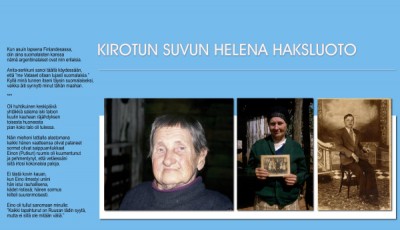
6/9: Helena Haksluoto: Encuentro con la muerte

Cuando vivía en Colonia Finlandesa

siempre estaba con finlandeses

estos argentinos son tan diferentes a nosotros.

Mi prima Anita me dijo una vez de visita:

“Nosotros los Vatanen somos bien finlandeses.”

Me siento netamente finlandesa

aunque mi mamá me dio a luz en esta tierra.

***

Era un mediodía de abril

de repente cayó un rayo en la casa

escuché una explosión fuerte

en la otra habitación

de repente la casa etaba en llamas.

Vi a mi marido en el piso, desnudo

tenía toda la ropa quemada

sus dedos estaban resbalosos como el jabón.

El cuerpo de Eino se había quemado

y ablandado cuando lo arrastraba

salían pedazos enteros de su carne.

No hace mucho tiempo,

Eino me visitó en un sueño

estaba sentado tranquilo,

con sus manos cruzadas; su anillo

brillaba intensamente.

Eino me había visitado para decirme:

“Todo lo que ha pasado es culpa de tu tía Ruusa

pero no tiene ninguna importancia.”
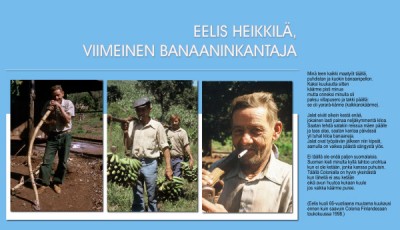
7/9: Eelis Heikkilä: El último recolector

Yo hago todo el trabajo aquí

limpio y carpo el bananal.

Hace dos meses me picó una víbora

suerte que tenía puesto

un pulóver grueso y un saco:

era un yarará (Bothrops alternatus).

Mis pies no aguantan más

cada cargamento que llevo pesa cuarenta kilos

puede ser que haga hasta 100 cargamentos por día

puede ser que en un día

haya cargado más de mil kilos de bananas.

Mis pies ya no aguantan más

mis pies están doloridos

después de un día de trabajao

es difícil levantarse en la mañana.

No hay en esta zona tantos finlandeses

Me estoy olvidando del finlandés

no tengo con quien hablar.

Colonia Finlandesa es un lugar triste

como nadie vive cerca de mí

me quedaría solo tirado

y nadie escucharía a mi socorro

si me picara una víbora.

(Eelis falleció a los 66 años unos meses antes de que visitara a Colonia Finlandesa en mayo de 1998.)

8/9: Helga y Artturi Heino se enamoran y se quedan

Siempre en el campo

conseguí un poco de fuerza

pensando que este sería

el último año

que hiciera este trabajo.

Lo único que nos faltaba

era un comprador para la chacra

todo estaba listo

pero después me embarazé.

Cuando nació Jussi

había estallado en Europa

la Segunda Guerra Mundial

pero nos quedo una pequeña esperanza:

Nos mudaríamos cuando

terminara la guerra.

Pero cuando terminó la guerra

había nacido

una pequeña hija,

Elena, en 1941.

Teníamos cuatro hijos

y poco dinero.

Artturi siempre añoraba

a Finlandia y toda su vida

vivió con la esperanza

de volver a su país natal.

9/9: Últimos pensamientos

El poeta fancés, Edmond Haraucourt (1856-1941), creía que la imagen de la muerte aparece siempre cuando dos personas se separan. Dijo: “El partir es morir un poco, es morir a lo que uno ama.”

El ritual de la despedida era una experiencia más traumática a comienzos del siglo pasado que hoy.  En aquellos tiempos, las personas que no se volverían a ver nunca más, por el destino o las circunstancias de la geografía, tuvieron que disfrazar las despedidas con grandes dosis de esperanza. Tuvieron que convencerse de que pronto se volverían  a ver, aunque nunca lo hicieran.

¿Cuántos inmigrantes de Finlandia y de otros países hubieran dejado a sus seres queridos si hubieran sabido que sería la última vez que los vieran? Seguramente la historia de la humanidad se hubiera escrito de manera distinta si hubiéramos tenido el don de saber si nuestros adioses eran los últimos.

New World Finn: Open the doors

Posted on October 3, 2012 by Migrant Tales

Twenty-five years ago, when I worked briefly for the Buenos Aires Herald as a young reporter, I wrote a column about how Argentina’s past could come to haunt it in the future. The last military regime (1976-83) that ruled the country was one of the most ruthless that Latin America had seen during the last century. Tens of thousands of people disappeared in a civil war that was characterized by habeas corpus writs and the silence of cemeteries.

The same concern I wrote about in that column a long time ago has resurfaced in Europe today.

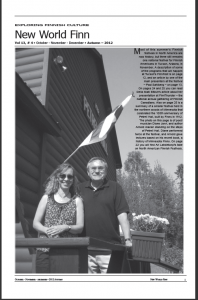
New World Finn is a quarterly exploring Finnish culture in the New World.
The column, Open the doors, raised the following points: “True, there is in present-day Argentina a consensus against military-run governments. However, even though these last years of democracy have instigated a new political era, there are still precious little questions being asked not only about our past – how different sectors such as politicians, unions, member of the clergy, historians, journalists, the U.S. embassy, among others, colluded in making a mockery of democracy and human rights – but most importantly, where we’re supposed to go from here.”

Could history be repeating itself again in Europe and Finland?

As our economic woes deepen in this part of the world, the louder we’re hearing the diatribes of far right and right-wing populist groups. We saw in Finland last year the rise of the Finns Party, which is anti-EU, anti-immigration and especially anti-Islam. The Finns Party, which only got 5 seats in 2007, won 39 seats in the last election!

The next hurdle for the Finns Party will be the municipal elections of October 28. A recent poll by YLE revealed that the Finns Party would be the biggest winner of the municipal election. If the party gets 15.8% of the votes as the poll suggests, it will be a big leap from 5.4% that the party got in the 2008 municipal elections. The poll sees that the National Coalition Party getting in October 22.7% compared with 23.5% in 2008. That would be followed by the Social Democrats with 18.7% (21.2%), and the Center Party with 16.6% (20.1%).

While all political parties in Finland are officially against all forms of racism and discrimination, it’s not clear what their real views are on the issue. How do they promote cultural diversity and how often do they speak out against racism? You will find in all Finnish parties members who are for or against immigrants and immigration. Even so, no other party has so many openly anti-immigration members like the Finns Party.

The Greens and Swedish People’s Party, and even the Left Wing Alliance with some reservations, appear to be the most open to immigration and cultural diversity, according to some polls.

“Intolerance is taking root throughout Europe and Finland. We witnessed with shock last year its ugliest side, when Anders Behring Breivik went on his murderous rampage killing 77 innocent victims. Europe witnessed this spring intolerance form a young Arab in Southern France who gunned down Jewish schoolchildren.

Contrary to North America, some claim that our view of ourselves as ethnic groups in Europe hinges too much on “race and blood.” The concept dates back to 1935, when a Jewish doctor in Germany was sent to a concentration camp for saving a patient’s life by donating his blood. This same idea, that blood and ethnicity are related, is how some Europeans see themselves ethnically today.

In order not to repeat the mistakes of the past, we have to look at our history. Finland, which was ravaged by internal and external wars during the first twenty-five years of its independence, built a model society based on respect, acceptance and social equality. The fruits of those efforts are everywhere today. In order to build the same type of society in this century, we must take great care not to exclude different ethnic groups.

We could look across the Atlantic as well for good cultural-diversity models. Even if racism is an issue in many parts of the Americas, countries like the United States, Canada, Brazil, Argentina and others understand that racism and discrimination are social ills that must be challenged.

The last paragraph of the Buenos Aires Herald column I wrote stated the following: “There are a lot of pending questions and, as long as Argentina does not accept the difficult challenge of answering them, the door of this country will remain closed, isolation will prevail, and despotism will one day flourish as it always has in the past. It will not come from abroad, however, as many would have us believe, but from our backyard.”

The column appeared in the autumn 2012 issue of New World Finn.

Migrant Tales Literary: El gaucho más corajudo de la Pampa durante la dictadura

Posted on July 9, 2012 by Migrant Tales

Siempre me ha fascinado el oponente más débil.  Hay muchos ejemplos en la historia:  José Artigas, Esteban Echeverría, Sacco y Vanzetti,  Resistencia Rosa Blanca, Che Guevara, Antero Rokka, Mahatma Gandhi,  Nelson Mandela, Alvaro Nuñez Cabeza de Vaca,  y El gaucho más corajudo de la Pampa, entre muchos otros.

Un buen ejemplo es el Maracanazo, cuando Uruguay le ganó al favorito Brasil 2 a 1 en el mundial de 1950.

http://www.youtube.com/watch?v=6pMmRFKKZfk

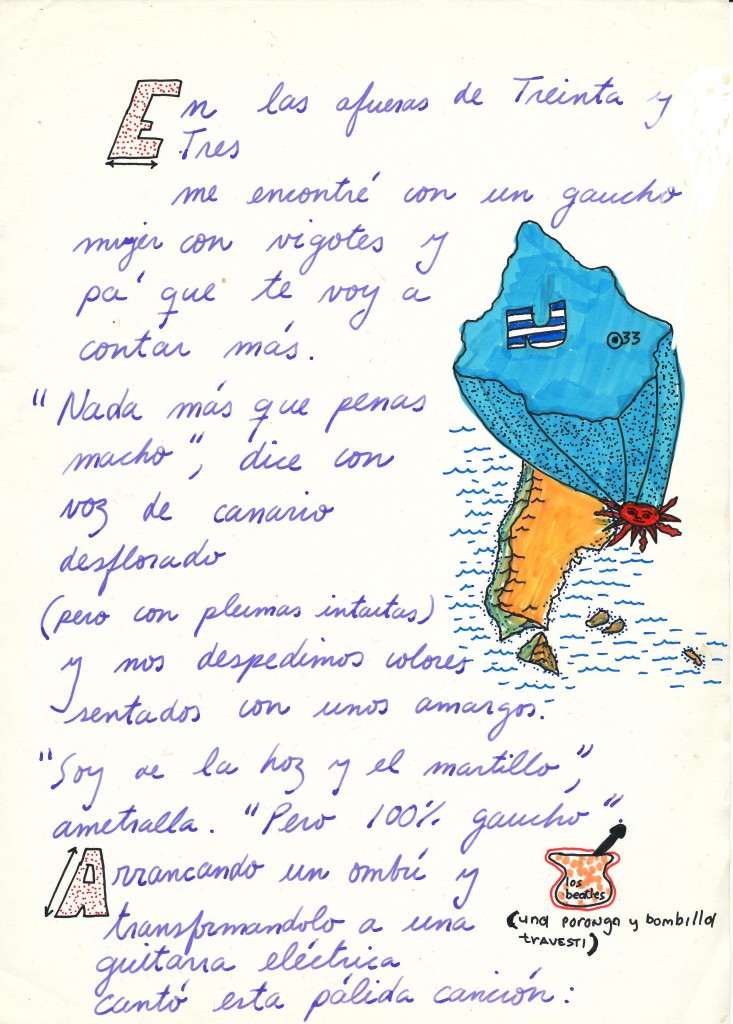
 EL GAUCHO MÁS CORAJUDO DE LA PAMPA DURANTE LA DICTADURA

 En las afueras de Treinta y Tres (Uruguay)

me encontré con un gaucho mujer con vigotes

y pa’ que to voy a contar más.

“Nada más que penas macho”, dice con voz de canario desflorado

(pero con plumas intactas)

y nos despedimos colores

sentados con unos amargos.

“Soy de la hoz y el martillo”,

ametralla

“Pero 100% gaucho”.

Arrancando un ombú y transofmandolo a una guitarra eléctrica

contó esta pálida canción:

El gaucho travesti

amontó un caballo

desparamando al aire gris

estas palabras al partir:

“Soy el gaucho más corajudo de la Pampa”!

                                                                                                                                                                                        Helsinki, 3 de marzo de 1984


Eino Parkkulainen’s home in Argentina becomes a community library

Posted on June 7, 2012 by Migrant Tales

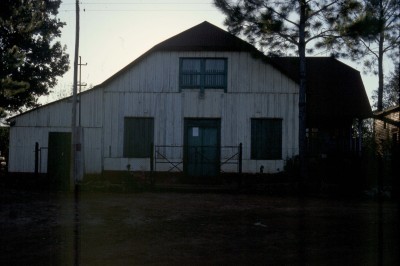
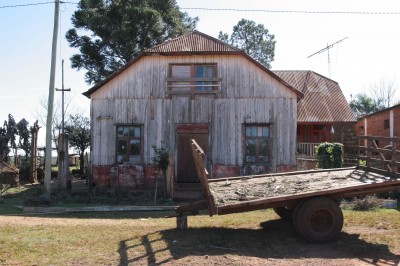
The late Eino Parkkulainen, a Finn who moved to Argentina in 1924 from Kitee, would be proud to see part of his former home  in the hamlet of San Martín being used as a library. Built in the mid-1930s, his home is probably the last one in existence built by the Finns that colonized Misiones province in northeastern Argentina.

Parkkulainen was a very enterprising man. One of the many things he accomplished during his lifetime was write a Finnish-Spanish dictionary. Unfortunately, the dictionary no longer exists.

Colonia Finlandesa was founded in 1906 by Arthur Thesleff.

Patricia Ocampo and Daniela Paola Friedl are spearheading a project to build numerous community libraries throughout Misiones. The first ones to open their doors to the public are the libraries of  San Martín and Puerto Leoni. Check out this video (in Spanish) of the inauguration of the San Martín Library on May 24.

The first picture I took of Pakkulainen’s home was in 1978.

Parkkulainen’s home in 2007.

One of the books on the shelves of the San Martín library is Lejana tierra mía authored by yours truly.

If you ever visit Misiones province and visit Colonia Finlandesa, you’ll probably pass by Parkkulainen’s former home.

In 1984, when I was taking pictures of the house, a fifty-year-old woman came out and asked me what I was doing. Everything was fine after I told her that I was  doing research on the Finns of Misiones.

“Send don Parkkulainen many regards when you see him,” she said. “Tell him that the house isn’t in such good shape. In a few years it may not be standing any longer.”

If you continue walking about 70 meters from the house you’ll soon hear the sound of rushing water of the Mártires River. If you stand on the wooden bridge that crosses it built by Artturi Heino about fifty years ago (in 1984), you’ll conclude that it too won’t last long.

After crossing the bridge you’ll be in Colonia Finlandesa.*

*Enrique Tessieri: Kaukainen maani. WSOY. Juva 1986. p. 33.


Migrant Tales Literary: Yearning never waits

Posted on April 7, 2012 by Migrant Tales

By Enrique Tessieri

I made one of the greatest discoveries of my life in 1998 at the Finnish Seamen’s Church of Buenos Aires, Argentina. Even if such pleasant interior landscapes no longer witness my silence and stance, they are now distant memories that have turned into spacious imaginary cities of the mind where each building has a tale to tell, whispering.

Even if I had visited the Finnish Seamen’s Church on many occasions,  the days I spent there as a tenant brought me back to the beginning of a long journey I began around two decades ago when I moved back to Finland.

William Blake (1757-1827) once said that improvements make straight roads but that it  was the crooked ones without improvement that are roads of genius. Is yearning and following your heart’s desire a crooked road that can lead you to wonderful places never imagined?

The former Finnish Seamen’s Church is today a cultural center in dire need of money and repair. 

Even if my great grandparents, Dante and Jacob only appear occasionally in talk, I can say with total confidence that the yearning and restlessness  I feel today is because of them…

…or possibly it’s because I was born in an enormous migrant transit lounge called The Americas.

Like many others, my family has been on the move for generations: from my father’s side, my great grandfather Dante was from Italy, my grandfather Nemo was born in Brazil, my father and I were born in Argentina, and my three children were  born in Finland.

Yearning is a powerful force. It is the fuel that turns on our hope; it is so powerful that it rarely dies in a lifetime but lives on for generations.

The world is becoming a very small place as time takes us by the hand to the future. It’s pretty certain that my children and grandchildren will be much luckier than I. They will have the ability to visit and leave cultures and lifestyles at will and be – if they wish – from many places simultaneously. They will travel without the baggage of hatred and prejudice constantly overlooking them.

As long as smaller cultures and not devoured by larger ones, life in the new millennium will resemble vast cities like New York or London, where everyone is from somewhere but few from there.

If we all learned to let go and allow yearning to take us by the hand, maybe the first lesson we’d learn is that we are nothing than temporary migrants on Earth searching for that hill where the grass is greener on the other side.

(1999)

How seriously should we take death threats in Finland?

Posted on March 31, 2012 by Migrant Tales

By Enrique Tessieri

How seriously should we take a person who threatens your life for what you write? What does he or she tell us about our society and should we expose that person’s threats? Will bringing to public light such threats strengthen or weaken our Nordic democracy and society?

I have worked as a foreign correspondent in countries that have seen their fair share of armed strife: the dirty war of Argentina (1976-83) and the over fifty-year civil war of Colombia. Even so, the only country where I had gotten death threats in Finland.

Contrary to Argentina and Colombia, the death threats that I got were for the same reason: exposing the dark side of our society, or racism.

The first death threats I got were in the early 1990s for writing an extensive report in Apu magazine on the reaction that a refugee center had caused in my hometown of Mikkeli. Fortunately, my daughter, who was about seven years old at the time, did not answer the phone. My wife did and the message she got was pretty straightforward: “Tell your husband that we will kill him if continues to write about Somalis [refugees].”

Another call I got because of that same story insulted me anonymously over the phone.

The latest death threat I got came in the fall after I published an opinion piece on Savon Sanomat in November. The handwritten note, which was put in our mailbox, insinuated that the column I wrote could “be dangerous for my health.”

Another case this month was by a person who is apparently very angry at Migrant Tales for disagreeing with his simplistic views of immigrants. He appears to be a regular visitor of the anti-immigration hate site, Hommaforum.

To give you an example of the level of harassment, he wrote an email to the whole staff of an institute where I have done research telling them how bad of a person I am and how he is going to sue me for slander.

He writes in the same email: “Correct the facts in an additional article [I wrote] in Suomen Kuvalehti accompanied by an apology on Migrant Tales to all your bloggers who you [and your friend’s associates] have targeted your INSULTS on. Make it detailed and quick or I will make the correction myself.”

One of the matters that all these threats have in common is that the those making them have  no respect for other people’s right to express themselves freely in our society.

But the question we should ask is what do we gain by exposing publicly such threats and demands?

We live in very peculiar political times. The fact that we have politicians in parliament that are openly hostile to immigrants and cultural diversity is a cause for concern.

Personally, I have never seen so much open hostility against immigrants and political chicanery in Finland as today. If we permit this type of behavior to be the norm in our society, we will relinquish and leave to chance the future of our Nordic democratic institutions and the values that have made us such a successful society today.

One of the greatest values we should defend tooth and nail is social equality for all or yhdenvertaisuus.

Those that attack our values and threaten us anonymously by taking the law into their hands should be exposed. By revealing their threats and the deranged world we allow ourselves to be reminded that we cannot take our Nordic way of life and society for granted.

Argentina’s dirty war: A couple I never met but always knew

Posted on December 19, 2011 by Migrant Tales

It’s a long story how I ended up conscripted in the Argentinean army during the dirty war (1976-83). Being part of a country that was at war with itself was like taking a one-way stroll  down the ally of hatred with a sack over your head. Even if no sack was placed over your head, your eyes could neither see nor your ears hear what was going down. Terror has a way of numbing your senses.  

Taking into account the rise of racism and xenophobia in Europe and horrific examples of World War 2 and ethnic cleansing in the former Yugoslavia, it’s clear that we cannot make a pact with the devil by remaining quiet to the threat of right-wing populist and far-right parties that are gaining strength throughout Europe.

One of the reasons why too many white Europeans aren’t too concerned about the situation is because these anti-immigration parties don’t pose a direct threat to them. As we know, these parties have declared indirectly and directly war against immigrants and other minorities.

I am grateful for the years (1977-78) I spent in Argentina. Even if  it changed my life as a young man, I now understand what it is to live under a ruthless dictatorship and why we must defend every day our civil rights.

In many respects populist and far-right parties are very much like those military dictatorships that ruled Latin America in the 1970s. I am certain that all hell would break loose in Europe if these types of parties got the chance to set their policies in motion.

The biggest losers would be our present democracies and civil rights, which are supposed to be inalienable.

How can I make such a claim? Easily. If you exclude and bash one minority by watering down their rights the impact is on the whole of society. Promoting social equality has the opposite effect.

I have adopted a couple out of the over 30,000 victims that disappeared in Argentina during the dirty war. They appeared by accident 33 years ago when I read about their disappearance on September 14, 1977.

Today Jorge Donato Calvo’s and his wife Adriana María Franconetti de Calvo’s story sits quietly on my desk.

Kuvankaappaus 2013-7-12 kello 11.01.51

Jorge Donato Calvo and Adriana María Franconetti de Calvo.

According to the Buenos Aires Herald clipping, the couple left their one- and two-year old baby daughters in their home under the care of the children’s paternal grandparents and went to see a movie at the Ritz Cinema, not too far from where I used to live in Buenos Aires.

Their tragic stories was published in gruesome detail years later on a website of the victims of the dirty war of Argentina:

Adriana and Jorge were students of Buenos Aires’ National School. Jorge was a medic and he worked at the Ramos Mejía Hospital. The couple lived in Sarandi, Buenos Aires province.

The couple was kidnapped when they were standing in a line of the Ritz Cinema in the neighborhood of Belgrano in Buenos Aires. They were seen at the ESMA (Navy Petty-Officers School of Mechanics); Adriana was “transferred” one or two days after.

Adriana’s sister and brother, Anna María and Eduardo, are also missing. Her father Eduardo was kidnapped together with her sister and brother and taken to the  “Club Atlético” detention center where his children were tortured in front of him. His abductors interrogated him about Adriana’s whereabouts. They freed him but he died a short while later of a cardiac arrest.    

*The term dirty war came about when a reporter asked an officer how he’d describe the civil war in Argentina. He said: “It was a dirty war.”


Why did you come here? (4/4) “Enrique Tessieri: Am I a foreigner?”

Posted on December 11, 2011 by Migrant Tales

By Enrique Tessieri

It’s funny that I askedthis important question, “am I a foreigner” in Finland, sixteen years ago. What astounds me is that I am still asking the same question: Do I belong here? Do you accept me for who I am?

I wrote this chapter in the book during Finland’s worst recession in a century, when unemployment rocketed to near-twnet-percent levels. The most vulnerable groups were immigrants at the time. Unemplyment for this group stood at around 50%!

Like today, when the winds of recession are blowing over Finland and Eurppe, back then racism and xenophobia were on the dramatic rise in Finland. Contrary to today, no party like the Perussuomalaiset had yet capitalized on people’s xenophobia because there were so few foreigners. In 1994-95, there were 55,587 immigrants in the country accounting for a mere 1.1% of the population, according to the Population Register Center.

A former student, who is a Finn with a multicultural background, told other students with similar backgrounds the following: “The first important step is accepting yourself. Extend your hand of friendship if possible to those that may loathe you.”

Those that change history are those who have the vision and courage to grab the issue by the horns.

I write in Why did you come here: “I believe that a hundred years from today people like myself will not be called a foreigner by some Finns. If we are not overcome by hatred and war, Europe and Finland will resemble a dynamic melting pot [culturally diverse society would be more appropriate today] of cultures.

______________

…Am I a foreigner in Finland? That is a difficult question to answer. If I could move to this country a hundred years from today, some people would not label me as a foreinger. People who are members of two, three or more cultures will be a common sight in Finlad in the late-twenty-first century.

I used to feel lonely because of my Finnish and Argentinan [as well as U.S.] background. I did not know anyone who belonged to these two [never mind three] cultures.

After receiving a degree in anthropology in the United States, I moved to Argentina to do my military service. Prior to that, I had only lived 2.5 years in that country. Argentina turned out to be a political nighmare. The country was in the midst of a civil war. I am still hounded by the cemetery silence that prevailed in Argentina during those years when over 9,000 people (sic, over 30,000 people) vanished.

I first heard of Colonia Finlandesa back in April 1977 at the Finnish Seaman’s Church of Buenos Aires.  Colonia Finlandesa, founded in 1906 in the subtropical jungles of Misiones, was the largest Finnish colony in South Ameridca It did not take me long to begin fieldwork on the few remaining Finns still living there.

Most of the old people were living off their pensions from Finland, while the younger ones were stubbornly striving to support their families by growing a few hectares of tobacco and other cash crops. It was a very modest existence.

One of the people I vividly remember meeting at Colonia Finlandesa was Svea Gumberg, who was only three months ole when her parents brought her to Argentina in May 1906.

“I remember my father rushing out of his bed at night with the rifle to shoot at the jguars [yaguareté] that ate our dogs and at the wold boars that ate our crops,” she said. “It was difficult to shoot these beasts because it was pitch dark.”

The last time I visited Colonia Finlandesa was in June 1988 [now 2007]. There was only one Finnish-born settler left. His name is Reino Putkuri, who came to Argentina as a child from Kitee The years have erased all the bonds he had with this country. He told me bluntly, “It wasn’t my fault if I was born in Finland.”

There’s a picture of Antti Lemmetyinen’s sauna that synmbolizes the fate of the colony. One of the most beautiful sauns in Colonia Finlandesa, in 1978 it was almost falling down for lack of care and had turned into a temporary pigsty. In 1984 the structure was gone.

Ethnically speaking, I can’t even say after five generations of Finnish heritage in Argentina if there is such a group that can call itself “Finnish-Argentinean,” when I take into account the large number of out-group marriages.

For example, if a song of a first-generation Finnish settler learned Finnish at home and married a daughter of a German immigrant, they would speak Spanish together. As a result, their children would learn Spanish as the language of their home.

In many ways, the same thins is happening to foreigners in Finland. They are slowly being integrated into this society. And their children are full-fledged Finns.

I believe that a hundred years from today people like myself will not be called a foreinger by some Finns. If we are not overcome by hatred and war, Europe and Finland will resemble a dynamic melting pot of cultures [I would change this part and state culturally diverse society instead].

I am very happey that my grandchildren will be fortunate enought to see that day.

  • Previous
  • 1
  • 2
  • 3
  • 4
  • 5
  • Next
Read more about documentary film
Read more

Recent Posts

  • Finland’s tabloids Iltalehti and Ilta-Sanomat are the pits
  • Riikka Purra’s Dr Jekyll and Mr Hyde mask
  • Double standards
  • Perussuomalaiset: Uusi logo, sama vanha juttu
  • Taco Trump

Recent Comments

  1. Absolutely Socking: Racist Finnish Facebook group against human rights gets flooded with socks on Musta Barbaari’s mother and sister charged by the police in “ethnic profiling” case
  2. Ilkka Nuotio on Pekka Myrskylä: “Tilastot kertovat toista kuin poliittinen keskustelu”
  3. Genrih Soinkara on The war in Ukraine and the Russian-Finnish border crisis are showing Finland’s ugly side
  4. Ahti Tolvanen on Comment by Ahti Tolvanen on the Helsinki +50 conference
  5. Angel Barrientos on Angel Barrientos is one of the kind beacons of Finland’s Chilean community

Archives

  • June 2026
  • May 2026
  • April 2026
  • March 2026
  • February 2026
  • January 2026
  • December 2025
  • November 2025
  • October 2025
  • September 2025
  • August 2025
  • July 2025
  • June 2025
  • May 2025
  • April 2025
  • March 2025
  • February 2025
  • January 2025
  • December 2024
  • November 2024
  • October 2024
  • September 2024
  • August 2024
  • July 2024
  • June 2024
  • May 2024
  • April 2024
  • March 2024
  • February 2024
  • January 2024
  • December 2023
  • November 2023
  • October 2023
  • September 2023
  • August 2023
  • July 2023
  • June 2023
  • May 2023
  • April 2023
  • March 2023
  • February 2023
  • January 2023
  • December 2022
  • November 2022
  • October 2022
  • September 2022
  • August 2022
  • July 2022
  • June 2022
  • May 2022
  • April 2022
  • March 2022
  • February 2022
  • January 2022
  • December 2021
  • November 2021
  • October 2021
  • September 2021
  • August 2021
  • July 2021
  • June 2021
  • May 2021
  • April 2021
  • March 2021
  • February 2021
  • January 2021
  • December 2020
  • November 2020
  • October 2020
  • September 2020
  • August 2020
  • July 2020
  • June 2020
  • May 2020
  • April 2020
  • March 2020
  • February 2020
  • January 2020
  • December 2019
  • November 2019
  • October 2019
  • September 2019
  • August 2019
  • July 2019
  • June 2019
  • May 2019
  • April 2019
  • March 2019
  • February 2019
  • January 2019
  • December 2018
  • November 2018
  • October 2018
  • September 2018
  • August 2018
  • July 2018
  • June 2018
  • May 2018
  • April 2018
  • March 2018
  • February 2018
  • January 2018
  • December 2017
  • November 2017
  • October 2017
  • September 2017
  • August 2017
  • July 2017
  • June 2017
  • May 2017
  • April 2017
  • March 2017
  • February 2017
  • January 2017
  • December 2016
  • November 2016
  • October 2016
  • September 2016
  • August 2016
  • July 2016
  • June 2016
  • May 2016
  • April 2016
  • March 2016
  • February 2016
  • January 2016
  • December 2015
  • November 2015
  • October 2015
  • September 2015
  • August 2015
  • July 2015
  • June 2015
  • May 2015
  • April 2015
  • March 2015
  • February 2015
  • January 2015
  • December 2014
  • November 2014
  • October 2014
  • September 2014
  • August 2014
  • July 2014
  • June 2014
  • May 2014
  • April 2014
  • March 2014
  • February 2014
  • January 2014
  • December 2013
  • November 2013
  • October 2013
  • September 2013
  • August 2013
  • July 2013
  • June 2013
  • May 2013
  • April 2013
  • March 2013
  • February 2013
  • January 2013
  • December 2012
  • November 2012
  • October 2012
  • September 2012
  • August 2012
  • July 2012
  • June 2012
  • May 2012
  • April 2012
  • March 2012
  • February 2012
  • January 2012
  • December 2011
  • November 2011
  • October 2011
  • September 2011
  • August 2011
  • July 2011
  • June 2011
  • May 2011
  • April 2011
  • March 2011
  • February 2011
  • January 2011
  • December 2010
  • November 2010
  • October 2010
  • September 2010
  • August 2010
  • July 2010
  • June 2010
  • May 2010
  • April 2010
  • March 2010
  • February 2010
  • January 2010
  • December 2009
  • November 2009
  • October 2009
  • September 2009
  • August 2009
  • July 2009
  • December 2008
  • November 2008
  • October 2008
  • September 2008
  • August 2008
  • July 2008
  • June 2008
  • May 2008
  • April 2008
  • March 2008
  • February 2008
  • January 2008
  • November 2007
  • October 2007
  • September 2007
  • August 2007
  • July 2007
  • June 2007
  • May 2007

Categories

  • ?? Gia L?c
  • ????? ?????? ????? ???????? ?? ??????
  • ???????
  • @HerraAhmed
  • @mondepasrond
  • @nohatefinland
  • @oula_silver
  • @Varathas
  • A Pakistani family
  • äärioikeisto
  • Abbas Bahmanpour
  • Abdi Muhis
  • Abdirahim Hussein Mohamed
  • Abdirahim Husu Hussein
  • Abdirisak Mahamed
  • About Migrant Tales
  • activism
  • Adam Al-Sawad
  • Adel Abidin
  • Afrofinland
  • Ahmed IJ
  • Ahti Tolvanen
  • Aino Pennanen
  • Aisha Maniar
  • Alan Ali
  • Alan Anstead
  • Alejandro Díaz Ortiz
  • Alekey Bulavsev
  • Aleksander Hemon
  • Aleksanterinliitto
  • Aleksanterinliitto ry
  • Aleksanterinliitto ry:n hallitus
  • Alex Alex
  • Alex Mckie
  • Alexander Nix
  • Alexandra Ayse Albayrak
  • Alexis Neuberg
  • Ali Asaad Hasan Alzuhairi
  • Ali Hossein Mir Ali
  • Ali Rashid
  • Ali Sagal Abdikarim
  • Alina Tsui
  • Aline Müller
  • All categories
  • Aman Heidari
  • Amiirah Salleh-Hoddin & Jana Turk
  • Amin A. Alem
  • Amir Zuhairi
  • Amkelwa Mbekeni
  • Ana María Gutiérrez Sorainen
  • Anachoma
  • Anders Adlecreutz
  • Angeliina Koskinen
  • Anna De Mutiis
  • Anna María Gutiérrez Sorainen
  • Anna-Kaisa Kuusisto ja Jaakko Tuominen
  • Annastiina Kallius
  • Anneli Juise Friman Lindeman
  • Announcement
  • Anonymous
  • Antero Leitzinger
  • anti-black racism
  • Anti-Hate Crime Organisation Finland
  • Anudari Boldbaatar
  • Arshiya Nasser
  • Aspergers Syndrome
  • Asylum Corner
  • Asylum seeker 406
  • Athena Griffin and Joe Feagin
  • Autism
  • Avaaz.org
  • Awale Olad
  • Ayan Said Mohamed
  • AYY
  • Barachiel
  • Bashy Quraishy
  • Beatrice Kabutakapua
  • Beri Jamal
  • Beri Jamal and Enrique Tessieri
  • Bertolt Brecht
  • Boiata
  • Boodi Kabbani
  • Bruno Gronow
  • Carmen Pekkarinen
  • Çelen Oben and Sheila Riikonen
  • Chiara Costa-Virtanen
  • Chiara Costa-Virtanen
  • Chiara Sorbello
  • Christian Thibault
  • Christopher Wylie
  • Clara Dublanc
  • Dana
  • Daniel Malpica
  • Danilo Canguçu
  • David Papineau
  • David Schneider
  • Dexter He
  • Don Flynn
  • Dr Masoud Kamali
  • Dr. Faith Mkwesha
  • Dr. Theodoros Fouskas
  • Edna Chun
  • Eeva Kilpi
  • Emanuela Susheela
  • En castellano
  • ENAR
  • Enrique
  • Enrique Tessieri
  • Enrique Tessieri & Raghad Mchawh
  • Enrique Tessieri & Yahya Rouissi
  • Enrique Tessieri and Muhammed Shire
  • Enrique Tessieri and Sira Moksi
  • Enrique Tessieri and Tom Vandenbosch
  • Enrique Tessieri and Wael Che
  • Enrique Tessieri and Yahya Rouissi
  • Enrique Tessieri and Zimema Mhone
  • Epäluottamusmies
  • EU
  • Europe
  • European Islamophobia Report
  • European Islamophobia Report 2019,
  • European Union
  • Eve Kyntäjä
  • Ezequiel Caldeiro
  • Facebook
  • Fadumo Dayib
  • Faisa Kahiye
  • Farhad Manjoo
  • Fasismi
  • Finland
  • Fizza Qureshi
  • Flyktingar och asyl
  • Foreign Student
  • Fozia Mir-Ali
  • Frances Webber
  • Frida Selim
  • Gareth Rice
  • Ghyslain Vedeaux
  • Global Art Point
  • Great Replacement
  • Habiba Ali
  • Hami Bahadori
  • Hami Bahdori
  • Hamid
  • Hamid Alsaameere
  • Hamid Bahdori
  • Handshake
  • Harmit Athwal
  • Hassan Abdi Ali
  • Hassan Muhumud
  • Heikki Huttunen
  • Heikki Wilenius
  • Helsingin Sanomat
  • Henning van der Hoeven
  • Henrika Mälmsröm
  • Hser Hser
  • Hser Hser ja Mustafa Isman
  • Husein Muhammed
  • Hussain Kazemian
  • Hussain Kazmenian
  • Ibrahim Khan
  • Ida
  • Ignacio Pérez Pérez
  • Iise Ali Hassan
  • Ilari Kaila & Tuomas Kaila
  • Imam Ka
  • inside-an-airport
  • Institute of Race Relations
  • Iraqi asylum seeker
  • IRR European News Team
  • IRR News Team
  • Islamic Society of Norhern FInland
  • Islamic Society of Northern Finland
  • Islamophobia
  • Jacobinmag.com
  • Jallow Momodou
  • Jan Holmberg
  • Jane Elliott
  • Jani Mäkelä
  • Jari Luoto
  • Jari Taponen
  • Jegor Nazarov
  • Jenni Stammeier
  • Jenny Bourne
  • Jessie Daniels
  • Joe Davidow
  • Johannes Koski
  • John D. Foster
  • John Grayson
  • John Marriott
  • Jon Burnett
  • Jorma Härkönen
  • Jos Schuurmans
  • José León Toro Mejías
  • Josue Tumayine
  • Jouni Karnasaari
  • Juan Camilo
  • Jukka Eräkare
  • Julian Abagond
  • Julie Pascoet
  • Jussi Halla-aho
  • Jussi Hallla-aho
  • Jussi Jalonen
  • JusticeDemon
  • Kadar Gelle
  • Kaksoiskansalaisuus
  • Kansainvälinen Mikkeli
  • Kansainvälinen Mikkeli ry
  • Katherine Tonkiss
  • Kati Lepistö
  • Kati van der Hoeven-Lepistö
  • Katie Bell
  • Kättely
  • Kerstin Ögård
  • Keshia Fredua-Mensah & Jamie Schearer
  • Khadidiatou Sylla
  • Khadra Abdirazak Sugulle
  • Kiihotus kansanryhmää vastaan
  • Kirsi Crowley
  • Koko Hubara
  • Kristiina Toivikko
  • Kubra Amini
  • KuRI
  • La Colectiva
  • La incitación al odio
  • Laura Huhtasaari
  • Lauri Finér
  • Leif Hagert
  • Léo Custódio
  • Leo Honka
  • Leontios Christodoulou
  • Lessie Branch
  • Lex Gaudius
  • Leyes de Finlandia
  • Liikkukaa!
  • Linda Hyökki
  • Liz Fekete
  • M. Blanc
  • Maarit Snellman
  • Mahad Sheikh Musse
  • Maija Vilkkumaa
  • Malmin Kebab Pizzeria Port Arthur
  • Marcell Lorincz
  • Mari Aaltola
  • María Paz López
  • Maria Rittis Ikola
  • Maria Tjader
  • Marja-Liisa Tolvanen
  • Mark
  • Markku Heikkinen
  • Marshall Niles
  • Martin Al-Laji
  • Maryan Siyad
  • Matt Carr
  • Mauricio Farah Gebara
  • Media Monitoring Group of Finland
  • Micah J. Christian
  • Michael McEachrane
  • Michele Levoy
  • Michelle Kaila
  • Migrant Tales
  • Migrant Tales Literary
  • Migrantes News
  • Migrants' Rights Network
  • MigriLeaks
  • Mikko Kapanen
  • Miriam Attias and Camila Haavisto
  • Mohamed Adan
  • Mohammad Javid
  • Mohammad M.
  • Monikulttuurisuus
  • Monisha Bhatia and Victoria Canning
  • Mor Ndiaye
  • Muh'ed
  • Muhamed Abdimajed Murshid
  • Muhammed Shire
  • Muhammed Shire and Enrique Tessieri
  • Muhis Azizi
  • Musimenta Dansila
  • Muslimiviha
  • Musulmanes
  • Namir al-Azzawi
  • Natsismi
  • Neurodiversity
  • New Women Connectors
  • Nils Muižnieks
  • No Labels No Walls
  • Noel Dandes
  • Nuor Dawood
  • Omar Khan
  • Otavanmedia
  • Oula Silvennoinen
  • Paco Diop
  • Pakistani family
  • Pentti Stranius
  • Perussuomalaiset
  • perustuslaki
  • Petra Laiti
  • Petri Cederlöf
  • Pia Grochowski
  • Podcast-lukija Bea Bergholm
  • Pohjois – Suomen Islamilainen Yhdyskunta
  • Pohjois Suomen Islamilainen Yhyskunta
  • Polina Kopylova
  • Race Files
  • racism
  • Racism Review
  • Raghad Mchawh
  • Ranska
  • Rashid H. and Migrant Tales
  • Rasismi
  • Raul Perez
  • Rebecka Holm
  • Reem Abu-Hayyeh
  • Refugees
  • Reija Härkönen
  • Remiel
  • Reza Nasri
  • Richard Gresswell
  • Riikka Purra
  • Risto Laakkonen
  • Rita Chahda
  • Ritva Kondi
  • Robito Ibrahim
  • Roble Bashir
  • Rockhaya Sylla
  • Rodolfo Walsh
  • Roger Casale
  • Rostam Atai
  • Roxana Crisólogo Correa
  • Ruth Grove-White
  • Ruth Waweru-Folabit
  • S-worldview
  • Sadio Ali Nuur
  • Sami Rusanen
  • Sandhu Bhamra
  • Sara de Jong
  • Sarah Crowther
  • Sari Alhariri
  • Sarkawt Khalil
  • Sasu
  • Scot Nakagawa
  • Shabana Ahmadzai
  • Shada Islam
  • Sharon Chang blogs
  • Shenita Ann McLean
  • Shirlene Green Newball
  • Sini Savolainen
  • Sira Moksi
  • Sonia K.
  • Sonia Maria Koo
  • Steverp
  • Stop Deportations
  • Suldaan Said Ahmed
  • Suomen mediaseurantakollektiivi
  • Suomen Muslimifoorumi ry
  • Suomen viharikosvastainen yhdistys
  • Suomen viharikosvastainen yhdistys ry
  • Suomi
  • Supermen
  • Susannah
  • Suva
  • Syrjintä
  • Talous
  • Tapio Tuomala
  • Taw Reh
  • Teivo Teivainen
  • The Daily Show
  • The Heino
  • The Supermen
  • Thomas Elfgren
  • Thulfiqar Abdulkarim
  • Tim McGettigan
  • Tino Singh
  • Tito Moustafa Sliem
  • Tobias Hübinette and L. Janelle Dance
  • Transport
  • Trica Danielle Keaton
  • Trilce Garcia
  • Trish Pääkkönen
  • Trish Pääkkönen and Enrique Tessieri
  • Tuulia Reponen
  • Uncategorized
  • UNITED
  • University of Eastern Finland
  • Uyi Osazee
  • Väkivalta
  • Vapaa Liikkuvuus
  • Venla-Sofia Saariaho
  • Vieraskynä
  • W. Che
  • W. Che an Enrique Tessieri
  • Wael Ch.
  • Wan Wei
  • Women for Refugee Women
  • Xaan Kaafi Maxamed Xalane
  • Xassan Kaafi Maxamed Xalane
  • Xassan-Kaafi Mohamed Halane & Enrique Tessieri
  • Yahya Rouissi
  • Yasmin Yusuf
  • Yassen Ghaleb
  • Yle Puhe
  • Yuliet Tresa
  • Yve Shepherd
  • Zahra Khavari
  • Zaker
  • Zalina Ametova
  • Zamzam Ahmed Ali
  • Zeinab Amini ja Soheila Khavari
  • Zimema Mahone and Enrique Tessieri
  • Zimema Mhone
  • Zoila Forss Crespo Moreyra
  • ZT
  • Zulma Sierra
  • Zuzeeko Tegha Abeng
© 2026 Migrant tales | Powered by Minimalist Blog WordPress Theme